



Reward charts initially motivate children but ultimately undermine intrinsic motivation by shifting focus from inherent satisfaction to external prizes—creating transactional thinking where cooperation becomes conditional. Research shows rewards decrease creativity and engagement, with behavior stopping once incentives disappear. They also damage sibling relationships through competition and prevent genuine character development by prioritizing compliance over understanding. Instead, you'll build lasting cooperation through emotional acknowledgment, offering meaningful choices, collaborative problem-solving, and descriptive praise that recognizes effort rather than outcomes. These approaches cultivate the internal motivation and emotional awareness your child needs for lifelong confidence and self-regulation.
Key Takeaways
- Reward charts undermine intrinsic motivation by shifting focus from inherent activity value to external prizes, causing diminished creativity and engagement.
- Children develop transactional thinking, calculating rewards rather than understanding moral reasoning or contributing genuinely to family cooperation.
- Compliance through rewards lacks understanding of why behaviors matter, failing to address underlying causes or build lasting character development.
- Acknowledge emotions and offer meaningful choices to empower children, reducing power struggles while fostering genuine cooperation and autonomy.
- Use descriptive praise and collaborative problem-solving to build intrinsic motivation, self-reflection, and emotional awareness instead of external validation.
The Science Behind Why Reward Systems Undermine Intrinsic Motivation
Get the latest insights delivered straight to your inbox.

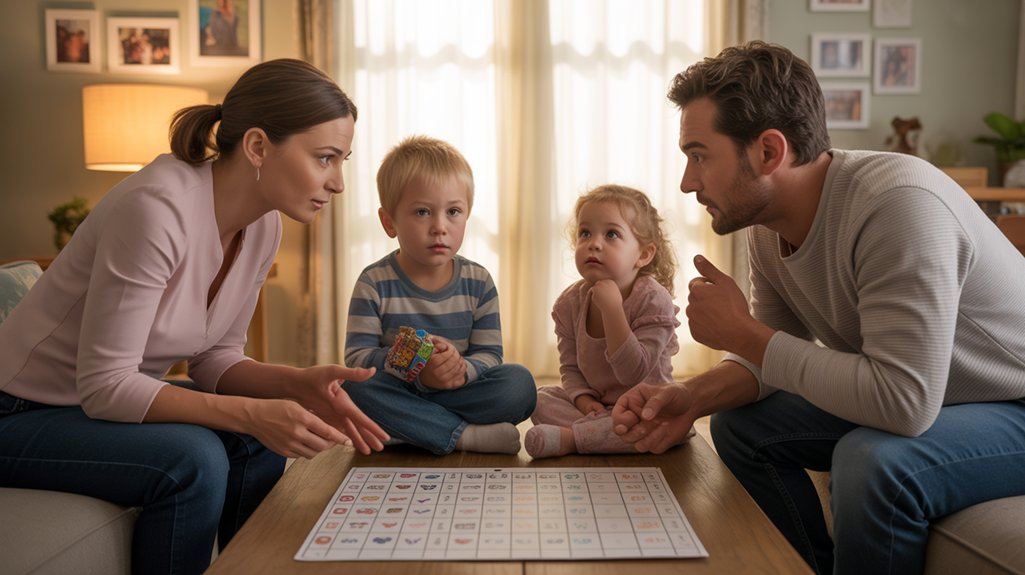
While it might seem counterintuitive, rewarding children for good behavior often backfires. Research reveals that extrinsic rewards actually shift children's focus away from the inherent value of an activity to the prize they'll receive. This phenomenon, known as the overjustification hypothesis, diminishes their natural curiosity and engagement.
When you offer stickers or treats for behaviors children would naturally perform—like helping a sibling or completing homework—you're inadvertently teaching them that these actions have value only when compensated.
Meta-analyses consistently show this approach decreases both performance and creativity, as children become less willing to think independently or take risks without guaranteed rewards.
The consequences extend beyond the immediate moment. Children begin developing a transactional mindset, where cooperation becomes conditional. They may experience anxiety about performance and feel their worth depends on compliance.
Most concerning, once rewards disappear, so does the behavior—revealing motivation that's fragile rather than genuine. Understanding these dynamics helps parents maintain balance while modeling healthy behaviors that support their children's emotional development.
How Rewards Create Transactional Relationships Instead of Genuine Connection
When you hand your child a sticker for setting the table, you're not just offering a reward—you're fundamentally reworking how they view your relationship.
A reward system alters you from a loving caregiver into a provider of incentives. Your child begins calculating: “What will I get for this?” rather than thinking, “How can I contribute to our family?” This transactional mindset erodes the emotional security that comes from unconditional connection.
When behavior becomes currency, children internalize a troubling message: their worth depends on performance. They may feel your affection is conditional, breeding insecurity and resentment instead of trust. Rather than understanding responsibility as cooperative participation, they focus solely on external validation.
This approach ultimately damages the very relationship you're trying to nurture. Children who feel manipulated or controlled often respond with defiance. They lose trust in your motivations, questioning whether you value them or simply their compliance.
The same dynamic occurs when parents use reward-based strategies for developmental milestones like potty training, where external incentives can overshadow a child's natural motivation to grow and learn.
Genuine connection requires seeing beyond behavior charts to the whole child before you.
The Problem With Compliance: Short-Term Gains vs. Long-Term Character Development

Because compliance looks like success, it's easy to mistake a quiet, obedient child for a thriving one.
But rewarding good behavior through charts often produces children who follow rules without understanding why those rules matter.
Research shows that while behavior charts generate immediate obedience, they don't address underlying causes of misbehavior or develop essential life skills like problem-solving and emotional regulation.
Behavior charts deliver compliance but bypass the deeper work of understanding causes and building lifelong skills.
Your compliant child may simply be performing for rewards rather than fostering internal values.
The consequences extend beyond missed learning opportunities.
Children who consistently appear on the “bad” side internalize that identity, shaping their self-perception for years.
Meanwhile, your “good” children may become risk-averse, fearing mistakes that threaten their status.
When you prioritize short-term compliance over character development, you're teaching children to seek external validation rather than nurture wisdom, empathy, and moral reasoning—the very qualities that enable them to serve others and navigate complex situations throughout their lives.
Just as helping kids cope with challenging situations requires understanding their emotional regulation abilities, effective discipline focuses on building internal skills rather than external compliance.
When Reward Charts Backfire: Understanding Why Children Resist or Bargain
You've committed to the reward chart, placed it prominently on the refrigerator, and explained the rules carefully. Yet within days, your child begins negotiating: “If I clean my room, can I get two stickers?”
The system you hoped would encourage cooperation has instead created a marketplace mentality.
This resistance reveals a deeper truth about rewards and punishments: children instinctively recognize when external controls threaten their autonomy. Research shows that strong-willed children particularly push back against systems that feel coercive, interpreting charts as attempts to manipulate rather than guide them.
When approval becomes conditional on performance, children may disengage entirely or develop transactional thinking that undermines intrinsic motivation. They begin calculating minimum effort required for maximum reward rather than genuinely embracing desired behaviors.
The bargaining and resistance you're witnessing aren't defiance—they're your child's natural response to feeling controlled. Understanding this helps you recognize why these systems often backfire despite your best intentions.
Caregivers and guardians can benefit from recognizing that these behavioral responses vary depending on the child's developmental stage and age-specific needs.
The Hidden Costs of Sticker Charts on Sibling Relationships and Family Dynamics

While you carefully track each child's stickers with hopes of motivating everyone, an unintended competition takes root at your kitchen table.
Sticker charts inadvertently pit siblings against one another, reshaping natural developmental differences into visible scorecards of success and failure.
Sticker charts transform childhood development into a competitive scorecard, making siblings' natural differences feel like winning and losing.
When one child excels while another struggles, the chart becomes a daily reminder of who's “winning”—breeding resentment rather than cooperation.
Children begin viewing parental attention and approval as transactional commodities earned through compliance, not freely given through unconditional love.
This comparison-driven environment particularly damages younger or developmentally challenged siblings who can't keep pace.
They may internalize a “bad child” identity, while high-achieving siblings learn their worth depends on outperforming others.
The focus shifts from building emotional bonds to individual achievement.
Instead of supporting each other through challenges, siblings compete for finite rewards and recognition.
Your family's emotional ecosystem becomes transactional rather than relational, undermining the cooperation and mutual support you're ultimately trying to nurture.
Listening and Validating: Meeting Children's Emotional Needs During Meltdowns
Instead of engineering compliance through charts and competition, your energy becomes creative when directed toward understanding what's actually happening during your child's most challenging moments.
During meltdowns, actively listening helps children feel genuinely heard, which naturally de-escalates heightened emotions and builds their capacity for self-regulation.
Validating their feelings—without immediately correcting behavior—provides essential security. When you acknowledge their emotional experience, you're teaching them that their inner world matters and deserves respect.
Resist addressing consequences during the storm. Wait until calm returns; your feedback will actually reach them then, rather than triggering more resistance.
You'll discover that gentle reminders and strategic humor often invite cooperation far more effectively than structured reward systems.
Most importantly, look beneath non-compliance to identify unmet needs. Is your child exhausted, overwhelmed, or seeking connection? Addressing these root causes creates lasting behavioral change and nurtures genuine emotional growth—outcomes no sticker chart can achieve.
Building Cooperation Through Choices, Explanations, and Shared Problem-Solving
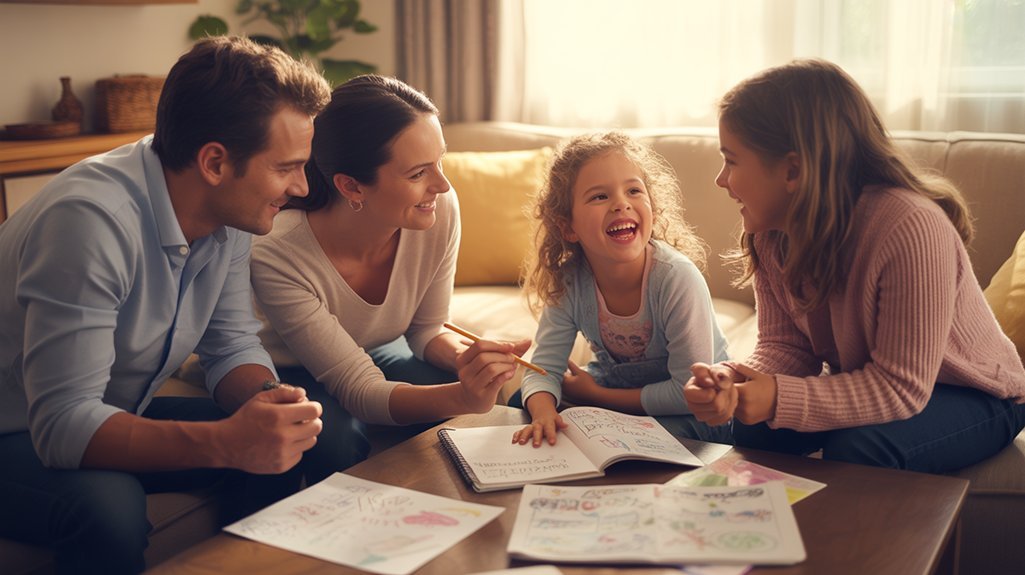
Instead of relying on external rewards, you can build genuine cooperation by offering your child meaningful choices throughout the day—like selecting between two acceptable outfits or deciding which task to complete first.
When you explain the reasoning behind your requests (“We need to leave now so we won't miss your friend's party”), children develop understanding rather than mere compliance.
You'll find that collaboratively problem-solving challenges together—asking “What could help you remember to put your shoes away?”—creates ownership and accountability that sticker charts simply can't replicate.
Offering Meaningful Choices Daily
How can parents shift from power struggles to genuine partnership with their children? By weaving meaningful choices into daily routines. When you offer options—”Would you like to brush teeth before or after pajamas?”—you're not relinquishing control; you're inviting cooperation. This simple practice acknowledges your child's growing autonomy while maintaining necessary structure.
The key is ensuring choices are genuine and age-appropriate. Two to three options work best for younger children, preventing overwhelm while encouraging decision-making skills. As children experience the natural consequences of their selections, they develop critical thinking and personal responsibility.
This approach changes mundane tasks into collaborative moments. Rather than commanding compliance, you're building a foundation of mutual respect that strengthens your relationship and nurtures your child's developing independence naturally.
Collaborative Problem-Solving Techniques
When conflicts arise, the most powerful question you can ask is “What can we do about this together?” This shift from parent-as-enforcer to parent-as-partner converts opposition into collaboration. Unlike reward systems that create external motivation, collaborative problem-solving builds intrinsic accountability. You're helping children develop critical thinking while strengthening your relationship.
| Traditional Approach | Collaborative Approach | Child's Experience |
|---|---|---|
| “Do this or lose privileges” | “What's making this difficult?” | Feels heard and valued |
| Parent dictates solution | Brainstorm options together | Develops problem-solving skills |
| Focus on compliance | Focus on understanding | Internalizes reasoning |
| One-way communication | Two-way dialogue | Strengthens relationship |
| Immediate behavioral change | Sustainable skill development | Builds independence |
Explain your reasoning, offer meaningful choices, and practice empathetic listening during emotional moments. This approach creates lasting cooperation.
The Power of Descriptive Praise and Unconditional Positive Regard
When you shift from generic “good job!” to specific observations like “You worked really hard figuring out that puzzle—you tried three different strategies,” you're giving your child concrete information about what made their effort valuable.
This descriptive praise, combined with unconditional positive regard—loving your child for who they're rather than what they achieve—creates emotional security that reward charts can't provide.
Research confirms that children raised with this approach develop stronger intrinsic motivation and self-esteem because they're learning to value their own efforts rather than chasing external validation.
Genuine Appreciation Over Rewards
While reward charts promise behavioral change through external incentives, they fundamentally miss what children need most: to feel genuinely seen and valued for who they are, not just what they do.
Genuine appreciation alters your relationship with your child by acknowledging their efforts and progress through specific, heartfelt affirmations. When you notice and verbally recognize their actions—”You worked really hard on that puzzle” or “You showed kindness to your sister”—you're building trust and emotional connection that external rewards can't replicate.
This approach nurtures intrinsic motivation by helping children associate positive feelings with their behavior itself, rather than prizes.
Research confirms that unconditional positive regard—accepting your child regardless of their behavior—strengthens their emotional security, self-esteem, and resilience, creating lasting positive change rooted in internal satisfaction.
Nurturing Through Unconditional Love
Unconditional love forms the foundation upon which descriptive praise becomes most effective. When you offer unconditional positive regard, you're affirming your child's inherent worth separate from their achievements or behavior. This creates emotional security that allows them to hear your specific feedback without fear of losing your love.
Instead of saying “You're such a good boy for cleaning up,” try “You organized all the blocks by color—that shows real attention to detail.” This approach acknowledges their effort while maintaining that your love isn't contingent on compliance.
Research confirms that children who experience unconditional positive regard develop stronger intrinsic motivation and healthier self-esteem.
They're more willing to take risks, admit mistakes, and communicate openly because they trust your relationship remains secure regardless of outcomes.
Creating Routines and Environments That Set Children Up for Success
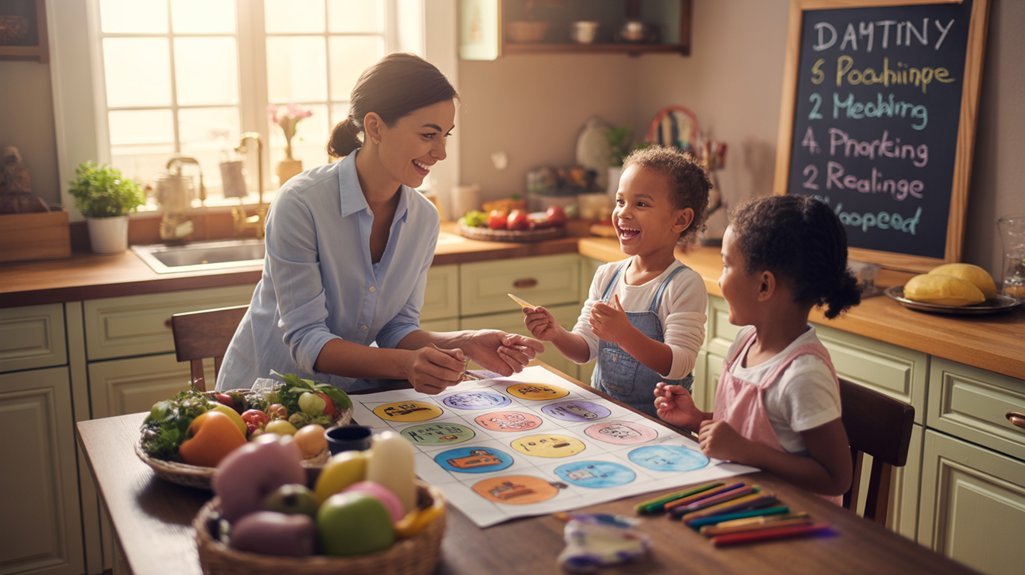
Instead of relying on sticker charts and prizes, you can design daily routines and physical spaces that naturally guide your child toward cooperation. Creating routines reduces uncertainty and helps children understand what's expected, leading to improved compliance without external rewards.
Involve your child in planning their routines to cultivate ownership and commitment. Use visual cues and predictable schedules that enable them to take initiative independently. This approach strengthens their intrinsic motivation rather than dependence on prizes.
| Traditional Approach | Routine-Based Approach |
|---|---|
| Sticker charts for tasks | Visual schedules children help create |
| Prizes for compliance | Playful rituals that build connection |
| External motivation | Natural consequences and ownership |
| Parent-driven expectations | Child-involved planning |
| Reward-focused environment | Emotionally safe, nurturing atmosphere |
When you emphasize emotional safety and use playful activities, you strengthen parent-child connections. Children who feel secure express feelings more freely, developing better emotional regulation and problem-solving skills that serve them throughout life.
Fostering Internal Satisfaction: Teaching Children to Recognize Their Own Good Feelings
One of the most powerful alternatives to reward charts is helping your child notice and name the good feelings that naturally arise from their accomplishments.
When you ask, “How did that make you feel?” after they've completed a challenging task or helped someone, you're teaching them to connect their actions with internal satisfaction rather than external validation.
This practice builds emotional awareness and self-worth that lasts far beyond any sticker or prize.
Highlighting Positive Emotional Moments
The key to building intrinsic motivation lies in helping children connect with their own positive emotions as they happen. When your child completes a task, pause and ask, “How does that make you feel?” This simple question shifts focus from external validation to internal recognition.
Research shows that children who develop emotional awareness demonstrate improved self-esteem and better coping skills.
Unlike traditional positive reinforcement through stickers or treats, descriptive praise emphasizing feelings—”You look really proud of yourself”—enhances emotional intelligence.
Creating space for children to openly discuss emotions helps them articulate their good feelings and seek similar experiences independently.
This approach nurtures ownership over achievements and builds the foundation for lasting self-motivation, ultimately supporting their social and emotional development.
Encouraging Self-Reflection After Success
When children pause to examine their accomplishments, they begin connecting actions with internal feelings of satisfaction rather than waiting for someone else to validate their efforts.
You'll nurture this essential skill by asking simple questions: “How do you feel about what you just did?” or “What did you notice about yourself when you finished that?” Research shows this self-reflection improves both self-esteem and motivation for future tasks.
Guide children to articulate their pride and accomplishment in their own words. This emotional awareness helps them understand their responses—a foundational skill for emotional development and regulation.
When you teach children to identify and celebrate these positive feelings, you're cultivating ownership over their actions and shifting them from external validation toward genuine internal motivation.
Building Confidence Through Awareness
Building this practice of self-reflection naturally leads children toward something even more powerful: recognizing the inherent good feelings that come from their own actions. When you help children notice their internal satisfaction—”You worked hard on that puzzle. How does finishing it make you feel?”—they develop emotional awareness that fuels intrinsic motivation.
| Instead of External Rewards | Ask These Questions | Child's Internal Experience |
|---|---|---|
| Sticker for sharing | “How did sharing make you feel?” | Pride in kindness |
| Prize for homework | “What feels good about completing this?” | Satisfaction in effort |
| Treat for helping | “How does helping others feel?” | Joy in contribution |
| Trophy for cooperation | “What do you notice inside when you cooperate?” | Confidence in relationships |
| Money for chores | “How does responsibility feel?” | Ownership of actions |
This emotional vocabulary converts positive behavior into self-sustaining habits.
Rewards Undermine Intrinsic Motivation
Although rewards charts promise quick behavioral fixes, they actually work against one of your most important parenting goals: raising children who are internally motivated to do the right thing.
Rewards charts undermine internal motivation, teaching children to ask “What's in it for me?” instead of doing what's right.
When you rely on external rewards, you inadvertently shift your child's focus from genuine engagement to earning prizes. This creates several concerning patterns:
- The overjustification effect takes hold: Children lose interest in activities they once enjoyed once rewards disappear.
- A transactional mindset develops: Tasks become obligations tied to incentives rather than meaningful opportunities.
- Pressure replaces purpose: Children prioritize quick wins over deep learning and skill mastery.
- Self-worth becomes conditional: Your child begins measuring their value through external validation instead of internal qualities.
Research consistently shows that children who depend on rewards struggle with sustained motivation. They're learning to ask “What do I get?” rather than “How can I contribute?”
This undermines the servant-hearted character you're hoping to nurture in your family.
When Should You Use Rewards?
While rewards generally undermine intrinsic motivation, there are specific situations where they can serve as temporary scaffolding.
You might consider using rewards during short-term behavioral emergencies, when teaching brand-new skills that require initial confidence-building, or during significant changes like a new school or sibling's arrival.
The key is ensuring rewards supplement—rather than replace—your warm connection with your child, and that you phase them out as quickly as possible to preserve natural motivation.
Short-Term Behavioral Emergencies
Despite their limitations, rewards *can* serve as a useful tool when you're facing acute behavioral challenges that require immediate intervention.
When your child is recovering from illness or steering through a particularly difficult developmental phase, charts offering timely, achievable rewards can provide the structure needed to encourage cooperation.
These short-term interventions work best when they're truly temporary—lasting days or weeks rather than months—and when you're clear about why you're implementing them.
Focus on natural consequences as rewards whenever possible, such as earned privileges that align with the desired behavior.
The key is ensuring these tools don't become permanent fixtures.
Once the crisis passes, gradually shift away from external reinforcement, helping your child reconnect with their intrinsic motivation and sense of competence.
Teaching New Skills Initially
Beyond emergency situations, rewards can play a legitimate role when your child is learning something genuinely new—a skill they've never encountered before. Teaching new skills initially requires scaffolding that builds competence and confidence.
A reward chart might help your child practice multiplication tables or master bicycle riding during those vulnerable first attempts.
The key is timing and design. Implement rewards sparingly in early acquisition stages, then phase them out as competence grows. Choose non-tangible reinforcements—extra story time or choosing dinner—rather than toys or treats. Guarantee goals are achievable and immediate, creating authentic connections between effort and outcome.
This approach differs fundamentally from bribery. You're providing temporary support while your child develops mastery, not conditioning compliance through external motivators indefinitely.
Temporary Transitions and Changes
Life throws curveballs at your family—a new sibling arrives, you're potty training, or you've just moved across the country.
During these temporary changes, rewards charts can provide structure when routines feel overwhelming. The key is involving your child in the process: let them help set expectations and choose meaningful (non-tangible) rewards together. This builds ownership and cooperation.
Keep rewards timely and achievable, offering immediate feedback that reinforces progress.
Natural consequences often work best—the satisfaction of staying dry, sleeping in their own bed, or adapting to new surroundings.
External Motivators When Appropriate
While temporary changes call for flexibility, you'll also encounter specific situations where external motivators serve a legitimate purpose. Natural consequences can provide effective motivation when they create clear connections between actions and outcomes. For instance, a child who completes homework independently experiences the natural reward of mastery and teacher recognition.
When you do implement external motivators, make certain they're timely, achievable, and non-tangible. Focus on one behavior at a time to maintain clarity and engagement.
Most importantly, use rewards sparingly to prevent bargaining mindsets where children only cooperate when they anticipate compensation.
External motivators work best when they're meaningful to your child and support specific developmental goals rather than serving as routine transaction tools for everyday expectations.
Supplement, Not Replace Connection
When you've built a strong foundation of connection with your child, rewards become occasional tools rather than primary motivators. Your quality time, shared activities, and emotional attunement create the nurturing environment where intrinsic motivation flourishes.
This connection allows you to understand your child's unmet needs and respond with empathy rather than defaulting to reward charts.
Use rewards strategically—perhaps to help your child through a specific challenge or support skill development—but never as a substitute for genuine relationship.
When children feel heard and validated through your presence, they're naturally more cooperative and engaged. Descriptive praise, offering choices, and acknowledging their feelings reinforce positive behaviors far more effectively than stickers or prizes.
The connection you nurture today builds lasting motivation that rewards simply can't replicate.
Building Autonomy Through Collaboration
Children who help create their own behavioral expectations develop stronger intrinsic motivation than those who simply follow imposed rules. When you invite collaboration, you're demonstrating respect for your child's growing autonomy while strengthening your relationship.
This partnership approach alters discipline from something you do *to* children into something you do *with* them:
- Involve them in goal-setting: Ask what behaviors they'd like to improve and why it matters to them
- Offer meaningful choices: Let them decide between acceptable options during daily routines
- Problem-solve together: Discuss challenges and brainstorm solutions as a team
- Co-create consequences: Help them understand logical outcomes rather than imposing arbitrary punishments
Through collaboration, children develop emotional awareness and self-regulation skills that reward charts can't teach. They learn to think critically about their behavior, understand expectations deeply, and feel genuinely motivated to cooperate.
Collaboration builds self-regulation and critical thinking—skills that external rewards simply cannot develop in children.
You're not just managing behavior—you're nurturing capable, confident individuals.
Long-Term Relationship Building
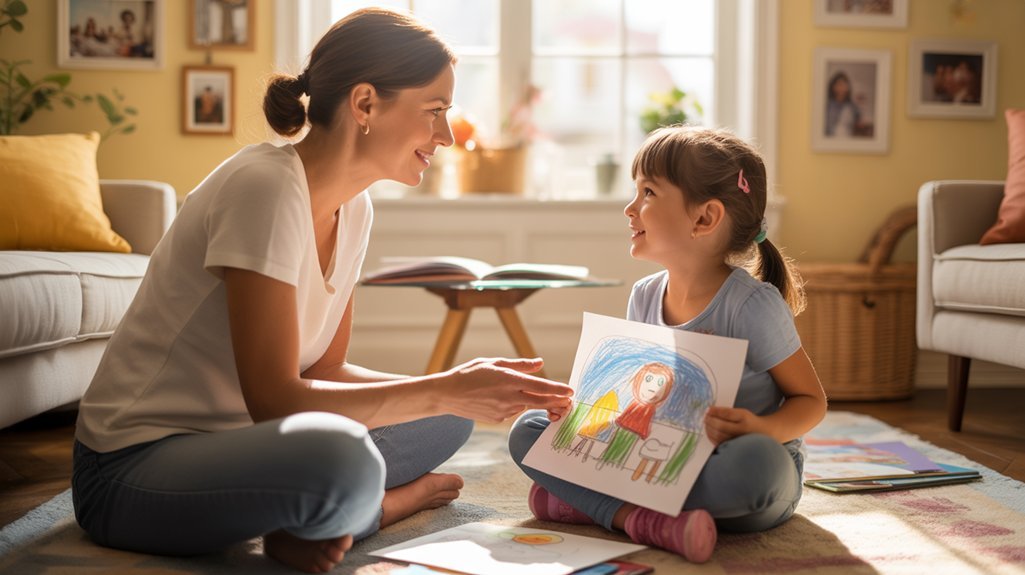
Beyond immediate behavioral compliance, the true measure of effective parenting lies in the relationship you're cultivating with your child. Long-term relationship building requires emotional awareness—recognizing and validating feelings creates trust that reward charts can't replicate.
When you engage in open communication about emotions and collaboratively solve problems, you're teaching accountability while strengthening your bond.
Quality time becomes the most powerful reinforcement. Your presence and attention communicate value more effectively than stickers or prizes. Children who feel genuinely connected develop intrinsic motivation to cooperate because they want to maintain that relationship, not earn external rewards.
Offering encouragement and authentic appreciation for both efforts and outcomes builds lasting confidence. This approach nurtures children's internal drive to behave positively while deepening relational connections.
You're not just managing behavior—you're investing in a foundation of trust, mutual respect, and emotional security that will sustain your relationship through every developmental stage.
Frequently Asked Questions
What if My Child's Teacher Uses Reward Charts at School?
You can't control classroom practices, but you can maintain consistency at home with intrinsic motivation strategies.
Through Teacher Communication, share your approach respectfully and ask how you can support your child's learning without relying on external rewards. Most teachers appreciate partnership.
At home, focus on process over outcomes, acknowledge effort, and help your child reflect on their own growth.
This balance lets them navigate different environments while building genuine internal motivation that'll serve them throughout life.
How Do I Handle Grandparents Who Give Rewards Against My Wishes?
Have a calm, private conversation with grandparents about your parenting approach. Explain how external rewards can undermine intrinsic motivation, backing your stance with research.
Acknowledge their loving intentions while setting clear boundaries. Managing Grandparent Relationships requires empathy and firmness—you're protecting your child's development, not criticizing their generosity.
If they struggle to comply, limit unsupervised visits temporarily. Most grandparents will respect your wishes once they understand the developmental reasoning behind your choice.
Can I Transition Away From Rewards if Already Using Them?
Yes, you can absolutely shift away from rewards!
Effective Shift Strategies include gradually reducing reward frequency while increasing descriptive feedback about your child's efforts and problem-solving.
Replace external motivators with collaborative conversations about goals and natural consequences.
Be transparent with your child about the change, acknowledging it's a change.
Expect some resistance initially—this is developmentally normal.
Focus on building intrinsic motivation through connection, autonomy, and competence rather than external prizes.
What About Rewards for Potty Training or Dangerous Behaviors?
Potty training and safety situations benefit most from natural consequences and connection rather than external rewards.
For potty training, focus on readiness cues, routine, and celebrating progress without creating pressure.
With dangerous behaviors, immediate intervention and teaching safe alternatives works better than reward systems.
You're addressing real needs—autonomy for toileting, safety for protection—so emphasize skill-building and understanding rather than compliance.
This approach respects developmental readiness while keeping children safe and supported through your consistent, connected presence.
How Long Until Children Respond Without External Rewards?
Rome wasn't built in a day—and neither is intrinsic motivation.
You'll typically see shifts within 2-4 weeks as children adjust to acting without external rewards, though some need 6-8 weeks. The timeline depends on your child's age, temperament, and how long they've relied on rewards.
You're nurturing a fundamental change in how they're motivated. Stay consistent, acknowledge their efforts genuinely, and trust that you're building something far more lasting than sticker charts ever could.
Conclusion
You've seen how reward charts might win today's battle but lose the war for your child's intrinsic motivation. The science is clear: stickers and prizes create compliance, not character. Instead, lean into collaboration, respect your child's autonomy, and build genuine connection. This approach takes more patience, yes, but it nurtures the internal compass your child needs for life. You're not just managing behavior—you're raising a human who makes thoughtful choices independently.
Related Articles
- The Ultimate Guide to Sibling Conflict
- The Ultimate Guide to Family Meal Planning
- The Ultimate Guide to Kids Educational Games
- 20 Fun DIY Crafts to Strengthen Family Bonds
- The Ultimate Guide to Bedtime Routine

Written by Sarah Mitchell, M.S., CFLE
Founder & Lead Editor
Sarah is a Certified Family Life Educator with a Master's degree in Human Development and Family Studies from the University of Missouri. With 15+ years of experience as a parent educator and mother of three, she brings both professional expertise and real-world parenting wisdom to every article.
Credentials: M.S. in Human Development and Family Studies, Certified Family Life Educator (CFLE)
Your Weekly Dose of Inspiration
Journaling ideas, family tips, and gentle inspiration.