

Start by tracking your child's accepted foods, textures, and presentation preferences over two weeks to identify patterns. Then prep versatile components—plain proteins, whole grains, and pre-cut vegetables—in separate containers rather than complete meals, allowing each family member to customize their plate. Use the “safe food plus one” strategy and age-appropriate portions to reduce mealtime anxiety. Store components in clear, divided containers and incorporate hidden nutrition through pureed vegetables in familiar sauces. This framework creates consistent opportunities for gradual food expansion while respecting current preferences.

Key Takeaways
- Track eating patterns for two weeks to identify accepted textures, temperatures, and plate arrangements before planning meal prep.
- Use component-based prep by cooking proteins, grains, and vegetables separately so each family member customizes their plate.
- Store prepped components in clear, divided containers with proper labels to maintain food safety and visual appeal for children.
- Apply the “safe food plus one” strategy by pairing familiar foods with single new options to reduce mealtime anxiety.
- Reheat at 70% microwave power or 325°F oven, adding moisture with damp paper towels to preserve texture and nutrients.
Understanding Your Picky Eater's Preferences and Patterns

Why does your child accept chicken nuggets one day and refuse them the next? Understanding preferences requires tracking more than just food choices. Note the timing, presentation, and surrounding circumstances of meals. You'll discover patterns when you document what your child eats versus rejects over two weeks.

Pattern recognition reveals that picky eating often connects to texture sensitivities, temperature preferences, or even plate arrangement. A child who refuses mixed casseroles might happily consume the same ingredients served separately. Monitor portion sizes too—overwhelming servings can trigger rejection before tasting begins.
Create a simple food log noting accepted foods, preparation methods, and serving sizes. This data-driven approach helps you identify reliable options for meal prep while respecting your child's genuine preferences. You're not accommodating pickiness; you're strategically planning nutritious meals your family will actually eat, reducing waste and stress while ensuring adequate nutrition. Remember that maintaining your own balance through self-care practices helps you stay patient and present during challenging mealtimes with picky eaters.
Essential Tools and Containers for Family Meal Prep Success
Once you've identified what your child will eat, you'll need the right equipment to prepare and store these meals efficiently. The essential tools include portion-appropriate containers with divided compartments, allowing you to separate foods that touch-averse children prefer kept apart. Choose BPA-free, microwave-safe options in 1-2 cup sizes for age-appropriate servings.
Understanding container basics means investing in clear, stackable storage that lets your child see their food before opening. This visual preview reduces mealtime anxiety for selective eaters. Label containers with preparation dates to maintain food safety standards—most prepped meals stay fresh 3-4 days refrigerated.
A quality food scale helps you portion proteins and carbohydrates accurately, ensuring balanced nutrition even when variety is limited. Add silicone muffin cups for separating small portions of fruits, vegetables, or dips. These reusable dividers make portions feel manageable for hesitant eaters while reducing waste. Keep backup containers available, as consistency in presentation helps anxious children accept meals more readily. Focus on creating systems that support healthy, active living by making nutritious meals more accessible and less stressful for both parents and children.
Building a Flexible Meal Prep Framework That Works for Selective Eaters

How can you create structure without triggering mealtime battles? You'll need a flexible framework that respects selective preferences while maintaining nutritional standards.
Start with a component-based approach: prepare proteins, whole grains, vegetables, and healthy fats separately. This allows children to build plates around accepted foods while gradually introducing new options. Research shows exposure without pressure increases acceptance over time.
Implement the “safe food plus one” strategy. Always include at least one familiar item alongside novel foods, reducing anxiety and power struggles. Portion sizes matter—serve age-appropriate amounts to prevent overwhelming plates.
Track patterns in your child's selective preferences weekly. You'll identify which textures, colors, and flavors they consistently accept, enabling strategic meal planning. Batch-cook preferred proteins in different seasonings to expand variety gradually.
Keep backup components refrigerated for quick assembly when primary meals fail. This flexible framework prevents you from becoming a short-order cook while honoring your child's developmental eating journey.
Strategic Ingredient Choices: Foods Most Picky Eaters Will Accept
Certain foods consistently earn acceptance across most selective eaters due to their mild flavors, familiar textures, and neutral colors. Understanding these strategic ingredient choices helps you build meals your family will actually consume while meeting their nutritional needs.
Base your meal prep around these universally accepted foods:
- Plain pasta and rice provide essential carbohydrates and serve as reliable foundation foods
- Mild proteins like chicken breast, eggs, and cheese deliver necessary nutrients without overwhelming taste profiles
- Simple starches including potatoes, bread, and crackers offer comfort and familiarity
When selecting ingredients, prioritize picky eater preferences by choosing items with predictable textures and minimal seasoning. You'll reduce food waste and mealtime stress by stocking these baseline options. Introduce variety gradually through small portions alongside these accepted foods. This approach respects your child's sensitivities while gently expanding their palate. Remember, portion-conscious meal prep means preparing appropriate amounts of preferred foods rather than forcing large servings of rejected items.
The Assembly Line Approach: Prepping Components Instead of Complete Meals
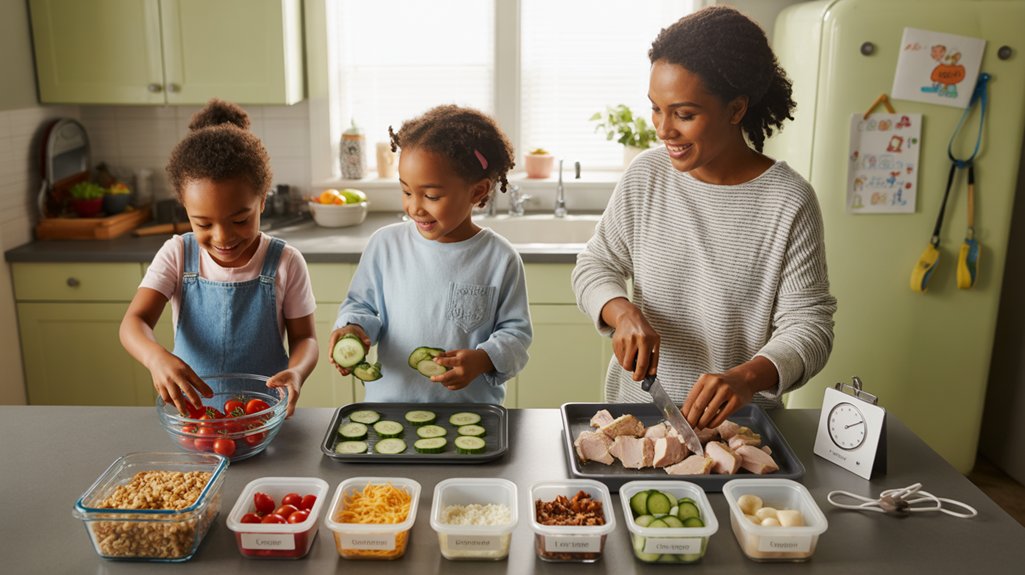
When you're dealing with picky eaters, preparing complete meals ahead of time often backfires—your child who loved chicken stir-fry yesterday might reject it entirely when the vegetables touch the protein.
The assembly line method solves this by prepping individual components separately, giving you the flexibility to plate foods according to your child's preferences each night while ensuring they still get balanced nutrition. You'll cook proteins in bulk, portion pre-cut vegetables into ready-to-use containers, and combine them in different ways throughout the week based on what your child will actually eat that day.
Prep Proteins in Bulk
Protein preparation delivers the highest return on your meal prep investment because a single batch provides 8-12 servings that picky eaters can accept in multiple formats throughout the week. You'll prep proteins efficiently by baking plain chicken breasts, browning ground turkey, or cooking meatballs simultaneously. Keep seasonings minimal during bulk preparation—you'll customize flavors when serving individual meals based on each child's preferences.
Evidence-based protein portioning:
- Toddlers need 2-3 ounces per meal, while school-age children require 3-4 ounces
- Properly cooled proteins maintain quality for 3-4 days in refrigeration
- Portioned containers eliminate decision fatigue during hectic weeknight dinners
Store proteins in single-serving containers immediately after cooling. This bulk storage method transforms chaotic mealtimes into predictable successes, allowing you to serve nutritious options your family actually eats.
Pre-Cut Versatile Vegetables
While proteins form your meal prep foundation, vegetables create the flexibility that accommodates picky eaters' unpredictable preferences. Pre cut vegetables in meal prep save crucial weeknight minutes when children's cooperation is limited.
Focus on versatile vegetables that work across multiple dishes: bell peppers, carrots, cucumbers, and broccoli. Store each variety separately in airtight containers with damp paper towels to maintain freshness for five days. This separation allows you to quickly customize portions based on each child's acceptance that particular day.
Reserve fifteen minutes weekly to wash, chop, and portion vegetables into child-appropriate sizes. Smaller pieces encourage hesitant eaters to try new options. Keep raw vegetables separate from cooked preparations, giving you options for different texture preferences. This component-based system reduces food waste while ensuring nutritional variety.
Mix-and-Match at Mealtime
How does component-based meal prep solve the nightly standoff with picky eaters? You'll prep versatile proteins, grains, and vegetables separately, then let each family member mix and match at serving time. This respects individual preferences while maintaining mealtime rhythms that reduce stress.
Your prepped components create personalized plates:
- Grilled chicken strips transform into tacos for one child, pair with rice for another, and top a salad for you
- Roasted sweet potato cubes become breakfast hash, lunch bowl additions, or dinner sides based on who's eating
- Quinoa batches serve as porridge, grain bowls, or casserole bases throughout the week
You'll control portions while offering autonomy. Each family member gets appropriate serving sizes from your prepped options, ensuring balanced nutrition without cooking multiple meals nightly.
Sneaky Nutrition Boosters Your Kids Won't Detect
Getting essential nutrients into reluctant eaters doesn't require deception—it requires strategic ingredient choices that enhance familiar foods without changing their appearance or taste. These sneaky nutrition additions integrate seamlessly into your meal prep routine while supporting your family's health goals.
| Base Food | Nutrition Booster | Added Nutrients |
|---|---|---|
| Pasta sauce | Pureed carrots or butternut squash | Vitamin A, fiber |
| Meatballs | Finely grated zucchini | Potassium, moisture |
| Smoothies | Frozen cauliflower rice | Vitamin C, folate |
| Pancakes | Mashed banana or sweet potato | Potassium, beta-carotene |
These hidden veggies maintain portion control while boosting nutritional density. Prep your nutrition boosters during weekend meal prep by steaming and pureeing vegetables in batches. Store them in ice cube trays for easy portioning throughout the week. You'll create nutrient-rich meals your family enjoys without complaints.
Time-Saving Batch Cooking Recipes for the Whole Family
Once you've mastered nutrition-boosting techniques, batch cooking changes these strategies into a systematic weekly routine. You'll transform Sunday afternoons into efficient meal prep sessions that serve your family's needs throughout the week.
These time saving recipes maximize nutrition while minimizing daily cooking stress:
- Vegetable-loaded meatballs freeze beautifully and portion into individual servings that satisfy growing appetites while delivering hidden nutrients your picky eaters need
- Sheet pan chicken and roasted vegetables simplify dinner preparation and create versatile protein portions you can repurpose into three different meals
- Slow cooker bean chili produces nutrient-dense portions that improve in flavor over several days, making your batch cooking efforts compound
Each recipe yields 6-8 family servings, allowing you to freeze half for future weeks. You're not just preparing food—you're creating a sustainable system that reduces mealtime battles while ensuring balanced nutrition. Focus on recipes your family already enjoys, then multiply quantities efficiently.
Storing, Reheating, and Serving Prepped Meals Throughout the Week
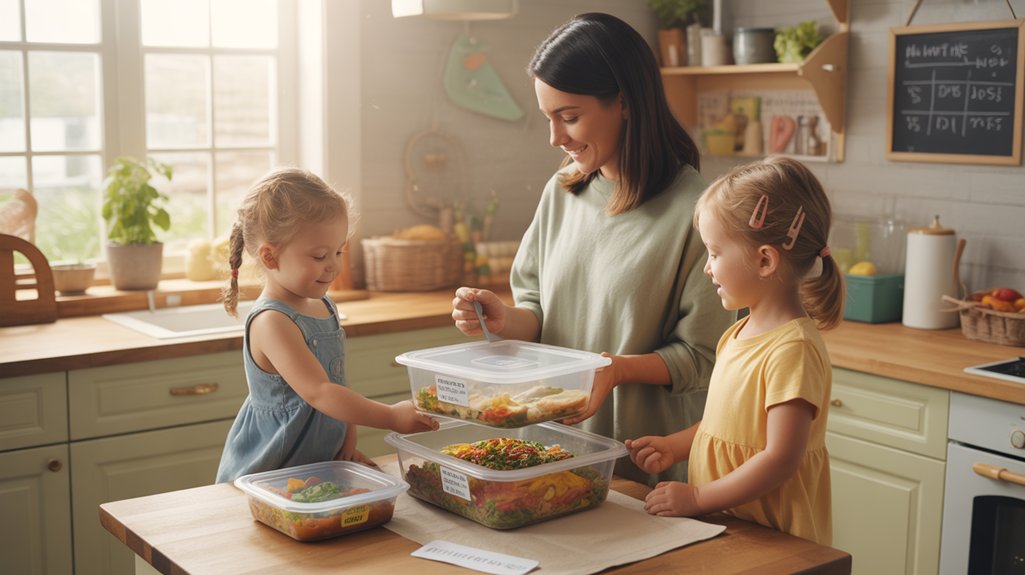
You've mastered batch cooking, but improper storage can compromise food safety and nutrient retention—especially concerning when feeding children. Selecting the right containers prevents bacterial growth and maintains meal quality, while age-appropriate reheating methods ensure your picky eater receives meals at safe temperatures without texture changes that trigger rejection. Research shows that proper storage extends the shelf life of prepped meals up to four days in the refrigerator while preserving up to 95% of key nutrients like vitamin C and folate.
Proper Storage Container Selection
How can choosing the right containers transition from a chaotic guessing game into a transform system? Select storage containers with airtight seals to preserve nutrients and prevent freezer burn. Color coded lids simplify organizing leftovers by family member or meal type, helping you quickly identify Monday's lunch versus Wednesday's dinner.
Consider these evidence-based benefits:
Recommended for You
🛒 Meal Prep Containers
As an Amazon Associate we earn from qualifying purchases.
- Glass containers preserve nutrient integrity during reheating without leaching chemicals
- Portion-controlled sizes prevent food waste while teaching appropriate serving amounts
- Stackable designs maximize refrigerator space, giving you room for fresh produce
Choose BPA-free materials that transition safely from freezer to microwave. Invest in containers with compartments to keep foods separate, respecting your picky eater's preferences. Clear sides let you verify contents instantly, eliminating morning stress when serving your family.
Kid-Friendly Reheating Methods
Reheating prepped meals correctly preserves both nutritional value and taste appeal—critical factors when you're serving picky eaters who'll reject anything slightly “off.” Microwave power levels matter more than most parents realize: reheating at 70% power for slightly longer prevents hot spots that destroy heat-sensitive vitamins like B12 and folate while ensuring even temperature distribution.
For kid friendly reheating methods, stir meals halfway through warming to eliminate cold centers. Check temperatures with a food thermometer—165°F ensures food safety without overcooking.
Oven reheating at 325°F works better for breaded items, maintaining crispness that microwaves compromise. Add moisture strategically: a tablespoon of water or broth prevents proteins from drying out. Cover containers with damp paper towels to create steam, keeping portions tender and appetizing for your selective eaters.
Frequently Asked Questions
How Do I Handle Meal Prep When My Children Have Different Picky Eating Preferences?
You'll want to prep deconstructed meals that let each child customize their plate. Cook protein and vegetables separately, then offer various serving styles to accommodate different tastes and texture tolerance levels.
For example, roast chicken can be shredded, cubed, or served whole. Steam broccoli for one child while roasting it crispy for another. Portion ingredients in separate containers so you're respecting each child's preferences while maintaining nutritional balance.
This approach reduces waste and mealtime stress considerably.
What Should I Do if My Child Refuses All Prepped Meals Suddenly?
Studies show 50% of preschoolers experience food neophobia phases lasting weeks. When refusal strikes, don't panic—it's normal developmental behavior.
Practice refusal coping by offering familiar foods alongside prepped meals without pressure. Implement sensory friendly strategies: serve meals at room temperature, separate mixed textures, and provide small portions (1-2 tablespoons per age year).
You're not failing; you're adapting. Keep presenting rejected foods consistently—research shows kids need 10-15 exposures before accepting new items. Your patience nurtures their relationship with food.
Can Meal Prepping Actually Make Picky Eating Worse Over Time?
When done rigidly, yes—meal prepping can worsen picky eating by limiting mealtime autonomy and reducing sensory tolerance exposure.
You'll want to prep flexible components (proteins, veggies, grains) that your child can combine differently each meal.
Don't serve identical plates repeatedly; instead, offer variety within your prepped options.
Include at least one accepted food alongside new ones, and let your child control portion sizes.
This approach preserves autonomy while building sensory acceptance gradually.
How Do I Transition From Fresh Cooking to Prepped Meals Without Resistance?
Start by prepping just one meal weekly while cooking others fresh, gradually transitioning mindsets around food flexibility. Adjust your kitchen routines to include your child in meal planning—they'll accept prepped foods better when involved. Increase sensory exposure by showing them the prep process, letting them taste components fresh and reheated. This evidence-based approach maintains portion-conscious serving while building trust. You're teaching valuable nutrition lessons and serving your family's long-term relationship with diverse foods.
Should I Involve My Picky Eater in the Meal Prepping Process?
Absolutely—turning “food resistance” into collaborative cooking builds acceptance. Involving your child during prep creates sensory exploration opportunities that reduce mealtime battles. Research shows kids who touch, smell, and arrange ingredients eat 80% more vegetables. Let them wash produce, measure portions, or choose between two nutritious options. You're not just preparing meals; you're teaching food literacy and self-regulation. Start small with age-appropriate tasks, and you'll foster independence while meeting their nutritional needs through portions they helped create.
Conclusion
You've armed yourself with containers, batch-cooked chicken three ways, and hidden enough vegetables to qualify for agricultural subsidies. Your freezer's now a Tetris masterpiece of portioned meals. Will your child actually eat them? Maybe. But you've done something remarkable: you've reclaimed your evenings from the tyranny of “I don't like it!” You're not a short-order cook anymore—you're a strategic food scientist with a really picky test subject.
Related Articles
- The Ultimate Guide to Sibling Conflict
- The Ultimate Guide to Family Meal Planning
- The Ultimate Guide to Kids Educational Games
- 20 Fun DIY Crafts to Strengthen Family Bonds
- The Ultimate Guide to Bedtime Routine

Written by Sarah Mitchell, M.S., CFLE
Founder & Lead Editor
Sarah is a Certified Family Life Educator with a Master's degree in Human Development and Family Studies from the University of Missouri. With 15+ years of experience as a parent educator and mother of three, she brings both professional expertise and real-world parenting wisdom to every article.
Credentials: M.S. in Human Development and Family Studies, Certified Family Life Educator (CFLE)
📚 Explore More on This Topic
Editor's Pick: Bento-style meal prep containers with dividers for portion control and zero food mixing.
Your Weekly Dose of Inspiration
Journaling ideas, family tips, and gentle inspiration.
Related from our network

