



When your child experiences big feelings, their emotional brain overwhelms their rational thinking, making it difficult to calm down independently. You can help by building their emotional vocabulary with feeling words beyond “happy” or “sad,” validating their experiences through active listening, and creating a calm corner with sensory tools for regulation. Practice daily calming routines like belly breathing (five slow breaths) and use emotion charts to identify triggers. Remember, your child needs time and patience to reset after dysregulation. Understanding the specific signs and age-appropriate techniques will strengthen your ability to support them effectively.
Key Takeaways
- Build emotional vocabulary by teaching feeling words beyond “happy” and “sad” using emotion charts, books, and daily check-ins to help children identify emotions.
- Create a calm corner with sensory tools and comforting items where children can retreat to reset when emotions become overwhelming.
- Practice daily calming techniques like belly breathing (five slow breaths) and brief mindfulness exercises to strengthen self-regulation skills.
- Validate feelings first through active listening and reflection before teaching coping strategies, as emotional overwhelm blocks rational thinking.
- Spend five minutes daily in special one-on-one time to strengthen emotional connection, providing the security foundation needed for regulation.
Understanding Emotional Dysregulation in Children
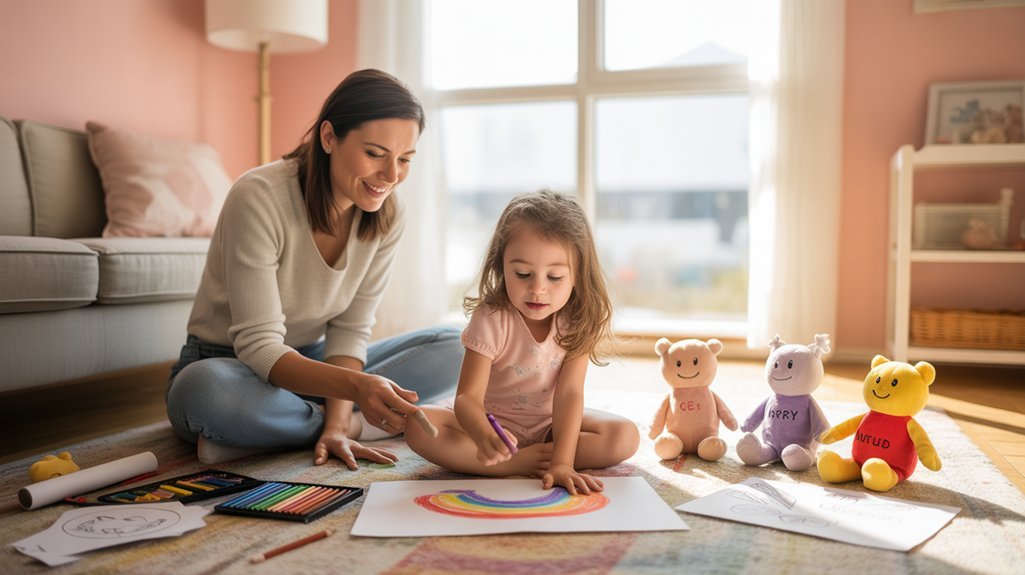
When a child's emotions spiral out of control, their brain enters a state where logic can't reach them. During emotional dysregulation, the emotional center overwhelms the rational part of the brain, making reasoning impossible until they've calmed down.

During emotional overwhelm, a child's brain shuts down its logic center, making rational conversation impossible until calm returns.
You'll notice these moments through intense tantrums and outbursts that seem disproportionate to the situation. Understanding that recovery takes time is essential for supporting these children effectively. They're not being defiant—their nervous system needs space to reset before they can process your words or guidance.
The root often lies in limited emotional vocabulary. When children can't name their feelings, those emotions become frightening and unmanageable.
You can bridge this gap by teaching them to recognize and label what they're experiencing early on. Use visual aids and encourage conversations about feelings regularly. When you validate their emotions through active listening and acknowledgment, you help them understand that their feelings are normal, not overwhelming forces beyond their control. The Child Mind Institute provides evidence-based treatment and resources to help families navigate these challenging emotional moments with their children.
Building Emotional Awareness Through Naming and Labeling
You can strengthen your child's emotional awareness by actively building a feelings vocabulary together through everyday conversations and interactions.
Start by introducing emotion words that match what your child is experiencing in the moment—moving beyond just “happy,” “sad,” and “mad” to include terms like “frustrated,” “disappointed,” “excited,” or “overwhelmed.
Using emotion charts daily gives your child a visual reference point to identify and name their feelings, altering abstract internal experiences into concrete concepts they can understand and communicate.
Children who struggle with big emotions may benefit from additional support strategies, especially when traumatic news events or overwhelming situations trigger intense emotional responses.
Creating Feelings Vocabulary Together
Before children can regulate their emotions, they must first identify what they're feeling—a skill that develops through consistent practice and supportive guidance. Building a strong feelings vocabulary enables children to express their feelings accurately, reducing frustration-driven behaviors.
Start by introducing emotion words during calm moments, using visual aids like emotion cards or feelings thermometers. Read books featuring characters experiencing various emotions, providing relatable contexts for discussion.
| Strategy | Tool | Benefit |
|---|---|---|
| Visual Learning | Emotion Cards | Recognizes facial expressions |
| Intensity Scaling | 1-10 Rating System | Communicates feeling strength |
| Story Context | Emotion-Focused Books | Relates to characters' experiences |
Encourage children to rank their emotions' intensity, helping them develop nuanced emotional regulation skills and effective problem-solving abilities through precise communication. Research consistently shows that early childhood development during the first three years establishes the foundation for lifelong mental health and emotional well-being.
Using Emotion Charts Daily
Emotion charts convert abstract feelings vocabulary into concrete, daily practice that children can see and touch. When you incorporate these tools into regular routines, you're giving children a visual way to express what's happening inside them without struggling for words.
Make the charts personally meaningful by adding familiar characters or images that resonate with each child. Check in with the emotion charts throughout the day, helping children identify feelings and their triggers.
These consistent touchpoints build mindfulness and emotional awareness naturally. During calm moments, discuss the emotions displayed and practice coping strategies together. This regular engagement teaches children to recognize patterns in their feelings, ultimately helping them manage their emotions more effectively.
You're creating a foundation for lifelong emotional intelligence. Parent Information resources can provide age-specific guidance to help caregivers implement emotional regulation strategies that match their child's developmental stage.
Validation and Active Listening Techniques

When children experience big emotions, they're not looking for solutions—they're seeking connection and understanding. Validation involves acknowledging your child's feelings and communicating that you truly understand. This simple act helps them feel accepted and naturally reduces emotional intensity.
Children experiencing intense emotions need connection and understanding, not immediate solutions or fixes.
Active listening strengthens this process. Give your undivided attention, reflect their feelings back (“You seem really frustrated”), and ask clarifying questions to help them understand their emotions better. Research demonstrates that validating emotions greatly helps children calm during distress, reinforcing that all feelings are normal and manageable.
When your child expresses feelings constructively, provide positive attention. This encourages continued emotional regulation efforts and deepens your connection.
Consider pairing validation with active ignoring of minor misbehaviors—addressing the feeling while not reinforcing the behavior. Over time, this approach reduces problematic behaviors and promotes healthier emotional expression, equipping children with essential skills for lifelong emotional regulation.
Creating Calming Routines and Safe Spaces
You can help your child manage overwhelming emotions by establishing calming routines and creating dedicated safe spaces in your home.
These structured approaches provide children with predictable ways to regulate their feelings while building essential coping skills they'll use throughout life.
Let's explore how to design an effective calm corner and incorporate daily calming activities into your family's routine.
Designing a Calm Corner
Children need a physical retreat where they can process intense emotions without judgment or interruption. A calm corner serves this purpose by offering a designated safe space for emotional regulation.
You'll want to include comforting items like soft blankets, favorite toys, and sensory tools that promote relaxation. Incorporate deep breathing exercises and soothing activities such as coloring or reading to help children manage big feelings constructively.
Set clear expectations about when and how to use this space, enabling children to recognize their emotional needs proactively. During peaceful moments, revisit the calm corner's purpose with your child.
These discussions reinforce its value as a self-regulation tool, helping children develop lifelong skills for maneuvering overwhelming emotions with confidence and independence.
Daily Calming Activities
As your child navigates daily stressors from school changes to social challenges, implementing consistent calming activities creates a predictable framework for emotional stability.
Integrate deep breathing exercises, yoga, or mindfulness practices into your daily schedule to help children develop essential self-soothing techniques. Reading together, drawing, or engaging in quiet play provides soothing alternatives when emotions escalate.
These calming routines equip children to recognize their emotional triggers before reaching crisis points. You'll notice reduced intensity and frequency of outbursts as they internalize these practices.
Visual aids like feelings thermometers help children identify their current emotional state and select appropriate responses. When you establish these activities consistently, you're teaching children they possess the tools to manage their feelings independently, building confidence and resilience for life's challenges.
Practical Coping Strategies for Everyday Situations
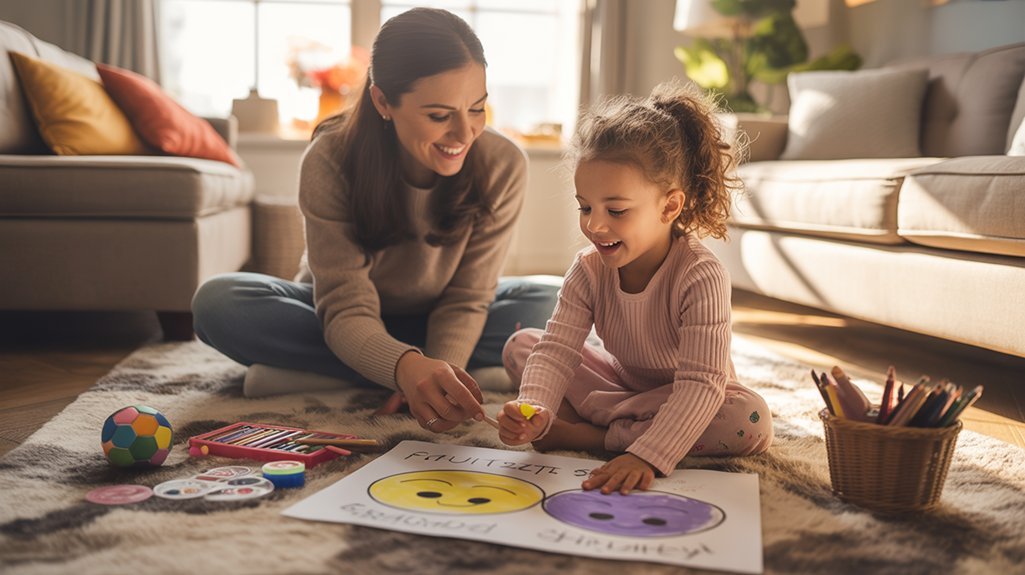
When big emotions strike during homework time, at the dinner table, or before bedtime, having practical tools ready makes all the difference. You can equip children with practical strategies that work in real-world moments when emotions feel overwhelming.
Start with a feelings thermometer to help them identify emotional intensity before it escalates. When you notice rising tension, guide them through belly breathing—five slow breaths can shift their nervous system toward calm.
Offer meaningful choices: “Would you like to squeeze this stress ball or draw your feelings?” This enables them while teaching them to manage their feelings independently.
Create a consistent calming routine they can rely on. Your “calm down corner” becomes their safe space with sensory items, soft textures, and comforting objects.
Practice these techniques during peaceful moments so they're automatic when emotions run high. Through guided imagery and mindfulness activities, you're building their capacity for self-regulation that'll serve them throughout life.
Strengthening Connection Through Daily Special Time
The foundation of emotional regulation isn't built solely through techniques—it's strengthened through connection. Dedicating five special minutes daily creates a safe space where your child leads the activity while you follow without commands or corrections. This focused attention reinforces unconditional love, helping children internalize security that directly supports emotional regulation.
During this time, practice active listening and ignore minor misbehaviors. Your complete presence communicates acceptance, allowing children to express feelings freely and feel genuinely validated.
| What You Do | What Your Child Experiences |
|---|---|
| Let them choose activities | Empowerment and autonomy |
| Listen without judgment | Validation and acceptance |
| Ignore minor misbehaviors | Unconditional positive regard |
| Maintain daily consistency | Predictable security and trust |
This consistent connection greatly decreases stress and improves your child's capacity for self-regulation. When children know they have dedicated time with you, they develop the emotional foundation necessary for managing big feelings throughout their day.
Understanding Dysregulation in Children

Even with strong connection and daily special time, your child will still experience moments when their emotions overwhelm their capacity to cope.
Strong connection doesn't prevent emotional overwhelm—it gives your child a safe place to experience and process those big feelings.
During emotional dysregulation, the emotional brain hijacks the rational brain, making logical reasoning ineffective. Understanding this neurological reality helps you respond with patience rather than frustration.
When your child's experiencing big feelings, they need you to validate feelings before teaching coping techniques. Recognition comes first—let them know their emotions are normal and acceptable.
Here's what happens during dysregulation:
- The emotional brain floods with stress hormones, blocking access to rational thinking
- Children can't process complex instructions or reasoning
- Physical sensations intensify (racing heart, tense muscles, rapid breathing)
- Some children take considerably longer to return to baseline calm
- Attempts to logic or lecture typically escalate the situation
Your role during these moments isn't to fix or stop the emotion—it's to provide safety while their nervous system regulates.
Signs of Emotional Dysregulation
You'll notice emotional dysregulation through specific behavioral patterns that signal your child needs support.
These signs include frequent intense meltdowns that seem disproportionate to the situation, persistent difficulty calming down without your help, physical aggression toward others or themselves, dramatic mood shifts throughout the day, and an inability to put their feelings into words.
Recognizing these indicators early allows you to intervene with appropriate strategies before emotions escalate beyond your child's capacity to cope.
Frequent Intense Emotional Outbursts
When your child's emotions explode with startling intensity—complete with screaming, throwing objects, or aggressive behaviors—you're likely witnessing emotional dysregulation in action.
These aren't sudden eruptions; emotions build gradually, though your child may lack the awareness to recognize early warning signs.
What you're observing is their emotional brain overwhelming their rational brain, making it impossible to manage big emotions effectively. Without adequate emotional vocabulary, children can't identify or communicate their feelings before reaching a breaking point.
They resort to behaviors like tantrums, aggression, or defiance because they simply don't have the tools to express what's happening inside.
If your child struggles to calm down after these outbursts, they need targeted support developing regulation skills and coping strategies to navigate their intense emotional experiences.
Difficulty Calming Down Independently
If your child consistently needs you to intervene before they can recover from upset feelings, they're showing a key sign of emotional dysregulation.
When children lack vocabulary to express their internal experiences, they become trapped in overwhelming emotions without knowing how to exit that state independently.
You'll notice this pattern when tantrums escalate rather than naturally subside, or when changes require constant adult scaffolding.
The emotional brain fundamentally hijacks the rational brain, leaving your child unable to access calming strategies on their own.
Building self-regulation skills starts with teaching emotion labels and demonstrating coping techniques during calm moments.
Physical Aggression or Self-Harm
Physical aggression—hitting, biting, kicking—and self-harming behaviors like head-banging or scratching represent your child's most desperate communication attempts when emotional overwhelm exceeds their regulatory capacity.
These behaviors signal that intense emotions like anger, frustration, or sadness have surpassed their ability to manage them constructively.
Your child needs immediate support developing emotional regulation skills. Start by identifying triggers and patterns preceding physical aggression.
Teach emotional vocabulary so they can name their feelings rather than act them out. Validate their emotions while modeling appropriate responses: “I see you're angry, but hitting hurts. Let's find another way.”
Early intervention dramatically reduces these behaviors. Provide concrete coping strategies—deep breathing, squeezing stress balls, taking space—that channel overwhelming emotions safely.
Consistency and empathy help your child replace physical aggression with healthier expression.
Extreme Mood Swings Daily
Your child's emotional landscape shouldn't resemble a rollercoaster, with dramatic shifts from joy to despair within minutes. When children experience extreme mood swings daily, their emotional brain struggles to communicate with their rational brain, making it nearly impossible to self-soothe.
| Regulated Response | Dysregulated Response |
|---|---|
| Recovers from disappointment within 10-15 minutes | Remains upset for 30+ minutes without resolution |
| Expresses frustration through words | Displays aggressive outbursts or self-harm |
| Adapts to unexpected changes | Experiences meltdowns over minor changes |
You'll notice these children manage feelings differently than their peers—prolonged anger, sudden tearfulness, and social withdrawal become patterns. Teaching them to recognize and label emotions early builds the neural pathways necessary for healthier emotional responses, altering dysregulation into developing self-awareness.
Inability to Express Feelings
When children can't put their overwhelming emotions into words, they'll show you through their behavior instead. This inability to express feelings often leads to hitting, screaming, or defiant outbursts—their way of communicating what they can't articulate verbally.
Young children especially struggle with limited language skills, making challenging behaviors their primary communication tool.
You'll notice these children have difficulty calming down after emotional episodes and experience frequent meltdowns over seemingly minor issues. During these moments, their emotional brain overwhelms their rational brain, disconnecting their ability to process and communicate effectively.
To help kids manage big emotions, start by recognizing and validating their feelings, even when they seem excessive. This validation creates the foundation for teaching them to express emotions appropriately and develop essential emotional regulation skills.
Age-Appropriate Calming Techniques
Because young children's brains are still developing the neural pathways needed for self-regulation, they benefit most from concrete, sensory-based calming techniques rather than abstract strategies.
Young children need hands-on calming tools that match their developing brains, not complex emotional concepts they can't yet grasp.
When you're helping kids manage big emotions, these age-appropriate calming techniques provide tangible tools they can actually use:
- Deep breathing exercises like “belly breathing” activate the body's relaxation response and reduce anxiety through simple, physical actions.
- Calm down corners equipped with soft toys and blankets offer a designated safe space where children can process overwhelming feelings.
- Sensory play with playdough or water beads promotes focus and presence through tactile experiences that naturally regulate emotions.
- Visual aids such as feelings thermometers or emotion cards help children identify and communicate their emotional experiences effectively.
- Brief mindfulness practices including guided imagery or gentle stretching improve self-awareness and build coping skills.
These concrete strategies meet children where they're developmentally, giving them practical ways to navigate their emotional landscape.
Resources for Additional Support

While these calming techniques form a strong foundation for emotional regulation, parents and caregivers don't have to traverse this journey alone. Numerous evidence-based resources can help children manage big emotions more effectively.
HealthyChildren.org offers tested methods for preventing aggressive behavior and supporting emotional development. The Emotion Wheel expands children's emotional vocabulary, enabling them to articulate feelings precisely. For thorough assessment, the DECA (Devereux Early Childhood Assessment) identifies areas needing support while highlighting your child's strengths in social-emotional development.
Interactive workshops and practical tools from the Gottman Parenting Newsletter strengthen parent-child emotional connections, creating supportive environments for regulation skill-building.
Play-based activities designed specifically for emotional management teach coping strategies through engagement rather than instruction.
These resources complement your daily efforts and provide mental health support when challenges feel overwhelming. You're equipping your child with lifelong skills for traversing complex emotions—a gift that serves them and their future communities.
Frequently Asked Questions
How to Teach Kids to Handle Big Emotions?
You can teach kids to handle big emotions through emotion coaching—helping them identify and label what they're feeling.
Introduce mindfulness activities like deep breathing or sensory exercises to build self-awareness and calm their nervous system.
Encourage expressive arts such as drawing, painting, or movement to give them healthy outlets for overwhelming feelings.
Remember to validate their emotions consistently, showing them that all feelings are acceptable while guiding them toward constructive coping strategies that'll serve them lifelong.
What Are the 4 R's of Emotional Regulation?
When seven-year-old Maya threw blocks during circle time, her teacher used the 4 R's: Recognizing emotions (“You seem frustrated”), Reflecting (“Building was hard today”), Responding appropriately (“Let's use words to ask for help”), and Regulating (“Take three deep breaths with me”).
You'll find these steps change challenging moments into learning opportunities.
How to Regulate Intense Emotions?
You can help children regulate intense emotions by teaching them mindfulness techniques like body scans or grounding exercises.
Guide them through breathing exercises—inhaling for four counts, holding, then exhaling slowly. Introduce positive affirmations they can repeat, such as “I'm safe, and this feeling will pass.”
Model these strategies during calm moments, then gently remind them during heightened states.
What Are the Three R's in Helping a Child Who Is Emotionally Dysregulated to Regulate?
Think of yourself as an emotional anchor in your child's storm. The three R's are: Recognize feelings by observing their behavioral cues, respond calmly with validation and comforting techniques like deep breathing, and reflect by helping them understand what triggered their emotions.
You'll guide them through articulating their experiences, building emotional vocabulary and self-awareness. Consistently applying these steps strengthens their capacity to manage big feelings and navigate social situations with greater confidence.
Conclusion
You're equipping your child with life-changing skills. Research shows that children who learn emotional regulation techniques experience 40% fewer behavioral problems and demonstrate notably improved social relationships. Remember, you're not eliminating big feelings—you're teaching your child to navigate them safely. Progress isn't linear, and setbacks are normal. By consistently applying these strategies and modeling healthy emotional responses yourself, you're giving your child tools they'll use throughout their lifetime. You've got this, and your effort truly matters.
Related Articles
- The Ultimate Guide to Sibling Conflict
- The Ultimate Guide to Family Meal Planning
- The Ultimate Guide to Kids Educational Games
- 20 Fun DIY Crafts to Strengthen Family Bonds
- The Ultimate Guide to Bedtime Routine

Written by Sarah Mitchell, M.S., CFLE
Founder & Lead Editor
Sarah is a Certified Family Life Educator with a Master's degree in Human Development and Family Studies from the University of Missouri. With 15+ years of experience as a parent educator and mother of three, she brings both professional expertise and real-world parenting wisdom to every article.
Credentials: M.S. in Human Development and Family Studies, Certified Family Life Educator (CFLE)