


Here's a number that stopped me mid-bite: according to The Family Dinner Project, a research and outreach initiative based at Harvard Medical School and founded by psychologist Anne Fishel, kids who eat regular family meals report better vocabulary, fewer behavior problems, and lower rates of substance use than kids who rarely eat with their families. Now here's the catch nobody tells you — a “family meal” with four phones lit up on the table doesn't count the same way. I learned this the hard way when I realized my family had been eating dinner “together” for months while actually just parallel-scrolling next to each other's plates. One tech-free Tuesday changed that, and eighteen months later it's the one ritual none of my three kids (ages 6, 11, and 14) will let me skip, even during soccer season chaos. This guide walks you through exactly how to start, what breaks down, and how to fix it without turning dinner into a battleground.
10 min read

In This Article
- What a Tech-Free Dinner Actually Means (and What It Doesn't)
- Who This Works For: Realistic Age Expectations
- What You'll Need: Materials List and Budget Breakdown
- How Much Time to Actually Set Aside
- Step-by-Step: Running Your First Tech-Free Dinner
- Age-by-Age: What This Actually Looks Like at Your Table
- When It Flops: Honest Troubleshooting
- What Changes After a Few Months
Key Takeaways
- What a Tech-Free Dinner Actually Means (and What It Doesn't)
- Who This Works For: Realistic Age Expectations
- What You'll Need: Materials List and Budget Breakdown
- How Much Time to Actually Set Aside
What a Tech-Free Dinner Actually Means (and What It Doesn't)
A tech-free dinner is one meal a week — I'd recommend starting with just one, not seven — where every phone, tablet, smartwatch, and TV in the room is off or in another zip code. That's it. It's not a screen detox for the whole day, and it's not a ban on all technology forever. It's a 30-to-60-minute window, roughly once a week, where the table becomes the only screen anyone needs.
I want to be honest about what this isn't: it's not a magic fix that transforms sullen tweens into chatty philosophers overnight. My 14-year-old sat through her first four tech-free dinners answering “fine” and “I don't know” to everything I asked. It took about six weeks — roughly six dinners, since we only do this weekly — before she started volunteering stories unprompted. If you're expecting instant Norman Rockwell energy, you'll be disappointed. If you're expecting a slow, steady shift in how your family talks to each other, you're in the right place.
This also isn't about shaming anyone's current setup. Pew Research Center's 2023 report on parenting in the digital age found that 66% of parents say they're at least somewhat worried about their kids' screen time, but plenty of families still watch shows together at dinner and that works fine for them. This is one specific tool, not a verdict on how you've been doing things.
This is one specific tool, not a verdict on how you've been doing things.
Who This Works For: Realistic Age Expectations
Tech-free dinners work at almost any age, but what “success” looks like changes a lot depending on developmental stage. A 3-year-old doesn't have a phone to put away, so for toddlers this is really about modeling — you putting your own phone in another room. For a 13-year-old with a group chat blowing up in her pocket, tech-free dinner might trigger genuine anxiety about missing out, and that's worth naming out loud rather than dismissing.
In my experience, kids ages 4-9 adapt the fastest, usually within one or two attempts, because they're not yet emotionally tethered to a device the way tweens and teens can be. Kids 10 and up often need a two-week grace period where the first few dinners feel stiff or resentful before the novelty of actual conversation kicks in. None of this means you should skip the age groups that resist harder — those are often the kids who need the connection most.
If you've got a mixed-age household like mine (6, 11, 14), expect the meal to feel a little uneven at first. My 6-year-old was thrilled from day one because he got undivided attention. My 14-year-old needed to be sold on it as “not a punishment.” I'll walk through age-specific approaches in detail further down.
What You'll Need: Materials List and Budget Breakdown
You genuinely don't need to buy anything to start tonight — a phone basket by the door and a shared agreement is free. But if you want to make the ritual stick, a few low-cost tools help a lot. Here's what I actually use, with real prices as of 2024:

- A phone basket or drawer — I use a $6 woven basket from Target's Threshold line; a shoebox works for $0.
- Conversation starter cards — The Family Dinner Project offers a free printable set of conversation questions on their website (familydinnerproject.org); if you want a physical deck, “TableTopics Family” retails for about $24.95 and has 135 cards.
- A visible kitchen timer — a $9 mechanical timer from Amazon, or just your oven's built-in timer, set for 30-45 minutes.
- A dedicated calendar reminder — free, using whatever app or paper planner you already have; I mark it in my Bullet Journal as a recurring Tuesday spread.
- Printable “no-phone zone” table sign (optional, mostly for younger kids who like the ceremony of it) — free to make at home, or laminated versions run about $3-5 at a print shop.
Total startup cost if you buy everything new: around $40. Total cost if you use a shoebox, free printables, and your phone's timer: zero dollars. I started with the zero-dollar version for the first two months before upgrading to the basket, and honestly the basket didn't change the experience much — it just made the ritual feel a little more official to my kids.
Total cost if you use a shoebox, free printables, and your phone's timer: zero dollars.
How Much Time to Actually Set Aside
Plan for 25-30 minutes with younger kids (ages 3-7), who typically lose focus at the table after that point regardless of what's happening. With school-age kids and tweens (8-13), 35-45 minutes tends to hit the sweet spot — long enough for real conversation, short enough that nobody's squirming. Teenagers, once they buy in, will sometimes stretch dinner to 60-75 minutes on their own, especially if something interesting comes up. I've had a Tuesday dinner run 70 minutes because my 14-year-old wanted to keep debating whether her school's dress code was fair. I let it run long that one time because the conversation was worth more than the dish pile waiting in the sink.
Prep time on your end is minimal — 5 minutes to gather everyone‘s devices, 2 minutes to set a timer if you use one, and zero extra cooking time since this works with whatever meal you're already making. You don't need a fancier dinner to justify a tech-free one. My most successful tech-free dinners have been leftover night and $4 boxed pasta, not elaborate meals.
Step-by-Step: Running Your First Tech-Free Dinner
Here's the exact sequence I'd recommend for your first attempt, based on what worked (and didn't) in my house:

- Announce it 24 hours ahead. Ambushing kids with a surprise phone ban at 6pm on a Tuesday breeds resentment. Say something like, “Starting this week, Tuesdays are our no-screens dinner night.”
- Set a visible timer for 30-45 minutes depending on ages present, so it feels like a defined event, not an open-ended punishment.
- Collect devices into the basket together, including your own phone. This step matters more than people expect — kids notice hypocrisy instantly.
- Use one conversation-starter question if the table goes quiet, pulled from a free printable or a deck like TableTopics.
- Let silence happen. The first few tech-free dinners often include awkward pauses. Resist the urge to fill every gap; kids often start talking exactly when you stop prompting.
- End when the timer goes off, even if some kids want to leave early. Devices come back only after the meal, not mid-meal.
- Debrief briefly the next day. Ask what worked and what didn't. My 11-year-old asked for background music, and adding a quiet instrumental playlist (no lyrics, no screen visible) solved a lot of our early awkwardness.
My 11-year-old asked for background music, and adding a quiet instrumental playlist (no lyrics, no screen visible) solved a lot of our early awkwardness.
Age-by-Age: What This Actually Looks Like at Your Table
Toddlers and Preschoolers (Ages 2-4)
At this age, the “tech” being removed is mostly yours, not theirs. Toddlers rarely have their own devices at the table, but they absolutely notice when a parent is glancing at a phone instead of them. Expect a 15-20 minute attention span at most — don't force a 45-minute sit for a 3-year-old. Success here looks like eye contact and simple back-and-forth, not deep conversation. That's a win at this stage.
School-Age Kids (Ages 5-10)
This is often the easiest group. Kids this age generally love ritual and structure, and a visible timer or a “no-phone zone” sign appeals to their sense of rules and fairness. Conversation cards work especially well here — questions like “What was the best and worst part of your day?” tend to get real answers rather than “fine.” Expect 30-40 minutes of genuine engagement, with occasional squirming near the end.
Tweens (Ages 11-13)
This is where resistance often shows up first, because tweens are just starting to feel real social pressure from group chats and social apps. My 11-year-old initially treated the phone basket like confiscation. What helped was framing it as a two-way deal: I put my phone in the basket too, and I don't check work email during that window either. Expect 4-6 dinners of lukewarm participation before it clicks. Common Sense Media's 2021 census found that 8-to-12-year-olds average about 5 hours and 33 minutes of screen entertainment daily, so a 40-minute break can feel like a bigger deal to them than to adults.
Teenagers (Ages 14-18)
Teens need buy-in more than rules. Announcing a mandatory ban usually backfires with this age group; asking for their input on which night works and how long it should run gets much better cooperation. My 14-year-old negotiated us down to 35 minutes on nights she has a lot of homework, and honestly that flexibility is why she still shows up willingly. Expect the best conversations to come from this age group once trust builds — teens often have the most to say, they just need to feel it's genuinely wanted, not extracted.
When It Flops: Honest Troubleshooting
I won't pretend every tech-free dinner has been a win. About two months in, we had a Tuesday where my husband was traveling, I was exhausted, and dinner was three kids fighting over the last dinner roll while I stared at my own phone anyway out of habit. The whole thing lasted maybe 12 minutes before everyone scattered. That's fine. One flopped dinner doesn't erase the ritual — it just means you try again next Tuesday.
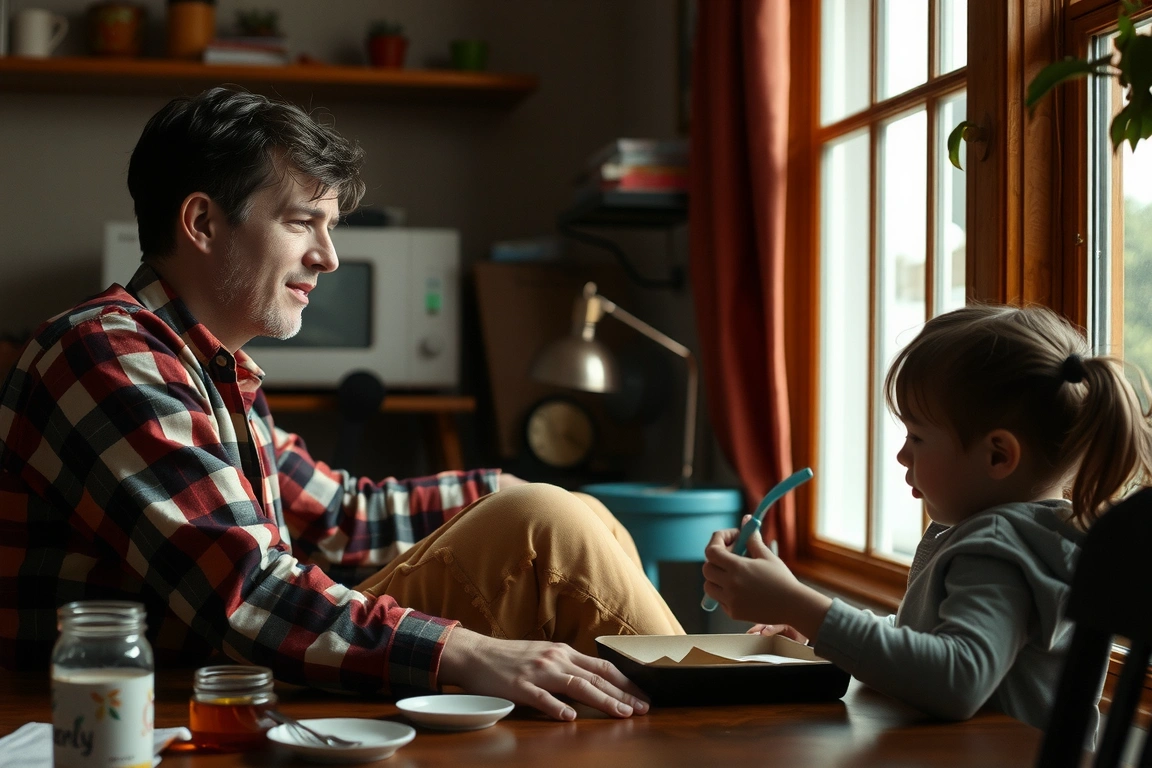
Common failure points I've hit or seen other parents mention: starting on a night that's already stressful (pick a calmer weeknight, not the one with three activities beforehand), forcing conversation instead of letting silence sit, and inconsistency — skipping three weeks in a row makes it much harder to restart than skipping one. If a teen is genuinely anxious about missing something time-sensitive (a group project deadline, a friend in crisis), it's reasonable to let them check briefly before the meal starts rather than mid-meal.
Clean-up tip that doubles as ritual reinforcement: have devices come out of the basket only after plates are cleared, not the second the timer buzzes. That extra 5 minutes without screens, even during cleanup, tends to extend the conversational momentum a little further.
What Changes After a Few Months
By month three, something shifted in our house that I didn't expect: my kids started reminding me it was Tuesday. The ritual had flipped from parent-enforced to kid-owned, which according to Anne Fishel's research at The Family Dinner Project, is a common marker of a habit that's actually taking hold rather than just being tolerated. We've also noticed our kids bring up harder topics — friend conflicts, worries about grades — more often during tech-free dinners than at other meals, likely because there's nothing competing for attention.
I can't promise controlled-study results from one family's experience, and I'd frame this as observed change rather than proven outcome. But the CASA Columbia National Family Day surveys have tracked for years that teens who have more frequent family dinners report closer relationships with parents. One weekly device-free dinner isn't a cure-all, but it's a low-cost, repeatable way to create the conditions where those conversations are more likely to happen.
Start small: pick one night this week, put a $6 basket or a free shoebox by the table, and set a 30-minute timer. Announce it a day ahead so nobody feels ambushed, and expect the first few attempts to feel a little stiff — that's normal, not a sign it's failing. If you want a visual way to track how it's going, try logging a one-line note about each tech-free dinner in a bullet journal spread; over a few months you'll actually see the shift instead of just hoping it happened. Whatever you do, don't quit after one awkward Tuesday — the payoff usually shows up around week six, not week one.
Do we really need to ban our own phones as parents too?
Yes, and this is the part people skip. Kids notice adult hypocrisy fast, and in my experience the whole ritual falls apart within a week if parents keep checking texts “just for a second.” Put your phone in the same basket as everyone else's. If you need to be reachable for a genuine emergency, silence notifications and set the phone screen-down and out of reach rather than exempting yourself entirely.
What if my teenager refuses to participate at all?
Don't turn it into a power struggle over one meal. Instead, ask your teen to help design the rules — which night, how long, whether music is allowed — since teens respond much better to negotiated structure than imposed rules. Start with a shorter window, like 20-25 minutes, and let it grow once they see it's not a punishment. If resistance continues for a month or more, a private conversation about what specifically feels bad about it (missing messages, feeling put on the spot) usually reveals a fixable problem.
How is this different from just watching TV together at dinner?
Watching TV together is a shared passive activity, while tech-free dinner is designed to create active back-and-forth conversation. Both have value, but they serve different purposes — TV nights can be great for bonding through shared enjoyment, while tech-free dinners specifically create space for kids to talk about their day, ask questions, or bring up things bothering them. I keep both in rotation: one screen-free dinner and one “watch something together” dinner most weeks, and my kids look forward to each for different reasons.
Small changes, real momentum
Get practical guides and templates you'll actually use — a few thoughtful emails a month.
Sources & further reading
Your Weekly Dose of Inspiration
Journaling ideas, family tips, and gentle inspiration.
Related from our network

