


Start with emotion recognition games like Emotion Charades to help your child read facial expressions and body language. Practice turn-taking through cooperative board games and activities like Roll the Ball, which build sharing skills without pressure. Use role-playing to rehearse conversation starters and joining groups in a safe environment. Create structured playdates where your child can apply these skills with positive reinforcement. Track progress with visual charts celebrating small victories like initiating conversations or remembering to take turns. The strategies below offer age-specific approaches tailored to your child's developmental stage.
Key Takeaways
- Emotion Charades and Expression Mimicking Games help children recognize feelings and interpret non-verbal cues through interactive play.
- Cooperative board games and obstacle courses build teamwork skills while creating natural opportunities for positive peer interactions.
- Role-playing scenarios allow children to rehearse conversation starters and challenging social situations in a safe, supportive environment.
- The Topic Game and Conversation Jenga make practicing communication skills enjoyable while helping children maintain focus during discussions.
- Visual progress charts with stickers or tokens celebrate small victories like turn-taking and initiating conversations, reinforcing continued effort.
Understanding Why Some Children Struggle to Make Friends
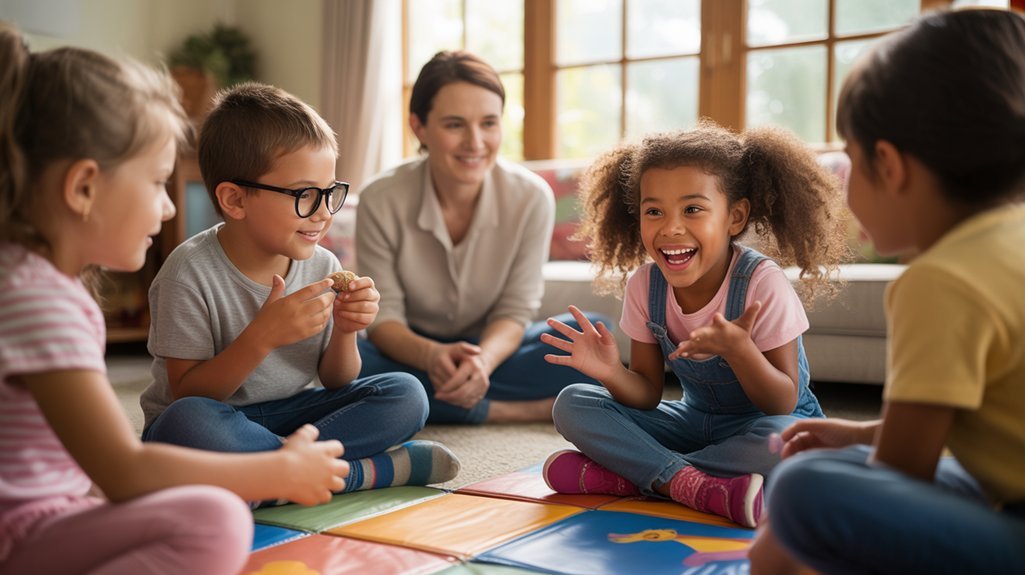
While most children naturally gravitate toward playmates, some face genuine obstacles that make forming friendships feel overwhelming. Understanding these challenges helps you provide targeted support.

Social anxiety often manifests as intense fear of judgment, causing children to avoid social interactions altogether. You'll notice these kids hanging back during group activities, despite wanting connection.
Social anxiety creates a painful paradox: children desperately craving connection while fear keeps them frozen on the sidelines.
Children with ADHD struggle differently—their impulsivity and inattentiveness can disrupt conversations and cooperative play, leaving peers frustrated.
Meanwhile, introverted children simply process the world differently, preferring solitary activities that limit friendship-building opportunities.
Developmental stages also play an essential role. Younger children haven't yet mastered fundamental social skills like sharing and turn-taking, requiring more guidance than their peers.
Perhaps most importantly, children who've experienced trauma or bullying develop trust issues that create protective barriers around their hearts. They've learned that relationships can hurt, making new friendships feel dangerously vulnerable.
Children with autism may face additional friendship challenges due to differences in social communication and interaction patterns that affect how they connect with peers. These differences in social communication can make it harder for them to interpret social cues and engage in typical playground interactions.
Recognizing these distinct patterns allows you to tailor interventions effectively.
Key Social Skills That Help Build Friendships
Building meaningful friendships requires a specific set of learnable skills that convert awkward encounters into genuine connections. When you help children develop these competencies, you're equipping them with tools they'll use throughout their lives.
| Skill | What It Involves | Why It Matters |
|---|---|---|
| Effective Communication | Using verbal and nonverbal cues to express thoughts clearly | Helps children share ideas and share ideas and feelings authentically |
| Active Listening | Demonstrating empathy and respect through attentive responses | Cultivates deeper understanding and connection |
| Sharing and Taking Turns | Cooperating during play and activities | Promotes mutual enjoyment and reciprocity |
| Conflict Resolution Skills | Expressing feelings calmly and finding compromises | Maintains healthy relationships through challenges |
Perspective-taking improves all these abilities by helping children understand their friends' experiences and emotions. When you teach these foundational skills, you're not just addressing immediate social challenges—you're nurturing compassionate, connected individuals who can build supportive relationships. Many children with social difficulties may also have underlying learning disorders that affect their ability to navigate social situations effectively.
Evidence-Based Games and Activities for Developing Social Connections
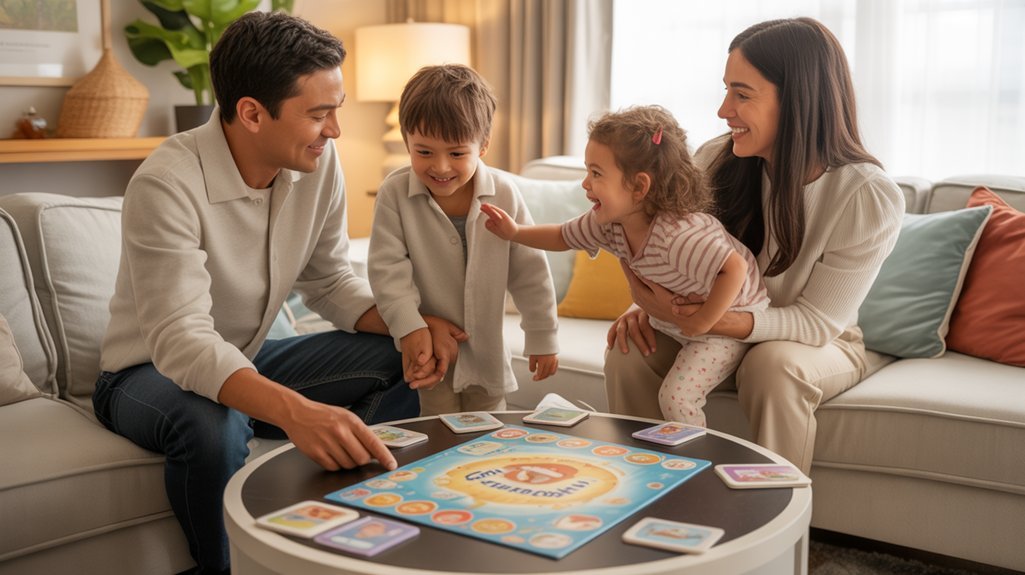
When children struggle to form connections, structured play activities provide scaffolding that converts abstract social concepts into concrete, practiced behaviors.
You'll find that Emotion Charades strengthens social skills by teaching children to recognize feelings and interpret non-verbal cues—foundational elements for meaningful peer relationships.
Roll the Ball introduces communication skills through nonverbal exchanges and turn-taking, reducing the anxiety many children experience when initiating interactions.
Cooperative board games naturally develop friendship skills by requiring teamwork and shared problem-solving, eliminating competitive pressure that can hinder connection.
The Topic Game targets conversation maintenance, helping children practice staying focused during discussions—a critical component of building deeper relationships.
Role playing offers safe opportunities to rehearse challenging social situations, from joining playground games to resolving conflicts.
Through repeated practice in these structured environments, you're helping children internalize strategies they'll confidently apply in real-world friendships.
Understanding that early childhood development research emphasizes the critical importance of the first three years for lifelong mental health and well-being can help parents recognize why investing time in social skills development during this period creates lasting foundations for healthy relationships.
Teaching Conversation and Communication Skills Through Play
Conversation skills don't emerge naturally for all children—they require explicit teaching and repeated practice in contexts that feel safe and engaging.
Play-based approaches provide this ideal learning environment while reducing performance anxiety. Activities like Conversation Jenga change question-answering into an enjoyable game, allowing children to practice back-and-forth exchanges without pressure.
Role-playing scenarios enable kids to rehearse conversation initiation and appropriate responses before facing real-world situations. The Name Game develops vital attentiveness while helping children learn peers' names—foundational skills for building friendships.
Emotion Charades specifically improves emotional vocabulary, teaching children to identify and express feelings that strengthen their communication skills during conversations.
Meanwhile, cooperative activities like obstacle courses that require teamwork create natural opportunities for children to practice giving instructions, asking for help, and problem-solving together.
Just as gentle parenting emphasizes patience and understanding in daily interactions, these social skill activities require consistent support and encouragement from parents to help children develop meaningful connections with their peers.
Helping Kids Join Groups and Initiate Friendships
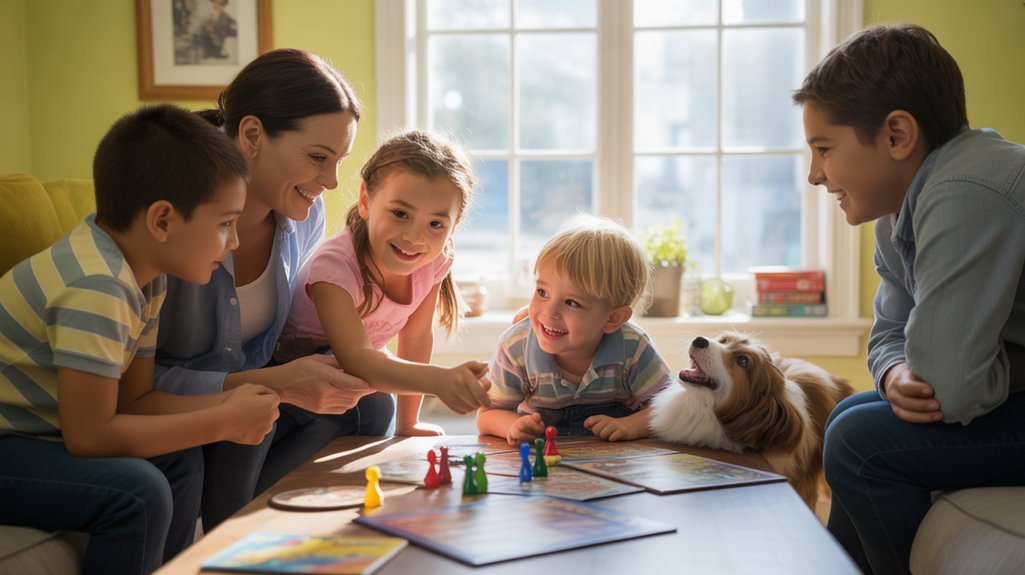
One of the most challenging social situations for children is approaching an established group and asking to join in.
You can equip your child with concrete strategies by teaching specific conversation starter phrases like “Can I play too?” and “That looks fun!” that reduce the anxiety of not knowing what to say.
Through role-playing these scenarios and gradually building their confidence in real-world situations, children develop the skills to observe social cues, choose appropriate moments to approach others, and initiate friendships with greater ease.
Teach Conversation Starter Phrases
How can children break into a new group of peers when they lack the right words to say? Teaching conversation starter phrases like “Can I sit with you?” and “That game looks fun! Can I join?” equips children to initiate interactions confidently.
Role-playing these phrases provides practical experience they can apply in real social situations. Start with low-stakes practice during structured playdates, allowing children to build comfort gradually.
Visual cue cards serve as helpful reminders for those who struggle with spontaneous conversation. The key is consistent reinforcement—when children successfully use these starters, offer positive feedback immediately.
This acknowledgment strengthens their confidence and motivates continued practice across different contexts. Remember, mastering conversation starters isn't about perfection; it's about giving children tangible tools to open doors to meaningful peer connections.
Practice Through Role-Playing
Knowing what to say matters little if children freeze when the moment arrives. Role-playing alters theoretical knowledge into embodied confidence through repeated practice in low-stakes environments.
You can guide children through scenarios like joining playground games, initiating conversations with classmates, or maneuvering lunch table interactions. This rehearsal allows them to experiment with different approaches, receive constructive feedback, and refine their techniques before real social interactions occur.
Structure sessions to address specific challenges: observing group activities, timing entry points, and handling rejection gracefully. Incorporate peers when possible—playdates and social skills groups provide authentic practice with immediate peer response.
Through this deliberate practice, children develop muscle memory for friendships, reducing anxiety and increasing their willingness to engage. They'll internalize successful patterns, making genuine connection feel increasingly natural.
Build Confidence Gradually
While role-playing builds foundational skills, translating them into real-world success requires careful scaffolding. You'll need to create stepped opportunities that gradually increase social demands.
Start with supervised playdates where you can offer real-time guidance and positive reinforcement as your child practices their social skills.
Structured activities like clubs and group projects provide essential support systems. These environments reduce pressure while encouraging meaningful teamwork.
Cooperative obstacle courses work particularly well, helping children collaborate without the complexities of unstructured play.
This gradual exposure approach allows you to build confidence systematically. Each successful interaction becomes a foundation for the next challenge.
You're not pushing your child into overwhelming situations—you're creating developable pathways where they can experience repeated success, master new skills, and naturally expand their social comfort zones.
Activities for Recognizing Emotions and Building Empathy
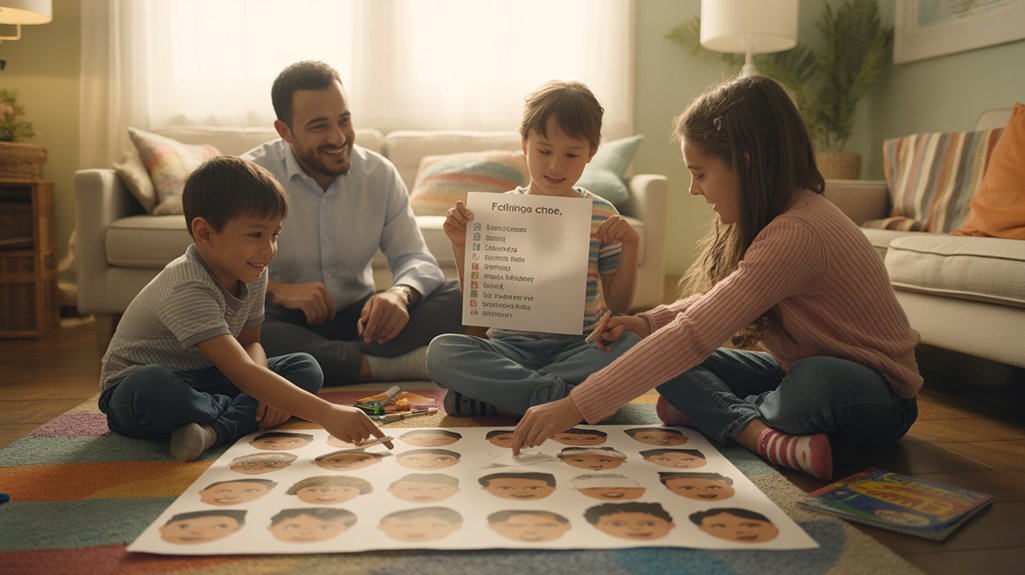
Because emotional intelligence forms the foundation of healthy relationships, teaching children to recognize and respond to emotions stands as one of the most valuable gifts parents and educators can provide.
Emotion Charades converts emotion recognition into an engaging game where children act out feelings while others identify them. This activity strengthens their ability to read non-verbal cues essential for social interactions.
Expression Mimicking Games build emotional awareness by having children practice copying facial expressions and body language. They'll develop deeper understanding of how others feel in various situations.
Role Reversal activities encourage children to step into another person's perspective, discussing the feelings and challenges they experience. This powerful exercise fosters genuine empathy.
Feelings Journals provide safe spaces for reflecting on emotions while considering others' experiences. Children develop self-regulation alongside compassion.
Random Acts of Kindness challenges put empathy into action. These kindness challenges create opportunities for children to practice respect and build meaningful connections through thoughtful gestures toward others.
Practicing Conflict Resolution and Problem-Solving Skills
When conflicts arise between children, they're actually valuable opportunities to build essential problem-solving skills that'll serve them throughout life.
Role-playing different conflict scenarios gives your child a safe space to practice expressing their feelings, understanding others' perspectives, and finding solutions that work for everyone involved.
Through these activities, you'll help them learn the art of compromise and the power of sincere apologies—two critical tools for maintaining healthy relationships.
Role-Playing Conflict Scenarios
Role-playing conflict scenarios alters abstract social concepts into concrete experiences children can touch, feel, and internalize. When you guide children through structured role-play, they practice conflict resolution in a safe environment where mistakes become learning opportunities.
This hands-on approach helps them articulate feelings using I-messages, reshaping vague emotional responses into clear communication during social interactions.
Through these activities, children explore multiple perspectives, developing empathy as they witness how their actions affect others. You'll observe them brainstorming solutions and evaluating outcomes, strengthening problem-solving skills they'll apply in real-world conflicts.
Regular practice builds confidence, equipping children with practical tools for maneuvering challenging social situations. By incorporating role-playing consistently, you're helping children develop healthier friendships and emotional resilience that extends far beyond the practice session.
Teaching Compromise and Apologies
As children develop social awareness through role-play, they're ready to master two foundational skills that change conflicts into opportunities for growth: compromise and genuine apologies.
Teaching compromise begins with helping your child understand that negotiation allows both parties to meet their needs. Guide them to identify what matters most and where flexibility exists. Introduce I-messages like “I feel upset when…” to encourage constructive expression during disagreements.
Sincere apologies require more than routine words. Help children recognize how their actions affect others and take genuine responsibility. This emotional awareness builds empathy and strengthens conflict resolution abilities.
When you consistently reinforce these skills, you're equipping children to convert disagreements into deeper emotional connections.
These practices create healthier friendships where understanding and collaboration replace tension, giving struggling children the tools they need for meaningful peer relationships.
Creating Supportive Environments for Social Skills Practice
Children thrive when they're given the right conditions to develop meaningful connections with their peers.
Creating supportive environments for social skills practice starts with establishing safe spaces where kids feel comfortable expressing themselves without fear of judgment. You can promote this through structured playdates and group activities that encourage positive peer interactions in controlled settings.
Role-playing scenarios offer valuable opportunities for children to rehearse challenging social situations, building confidence before real-life encounters.
Collaborative projects like group art or community service initiatives naturally enhance teamwork and communication, allowing children to connect through shared goals.
Your consistent positive reinforcement is essential—celebrate every attempt at social interaction, no matter how small.
This encouragement builds resilience and motivates continued practice across various settings. When children receive supportive feedback and see their efforts recognized, they're more likely to persist in developing the social skills that will serve them throughout their lives.
Signs Your Child Needs Help
When should you become concerned about your child's social development? If you notice persistent patterns affecting their ability to connect with peers, it's time to provide additional emotional support and guidance.
Watch for these key indicators:
- Difficulty reading social cues – Your child consistently misinterprets body language, facial expressions, or tone during peer interactions.
- Avoidance behaviors – They regularly shy away from group activities, hesitate to initiate conversations, or prefer solitary play exclusively.
- Challenges with cooperation – Struggles with sharing, taking turns, or resolving conflicts emerge repeatedly.
Additionally, if your child frequently expresses loneliness or feeling excluded, these are clear signals they need help developing social skills.
Children making friends successfully demonstrate flexibility in their interactions and genuine interest in connecting with others. When these abilities don't naturally develop, targeted activities and patient guidance can make a significant difference in helping your child build meaningful relationships.
Age-Appropriate Activity Selection
Choosing social skills activities that match your child's developmental stage directly impacts their ability to learn and practice friendship-building behaviors effectively.
A three-year-old needs different social tools than a thirteen-year-old, as each age group faces distinct challenges—from learning to share toys in preschool to managing complex peer interactions in high school.
Preschool and Kindergarten Activities
During the preschool and kindergarten years, children's social skills develop rapidly as they shift from parallel play to more interactive peer engagement.
You can help children strengthen peer relationships through targeted social skills activities that build foundational competencies.
Roll the Ball creates natural conversation opportunities while practicing taking turns.
Emotion Charades develops emotional literacy by encouraging kids to identify and express feelings through non-verbal communication.
Play pretend scenarios allow children to safely explore different social roles and practice real-world interactions.
Teach specific entry strategies like observing group interactions and waiting for appropriate joining moments.
Thank You Notes reinforce gratitude while developing communication skills.
These structured activities provide repeated practice in essential social behaviors, helping struggling children build confidence and competence in peer interactions.
Elementary School Age Range
As children enter elementary school, their social landscape expands considerably, requiring more sophisticated interpersonal skills to navigate complex peer interactions and classroom environments.
You'll find that activities like Emotion Charades help children recognize and express feelings, strengthening their ability to connect authentically with peers. Conversation Jenga alters social interaction into an engaging game, making it easier for hesitant children to participate in dialogue.
Role-playing scenarios offer invaluable practice for real-world situations—initiating conversations, resolving conflicts, and joining group activities. These skills directly translate to friendship-building success.
Group art projects encourage collaboration while creating shared experiences that naturally break down social barriers. Thank You Notes activities teach children to express gratitude, reinforcing positive interactions that deepen existing relationships and attract new friendships through genuine appreciation.
Middle School Social Challenges
When adolescence arrives, middle schoolers encounter a dramatically altered social ecosystem where peer acceptance intensifies, cliques solidify, and self-consciousness peaks.
You'll find that structured activities become essential tools for steering through these challenges.
Group art projects and role-playing scenarios provide safe spaces where students can practice social skills while creating together. Icebreaker games and conversation starters help shy students forge peer connections without pressure.
You can assist in conflict resolution through guided role-play, teaching students to manage friendship disputes with empathy.
Don't overlook virtual playtime as a legitimate tool—it offers comfortable environments where anxious students can build confidence before moving on to face-to-face interactions.
These evidence-based approaches address the unique developmental needs of middle schoolers struggling socially.
High School Developmental Needs
High school students require different social skill interventions than their younger counterparts, as their developmental focus shifts toward establishing autonomy and forming a coherent identity.
You'll need to prioritize activities that build social competence through real-world applications. Role-playing scenarios addressing peer pressure and social navigation strengthen conflict resolution abilities while respecting their need for authenticity.
Collaborative learning experiences and group projects effectively develop teamwork and communication skills without feeling childish. These structured interactions provide safe spaces for practicing conversation initiation and relationship building.
You should actively encourage participation in extracurricular activities, where students naturally connect through shared interests. Whether through sports, clubs, or creative pursuits, these settings offer organic opportunities for developing meaningful friendships while honing essential social capabilities that'll serve them beyond graduation.
Adapting Activities by Maturity
Selecting social skills activities that match your child's maturity level directly impacts their ability to learn and apply new competencies.
For younger children (ages 3-5), choose activities that teach nonverbal communication through “Emotion Charades” or “Staring Contests.” These simple games help kids make connections between feelings and expressions.
Children aged 6-8 benefit from “Conversation Jenga” and “Simon Says,” which develop their emotional awareness through turn-taking and active listening.
For older children (9-12), implement structured activities like “Productive Debate” to develop skills in real social situations.
This developmental approach works effectively for all children, including children with autism spectrum disorders, because it creates comfortable learning environments where they feel capable.
When activities align with maturity levels, you're nurturing genuine engagement that translates into meaningful friendships.
Maximizing Practice Through Consistency
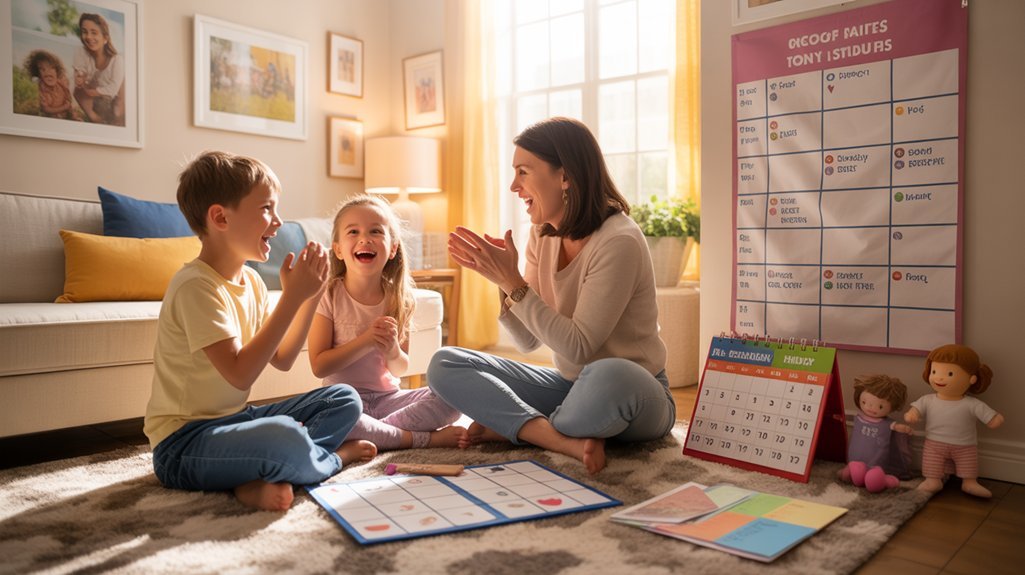
Just as children master riding a bike through repeated attempts, they'll develop stronger social skills when you build consistent practice into their daily routines.
Consistency in practicing social skills creates the repetition needed for children to internalize new behaviors and gain confidence in peer interactions.
Establish regular opportunities for children to practice essential social skills:
- Schedule weekly playdates or group activities where your child can safely initiate conversations and navigate friendship interactions in familiar settings.
- Incorporate structured role-playing scenarios into your routine, allowing children to rehearse conflict resolution and develop empathy across different social contexts.
- Repeat favorite social skills games like Emotion Charades or Roll the Ball, building comfort through familiarity while reinforcing learned behaviors.
Regular feedback and positive reinforcement during these practice sessions rewards good behavior and encourages children to transfer their developing skills into real-life situations.
This consistent approach helps children learn that forming friendships is an achievable skill they can master through dedicated practice.
Celebrating Progress and Growth
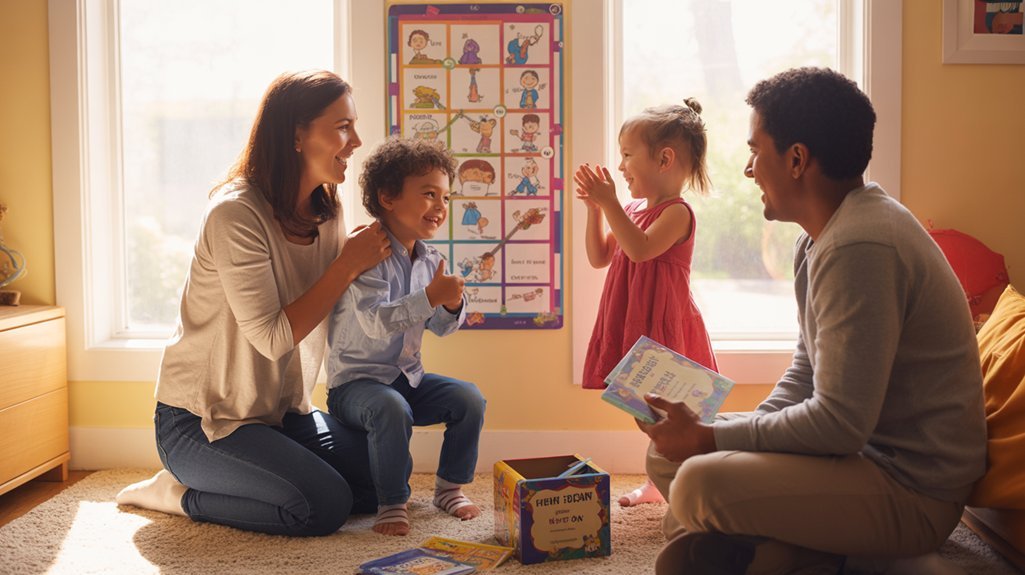
While consistency provides the foundation for skill development, recognizing and honoring each step forward alters practice into meaningful progress. Celebrating progress modifies your child's social journey into a source of pride and motivation.
Acknowledge small victories—initiating conversations, sharing toys, or joining group activities. These moments build self-esteem and reinforce behaviors that improve social competence. When you highlight these achievements, you're teaching your child to recognize their own growth.
Track milestones together: making a new friend, remembering to take turns, or expressing feelings appropriately. Consider implementing simple reward systems or special recognition moments that make children feel valued. Regular reflection conversations help them articulate their experiences and understand social interactions more deeply.
This practice of celebrating progress creates powerful momentum. Children who see their development acknowledged feel motivated to continue building friendships. You're not just teaching skills—you're cultivating confidence and showing them that their efforts toward connection matter profoundly.
Frequently Asked Questions
How Do I Explain My Child's Social Struggles to Family Members?
Start by sharing experiences honestly with family members, explaining your child's specific challenges without shame.
Use clear communication strategies that emphasize your child's strengths alongside areas needing support.
Help relatives build empathy by describing how social situations feel for your child.
Address overcoming stigma directly by educating them about developmental differences.
When you encourage family support through open dialogue, you'll create a network that understands and nurtures your child's social growth effectively.
Should I Inform My Child's Teacher About Their Friendship Difficulties?
Yes, you should absolutely inform your child's teacher.
When Marcus's parents shared his friendship difficulties, his teacher implemented targeted classroom strategies during group work and lunch. Effective teacher communication allows friendship observation throughout the day—insights you'll miss at home.
Teachers can promote parental involvement through regular updates and recommend social skills workshops. This collaborative approach guarantees consistent support across environments.
Research shows children progress faster when educators understand their social needs and can create intentional peer-interaction opportunities that build genuine connections.
When Should I Consider Professional Therapy for Social Skills Development?
You should consider professional therapy when behavioral observations reveal persistent social struggles despite your parental involvement and home-based interventions.
Key therapy indicators include social isolation lasting over six months, anxiety around peers, or developmental delays affecting communication.
Social skill assessments by professionals can identify specific challenges based on age considerations.
If your child's difficulties impact their emotional well-being or academic performance, don't hesitate—early intervention through evidence-based therapy creates lasting positive change and builds essential life skills.
How Do I Handle My Own Emotions When My Child Feels Lonely?
Your heartache mirrors your child's loneliness, but managing your emotions strengthens both of you.
Practice self-compassion through coping strategies like journaling or parent discussions with trusted friends. You'll provide better emotional support when you're regulated.
Focus on building resilience by celebrating small social wins together and nurturing connections through structured activities.
Can Medication Help Children Who Struggle With Making Friends?
Medication options alone won't teach social skills, but they can address underlying conditions like ADHD or anxiety that hinder social interaction.
You'll find therapy benefits and behavioral strategies are most effective for building friendship skills. When combined with parental support, these approaches create lasting change.
Consider consulting a developmental pediatrician who can evaluate whether medication might help your child focus during social learning, while prioritizing evidence-based social skills training as your primary intervention.
Conclusion
You've likely heard that social skills can't be taught—that kids either have them or they don't. Research proves otherwise. Your child's brain is remarkably adaptable, and with consistent practice through structured activities, they can absolutely develop meaningful friendships. The evidence shows that targeted social skills training creates lasting changes in how children connect with peers. Start small, stay patient, and remember: every positive interaction you're facilitating today is building their confidence for tomorrow's friendships.
Related Articles
- The Ultimate Guide to Sibling Conflict
- The Ultimate Guide to Family Meal Planning
- The Ultimate Guide to Kids Educational Games
- 20 Fun DIY Crafts to Strengthen Family Bonds
- The Ultimate Guide to Bedtime Routine

Written by Sarah Mitchell, M.S., CFLE
Founder & Lead Editor
Sarah is a Certified Family Life Educator with a Master's degree in Human Development and Family Studies from the University of Missouri. With 15+ years of experience as a parent educator and mother of three, she brings both professional expertise and real-world parenting wisdom to every article.
Credentials: M.S. in Human Development and Family Studies, Certified Family Life Educator (CFLE)