



Your child may need an occupational therapy evaluation if they're missing developmental milestones, struggling with fine motor tasks like writing or buttoning, avoiding physical play, experiencing sensory sensitivities to textures or sounds, having frequent meltdowns, showing poor hand-eye coordination, facing challenges with self-care like dressing or eating independently, displaying attention difficulties, struggling with social interactions, or demonstrating persistent frustration with age-appropriate tasks. These signs aren't phases to outgrow—they're indicators that professional support can help your child develop essential skills. Understanding these warning signs will help you determine the right path forward for your child's development.
Key Takeaways
- Delayed milestones like not walking by 15 months, struggling with self-feeding, or inability to sit unsupported by 9 months.
- Fine motor difficulties with grasping utensils, buttoning clothes, writing, or using scissors affecting academic and self-care tasks.
- Sensory processing issues including overwhelming responses to sounds, clothing refusal, extreme picky eating, or clumsiness.
- Emotional regulation problems with frequent meltdowns, difficulty calming down, or reactions that disrupt daily activities.
- Attention and focus challenges affecting ability to complete tasks, follow instructions, or participate in structured learning settings.
Delayed Developmental Milestones

Developmental milestones serve as critical markers for evaluating your child's growth and identifying potential concerns early. If your child hasn't started saying first words by 12 months or walking independently by 15 months, these delayed developmental milestones warrant attention.

By 18 months, you'll want to observe whether your child can feed themselves finger foods and begin using a spoon—skills that help build independence and coordination.
Self-feeding with finger foods and spoons by 18 months demonstrates developing independence and fine motor coordination in toddlers.
Watch for signs of developmental delays if your child can't sit unsupported by 9 months or pull to stand by 12 months. For school-aged children, struggles with dressing, bathroom independence, or basic self-care tasks indicate potential concerns.
You should also consider emotional regulation difficulties, such as persistent tantrums or challenges calming down, as these represent delays in age-appropriate social and emotional skills. When developmental delays coincide with social communication challenges or repetitive behaviors, families may need additional autism supports to address these complex needs. Recognizing these signs of developmental concern enables you to seek occupational therapy evaluation promptly, giving your child the support they need to thrive.
Fine Motor Skill Difficulties
While many children develop at their own pace, persistent struggles with fine motor tasks signal a need for professional evaluation. You'll notice your child having difficulty with everyday activities like grasping utensils, buttoning shirts, or tying shoelaces.
Writing, drawing, and using scissors may prove particularly challenging, affecting their academic progress and self-care independence.
Watch for signs of poor hand-eye coordination, such as trouble catching balls or writing legibly. Your child might show frustration or deliberately avoid precision tasks like coloring within lines or assembling puzzles.
These behaviors often indicate underlying fine motor skills deficits that require attention.
Developmental delays in this area don't improve through simple practice alone. Occupational therapy provides structured interventions targeting specific skill gaps.
Through professional support, your child can develop the coordination and dexterity needed for school success and daily independence.
Early intervention proves most effective, building both competence and confidence while preventing long-term academic and social difficulties. Parents can find videos, articles, and fact sheets through learning support resources specifically designed to address their child's developmental and emotional needs.
Gross Motor Skill Challenges

When your child struggles with basic physical activities like running, jumping, or climbing playground equipment, these difficulties may indicate gross motor skills challenges requiring professional assessment.
You might notice your child frequently losing balance during play or having trouble catching and throwing balls, which can limit their participation in sports and peer activities.
Poor core strength often manifests as difficulty sitting upright or completing age-appropriate physical tasks.
Children with weak core muscles may struggle to maintain proper posture during seated activities or tire quickly during physical play.
If your child struggles maneuvering obstacles or uneven surfaces while walking, these signs shouldn't be overlooked. Such challenges can indicate delays in reaching critical developmental milestones.
Occupational therapy provides targeted interventions to strengthen large muscle groups and improve coordination.
Early identification of gross motor difficulties allows therapists to develop customized treatment plans that address your child's specific needs.
Through structured activities and exercises, occupational therapy helps children build confidence while developing the physical capabilities necessary for successful participation in daily activities and social interactions.
Parents should seek guidance from caregivers who understand age-specific health concerns when gross motor delays become apparent in their child's development.
Sensory Processing Issues
If your child covers their ears at everyday sounds, refuses to wear certain clothing, or melts down during haircuts, they may be experiencing sensory processing issues that warrant occupational therapy evaluation.
Children struggling with sensory processing often display overwhelming responses to routine stimuli—aversion to specific textures, avoidance of certain smells, or distress in loud environments.
You'll notice these developmental needs manifesting through picky eating patterns, where texture and taste dictate food acceptance, or physical challenges like clumsiness and poor hand-eye coordination.
Watch for resistance to routine changes and bedtime struggles, as these signal difficulties with sensory regulation. Your child isn't being defiant; they're genuinely overwhelmed by sensory input their nervous system can't effectively organize.
Understanding proper child growth patterns can help you identify when sensory challenges are impacting your child's developmental milestones.
Occupational therapy provides structured interventions to increase sensory tolerance, helping your child navigate daily environments with greater confidence.
Through targeted therapeutic activities, children develop coping strategies and regulation skills, enabling them to participate more fully in home, school, and community activities that serve their growth and development.
Self-Care and Daily Living Struggles

When you notice your child consistently struggling with basic self-care tasks like getting dressed or managing grooming routines, these challenges may signal underlying developmental delays that occupational therapy can address.
Difficulties with eating independently—whether it's holding utensils properly, drinking from a cup, or managing different food textures—often indicate the need for specialized intervention.
These daily living struggles aren't just phases; they're important indicators that your child may benefit from an occupational therapy evaluation to build essential life skills and independence.
Dressing and Grooming Delays
Self-care routines become significant milestones as your child develops independence, and struggles with dressing or grooming often signal underlying fine motor or sensory processing challenges. You'll notice these difficulties when your child consistently avoids buttons, zippers, or shoelaces, or shows frustration during daily routines. By age 4, children should dress with minimal assistance; by age 5, independent handwashing is expected.
| Age | Expected Dressing Skills | Expected Grooming Skills |
|---|---|---|
| 3-4 years | Puts on loose clothing, removes shoes | Washes hands with reminders |
| 4-5 years | Manages large buttons, pulls up zippers | Brushes teeth with supervision |
| 5-6 years | Dresses independently, ties simple knots | Combs hair, washes face independently |
Sensory sensitivities to clothing textures may also interfere with participation. When these delays persist, occupational therapy evaluation helps identify skill deficits and develop targeted interventions.
Eating and Feeding Difficulties
Beyond dressing and grooming, mealtime presents another critical arena where self-care skills develop and challenges may emerge.
You'll notice eating and feeding difficulties when children struggle with utensils, impacting their independence and confidence. Difficulty drinking from a cup signals oral motor challenges affecting daily living tasks.
Watch for chewing problems and food pocketing—these raise safety concerns and may warrant a swallow study.
Texture sensitivities often lead to restricted diets, compromising nutritional intake and overall health. These feeding difficulties aren't simply behavioral issues; they're developmental challenges requiring specialized intervention.
Occupational therapy addresses these concerns systematically, helping children build essential mealtime skills. Therapists work to expand food acceptance, improve oral motor coordination, and develop proper utensil use, enabling children to participate safely and confidently in this fundamental daily activity.
Emotional Regulation Problems
If you notice your child experiencing frequent meltdowns that seem disproportionate to the situation or lasting longer than expected for their age, they may be struggling with emotional regulation.
These intense reactions often signal difficulty processing and managing overwhelming feelings, which can affect their daily functioning at home and school.
When your child consistently has trouble calming down after becoming upset—requiring extensive time or support to return to baseline—occupational therapy can provide targeted strategies to build these essential self-regulation skills.
Frequent Meltdowns and Tantrums
While all children experience occasional outbursts, persistent meltdowns that seem disproportionate to the situation may signal underlying difficulties with emotional regulation.
You'll notice your child struggles to recover from distress, displaying intense reactions to minor setbacks or routine changes. These frequent meltdowns often disrupt daily activities at home and school, affecting peer relationships and family interactions.
Children with emotional regulation challenges may experience overwhelming anger or disappointment without effective self-calming strategies. They're unable to process frustration appropriately, leading to behavioral challenges across multiple settings.
When you observe these patterns consistently interfering with your child's social interactions and daily functioning, occupational therapy can provide evidence-based interventions.
Therapists work collaboratively with families to develop personalized coping techniques and emotional management skills, supporting your child's developmental progress toward greater self-regulation.
Difficulty Calming Down
When your child remains inconsolable for extended periods following emotional upset, they're demonstrating core difficulties with self-regulation that extend beyond typical developmental tantrums.
You'll notice these emotional regulation struggles when your child can't identify what triggered their distress, making it nearly impossible for them to communicate their needs effectively.
These behavioral challenges often surface across multiple environments—classroom disruptions, home conflicts, and strained peer interactions all signal deeper regulatory concerns.
Watch for heightened anxiety when routines shift unexpectedly, as this reveals your child's limited capacity to manage emotional changes.
Occupational therapy offers evidence-based interventions specifically designed to build self-calming skills.
Therapists work systematically to help your child recognize emotional triggers, develop coping strategies, and strengthen their ability to recover from distressing situations—essential skills for academic success and social development.
Visual-Perceptual Difficulties

Visual-perceptual difficulties affect how your child's brain interprets what their eyes see, creating challenges that extend far beyond simple vision problems. These developmental issues may cause your child to confuse letters, struggle with recognizing shapes, or lose their place while reading. You'll notice they can't efficiently complete academic tasks that require visual processing.
Your child might've trouble tracking text across a page or copying from the board, impacting their classroom performance. Spatial awareness challenges affect understanding concepts like right and left, hindering both academic work and social navigation.
Fine motor activities such as handwriting become frustrating because visual-perceptual skills are essential for coordinating hand movements. Daily independence suffers when your child can't locate objects among clutter or organize their belongings.
If you're observing these patterns, occupational therapy evaluation can identify specific visual-perceptual deficits and establish targeted interventions to support your child's developmental progress.
Eating and Feeding Concerns
Mealtime struggles often signal underlying developmental challenges that extend beyond typical picky eating behaviors. If you're supporting a child who demonstrates persistent difficulty using utensils or drinking from a cup, an occupational therapy evaluation can identify specific motor or sensory barriers affecting their feeding independence.
Watch for children who struggle with chewing food properly or consistently pocket food in their cheeks rather than swallowing. These patterns may indicate oral-motor dysfunction requiring professional assessment.
Similarly, extreme sensitivity to food textures that severely limits dietary variety warrants occupational therapy intervention.
Children needing support adapting to solid foods or those with disorganized mealtime routines benefit from structured therapeutic approaches that build self-feeding skills systematically.
If swallowing concerns arise—particularly if a swallow study has been recommended—prompt evaluation becomes essential for the child's safety.
Occupational therapy addresses these eating and feeding challenges through targeted interventions that promote functional independence while ensuring adequate nutrition and safe mealtimes.
Communication and Social Interaction Challenges

How does your child connect with others and express their needs? Communication development extends beyond spoken words to include gestures, eye contact, and social engagement.
Communication reaches far beyond words—your child's gestures, eye contact, and social connections tell an equally important story.
If your child hasn't developed babbling or speaking skills by 18 months, this communication delay warrants professional assessment. Watch for signs of frustration during attempts to express themselves, as these struggles indicate challenges with expressive language skills.
Non-verbal communication is equally important. Difficulty pointing or gesturing by six months suggests developmental concerns requiring occupational therapy evaluation. Limited verbal interaction with peers and caregivers can greatly impact social skills development and future relationships.
Social engagement patterns reveal critical information. Children who consistently avoid eye contact or struggle participating in group activities need targeted support.
These communication and social interaction challenges don't resolve independently. Occupational therapy provides evidence-based interventions that strengthen both verbal and non-verbal communication abilities, helping your child build meaningful connections with others and navigate their social world confidently.
Attention and Focus Difficulties
While communication challenges affect how children connect with others, attention and focus difficulties directly impact their ability to learn and participate in daily activities. You'll notice these struggles when your child can't maintain attention during structured settings or shows a marked shorter attention span than their peers.
Watch for signs like frequent distraction during play or learning activities, difficulty engaging in group settings, and inability to follow directions in sports or classroom tasks. These behaviors often indicate your child feels overwhelmed and may benefit from occupational therapy evaluation.
When attention deficits persist, they'll affect academic performance and social interactions. An occupational therapy assessment can identify underlying issues and provide targeted interventions to strengthen focus skills.
Early recognition allows you to support your child's development effectively, helping them build the concentration abilities they need to succeed in school and social environments. Don't hesitate to seek professional guidance when concerns arise.
Early Signs Matter Most

Recognizing developmental concerns in their earliest stages gives your child the best chance for successful intervention and long-term growth.
When you notice signs that something's not quite right, trust your instincts and seek an occupational therapy evaluation. Early identification creates pathways for children to build essential skills before challenges become deeply ingrained patterns.
Trust your parental instincts—early intervention creates essential skill-building pathways before developmental challenges become deeply ingrained patterns.
Watch for these key developmental signs indicating your child may benefit from occupational therapy:
- Communication delays: Missing milestones like babbling by 18 months or pointing by six months
- Fine motor struggles: Difficulty with writing, using utensils, or manipulating small objects
- Attention challenges: Trouble maintaining focus or completing age-appropriate tasks
- Sensory sensitivities: Overwhelming reactions to sounds, textures, or stimulating environments
- Routine rigidity: Significant difficulty adapting to changes in daily schedules
You're not overreacting by seeking professional guidance.
Early support strengthens your child's foundation for academic success, social interaction, and daily functioning. The sooner you address concerns, the more effectively therapists can help your child thrive.
When to Seek Help
You'll know it's time to seek an occupational therapy evaluation when your instincts tell you something isn't quite right with your child's development.
Whether you're noticing persistent delays, struggling through daily routines that should be getting easier, or receiving concerns from teachers and caregivers, these signs shouldn't be ignored.
The research is clear: early intervention leads to better outcomes, so acting on your concerns now can make a significant difference in your child's developmental trajectory.
Trust Your Parental Instincts
As a parent, you possess an intimate understanding of your child's behavior and development that no standardized checklist can replicate. Trust your parental instincts when you observe persistent struggles with daily activities or developmental milestones.
These signs that your child may benefit from occupational therapy deserve professional attention, not dismissal. When you notice difficulties with fine motor skills, sensory processing, or social adaptation, seeking an evaluation demonstrates strength, not overreaction.
Early intervention leads to better outcomes, enabling your child to succeed academically and socially. If you observe behavioral patterns like avoiding eye contact, resistance to routine changes, or communication frustration, act on your concerns.
Your intuition, combined with professional expertise, creates the foundation for effective support. Seeking help when doubts arise enables you to advocate powerfully for your child's developmental needs.
Persistent Developmental Delays
Your parental concerns gain particular significance when developmental delays persist beyond typical variation timelines. When your child consistently struggles to meet age-appropriate milestones across multiple domains, an occupational therapy evaluation becomes essential. These persistent developmental delays often manifest in interconnected ways that impact daily functioning.
| Developmental Area | Warning Signs | Impact on Daily Life |
|---|---|---|
| Motor Skills | Difficulty writing, using utensils | Challenges with self-feeding, classroom tasks |
| Self-Care | Struggles with dressing, toileting | Reduced independence, increased frustration |
| Emotional Regulation | Frequent tantrums, difficulty calming | Disrupted routines, social difficulties |
| Social Interaction | Peer avoidance, withdrawal | Limited relationship development, isolation |
Recognizing these developmental challenges early enables timely intervention. An occupational therapy evaluation provides thorough assessment and targeted strategies to support your child's growth.
Daily Activities Become Struggles
When routine tasks that peers complete with ease become sources of daily frustration for your child, occupational therapy evaluation warrants serious consideration.
Watch for persistent struggles with fine motor activities like holding utensils or writing, which directly impact classroom participation and mealtime independence. Gross motor challenges—difficulty climbing stairs or catching a ball—can limit your child's engagement in physical play and social interactions.
Visual-perceptual difficulties, including trouble tracking objects or copying shapes, may compromise academic performance. Self-care tasks such as dressing and personal hygiene shouldn't remain overwhelming beyond developmental expectations.
When sensory sensitivities to noise or texture disrupt daily routines, occupational therapy provides targeted interventions. These professionals assess how children develop essential skills and create individualized strategies that restore confidence and functional independence in everyday activities.
Teacher or Caregiver Concerns
Teachers and caregivers often serve as critical observers who notice developmental patterns parents might miss in daily interactions. When a teacher reports persistent fine motor difficulties—struggling with writing, scissors, or utensils—it's time to reflect on an occupational therapy evaluation.
Similarly, if your child's caregiver notes frequent attention lapses, difficulty following directions, or challenges with emotional regulation like prolonged tantrums, these observations shouldn't be dismissed.
Pay attention when educators mention social interaction concerns, such as peer avoidance or overwhelm in group settings. Teachers also recognize delays in age-appropriate self-care skills, like independent dressing or hygiene management.
These professionals see your child in structured environments where developmental gaps become more apparent. Their concerns represent significant observations that can guide you toward appropriate occupational therapy support for your child's growth.
Earlier Is Always Better
The developmental window of early childhood represents the most neurologically responsive period for intervention, making timing a critical factor in treatment success.
When you notice developmental delays in self-care, coordination, or emotional regulation, don't wait to seek occupational therapy services. Research demonstrates that children receiving early intervention before age five catch up to their peers markedly faster than those starting later.
The sooner you address concerns, the more effectively you'll cultivate independence and confidence in the children you support. As soon as developmental milestones aren't being met, pursue an evaluation.
Early intervention doesn't just address current challenges—it prevents delays from compounding and affecting academic performance and social relationships. Your proactive response now creates better long-term outcomes for a child's success in school and daily life.
Recognizing Red Flags Early
How can parents distinguish between typical developmental variations and genuine concerns requiring professional intervention?
While every child develops at their own pace, certain signs warrant occupational therapy evaluation. You'll notice red flags when challenges persist beyond expected developmental windows or notably impact your child's daily functioning.
Developmental concerns become actionable red flags when they persist beyond typical windows or significantly disrupt your child's everyday participation and functioning.
Watch for these critical indicators:
- Motor skill difficulties: Your child struggles with age-appropriate tasks like gripping pencils, buttoning clothes, or using utensils consistently.
- Coordination concerns: Frequent falls, poor balance, or unusual clumsiness during activities like stair climbing.
- Attention barriers: Inability to follow simple instructions or complete routine tasks without constant redirection.
- Emotional dysregulation: Excessive tantrums, meltdowns, or difficulty self-soothing that disrupts family routines.
- Social withdrawal: Persistent avoidance of peer play, extreme anxiety in groups, or inability to engage appropriately.
Trust your instincts.
When developmental concerns interfere with your child's participation in daily activities, seeking professional assessment demonstrates proactive advocacy for their long-term success.
Taking Action for Development
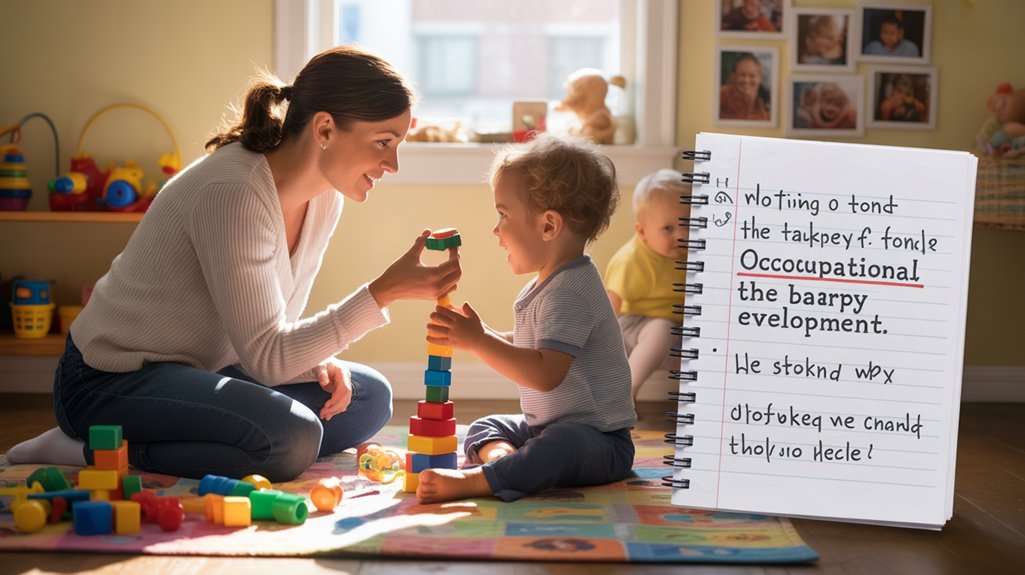
Recognizing concerning patterns marks only the beginning—your next step determines your child's developmental trajectory. When you notice struggles with developmental milestones, sensory processing challenges, or self-care difficulties, scheduling an occupational therapy evaluation becomes essential. Don't wait for problems to resolve independently—early intervention yields the strongest outcomes.
| Your Child's Challenge | Impact Without Support | Potential With Intervention |
|---|---|---|
| Delayed motor skills | Growing frustration, social isolation | Confidence, peer participation |
| Sensory processing difficulties | Daily meltdowns, avoidance behaviors | Regulation strategies, engagement |
| Self-care struggles | Dependence, lowered self-esteem | Independence, pride in abilities |
Contact your pediatrician to discuss observations and request a referral. Document specific concerns—when difficulties occur, their frequency, and triggering situations. You're not overreacting; you're advocating. Occupational therapy professionals will assess your child's unique needs and create targeted interventions that change challenges into capabilities, enabling your child to participate fully in life's activities.
Frequently Asked Questions
How Do I Know if My Kid Needs OT?
You'll notice signs when your child struggles with developmental milestones like dressing independently or using utensils effectively.
Watch for sensory processing challenges—overreacting to sounds, textures, or lights—and difficulties with fine motor skills such as holding pencils or manipulating small objects.
If you're observing persistent struggles with hand-eye coordination, emotional regulation, or social engagement, it's time to seek an occupational therapy evaluation.
Trust your instincts; early intervention can greatly support your child's growth and independence.
What Are the 7 Occupational Needs?
Wondering if your child's struggling with everyday tasks? The seven occupational needs include fine motor skills, gross motor coordination, sensory processing abilities, self-care skills, visual-perceptual development, social participation, and emotional regulation.
You'll notice these areas impact how your child buttons clothing, processes touch and sound, manages personal hygiene, and interacts with peers.
When you observe persistent challenges in multiple areas, it's time to seek an OT evaluation to support your child's developmental progress and independence.
Why Would a Child Be Referred to an OT?
Your child might be referred to an OT when they're experiencing developmental delays, struggling with fine motor skills like handwriting or buttoning, or showing sensory processing difficulties.
You'll notice these challenges impact their daily activities, self-care routines, and school performance.
An occupational therapist can assess whether your child needs support to develop age-appropriate skills.
They'll work collaboratively with you to address these concerns, helping your child participate more fully in meaningful activities and reach their developmental potential.
Does My Child Need an Occupational Therapy Checklist?
Think of a checklist as your compass through uncertain terrain. Yes, you'll benefit from an occupational therapy checklist to systematically evaluate concerns about your child's development.
It helps you document observations regarding developmental milestones, sensory processing challenges, and fine motor skills difficulties. This structured approach guarantees you don't overlook essential signs and provides valuable information for healthcare providers.
A checklist enables you to advocate effectively for your child's needs while supporting their journey toward independence.
Conclusion
You're your child's best advocate, and trusting your instincts is the compass guiding you toward the right support. If you've noticed several of these signs, don't wait for struggles to multiply. Early intervention opens doors that might otherwise remain closed, giving your child the tools they need to thrive. Contact a pediatric occupational therapist for evaluation—it's a proactive step that can change daily challenges into developmental victories. Your action today shapes their confident tomorrow.
Related Articles
- The Ultimate Guide to Sibling Conflict
- The Ultimate Guide to Family Meal Planning
- The Ultimate Guide to Kids Educational Games
- 20 Fun DIY Crafts to Strengthen Family Bonds
- The Ultimate Guide to Bedtime Routine

Written by Sarah Mitchell, M.S., CFLE
Founder & Lead Editor
Sarah is a Certified Family Life Educator with a Master's degree in Human Development and Family Studies from the University of Missouri. With 15+ years of experience as a parent educator and mother of three, she brings both professional expertise and real-world parenting wisdom to every article.
Credentials: M.S. in Human Development and Family Studies, Certified Family Life Educator (CFLE)