



Your toddler's separation anxiety typically begins around 7-9 months and peaks again near age two—it's actually a sign of healthy attachment, not a problem. You'll notice excessive clinging at 15-18 months, daycare distress at 2-3 years, and anticipatory worries by ages 3-5. The key strategies include establishing brief goodbye rituals, practicing gradual separations, and staying calm yourself since your child mirrors your emotions. Understanding what's normal at each stage helps you respond with confidence and know when professional support might be beneficial.
Key Takeaways
- Separation anxiety typically begins at 7-9 months when object permanence develops, with peaks in early months and around age two.
- Symptoms vary by age: 15-18 months show excessive clinging, 2-3 years fear abandonment, and 3-10 years develop anticipatory anxiety.
- Establish brief, consistent goodbye rituals and maintain upbeat tones during departures to reduce distress and provide predictability.
- Gradually practice separations with increasing duration and provide comfort items like stuffed animals for emotional security during absences.
- Seek professional help if anxiety persists beyond age three, causes physical symptoms, or disrupts daily routines despite consistent strategies.
Understanding Separation Anxiety: What Parents Need to Know
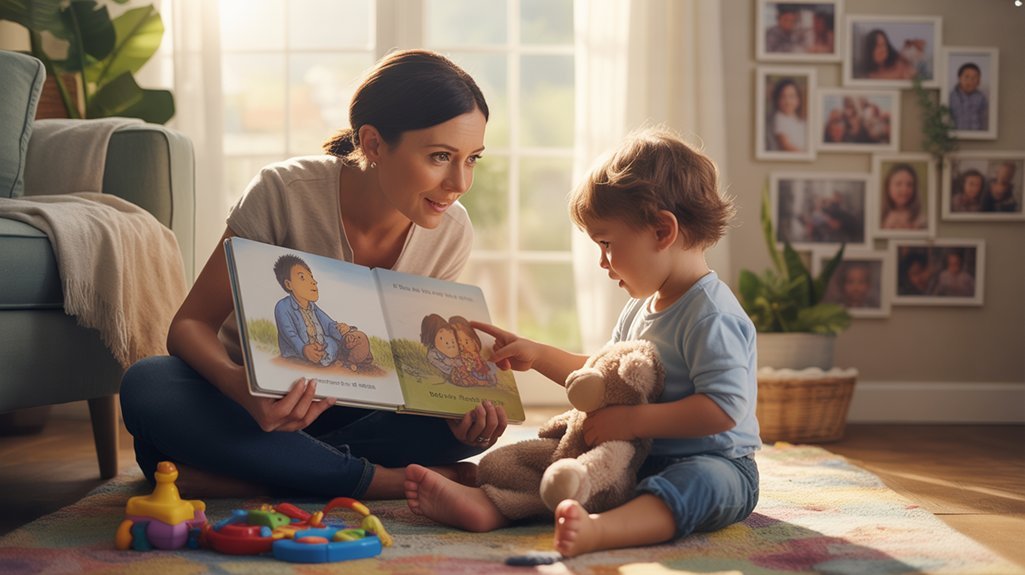
When your toddler clings to your leg and cries as you attempt to leave for work, you're witnessing a normal developmental milestone called separation anxiety. This developmental stage typically emerges between 7-9 months and resolves by age three, signaling healthy attachment to you as their caregiver.

Separation anxiety between 7-9 months and age three is a normal milestone that reflects your child's healthy emotional attachment.
Your child's distress stems from their growing understanding of object permanence—they now realize you exist even when you can't be seen, making your absence feel overwhelming.
You'll notice excessive clinging, tantrums during goodbyes, and significant distress at your departures.
While separation anxiety is a normal part of childhood, persistent anxiety that disrupts daily routines may require attention.
If symptoms interfere with your family's functioning or persist beyond typical developmental timeframes, consult your pediatrician. They can determine whether your child needs support from a mental health professional or if you're simply maneuvering expected developmental challenges that'll pass with consistent, patient guidance. Remember that maintaining your own self-care during these challenging moments helps you stay present and balanced, modeling healthy behaviors for your child.
When Separation Anxiety Begins and Peaks in Young Children
Your baby's separation anxiety follows a predictable timeline that begins around 7 to 9 months of age, coinciding with an essential cognitive milestone—the development of object permanence. At this stage, your child understands you exist even when out of sight, triggering distress at your departure.
You'll likely notice the first peak during these early months, with a second wave emerging around age two as your toddler becomes increasingly aware of their environment and attachment relationships.
These responses represent normal, healthy development in young children—signs that your child has formed secure bonds with you.
Most children naturally outgrow separation anxiety by age two, though individual timelines vary based on temperament and family circumstances.
However, if your child's anxiety persists beyond this age or greatly disrupts daily routines, consider seeking professional evaluation.
Recognizing these developmental patterns helps you respond with patience and understanding during these challenging changes. While separation anxiety is a normal part of development, families need supportive resources to navigate this phase effectively and maintain healthy family functioning.
Age-by-Age Symptoms: How Separation Anxiety Looks at Different Stages
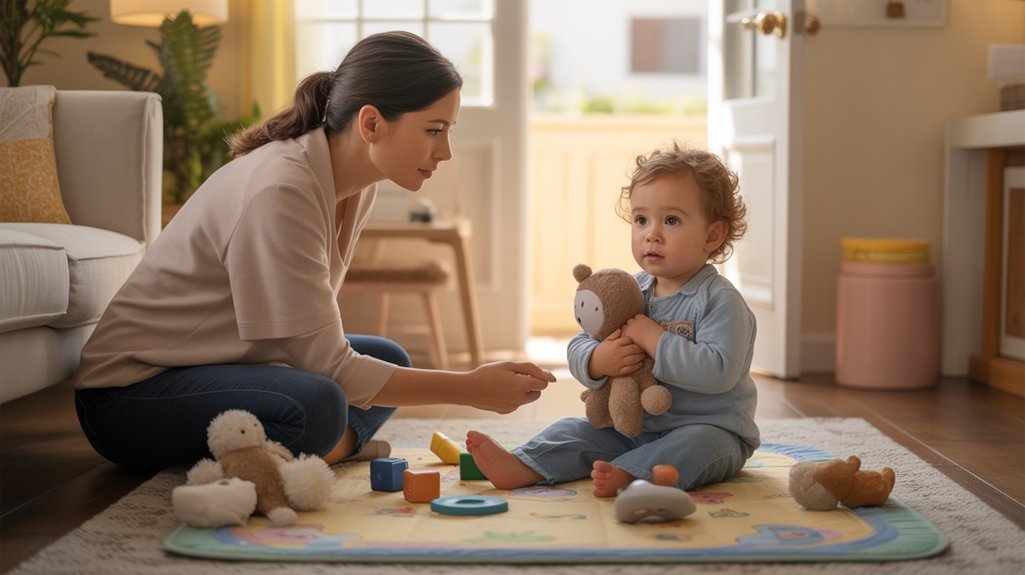
As your child grows from infancy through the early school years, separation anxiety manifests differently at each developmental stage. Understanding these age-specific patterns helps you recognize when your child needs extra support or mental health resources.
| Age Range | Key Symptoms |
|---|---|
| 15-18 months | Excessive clinging, tantrums during separations |
| 2-3 years | Distress at daycare drop-offs, fear of abandonment, difficulty calming |
| 3-5 years | Anticipatory anxiety, avoidance of sleepovers and parties |
| 6-10 years | Physical complaints (stomachaches), frequent reassurance-seeking |
While separation anxiety typically resolves by age 3, persistent symptoms that disrupt daily activities warrant consultation with mental health professionals. Watch for patterns where your child can't function normally at school, refuses all separations, or experiences physical distress consistently. Since the first three years are the most important for lifelong mental health and well-being, addressing separation anxiety early supports optimal development during this critical period. Early intervention supports healthy emotional development and prevents anxiety from intensifying as your child matures.
Practical Strategies to Help Your Toddler Manage Separation Anxiety
Separation anxiety doesn't have to overwhelm your family's daily routine when you implement targeted strategies that address your toddler's specific developmental needs.
Start by establishing a consistent goodbye ritual that emphasizes brevity—prolonged farewells often intensify distress. Your quick goodbye should remain upbeat and reassuring, signaling confidence in your child's ability to manage the separation.
Keep goodbyes short and confident—your calm, upbeat departure helps your toddler feel secure and capable of handling separation.
Build your toddler's coping skills through gradual practice sessions, beginning with brief absences and slowly extending the duration. Use concrete, age-appropriate language to explain your return: “I'll be back after your snack” provides more reassurance than abstract time references.
Comfort items like a favorite stuffed animal or blanket serve as transitional objects that provide emotional security when you're apart. These tangible reminders of home help your child self-soothe during challenging moments.
Your emotional state matters tremendously—toddlers mirror their caregivers' feelings. Maintaining composure during goodbyes communicates safety and trust, helping your child develop resilience through these developmental changes.
Understanding typical developmental milestones helps you recognize when separation anxiety behaviors are age-appropriate versus when they might warrant additional support from your pediatrician.
When to Seek Professional Help for Your Child's Separation Anxiety
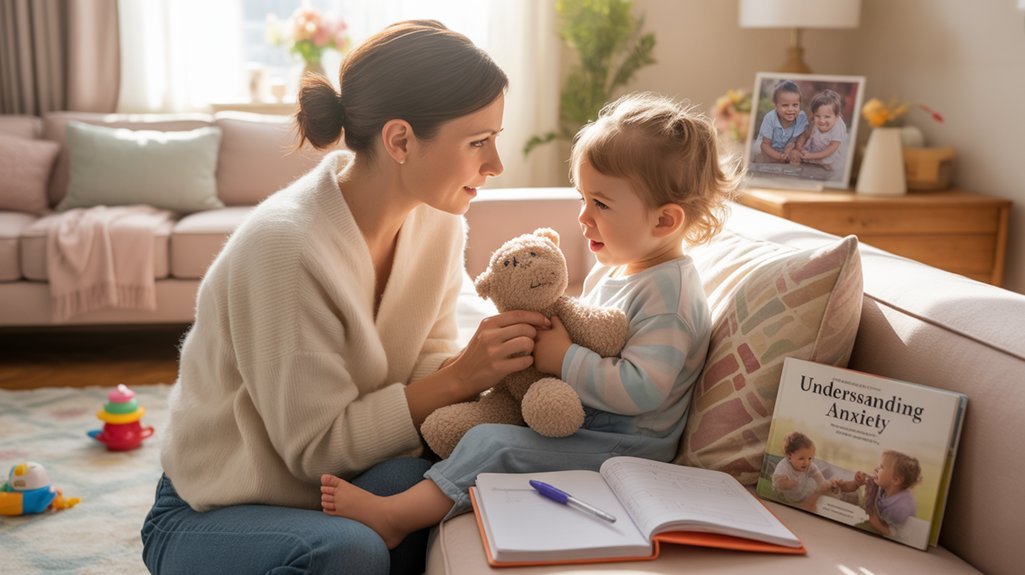
While most toddlers outgrow separation anxiety with consistent support and patience, some children experience distress that extends well beyond typical developmental patterns. If your child's anxiety persists past age 3 and disrupts daily activities like school attendance, professional evaluation becomes essential for ruling out separation anxiety disorder.
| Warning Sign | When to Act |
|---|---|
| Excessive clinging | Persistent inability to separate despite consistent strategies |
| Physical symptoms | Recurring stomachaches, headaches, or panic attacks during separations |
| Behavioral regression | Bedwetting or loss of previously mastered skills |
| Social avoidance | Refusing to attend events or interact with peers |
Early intervention greatly improves outcomes by preventing long-term emotional challenges. Consult your pediatrician if you observe extreme distress, uncontrollable tantrums during drop-offs, or avoidance patterns that limit your child's development. Mental health professionals can provide targeted strategies and support to help your child build resilience and confidence.
Normal Development, Not Disorder
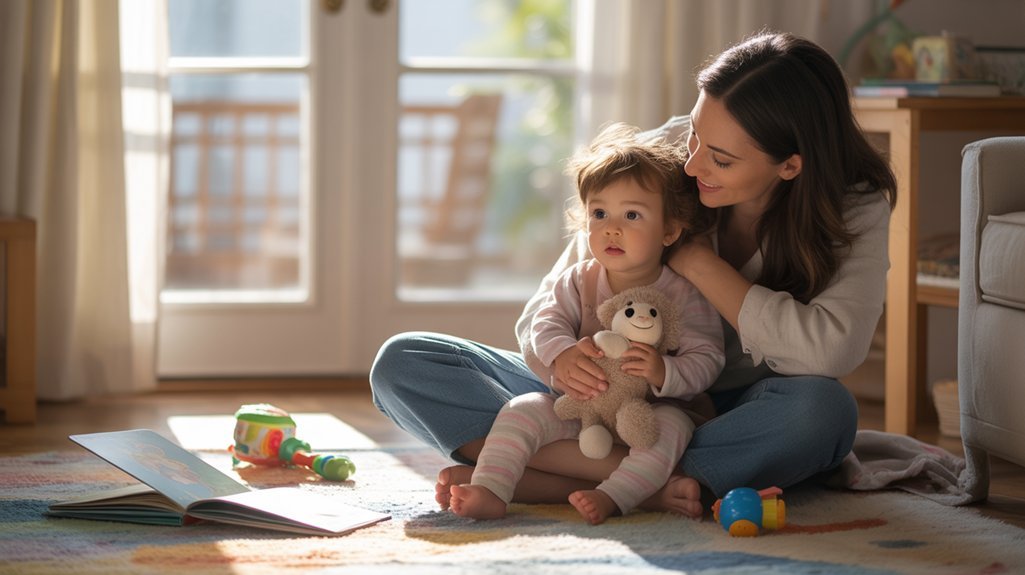
Before you worry that something is wrong with your clingy toddler, understand that separation anxiety represents healthy emotional growth rather than a problem to fix. This normal development signals your child's forming secure attachments and cognitive advances, particularly their grasp of object permanence—recognizing you exist even when out of sight.
Consider these developmental milestones:
- 8-9 months: Initial separation anxiety emerges as babies first understand object permanence.
- Around age two: Anxiety typically peaks as emotional development intensifies.
- By age three: Most children naturally outgrow these behaviors without intervention.
Your toddler's distress when you leave demonstrates they've bonded with you—a vital foundation for future relationships. Rather than viewing their clinginess as problematic, recognize it as evidence of healthy emotional development.
Your child's clinginess isn't a problem—it's proof of the secure attachment you've successfully built together.
While challenging for caregivers, this phase confirms your child's psychological growth is progressing normally. You're witnessing significant development, not disorder.
When Does It Peak?
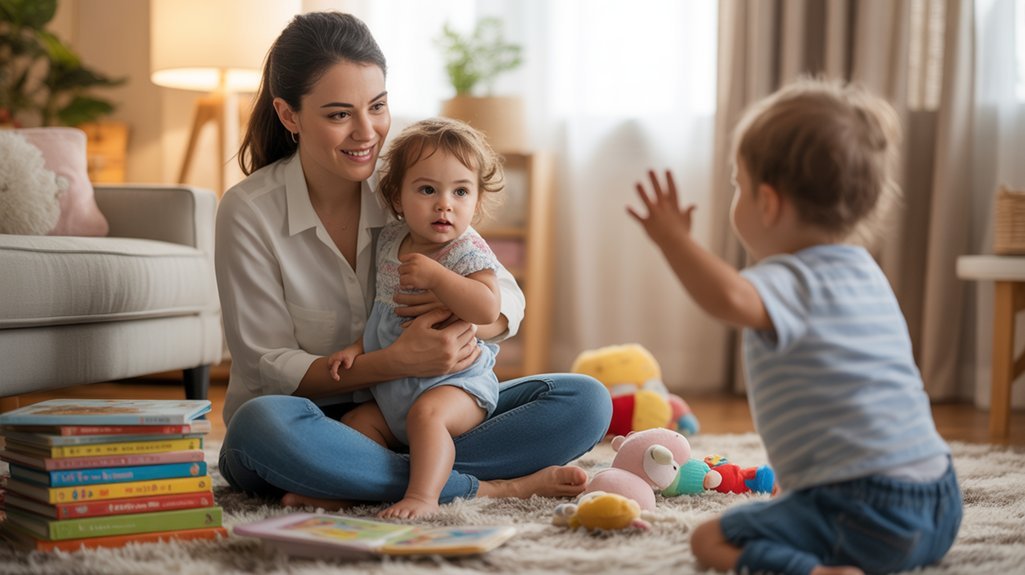
You'll likely notice your toddler's separation anxiety intensify around 7 to 9 months as they develop object permanence and realize you exist even when out of sight.
This peak period varies in length depending on your child's temperament and your family's routines, but many toddlers experience a second wave of heightened anxiety around age two as they navigate the tension between growing independence and their need for security.
Understanding these predictable developmental stages can help you respond with patience rather than worry when your child clings more tightly during drop-offs or bedtime.
Typical Peak Age Range
Separation anxiety follows a predictable developmental timeline, though every child's experience is unique.
You'll typically notice it emerging between 7-9 months as your child develops object permanence—the understanding that family members exist even when out of sight. The first peak usually occurs between 8 months and one year, when your child realizes caregivers can leave.
Many children experience a second wave around age two, coinciding with increased environmental awareness and stronger attachment bonds.
This variability means your child might show heightened anxiety at different times than peers.
Most children naturally outgrow separation anxiety by age two, though some continue experiencing it into preschool years.
If symptoms become severe or persistent, consult your pediatrician for guidance.
Signs of Peak Anxiety
During peak anxiety periods, your toddler's behavior will likely shift in noticeable ways. Watch for increased clinginess, crying when you leave the room, and visible distress during goodbyes.
These signs typically intensify between 7 to 9 months of age and resurface around age two, as your child understands object permanence but lacks the cognitive ability to grasp your return.
You'll notice the intensity varies based on your child's temperament and family interactions.
While most toddlers naturally outgrow these responses by age three, persistent symptoms beyond typical developmental stages may signal concerns requiring behavioral health evaluation.
Trust your instincts—if separation anxiety seems excessive or prolonged, consult your pediatrician to guarantee your child receives appropriate support.
Duration of Peak Period
Most toddlers experience two distinct waves of separation anxiety as part of normal development. The first wave typically develops between 7 to 9 months, when your child becomes aware you can leave.
The second peak emerges around age two, often intensifying as toddlers gain independence while still needing security.
Each child's timeline varies based on their unique temperament and developmental pace. While these peaks represent a normal developmental milestone, the intensity and duration differ among children.
You'll likely notice the anxiety gradually diminishing as your child approaches age three.
However, some toddlers show heightened anxiety outside these typical windows or experience prolonged distress. If separation anxiety persists beyond age three or greatly disrupts daily functioning, consider seeking professional guidance to support your child's emotional development.
Individual Variation Factors
While the typical timeline provides a helpful framework, your toddler's separation anxiety won't necessarily follow a textbook pattern. Individual variation means some children experience intense anxiety at 8 months, while others won't show significant distress until well past their first birthday.
Your child's temperament plays a significant role in how separation anxiety manifests. Some toddlers naturally adapt more easily to changes, while others require additional support and reassurance.
Alterations in family interactions or routine can intensify anxiety at any age, even after it seemed to resolve.
Understanding these individual variation factors helps you respond appropriately to your child's unique needs rather than comparing their experience to developmental milestones alone.
Trust your observations and seek guidance if persistent anxiety disrupts daily functioning.
Second Peak in Toddlerhood
Just when you thought your child had moved past the challenges of early separation anxiety, you may notice a resurgence around 15 to 18 months. This second peak occurs at a significant developmental stage when your toddler's growing independence clashes with their continued need for security. Your child might display intensified clinginess and distress during separations.
| Age Range | Common Behaviors |
|---|---|
| 15-18 months | Peak clinginess, frequent tantrums at drop-offs |
| 18-24 months | Gradual understanding of temporary separation |
| 24-30 months | Improved coping skills emerge |
| 30-36 months | Enhanced object permanence reduces anxiety |
Here's practical advice: establish consistent goodbye routines and keep farewells brief yet reassuring. Most children show improvement approaching age three as their cognitive understanding deepens and emotional regulation strengthens.
Quick Goodbye Rituals Work
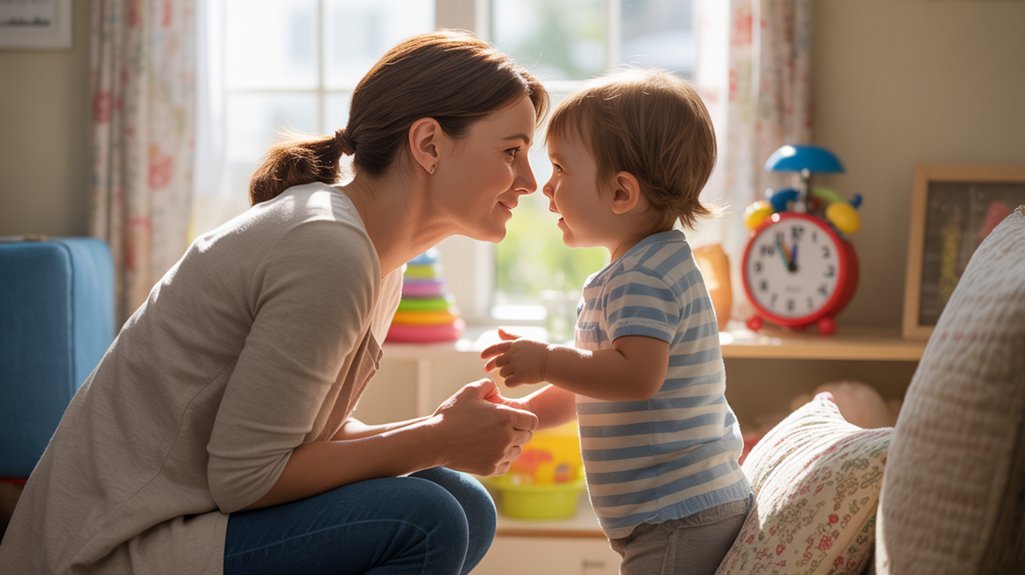
When your toddler clings to your leg at daycare drop-off, your instinct might tell you to stay longer and soothe them until they're calm.
Staying longer at drop-off feels right, but prolonging goodbyes can actually increase your toddler's anxiety rather than calm them.
However, research shows that quick goodbye rituals actually reduce separation anxiety more effectively than prolonged farewells.
A consistent goodbye routine gives your toddler predictability and control during changes.
Keep it short and sweet—lingering often intensifies distress rather than easing it.
Here's how to create an effective ritual:
- Design a special goodbye sequence like three kisses, a secret handshake, or a specific phrase such as “See you after snack time!”
- Use clear, age-appropriate language to explain when you'll return, linking it to concrete events in their day.
- Exit confidently after your ritual without sneaking away or repeatedly returning.
This structured approach builds trust.
Your toddler learns that goodbyes are temporary and that you'll always come back as promised.
Consistency Reduces Anxiety Over Time
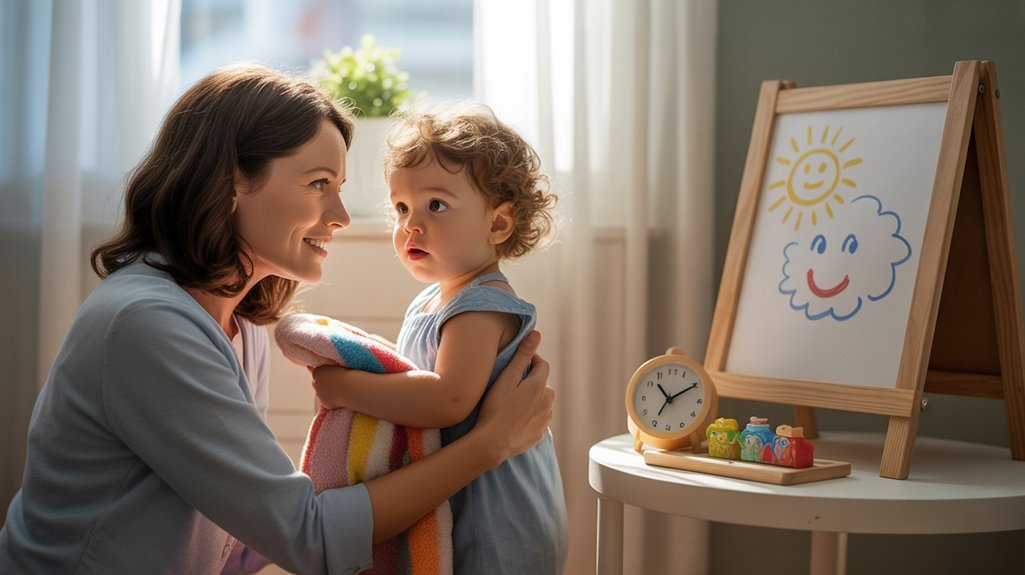
Your toddler's brain thrives on predictability, which is why maintaining the same separation routine day after day becomes one of your most powerful tools against anxiety. When you establish consistent drop-off times and follow identical goodbye rituals, you're building neural pathways that signal safety to your child's developing brain.
This consistency extends beyond timing. Using the same comfort items—like a familiar blanket—and repeating relatable phrases about your return (“I'll be back after naptime”) helps your toddler develop a framework for understanding temporary separations. Each predictable experience reinforces that you'll return, gradually diminishing their anxiety.
Start with brief practice separations, then slowly extend the duration. This progressive approach allows your child's nervous system to adapt without overwhelming them.
Frequently Asked Questions
How Do You Treat Separation Anxiety in Toddlers?
You'll treat separation anxiety by establishing consistent routines and practicing calming techniques like deep breathing together.
Start with gradual departures, leaving for short periods and slowly extending time away. Encourage your toddler to use comfort objects like a favorite stuffed animal for reassurance.
Offer positive reinforcement when they handle separations well, praising their bravery. Keep goodbyes brief and upbeat, and always follow through on your return promises to build trust and security over time.
What Is the 3 3 3 Rule for Anxiety in Toddlers?
Like a gentle bridge guiding your child across turbulent waters, the 3 3 3 rule for toddler anxiety offers structured emotional support during separations.
You'll spend three minutes saying goodbye, allow three minutes for self-soothing, then encourage three minutes of engaging activity.
These coping strategies create predictable routines that validate your toddler's feelings while building resilience.
Research shows this approach reduces prolonged distress and helps children develop healthy separation skills, ultimately serving their developmental needs compassionately.
What Age Is Hardest for Separation Anxiety?
You'll typically find separation anxiety hardest between 7-9 months and around age two, when emotional development intensifies.
During these peaks, your toddler's separation triggers can feel overwhelming. Understanding that this reflects normal attachment helps you provide vital parent support.
You'll want to implement coping strategies like consistent goodbyes and reassurance rituals. While challenging, remember you're guiding them through significant developmental milestones.
If anxiety persists beyond age three and disrupts daily life, consider seeking professional guidance to support your child's needs.
At What Age Does Separation Anxiety Typically Peak in Infants?
Ironically, just as your infant's love deepens, so does their distress—separation anxiety typically peaks between 7 to 9 months.
This vital infant milestone signals healthy emotional development and secure attachment styles forming. You'll notice increased crying when you leave, but don't worry; it's normal.
Understanding this phase helps you develop effective coping strategies, like consistent goodbye routines and reassuring returns.
Conclusion
Steering your toddler's separation anxiety isn't always smooth sailing, but you're equipping yourself with the right tools. Remember, those tears and clingy moments are actually signs of a healthy attachment—you've created a secure home base. Stay consistent with your goodbyes, trust the developmental process, and give yourself grace on tough days. You're not just surviving these phases; you're helping your child build resilience that'll serve them throughout life. You've got this.
Related Articles
- The Ultimate Guide to Sibling Conflict
- The Ultimate Guide to Family Meal Planning
- The Ultimate Guide to Kids Educational Games
- 20 Fun DIY Crafts to Strengthen Family Bonds
- The Ultimate Guide to Bedtime Routine

Written by Sarah Mitchell, M.S., CFLE
Founder & Lead Editor
Sarah is a Certified Family Life Educator with a Master's degree in Human Development and Family Studies from the University of Missouri. With 15+ years of experience as a parent educator and mother of three, she brings both professional expertise and real-world parenting wisdom to every article.
Credentials: M.S. in Human Development and Family Studies, Certified Family Life Educator (CFLE)