

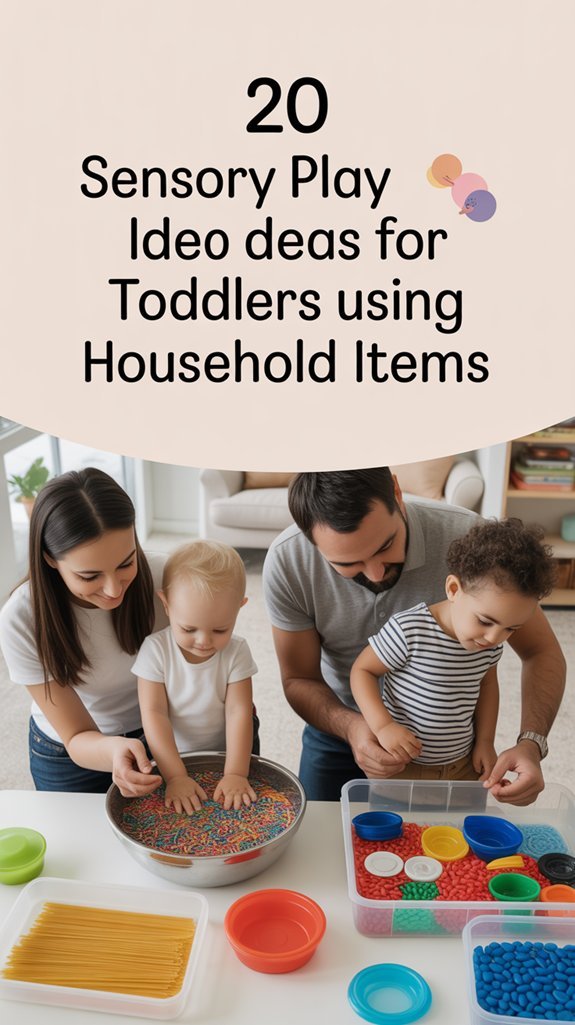

You can create engaging sensory experiences for your toddler using items you already have at home. Try water and food coloring exploration, cloud dough made from flour and oil, whipped aquafaba foam, dyed rice bins, or homemade oobleck from cornstarch. Add shaving cream play, frozen toy rescues, colored spaghetti bins, kinetic sand, and playdough with cookie cutters. These activities develop fine motor skills, encourage creativity, and support brain development through safe, supervised exploration. The following ideas will show you exactly how to set up each activity with simple step-by-step guidance.
Key Takeaways
- Water activities with food coloring, ice cubes, and spray bottles develop fine motor skills and teach scientific concepts.
- Cloud dough, aquafaba foam, and shaving cream offer tactile exploration while strengthening hand coordination and creativity.
- Dyed rice, colored spaghetti, and corn kernels in bins provide textured sensory experiences that enhance motor development.
- Kinetic sand and homemade playdough encourage open-ended creative play with minimal mess and easy cleanup.
- Common household items like squeeze bottles, tongs, cookie cutters, and containers extend sensory play possibilities inexpensively.


Complete Sensory Bin Kit for Toddlers
Best Sensory Bin Fillers
These safe, mess-friendly fillers create engaging tactile experiences for little explorers.


Best Water Play Toys
Water play provides calming sensory input while building pouring, scooping, and hand-eye coordination skills.

Step2 Splash & Scoop Water Table
- Perfect height for toddlers to stand and play
- Multiple activity zones keep kids engaged
- Includes accessories for scooping and pouring
- Durable construction for indoor/outdoor use
Best Tactile & Texture Toys
These toys stimulate the sense of touch and help toddlers explore different textures safely.


Play-Doh 24-Pack of Colors
- Classic sensory play that never gets old
- Non-toxic and safe for toddlers
- 24 vibrant colors for endless creativity
- Builds hand strength and fine motor skills
Water and Food Coloring Exploration
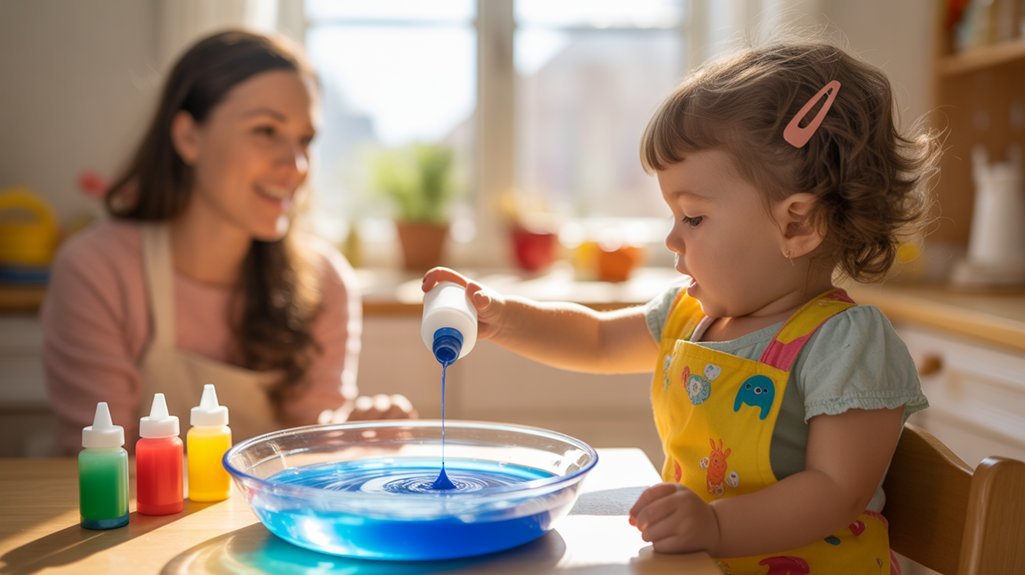
Water play with food coloring offers one of the simplest yet most enchanting sensory experiences you can set up for your toddler. Fill squeeze bottles with water and different food colors, then let your child discover color mixing as they create new hues.
They'll observe liquid properties while experimenting with cause-and-effect relationships.
Enhance their imaginative play by adding plastic animals or flowers to the colored water. Your toddler can design rescue missions or build underwater worlds, extending their engagement and creativity.
This activity naturally develops fine motor skills as children manipulate cups, spoons, and strainers to pour, scoop, and transfer materials. They'll strengthen hand-eye coordination while exploring.
Set up the activity in your bathtub or a shallow container to contain the mess. This designated space allows your toddler to freely explore sensory experiences while you maintain easy cleanup, making it a sustainable activity you'll feel confident repeating.
These hands-on experiences support healthy, active living by encouraging physical movement and engagement that helps kids thrive through play-based learning.
Cloud Dough Creation Station
Cloud dough converts just two ingredients into a sensory wonderland that'll captivate your toddler for hours. Mix 8 cups of all-purpose flour with 1 cup of vegetable or coconut oil to create this soft, moldable texture. The sensory play benefits include strengthened fine motor skills as your child squeezes, molds, and manipulates the dough.
Explore these cloud dough variations to improve the experience:
| Addition | Purpose |
|---|---|
| Cocoa powder | Creates chocolate-scented play |
| Food coloring | Produces vibrant colored dough |
| Water | Adjusts texture consistency |
| Construction vehicles | Encourages imaginative scenarios |
| Cookie cutters | Develops shape recognition |
You'll appreciate the simple cleanup—cloud dough can be composted when playtime ends, making it an eco-friendly choice. Your toddler can build structures, create patterns, and engage in construction-themed play while developing essential developmental skills through this tactile experience. These activities are particularly valuable during early childhood development when the brain is rapidly forming critical connections that support lifelong learning.
Whipped Aquafaba Foam Play
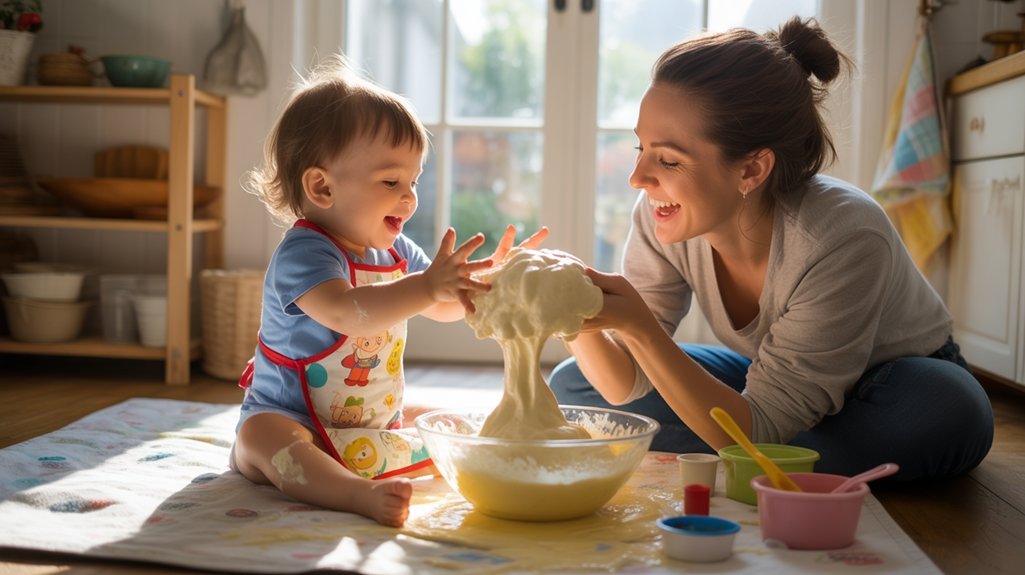
Chickpea liquid changes into fluffy clouds of sensory fun when you whip aquafaba with cream of tartar until stiff peaks form. This taste-safe foam offers remarkable aquafaba benefits for your toddler's development while giving you peace of mind during play.
Set up a sensory exploration station with spoons, cups, and molds alongside the whipped foam. Your little one can scoop, pour, and shape the material, strengthening fine motor skills while engaging multiple senses.
The soft texture invites touching, squishing, and creative experimentation, encouraging imaginative play that supports cognitive growth.
You'll appreciate the practical side of this activity—cleanup requires only water to rinse away the foam. Since aquafaba is completely edible, you won't worry if curious hands reach mouths during exploration.
This simple household ingredient evolves into an enriching sensory experience that nurtures your toddler's creativity, motor development, and natural curiosity through meaningful play. These types of hands-on activities support both learning and emotional needs as your child develops essential skills through exploration and discovery.
Dyed Rice Discovery Bin
Rainbow grains of dyed rice change an ordinary plastic bin into an enchanting sensory wonderland that'll hold your toddler's attention for extended exploration.
You'll create this engaging activity by mixing uncooked rice with food coloring and vinegar, producing vibrant sensory textures that invite tactile discovery.
Set up a large shallow tub filled with your colorful rice, then add measuring cups, scoops, and containers for open-ended play. As your child pours and transfers the rice, they'll strengthen fine motor skills and hand-eye coordination naturally.
You can introduce color mixing concepts by providing separate bins of different colored rice for sorting activities.
The non-toxic materials make this a safe choice for supervised sensory play, though you'll want to watch younger toddlers carefully.
This type of hands-on exploration is especially valuable as children develop, following similar principles that support gentle parenting approaches through natural learning experiences.
Cleanup's delightfully simple—just sweep or vacuum any scattered grains. Store the remaining rice in an airtight container, and you've got ready-to-use sensory materials for future learning sessions.
Homemade Oobleck Adventures
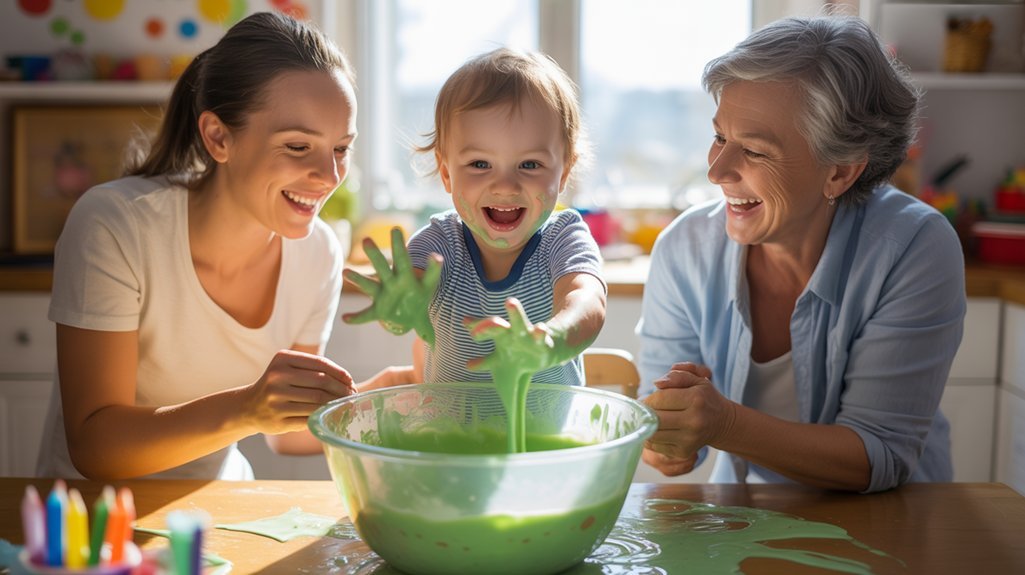
You can create Oobleck by mixing two parts cornstarch with one part water—it's that simple.
Your toddler will discover how this fascinating mixture flows like a liquid when poured but becomes solid when squeezed or pressed.
Since Oobleck easily rinses away with water, cleanup is straightforward, though you'll want to supervise play and keep it contained in a bin or tray.
Simple Two-Ingredient Recipe
Making Oobleck at home requires just cornstarch and water—that's it.
You'll mix two parts cornstarch with one part water to create this remarkable non-Newtonian fluid. The Oobleck texture changes right before your toddler's eyes, offering an incredible solid liquid comparison they can experience firsthand.
When they squeeze or press it, the mixture hardens like a solid. Release the pressure, and it flows like liquid through their fingers.
You can improve the visual appeal by adding food coloring to spark their curiosity during play. This hands-on exploration strengthens fine motor skills while promoting cognitive development through experimentation.
When playtime ends, cleanup is hassle-free—simply rinse surfaces with warm water or sweep up any dried bits.
You're providing meaningful learning experiences through accessible household materials.
Exploring Solid-Liquid Properties
When your toddler presses down firmly on Oobleck, they'll discover it resists like a solid surface—but the moment they lift their hand, it oozes through their fingers like thick liquid. This dramatic shift demonstrates Oobleck viscosity in action, offering your child a hands-on lesson in cause and effect.
Encourage your toddler to experiment with different interactions: slow stirring versus quick jabbing, gentle poking versus firm pounding. Each action reveals unique solid liquid interaction patterns that build their understanding of how materials respond to force.
You'll witness cognitive development as they predict and test outcomes.
Enhance the experience by adding scoops, spoons, or toy cars. These tools let your toddler develop fine motor skills while investigating how Oobleck behaves under various pressures, creating memorable learning moments through purposeful play.
Easy Cleanup Tips
Smart preparation changes Oobleck play from potentially messy chaos into contained, stress-free exploration.
Begin your sensory organization by placing a large tray or shallow bin under the activity area, then layer an old sheet or tablecloth beneath everything to catch drips. These cleanup strategies let you focus on your toddler's learning rather than worrying about mess.
When your play session ends, you'll appreciate how easily spilled Oobleck pours back into its container, minimizing waste.
If you've added food coloring for improved sensory experiences, keep soap and water nearby for quick surface cleaning.
This thoughtful setup protects your home while giving your little one freedom to explore this fascinating non-Newtonian fluid's unique solid-liquid properties fully.
Bubble Foam Sensory Fun
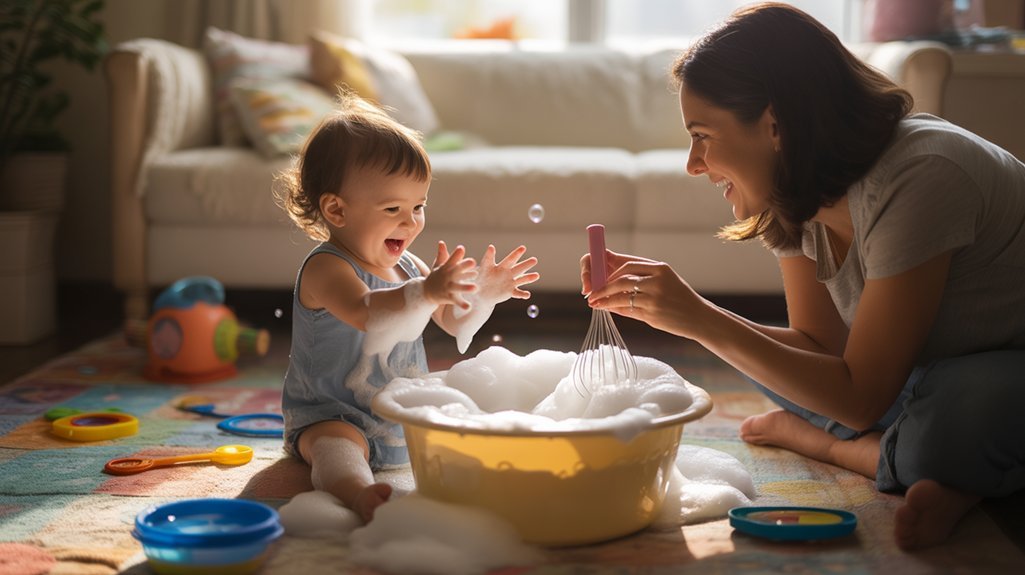
Bubble foam changes ordinary dish soap and water into a cloud-like sensory wonderland that toddlers can't resist touching, squishing, and exploring.
You'll discover numerous bubble foam benefits as your little one develops fine motor skills through scooping, pouring, and manipulating the fluffy texture. The activity is completely safe since all materials are non-toxic and rinse away easily with water.
Create engaging bubble foam variations by adding food coloring to alter plain white foam into vibrant sensory experiences. You can set up this activity indoors or outdoors, depending on your space and weather conditions.
Improve the exploration by providing kitchen utensils like whisks, spoons, and measuring cups, which encourage imaginative play while children investigate different textures and movements.
Cleanup couldn't be simpler—just rinse everything with water when playtime ends. This hassle-free approach lets you focus on nurturing your toddler's development rather than worrying about messy aftermath.
Kinetic Sand Sculpting
Kinetic sand sculpting alters playtime into an enchanting sensory adventure that'll keep your toddler engaged for hours. This moldable material sticks to itself rather than spreading everywhere, making cleanup markedly easier for you while your little one explores their creativity.
You'll find that kinetic sand creations become more elaborate when you add simple tools like cookie cutters, rolling pins, and molds from your kitchen. These accessories change basic sensory sculpting into opportunities for developing fine motor skills and hand-eye coordination.
The unique texture encourages your toddler to build castles, mountains, or imaginative landscapes through open-ended play. You're nurturing their creativity while they squeeze, mold, and shape this safe material.
When you invite other children to join, sensory sculpting becomes a collaborative experience that strengthens social skills. Your toddler learns sharing, taking turns, and working together—essential abilities that'll serve them throughout life.
This tactile exploration supports their developmental growth while providing meaningful engagement.
Food Colored Spaghetti Bin
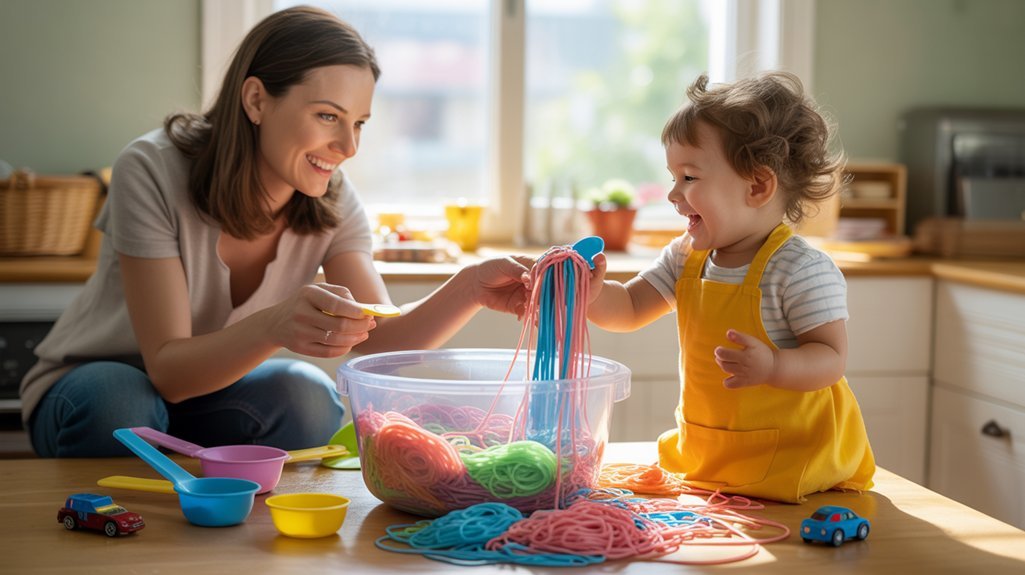
You can change ordinary pasta into an enchanting sensory experience by boiling spaghetti in water mixed with food coloring.
This simple preparation creates vibrant, slippery strands that invite your toddler to explore different textures while developing fine motor skills through squishing, pulling, and transferring.
Setting up a shallow bin with the colored spaghetti, along with scoops and cups, encourages hands-on learning that's both engaging and taste-safe for young explorers.
Preparing Colorful Spaghetti Play
Changing ordinary pasta into a rainbow of textures creates one of the most enchanting sensory experiences for toddlers. You'll start by cooking spaghetti according to package directions, then dyeing it with food coloring mixed in water. This process introduces opportunities for color mixing and vibrant spaghetti art exploration.
| Preparation Step | Purpose |
|---|---|
| Rinse in cold water | Stops cooking, prevents sticking |
| Set up shallow bin | Provides contained exploration space |
| Add various tools | Encourages fine motor development |
Include tongs, measuring cups, and small plastic toys to support imaginative play. As children scoop and manipulate the colorful strands, they'll develop essential fine motor skills while exploring diverse textures. Cleanup's straightforward—gather leftover pasta for disposal, then sweep any spills.
Engaging Sensory Exploration Activities
Once your colorful spaghetti is ready, the real magic begins as your toddler's hands plunge into this slippery, cool sensory wonderland.
You'll notice immediate sensory integration benefits as little fingers explore different textures and temperatures while grasping wet strands. Offer child-safe tongs, measuring cups, and spoons to strengthen fine motor control through purposeful scooping and sorting activities.
Enhance toddler engagement strategies by introducing color-matching games or encouraging imaginative scenarios like restaurant play.
You're nurturing cognitive development while your child naturally discovers cause-and-effect relationships through manipulation. The contained bin environment guarantees mess stays manageable, letting you focus on observing developmental milestones rather than worrying about cleanup.
This simple activity delivers rich learning experiences that support your little one's growth across multiple developmental domains simultaneously.
Dry Corn Kernel Exploration
Dry corn kernels offer toddlers a delightful sensory experience that's both safe and engaging. You'll discover numerous corn kernel benefits as children explore this texture-rich material in their sensory bins. The kernels provide excellent tactile stimulation while building vital fine motor skills through pouring and scooping activities.
Enhance your sensory bin creativity by including various tools like funnels, cups, and measuring spoons. These additions encourage problem-solving as children transfer kernels between containers. You can also hide small toys—plastic animals or vehicles—within the kernels to promote discovery-based learning and imaginative play.
For added visual interest, dye the kernels using food coloring before play. This simple step alters ordinary kernels into vibrant learning tools that captivate young minds for extended periods.
Cleanup's straightforward since you can quickly sweep or vacuum any spilled kernels. This convenience makes dry corn kernel exploration an ideal indoor activity that supports developmental growth while minimizing your preparation and cleanup time.
Ice Cube Rescue Activity
You'll create an exciting rescue mission by freezing small toy animals or figurines in muffin tins filled with water overnight.
Once frozen, give your toddler warm water and simple tools like spoons, pipettes, or droppers to help them melt the ice and free their trapped friends.
This hands-on activity teaches them about temperature differences and texture changes while building fine motor skills through purposeful, supervised play.
Freezing Toys in Ice
The Ice Cube Rescue Activity changes ordinary frozen water into an exciting sensory adventure that'll captivate your toddler's curiosity. You'll simply fill ice cube trays with water, place small toys or figurines inside, and freeze for several hours.
This straightforward preparation creates meaningful learning opportunities for the child you're caring for. As your toddler works to free the trapped toys using spoons or small cups, they'll develop essential fine motor skills through hands-on sensory exploration.
They'll discover scientific concepts firsthand, observing ice melting and converting into liquid water. Consider adding food coloring before freezing to improve visual interest—watching colors blend as ice melts adds another dimension to their discovery.
This activity effectively combines play with learning while keeping your toddler engaged in safe, developmentally-appropriate sensory exploration.
Tools for Melting Ice
Equipping your toddler with simple melting tools alters the Ice Cube Rescue Activity into a hands-on science experiment they'll love. These melting techniques modify sensory exploration into purposeful learning while developing fine motor skills.
| Tool | Skill Development | Safety Note |
|---|---|---|
| Warm water in droppers | Pincer grip, hand-eye coordination | Supervise temperature |
| Spray bottles | Hand strength, bilateral coordination | Use child-safe bottles |
| Spoons and tongs | Manipulation skills, problem-solving | Choose rounded edges |
Offer both warm and cold water so your toddler can discover which temperature melts ice faster. Let them use their hands too—touching different temperatures improves tactile awareness. As they work, discuss why the ice melts and how water changes. This approach supports cognitive development while keeping the activity engaging and educational.
Exploring Temperature and Texture
When toddlers grasp cold ice cubes containing trapped animals, they experience dramatic temperature contrasts that sharpen sensory awareness.
You'll notice children instinctively react as frozen surfaces meet warm hands, creating powerful learning moments about physical properties.
Guide your toddler's sensory exploration by encouraging them to describe what they feel—smooth ice, rough textures, and slippery melting surfaces.
As they manipulate ice cubes with spoons or tongs, they'll develop fine motor skills while discovering how warmth affects frozen objects.
This temperature contrast activity naturally invites imaginative play.
Children create rescue narratives while observing ice change into water.
Always supervise closely, ensuring safe water interactions and appropriate handling of cold materials.
You're nurturing tactile learning that builds scientific understanding through hands-on discovery.
Shaving Cream Sensory Play
Shaving cream alters ordinary playtime into an extraordinary sensory experience that toddlers can't resist touching, squishing, and exploring.
You'll need just a shallow container and a small amount of foam to create this engaging activity. The soft, fluffy texture encourages tactile exploration while strengthening fine motor skills through natural manipulation.
The soft, fluffy texture invites little hands to explore, squeeze, and manipulate while naturally building essential fine motor skills.
Enhance the experience by adding food coloring drops, changing simple play into vibrant shaving cream art. Your little ones can swirl colors together, discovering how hues blend and change.
For added sensory dimensions, consider using scented shaving cream varieties that introduce olfactory learning.
Incorporate kitchen utensils like spatulas, spoons, or toy tools to extend creative possibilities. Children can scoop, spread, and create patterns while developing hand-eye coordination.
The beauty of this activity lies in its simple cleanup—just rinse surfaces and skin with water. You're providing meaningful sensory development without complicated preparation or extensive mess management.
Homemade Playdough Creations
Homemade playdough offers toddlers a tactile experience that builds strength in growing fingers while sparking imaginative play.
You'll find that simple playdough recipes require just 2 cups flour, 1 cup salt, 2 tablespoons cream of tartar, 2 tablespoons vegetable oil, and 2 cups boiling water. This creates a safe, cost-effective material you can customize for each child's needs.
Enhance the sensory experience by adding food coloring, essential oils, or spices like cinnamon. These additions change basic dough into multi-sensory learning opportunities that engage sight, touch, and smell simultaneously.
As toddlers roll, shape, and manipulate the dough with their hands and simple tools, they're developing vital fine motor skills needed for future writing and self-care tasks.
Proper playdough storage in airtight containers guarantees you can reuse the material multiple times, making this a sustainable choice for ongoing developmental activities.
You're providing children with endless opportunities to create, explore, and grow through hands-on learning.
Measuring Cup Pouring Station
A measuring cup pouring station offers endless learning opportunities with minimal setup—you'll just need various cups, bowls, and safe materials like rice or dry pasta.
This simple activity strengthens your toddler's fine motor skills, hand-eye coordination, and early math concepts as they pour, scoop, and transfer materials between containers.
You can keep cleanup manageable by using a washable surface or placing an old sheet underneath the station, allowing your child to explore freely without stress.
Simple Setup and Materials
Setting up a measuring cup pouring station takes just minutes and requires items you likely already have in your kitchen. Gather plastic measuring cups in various sizes, several bowls, and a shallow tray to catch spills.
This simple arrangement provides immediate measuring cup benefits as your toddler practices scooping and pouring with different volumes. Fill containers with rice, beans, or water to create engaging textures.
For added visual interest, use colored water or food-dyed rice that captivates their attention while offering sensory play advantages. Place an old sheet or large tray underneath your entire setup to simplify cleanup—just gather the corners and pour materials back into storage.
This practical approach lets you focus on guiding your child's exploration rather than worrying about mess.
Developmental Skills Being Built
Every scoop and pour at this simple station strengthens multiple developmental areas simultaneously.
You'll observe your toddler's fine motor skills advancing as they practice pouring techniques, learning to grip cups firmly and control material flow with increasing precision. This hands-on experience introduces volume concepts naturally—children discover through experimentation how containers hold different amounts and how materials behave when transferred.
The activity builds problem-solving abilities as your little one figures out how to prevent spills and adjust their movements accordingly.
Tactile exploration through rice, sand, or water engages their sensory processing, helping them understand textures and properties through direct observation.
When multiple children participate together, they'll develop social competencies by sharing materials, taking turns, and communicating their discoveries, creating meaningful learning opportunities you're facilitating.
Tips for Mess Management
While pouring stations offer tremendous learning value, containing the inevitable mess doesn't require elaborate preparation.
You'll enhance sensory exploration benefits by placing a large, shallow plastic bin or tray beneath your measuring cups and containers. This simple boundary catches spills and converts cleanup into another learning opportunity.
Introduce rice, beans, or water beads to vary textures while teaching volume concepts. As part of your toddler engagement strategies, establish clear guidelines about keeping materials within the designated area. This boundary-setting encourages responsibility without limiting exploration.
After playtime, involve your toddler in pouring spilled materials back into the bin.
You're not just tidying up—you're teaching resourcefulness and building positive cleanup habits that'll serve them well beyond sensory play activities.
Soap Foam Sensory Experience
Soap foam sensory play converts two simple household ingredients into an engaging tactile experience that'll captivate your toddler's attention while building essential developmental skills.
You'll create this fluffy foam texture by mixing 2 tablespoons of dish soap with 1/4 cup of water, then whipping it with a hand mixer until it reaches a cloud-like consistency.
The sensory benefits extend beyond entertainment—your child develops fine motor skills by manipulating the foam with hands, spoons, or whisks.
You can improve the experience by adding food coloring, allowing your toddler to explore color mixing while engaging multiple senses simultaneously.
This activity offers peace of mind since soap foam is taste-safe, though you'll want to supervise to prevent excessive ingestion.
Cleanup couldn't be simpler—just rinse surfaces and your child with water.
It's an ideal choice when you're looking for meaningful play that supports your toddler's development without complicated preparation.
Water Beads Discovery Bin
Water beads create a mesmerizing sensory experience that'll change your toddler's playtime into a hands-on learning adventure.
These colorful gel spheres expand when soaked, offering incredible sensory benefits through their unique squishy texture and visual appeal.
Set up your discovery bin by soaking the beads according to package directions, then add scoops, small containers, and toys to encourage exploration. Your child will develop fine motor skills while learning about texture, size, and cause-and-effect relationships through hands-on play.
Water bead safety requires your constant supervision. While they're designed for sensory play, they pose serious choking hazards if ingested, so never leave your toddler unattended during this activity. Keep beads away from mouths and younger siblings.
Cleanup's straightforward—simply vacuum or sweep any spills. You'll appreciate that water beads are reusable; just re-soak them for future play sessions.
This cost-effective activity promotes cognitive development while providing endless sensory exploration opportunities for the children you're nurturing.
Cookie Cutter Stamping Activity
You'll need just a few basic supplies to get started with cookie cutter stamping: homemade or store-bought playdough, a variety of cookie cutters in different shapes and sizes, and a flat surface for play.
To make this activity more engaging, you can add sensory elements like glitter, vanilla extract, or cinnamon to the dough before your toddler begins stamping.
Encourage your child to press firmly, twist the cutters gently, and experiment with layering different shapes to build their hand strength and coordination.
Materials Needed for Stamping
Cookie cutter stamping changes simple household items into creative tools that spark your toddler's imagination. You'll need just a few supplies to get started with this engaging activity.
Gather various cookie cutter shapes in different sizes—seasonal designs work wonderfully for themed learning experiences. Select non-toxic, washable paints in multiple colors to guarantee safety and simple cleanup. You'll also need sturdy paper or cardstock, shallow containers for paint, and protective covering for your workspace.
These stamping techniques help your child explore textures while developing fine motor skills through pressing and lifting motions. The cookie cutter shapes you choose can introduce educational themes, from nature elements to holiday symbols.
Keep paper towels and wet wipes nearby for quick cleanups, allowing you to focus on guiding your toddler's creative exploration.
Techniques to Enhance Play
When you're ready to expand your toddler's cookie cutter stamping experience, introduce textured materials like playdough, kinetic sand, or cloud dough alongside traditional paint.
These varied surfaces boost toddler engagement while strengthening hand muscles through different resistance levels. Add food coloring to create opportunities for color recognition and mixing experiments that support sensory development.
Transform stamping into storytelling by asking your child to describe their creations. “What's your star doing?” or “Where's the circle going?” prompts language growth while keeping little hands busy.
Set up a large tray beneath your workspace to contain mess and simplify cleanup—you'll simply gather excess materials when play concludes.
These intentional techniques turn simple stamping into rich learning moments that nurture your toddler's creativity and developmental progress.
Homemade Snow Sensory Bin
Since winter weather doesn't always cooperate with outdoor play plans, a homemade snow sensory bin brings the magic of snow indoors safely and mess-free.
You'll need just 8 cups of cornstarch and 1 cup of conditioner to create this fluffy, non-toxic mixture that's perfect for toddlers.
This sensory exploration activity strengthens fine motor skills as children scoop, mold, and manipulate the snow-like texture. You can enrich their experience by adding small plastic snowmen, winter-themed toys, or cookie cutters to encourage imaginative play.
Consider including glitter or fake snow for extra visual appeal and tactile interest.
The beauty of homemade snow lies in its simplicity and safety. It engages multiple senses simultaneously—touch and sight—while allowing toddlers to explore freely without outdoor weather concerns.
Cleanup is straightforward, making this an ideal indoor activity during cold months. You're providing meaningful developmental opportunities while creating memorable winter experiences for the children in your care.
Gelatin Squish Bags
Gelatin squish bags offer toddlers a safe, mess-contained way to explore fascinating textures through tactile play. You'll simply mix flavored gelatin with water, pour it into resealable plastic bags, and seal them securely.
The sensory benefits include strengthening fine motor skills as your little ones squeeze, press, and manipulate the wobbly substance inside.
Different gelatin flavors create vibrant colors that capture children's attention while they explore. You can improve the experience by adding plastic toys, beads, or glitter before sealing, giving toddlers visual elements to discover.
Refrigerating the bags creates a firmer texture that provides varied resistance during play.
This activity supports your child's sensory development through hands-on exploration without requiring extensive cleanup—you'll simply dispose of the bags when playtime ends.
The straightforward preparation using household ingredients makes this an accessible option for busy caregivers seeking meaningful developmental activities that engage multiple senses simultaneously.
Bubble Wrap Stomp Painting
Bubble wrap stomp painting changes ordinary packing material into an exciting sensory adventure that gets toddlers moving while they create art.
You'll simply lay a large sheet of bubble wrap on the ground, apply non-toxic paint to the bubble side, and let your toddler stomp with bare feet or press with their hands. Each jump creates unique stomp patterns while building gross motor skills through active movement.
Transform packing material into an active art station where every stomp builds motor skills and creates colorful masterpieces.
This activity offers rich sensory feedback as children feel the bubbles pop beneath their feet and watch colorful designs emerge. The tactile experience helps toddlers explore cause-and-effect relationships while developing body awareness.
You can improve their engagement by playing music or creating rhythmic stomping sequences, which adds auditory stimulation to their creative expression.
Cleanup couldn't be easier—rinse the paint with water and save the bubble wrap for future sessions or other crafts. This reusable approach makes it perfect for parents seeking meaningful, budget-friendly activities.
Kitchen Utensil Exploration Station
Your kitchen drawers hold a treasure trove of sensory learning opportunities that'll captivate your toddler's curiosity without costing a penny.
Set up a kitchen utensil exploration station with measuring cups, spoons, whisks, and colanders to engage sight, sound, and touch simultaneously.
Fill containers with dried rice, pasta, or beans for your little one to scoop, pour, and sort—building essential fine motor skills through hands-on play.
Metal spoons and pots become instruments for auditory sensory exploration when tapped or shaken, introducing cause-and-effect learning.
Use colorful utensils to support color recognition while expanding vocabulary as your toddler names each item they discover.
This kitchen utensils activity alters ordinary objects into tools for meaningful sensory exploration.
Always supervise play and select non-breakable tools appropriate for your child's age.
This simple setup encourages open-ended discovery and imaginative play while creating rich learning moments that support your toddler's development across multiple domains.
Easy Setup, Big Benefits
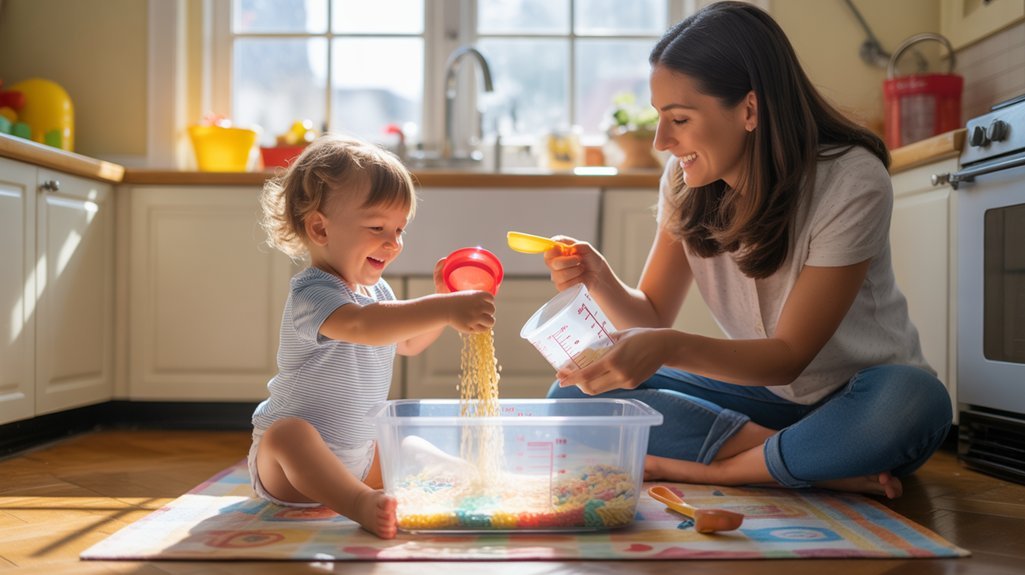
The beauty of sensory play lies in its simplicity—most activities take less than five minutes to prepare and deliver hours of developmental benefits.
You'll find everything you need already in your pantry and kitchen drawers. Rice, beans, and pasta become instant sensory bins that invite tactile exploration. Shaving cream, water beads, and playdough offer diverse textures that strengthen little fingers while encouraging creative expression.
Quick Setup Benefits:
- Minimal investment – No specialized equipment needed; everyday items work perfectly
- Flexible learning – Add measuring cups and spoons to introduce early math concepts naturally
- Extended engagement – Simple activities captivate toddlers for 30+ minutes of focused play
- Cognitive growth – Stimulates curiosity and experimental thinking through hands-on discovery
- Easy cleanup – Contain activities in shallow bins or trays for manageable mess control
Your preparation effort multiplies into meaningful developmental gains while keeping toddlers happily engaged.
Safety and Age Considerations
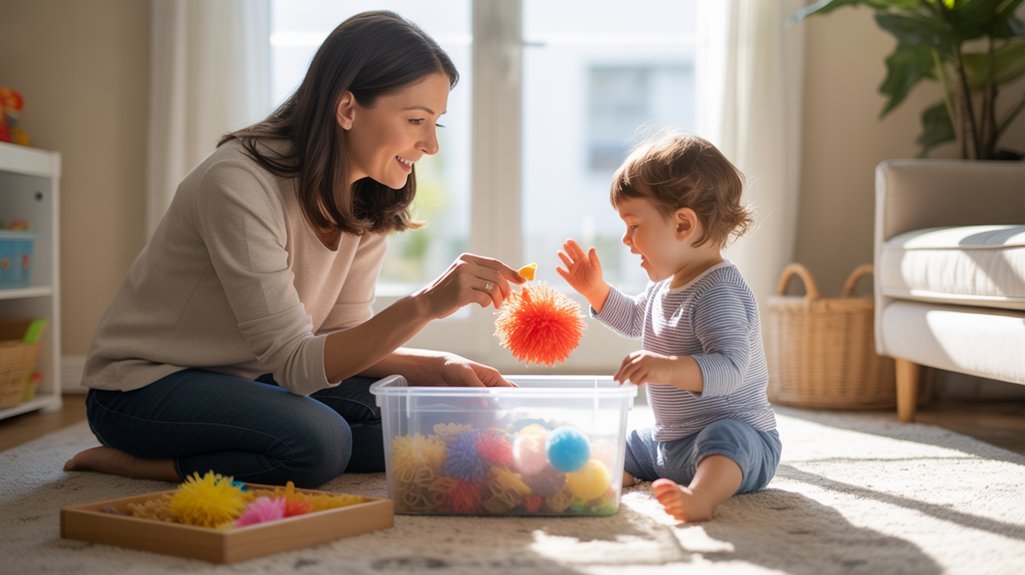
Keeping your toddler safe during sensory play requires careful attention to materials and constant supervision.
You'll need to choose age-appropriate items that won't pose choking risks while ensuring everything is non-toxic in case your little one takes an exploratory taste.
Before you start any activity, check for potential allergens and assess whether the materials match your child's developmental stage and abilities.
Age-Appropriate Materials Guide
Choosing sensory materials for your toddler starts with one critical question: Is it safe? Your safe material selection process begins by eliminating choking hazards—opt for large plastic containers and kitchen utensils rather than tiny pieces.
For sensory texture exploration, create taste-safe materials using flour, salt, and water for homemade playdough or edible paint that won't harm if ingested.
You'll want to monitor for potential allergies, particularly with scented items or food coloring. Introduce familiar household tools like measuring cups and spoons to build your toddler's confidence during exploration.
Start supervised activities with dry textures such as rice or beans before shifting to wetter materials. This gradual progression helps your child develop comfort while you guarantee their safety throughout each developmental stage.
Choking Hazard Prevention
While selecting materials with appropriate textures matters, your most important responsibility is preventing choking incidents during sensory play.
Develop strong choking hazard awareness by ensuring all items exceed 1.25 inches for children under three. Before each activity, inspect household materials for loose parts that could detach during play.
Never leave toddlers unsupervised with sensory materials, regardless of size. Establish designated play areas where you can maintain constant visual contact while children explore. This safety precautions approach allows you to intervene immediately if needed.
Educate other caregivers about specific risks associated with common items like beads, buttons, and small toys. When materials present concerns, suggest safer alternatives that provide similar sensory experiences.
Your vigilance protects the children you serve while enabling enriching developmental play.
Supervising Your Toddler
Active supervision changes sensory play from a potential safety concern into a valuable learning opportunity. Your toddler supervision should involve staying within arm's reach, actively observing their exploration, and ready to intervene if needed. Watch for signs they're attempting to ingest materials or showing distress with certain textures.
| Supervision Level | Your Actions | When to Use |
|---|---|---|
| Direct observation | Stay within arm's reach, eyes on child | Activities with small items like rice or beads |
| Active monitoring | Remain in same room, frequent check-ins | Larger materials like water play or playdough |
| Boundary setting | Establish sensory boundaries for contained play | All sensory activities to minimize mess |
| Response readiness | Watch for discomfort or unsafe behaviors | Throughout entire play session |
| Positive reinforcement | Encourage safe exploration techniques | When child follows guidelines appropriately |
Non-Toxic Material Selection
Because toddlers explore the world through touch, taste, and manipulation, your material choices directly impact their safety during sensory play.
Prioritize safe material sourcing by selecting items labeled appropriate for children under three, preventing ingestion hazards.
Common household staples like flour, cornstarch, and water create excellent sensory experiences—think cloud dough and oobleck—without harmful chemicals.
You'll maintain sensory play safety by checking for allergies before introducing food-based materials like homemade playdough.
Consider taste-safe alternatives, such as flour-and-water paint, allowing toddlers to explore creatively without risk.
Always supervise closely, particularly with materials that could present choking hazards or weren't designed for young children.
Your vigilant oversight and thoughtful material selection create an environment where children can safely discover textures, develop motor skills, and engage their senses confidently.
Allergy Awareness Tips
Even familiar ingredients can trigger unexpected allergic reactions in toddlers, making pre-activity screening essential for every sensory play session. You'll need to gather allergy information from parents before planning activities, creating a foundation for safe materials selection and allergy education.
| Risk Level | Material Examples |
|---|---|
| High Allergen | Wheat flour, nut shells, dairy products |
| Low Allergen | Rice, water beads, sand |
| Alternative Options | Oat flour (certified gluten-free), coconut-based items |
| Non-Food Safe | Kinetic sand, commercial play dough |
Monitor children continuously during play, watching for rashes, breathing changes, or discomfort. Keep emergency contact information accessible and establish clear protocols for responding to allergic reactions. Choose non-food alternatives whenever possible to minimize risks while maintaining engaging sensory experiences.
Minimizing Mess and Cleanup
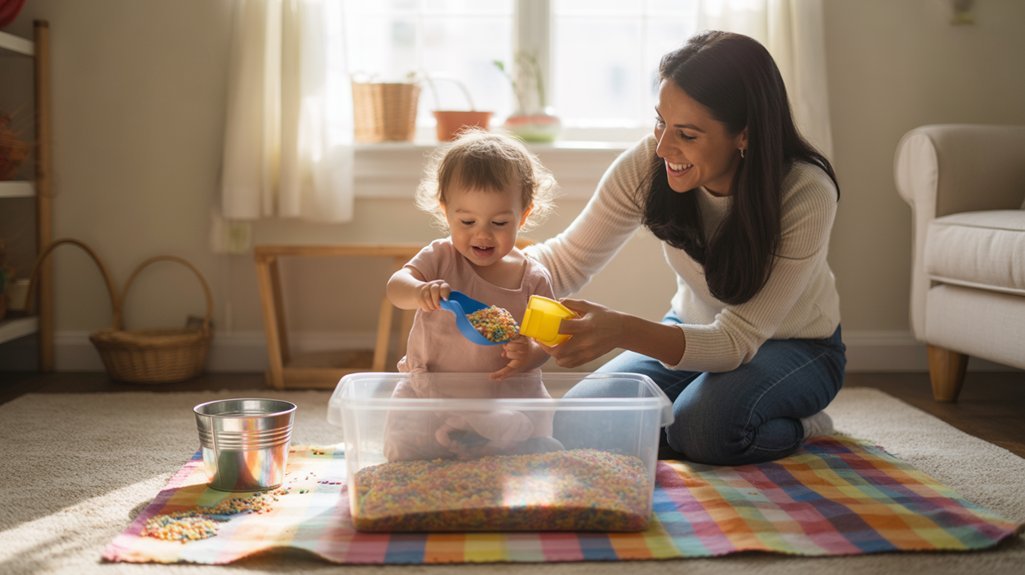
While sensory play offers tremendous developmental benefits, the potential mess often makes parents hesitate.
The mess factor shouldn't stop you from providing enriching sensory experiences that boost your toddler's development.
Fortunately, implementing effective mess containment strategies can convert cleanup from overwhelming to manageable, allowing you to focus on your toddler's learning experience.
Smart sensory cleanup techniques start with prevention. Here are practical ways to minimize mess while maximizing engagement:
- Lay down an old sheet or tablecloth beneath the play area to catch spills and protect your floors
- Use clear plastic bins or sensory tables to contain materials and establish physical boundaries
- Establish the “materials stay in the bin” rule to help children understand play expectations
- Save particularly messy activities like water play or cloud dough for outdoor sessions
- Pour spilled materials back into bins immediately after play to maintain organization and reuse supplies
These approaches create structured environments where toddlers can explore freely while you maintain control over the cleanup process.
You'll serve your child's development without sacrificing your home's cleanliness.
Start Simple, Explore Together
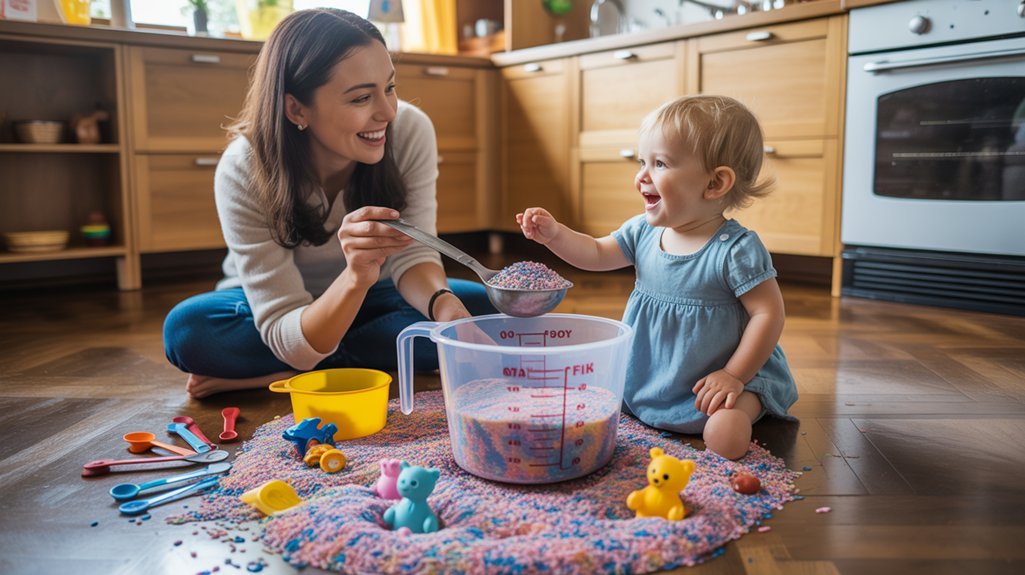
The beauty of sensory play lies in its accessibility—you don't need specialty supplies or expensive kits to create meaningful learning experiences. Begin your toddler exploration journey with simple pantry staples like rice, beans, or pasta in a sensory bin. Add basic kitchen utensils—measuring cups, spoons, or tongs—to develop fine motor skills as little hands scoop and transfer.
| Base Material | Tools to Include | Learning Focus |
|---|---|---|
| Dry rice or pasta | Measuring cups, funnels | Pouring, volume concepts |
| Beans (large) | Tongs, spoons | Grip strength, coordination |
| Cooked spaghetti | Plastic toys, containers | Texture exploration |
| Dyed rice | Kitchen tools, scoops | Color recognition |
Enhance engagement by incorporating everyday objects—plastic toys, small containers, or kitchen gadgets. As you explore together, encourage your toddler to describe textures, colors, and sounds they discover. This dialogue builds vocabulary while creating rich opportunities for connection and learning through guided play.
Frequently Asked Questions
How Long Should Sensory Play Sessions Last for Toddlers?
You'll want to keep sensory play sessions between 10-20 minutes, matching your toddler's attention span.
Watch for cues that they're losing interest, and don't force longer sessions. Since toddler attention naturally fluctuates, shorter, frequent activities work best.
The ideal sensory duration depends on your child's age and engagement level. Start with five minutes for younger toddlers, gradually extending as they grow.
Can Sensory Play Help With Picky Eating Habits in Toddlers?
Yes, sensory play can absolutely help!
Like knights exploring uncharted territories, you'll guide your toddler through taste exploration activities that reduce mealtime battles. When you introduce food textures through playful touching, squishing, and examining before eating, you're helping them overcome sensory sensitivities.
You'll notice they become more willing to try new foods when pressure's removed. Through patient, play-based exposure, you're nurturing adventurous eaters while supporting their developmental needs and building positive food relationships.
What Should I Do if My Toddler Refuses Sensory Activities?
Don't force it when facing toddler resistance. Start small by modeling sensory engagement yourself—let them watch you explore textures without pressure to join.
Offer choices between two simple activities, and keep sessions brief (5-10 minutes). Try incorporating their favorite toys or characters into sensory bins.
Remember, some children need time to warm up to new experiences. Respect their pace while gently encouraging exploration.
Your patient, pressure-free approach helps build trust and curiosity naturally.
How Often Should I Introduce New Sensory Materials to My Toddler?
You'll want to rotate sensory materials every 1-2 weeks to maintain your toddler's attention and spark fresh curiosity.
Watch your child's engagement levels, notice their interest patterns, and adapt your sensory material rotation accordingly. Some toddlers thrive with weekly changes, while others need more time to fully explore each activity.
Don't overwhelm them with constant novelty—balance familiar favorites with new experiences.
You're supporting their development best when you're responsive to their individual learning pace and preferences.
Are There Sensory Activities Suitable for Siblings of Different Ages?
You'll find sensory activities work beautifully across sibling interactions when you focus on age adaptation.
Offer younger toddlers safe items like cooked pasta or water play while older siblings explore the same materials with added challenges—measuring, sorting, or creating patterns.
This learning-focused approach lets each child engage at their developmental level while encouraging cooperation.
Always supervise closely and modify materials based on each child's abilities, ensuring everyone's safety while they explore together.
Conclusion
Think of sensory play as planting seeds in your toddler's garden of learning. Each texture they squeeze, each color they mix, sends roots deeper into understanding their world. You're not just filling an afternoon—you're watering curiosity that'll bloom for years. Start with one activity today. Watch those little hands explore, and you'll see growth happening right before your eyes. That's the magic you're cultivating together.
Related Articles
- The Ultimate Guide to Sibling Conflict
- The Ultimate Guide to Family Meal Planning
- The Ultimate Guide to Kids Educational Games
- 20 Fun DIY Crafts to Strengthen Family Bonds
- The Ultimate Guide to Screen Time Management
Written by Sarah Mitchell, M.S., CFLE
Founder & Lead Editor
Sarah is a Certified Family Life Educator with a Master's degree in Human Development and Family Studies from the University of Missouri. With 15+ years of experience as a parent educator and mother of three, she brings both professional expertise and real-world parenting wisdom to every article.
Credentials: M.S. in Human Development and Family Studies, Certified Family Life Educator (CFLE)