



Evidence-based guidelines recommend zero screen time for infants under 18 months (except video chatting), limited co-viewing for toddlers 18-24 months, and one hour daily of high-quality programming for preschoolers aged 2-5 years. School-age children should cap recreational screen time at two hours daily, while teenagers need screen-free periods before bed to protect sleep quality. You'll want to establish screen-free zones during meals and create a personalized Family Media Plan that addresses your child's developmental needs, temperament, and the physiological impacts of excessive digital exposure.
Key Takeaways
- Infants under 18 months should have zero screen time, except video chatting, to protect critical language and social development.
- Toddlers 18 months to 2 years need caregiver co-viewing of high-quality educational content for meaningful learning outcomes.
- Preschoolers aged 2-5 should limit screen time to 1 hour daily, prioritizing educational programming supporting cognitive skills.
- School-age children 6-12 need recreational screen time capped at 2 hours daily with screen-free meals and bedtimes.
- Teenagers 13-16 should limit non-school screen use to 2 hours daily and avoid screens before bed for sleep quality.
Why Screen Time Guidelines Matter for Child Development

Because children's brains undergo rapid development during their early years, the amount and quality of screen exposure they receive can greatly shape their cognitive trajectories. Research demonstrates that excessive screen use correlates with language delays, attention deficits, and emotional regulation difficulties.

When you understand these developmental risks, you're better equipped to guide families toward protective measures.
Current data reveals children aged 8-18 spend approximately 7.5 hours daily on screens, contributing to decreased physical activity and increased obesity rates. Studies link screen exposure exceeding two hours daily with higher anxiety and depression rates.
These findings underscore why implementing screen time guidelines isn't optional—it's fundamental to safeguarding developmental outcomes. Just as early immunizations protect children from preventable diseases during critical developmental windows, establishing appropriate screen boundaries helps shield developing minds from potential harm.
Negative Impacts of Excessive Screen Time on Children
When children spend excessive time on screens, their developing brains face measurable disruptions across multiple domains. You'll observe that excessive screen time correlates directly with language delays, cognitive challenges, and diminished learning capacity in the children you serve.
| Developmental Area | Impact | Clinical Evidence |
|---|---|---|
| Physical Health | Reduced activity levels | Increased obesity risk in children and adolescents |
| Mental Health | Anxiety and depression | Rates rise beyond 2 hours daily screen exposure |
| Sleep Quality | Disrupted melatonin production | Evening use notably impairs duration and quality |
Children experiencing excessive screen time demonstrate shorter attention spans and emotional regulation difficulties. The passive consumption pattern prevents active cognitive engagement necessary for healthy development. Mental health indicators show concerning trends: youth exceeding recommended limits report measurably higher psychological distress. These disruptions aren't abstract concerns—they're observable challenges affecting the children in your care today. Parents struggling with these issues can access evidence-based treatment and comprehensive resources to help their children develop healthier screen habits and address related behavioral concerns.
Screen Time Recommendations for Infants (0-18 Months)

During the first 18 months of life, infants require zero screen time—with the singular exception of video chatting that connects them to distant caregivers.
These screen time recommendations for infants align with both the American Academy of Pediatrics and WHO guidelines, reflecting clear developmental evidence.
You'll serve infants best by understanding that screens interfere with critical language acquisition and social skill development during this foundational period.
Face-to-face interactions aren't optional—they're essential for building cognitive and emotional capacities through eye contact and social bonding.
Instead of screens, prioritize hands-on exploration and physical interaction.
These experiences directly support sensory and motor development in ways that passive viewing can't replicate.
When you encourage parents to engage infants through direct human connection rather than digital devices, you're protecting the developmental building blocks that'll support all future learning and relationship formation.
Just as choosing appropriate developmental toys becomes important as babies grow, creating a screen-free environment during these early months establishes healthy foundations for later technology use.
Guidelines for Toddlers (18 Months to 2 Years)
As your child reaches 18 months, you can introduce limited screen time—but only high-quality educational programming that you watch together.
Co-viewing remains essential because toddlers in this developmental stage need your active participation to understand and learn from digital content.
While video chatting with family members supports social development, you'll want to avoid using screens as quick fixes for tantrums or boredom, as this can establish problematic patterns that interfere with self-regulation skills.
For additional guidance on supporting your toddler's overall development during these formative years, parent information resources can help you make informed decisions about health and safety practices.
Co-Viewing Educational Content Only
Between 18 and 24 months, toddlers shouldn't engage with screens independently—caregivers must co-view all educational content to promote learning and comprehension.
The American Academy of Pediatrics emphasizes that co-viewing converts passive consumption into interactive learning experiences. You'll guide discussions about content, helping your toddler connect concepts to real-world experiences.
Passive screen time hinders language development and social interaction skills during this critical period. However, when you actively engage with educational content alongside your child, you promote vocabulary growth and comprehension.
Assess each program's appropriateness for your toddler's developmental stage and interests. Your participation makes the difference between merely watching and meaningful learning.
Video Chatting With Family
While most screen time remains discouraged for 18-to-24-month-old toddlers, video chatting with family members stands as the primary exception to this restriction. This healthy screen activity enables meaningful connections with distant loved ones while supporting language development and social skill formation.
You'll optimize these benefits by actively co-viewing and participating during calls. Your engagement provides essential context that helps toddlers understand interactions and practice communication skills. High-quality video chats allow children to hear familiar voices and observe facial expressions in real-time, reinforcing language patterns.
Remember that video chatting supplements—not replaces—in-person interactions and play. Monitor content to guarantee age-appropriate exchanges that promote positive social engagement.
The American Academy of Pediatrics supports this approach when caregivers remain present and interactive throughout the experience.
Avoiding Screens as Pacifiers
Using screens to calm or distract your toddler creates problematic patterns that interfere with crucial developmental milestones. Avoiding screens as pacifiers protects your child's emerging language and cognitive abilities during this sensitive period.
Research demonstrates that relying on devices for emotional regulation prevents toddlers from developing essential self-soothing skills and reduces important caregiver-child interactions.
The developmental consequences extend beyond immediate concerns. When screens replace responsive parenting during distress, toddlers miss opportunities to build emotional literacy and secure attachments.
You'll also notice reduced engagement in hands-on exploration and imaginative play—activities fundamental to cognitive growth.
Instead, respond to your toddler's needs through physical comfort, age-appropriate toys, or simple verbal reassurance.
These alternatives strengthen your bond while supporting healthy social-emotional development and establishing self-regulation skills that serve children throughout life.
Appropriate Screen Use for Preschoolers (2-5 Years)
As your child enters the preschool years, you'll need to establish clear boundaries around screen use while prioritizing content that supports their developmental needs.
The American Academy of Pediatrics recommends limiting screen time to 1 hour per weekday and up to 3 hours on weekends, emphasizing that what your child watches matters more than duration alone.
You should select high-quality, educational programming that promotes language acquisition, cognitive skills, and social-emotional learning rather than passive entertainment.
Daily Screen Time Limits
How much screen time is appropriate for your preschooler? Research indicates you should limit non-educational screen time to 1 hour per day for children aged 2-5 years. This restriction supports ideal cognitive and emotional development during these critical formative years.
On weekends, you can extend this to 3 hours, provided the content remains high-quality and educational.
When establishing daily screen time limits, guarantee digital media doesn't replace essential activities like physical play, adequate sleep, or family interactions. These elements remain fundamental to your child's overall well-being.
You'll cultivate healthy digital habits by implementing clear boundaries—turning off devices during meals and actively promoting screen-free activities.
For younger preschoolers (18-24 months), co-viewing improves their learning and comprehension of media content.
Quality Content Over Quantity
While setting time limits provides structure, the content your preschooler consumes matters more than the minutes spent watching. Quality content that's interactive and educational supports language development and cognitive skills in ways passive viewing cannot.
You'll want to select programming designed specifically for preschoolers, featuring clear learning objectives and age-appropriate engagement opportunities.
Research shows that educational media, when paired with co-viewing and discussion, improves your child's learning outcomes considerably. Conversely, excessive screen time with low-quality content can delay language development and create cognitive challenges.
Focus on programs that encourage participation, introduce new vocabulary, and spark curiosity. Remember that even high-quality screen time should complement—not replace—hands-on play, social interaction, and physical activity that are essential for your preschooler's development.
Screen Time Rules for School-Age Children (6-12 Years)
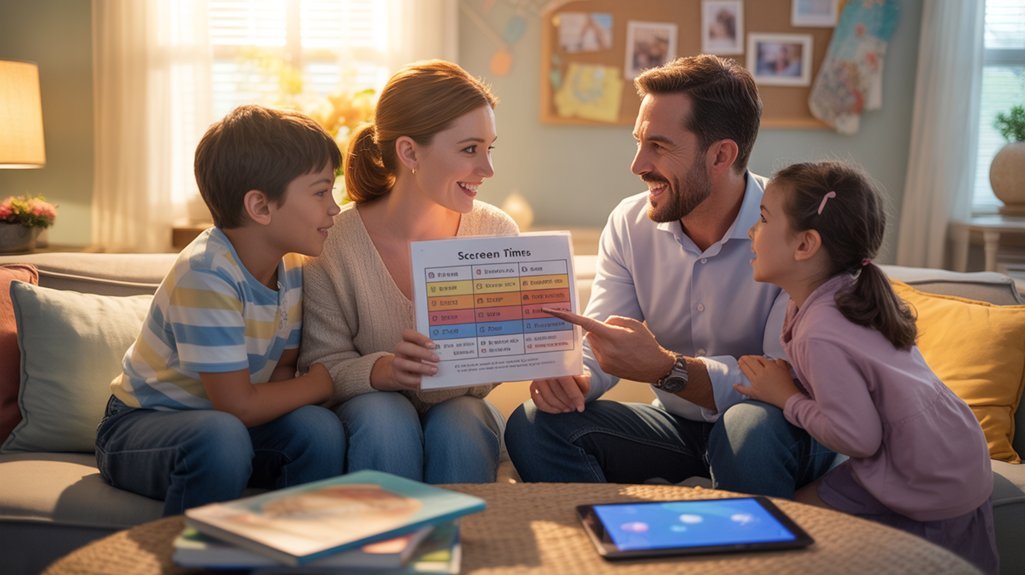
School-age children between 6 and 12 years require structured screen time limits as their developmental needs shift toward academic learning, peer relationships, and physical activity.
You'll want to cap recreational screen time at 2 hours daily, tracking educational content separately to support their learning objectives.
Establish clear boundaries by implementing screen-free zones during meals and before bedtime. These practices promote healthy sleep patterns and reinforce family connections.
You should prioritize at least 1 hour of daily physical exercise to counterbalance sedentary behaviors associated with device use.
Encourage alternative activities including reading, sports participation, and creative pursuits. These experiences cultivate cognitive development and emotional regulation skills essential for this age group.
Monitor content quality carefully, selecting age-appropriate programming that supports social-emotional learning.
Research demonstrates that thoughtfully chosen media can improve communication skills and emotional intelligence. Your guidance helps children develop balanced technology habits that serve their overall development and well-being.
Managing Digital Media for Teenagers (13-16 Years)
As your teenager enters adolescence, you'll need to shift from direct supervision to collaborative boundary-setting that respects their growing autonomy while protecting their health.
Research supports limiting non-school screen time to two hours daily, establishing screen-free periods before bed to preserve sleep quality, and helping your teen evaluate whether their digital consumption is purposeful or merely passive.
These evidence-based strategies form the foundation for developing self-regulation skills that'll serve them throughout their digital lives.
Recommended Daily Time Limits
Teenagers aged 13-16 years should limit non-school recreational screen time to no more than 2 hours per day. These recommended daily time limits help protect adolescent sleep patterns, emotional regulation, and physical health.
You'll need to guarantee screen media doesn't interfere with essential developmental activities like adequate sleep, face-to-face social interactions, and physical exercise.
Establish clear boundaries by implementing screen-free periods before bedtime and during family meals. Encourage regular digital breaks throughout the day to support your teen's cognitive rest and emotional well-being.
Engage in ongoing conversations about their media consumption patterns and model healthy habits yourself. By setting consistent limits and creating screen-free zones, you'll help your teenager develop self-regulation skills that promote balanced technology use and overall wellness.
Healthy Digital Habit Development
Building healthy digital habit development during adolescence requires intentional guidance that extends beyond simply enforcing time limits.
You'll need to establish a thorough Family Media Plan that includes clear boundaries, such as device-free periods before bedtime to support sleep quality and emotional regulation.
Model positive digital behaviors yourself, as teenagers observe and internalize your media usage patterns.
Focus on content quality by encouraging educational and constructive material that supports cognitive and social development.
Implement regular digital breaks throughout the day to prevent excessive exposure.
Create open dialogue about screen time decisions rather than imposing arbitrary restrictions.
This collaborative approach encourages self-regulation skills that teenagers need for lifelong healthy digital habit development.
Your consistent guidance helps them navigate technology responsibly while maintaining balanced well-being.
Sleep and Screen Boundaries
Because adolescent circadian rhythms naturally shift toward later sleep times, establishing firm screen boundaries becomes essential for maintaining adequate sleep duration and quality.
You'll need to restrict screen time at least one hour before bedtime, as evening exposure suppresses melatonin production and delays sleep onset. Implement screen-free zones in bedrooms to eliminate nighttime access and support consistent sleep hygiene practices.
Create clear expectations around digital curfews, using device management tools when necessary. Encourage your teen to charge devices outside their bedroom overnight.
Model these boundaries yourself to reinforce their importance. When you discuss the connection between screen time and sleep quality with your teen, you're helping them develop self-regulation skills and understand how media choices directly impact their physical health and cognitive functioning.
Creating a Family Media Plan That Works
While establishing screen time limits remains important, developing an extensive Family Media Plan creates a structured framework that addresses the nuances of healthy digital engagement across different developmental stages.
You'll need to customize your approach based on each child's age, health status, and personality traits to guarantee developmentally appropriate guidelines.
The American Academy of Pediatrics strongly recommends involving your children in creating this plan, which promotes accountability and reinforces healthy media habits.
Designate screen-free zones and times—particularly during meals and before bedtime—to strengthen family connections and support essential routines.
Your plan shouldn't remain static. Regular reviews allow you to adjust guidelines as your children mature, shifting focus from merely limiting quantity to emphasizing content quality.
Utilize resources like HealthyChildren.org/MediaUsePlan to access evidence-based frameworks that'll help you establish effective boundaries while nurturing responsible digital citizenship in those you're guiding.
Screen-Free Activities to Support Healthy Development

Beyond implementing structured media guidelines, you must actively encourage screen-free alternatives that address your child's developmental needs across physical, cognitive, and social-emotional domains.
Prioritize physical activities like sports and outdoor play to counteract sedentary behaviors while promoting cardiovascular health and motor skill development. You'll strengthen family connections by scheduling regular game nights and shared reading times, creating opportunities for meaningful social interaction.
Active play and shared family activities build stronger bodies and deeper connections while reducing sedentary screen time.
Encourage creative hobbies—painting, music, and crafting—that improve cognitive flexibility and emotional regulation. These screen-free activities support healthy development by engaging neural pathways essential for problem-solving and self-expression.
Organize nature walks and bike rides to promote environmental awareness while building physical endurance.
Establish daily routines incorporating tech-free meals and bedtime rituals. These boundaries simplify face-to-face communication and regulate circadian rhythms disrupted by evening screen exposure.
Teaching Children to Self-Regulate Their Screen Time
Self-regulation represents a critical executive function that you can cultivate in your child through deliberate scaffolding of their media consumption patterns.
Begin by collaboratively developing a Family Media Plan that establishes clear boundaries while granting your child ownership over their digital choices. This participatory approach alters screen time from an imposed restriction into a self-directed responsibility.
Equip your child with practical monitoring tools—screen time tracking apps and do-not-disturb modes—that provide concrete data about their usage patterns.
Guide them to evaluate content quality rather than merely limiting duration, encouraging critical thinking about media value.
Discuss the physiological and emotional consequences of excessive screen time, including sleep disturbances and anxiety symptoms.
This knowledge equips children to recognize internal signals indicating the need for breaks.
Encourage them to self-regulate by balancing digital activities with physical play and family engagement, helping them internalize healthy habits that extend beyond parental supervision into independent decision-making.
WHO Recommends Minimal Toddler Exposure
Recognizing that early brain development occurs most rapidly during the first five years of life, the World Health Organization has established conservative screen time guidelines that prioritize direct human interaction over digital exposure.
These evidence-based recommendations protect young children from developmental risks associated with sedentary digital consumption.
The WHO's age-specific guidelines include:
- Under 1 year: Zero screen time to enhance real-world sensory experiences and caregiver bonding
- Ages 1-2 years: Maximum 1 hour daily of high-quality educational content with caregiver co-viewing
- Ages 3-4 years: Maximum 1 hour daily emphasizing interactive, educational programming
- All ages: Prioritize physical activity, adequate sleep, and family interactions over digital engagement
Research demonstrates that excessive screen time correlates with increased obesity risk, developmental delays, and compromised cognitive and social skills.
When you're supporting families with young children, emphasize these protective guidelines to improve developmental outcomes during this critical neurological growth period.
Addressing Parent Screen Time Concerns

You'll face unique challenges implementing screen time guidelines while managing your own device use, particularly when working from home or feeling guilty about necessary screen exposure.
Research shows that children learn digital behaviors primarily through parental modeling, making your screen habits as important as the rules you set.
Successfully addressing these concerns requires establishing realistic family expectations, developing strategies to manage work-related screen time, and creating practical solutions for common implementation obstacles.
Modeling Healthy Digital Behavior
When parents demonstrate healthy digital habits, children internalize these behaviors as the household norm.
Modeling healthy digital behavior requires consistency in your own screen use patterns. Set designated screen-free times during family meals and activities to prioritize face-to-face interaction.
Practice the 20-20-20 rule—taking 20-second breaks to look at something 20 feet away every 20 minutes—to maintain eye health while setting a good example.
Engage in co-viewing media with your children, using these opportunities to discuss content critically and contextualize messages.
Balance digital activities with physical exercise and hobbies, demonstrating that screens are one component of a well-rounded lifestyle.
Communicate openly about online safety, respectful behavior, and privacy concerns.
Your actions speak louder than rules, shaping how children navigate their digital environments throughout development.
Managing Parental Guilt Effectively
Even with intentional modeling and clear boundaries, many parents experience persistent guilt about their children's screen exposure. Managing parental guilt starts with understanding that quality matters more than quantity. When you prioritize educational, engaging content over passive consumption, you're supporting cognitive development rather than hindering it.
Create a Family Media Plan that establishes screen-free times during meals and bedtime routines. This collaborative approach reduces anxiety while promoting healthier habits. Remember that the average child spends 7.5 hours daily on screens—you're not alone in facing this challenge.
Focus on what you can control: content selection, co-viewing opportunities, and balanced scheduling. When screen time serves developmental goals and doesn't replace essential activities like sleep, physical play, and family interaction, you're providing appropriate guidance for your child's digital well-being.
Setting Realistic Family Expectations
As you navigate screen time concerns, recognize that realistic family expectations must account for both developmental needs and modern life constraints.
Rather than imposing arbitrary limits, prioritize content quality over quantity when evaluating screen use. The American Academy of Pediatrics supports this approach, emphasizing meaningful media interactions.
Develop a Family Media Plan collaboratively with your children, establishing specific boundaries during meals and bedtime to improve family connections and sleep hygiene.
Model the digital habits you expect from your children—they'll mirror your behaviors more than follow your directives.
Engage in open discussions about media quality and responsible digital citizenship. Encourage children to self-assess their screen use patterns.
Balance remains essential: guarantee physical activity, face-to-face interactions, and screen-free family time complement digital engagement appropriately.
Balancing Work-From-Home Screens
Remote work has fundamentally altered family screen interactions, creating situations where parents model extended device use while simultaneously attempting to regulate their children's digital consumption.
When you're managing work-from-home responsibilities, your children observe these patterns—U.S. children ages 8-18 already spend 7.5 hours daily on screens, often mirroring parental behaviors that can decrease physical activity and increase mood problems.
Implement the AAP Family Media Plan to establish boundaries for both work-from-home screen time and children's digital use.
Designate screen-free zones during family meals and dedicated play periods. Practice co-viewing media with your children, discussing content to improve comprehension and critical thinking.
These strategies help you balance professional obligations while modeling healthy digital habits that prioritize developmental needs and family connection.
Addressing Common Implementation Challenges
When parents express concern about managing screen time boundaries, they often identify their own device dependence as the primary obstacle—yet research demonstrates that 67% of parents admit to checking phones during conversations with their children, inadvertently establishing patterns that undermine the rules they're attempting to enforce.
To address these implementation challenges, you'll need to model the behaviors you're teaching. Establish screen-free zones during family meals and create consistent routines that apply to all household members.
The AAP Family Media Plan provides a collaborative framework for setting realistic boundaries with your children, acknowledging developmental needs while addressing excessive use concerns.
When children resist new limits, involve them in problem-solving discussions. This approach reduces conflict while teaching self-regulation skills essential for healthy media relationships throughout their development.
Creating Family Media Plans

Establishing a Family Media Plan provides a structured framework for managing screen time that accounts for each child's developmental stage and individual needs.
The American Academy of Pediatrics emphasizes collaborative development of family media plans, ensuring everyone participates in setting screen time limits that work for your household.
Your extensive plan should include:
- Designated screen-free zones in bedrooms and during family meals to protect sleep quality and improve face-to-face interaction.
- Specific time blocks for educational versus recreational media use, adjusted by age and developmental requirements.
- Regular family discussions about content quality, online safety, and digital citizenship to encourage open communication.
- Consistent boundaries for tech-free bedtime routines that support healthy sleep hygiene.
Engage your children in creating these guidelines—their input increases adherence and helps them develop self-regulation skills.
Resources like HealthyChildren.org/MediaUsePlan offer customizable templates that address individual health considerations and family values while promoting balanced media consumption.
Balancing Benefits With Boundaries

While screens offer legitimate educational and social benefits, their integration into children's lives requires deliberate oversight to prevent displacement of developmentally critical activities. You'll need to establish boundaries that protect sleep, physical activity, and face-to-face interactions while allowing appropriate media engagement.
| Age Group | Screen Time Limit | Priority Protection Areas |
|---|---|---|
| 2-5 years | 1 hour daily | Co-viewing, outdoor play |
| Grade-schoolers | Individualized | Sleep duration, homework |
| Teens | Self-regulated | Family meals, exercise |
| All ages | Screen-free zones | Bedrooms, dining areas |
| All ages | Screen-free times | Before bed, during meals |
Your Family Media Plan should emphasize quality over quantity, selecting high-quality programming that aligns with developmental needs. Implement screen-free times during meals and before bedtime to establish healthy habits. Co-view content with younger children to enhance learning opportunities. Monitor whether media use interferes with essential activities, adjusting boundaries as needed to support your child's overall well-being.
Frequently Asked Questions
What Apps or Platforms Are Considered High-Quality Educational Media for Children?
You'll find high-quality educational media through platforms like PBS Kids, Khan Academy Kids, and Epic! for interactive storytelling.
Look for apps featuring educational games that promote active learning rather than passive consumption. Research supports programs encouraging problem-solving, creativity, and critical thinking.
You should prioritize content with minimal advertising, age-appropriate challenges, and co-viewing opportunities.
How Do I Monitor Screen Time When My Child Uses Multiple Devices?
You'll need centralized device tracking systems that sync across smartphones, tablets, and computers.
Implement built-in parental controls like Apple Screen Time or Google Family Link, which aggregate usage data from all connected devices.
For thorough monitoring, consider third-party apps like Qustodio or Circle that track gaming consoles and smart TVs too.
These tools provide developmental insights by showing total screen exposure patterns, helping you make evidence-based adjustments to support your child's healthy media habits.
Should Screen Time Limits Be Different on Weekends Versus Weekdays?
Ironically, children thrive on structure yet we often abandon it when they need consistency most.
You should maintain similar limits across all days, prioritizing weekday consistency over dramatic variations. Research shows erratic patterns disrupt sleep schedules and routine development.
However, modest weekend flexibility—adding 30-60 minutes—can accommodate family activities without undermining healthy habits.
You're serving your child best by creating predictable boundaries that support their developmental needs, rather than arbitrary distinctions between school days and leisure time.
What Should I Do if Grandparents Don't Follow Our Screen Time Rules?
Address grandparent screen time conflicts through collaborative communication strategies that respect family interactions while protecting your child's developmental needs.
Schedule a private conversation explaining the research-based rationale behind your limits. You'll find success by acknowledging their caregiving role and seeking compromise—perhaps allowing slightly relaxed rules during special visits.
Provide specific alternatives they can enjoy together. If disagreements persist, you may need to limit unsupervised visits until you've established mutual understanding and respect for your parenting decisions.
Can Audiobooks or Podcasts Count Toward Daily Screen Time Limits?
No, audiobooks and podcasts shouldn't count toward screen limits—they're fundamentally different experiences.
Think of screens as direct sunlight requiring protective limits, while audio content resembles filtered, gentler exposure.
Research confirms audiobook benefits include improved vocabulary and imagination without visual overstimulation.
Podcast engagement activates language processing similarly to conversation.
You're supporting neural development through auditory channels that complement, rather than compete with, screen-based learning.
Audio content deserves its own category in your family's media plan.
Conclusion
You'll find that evidence consistently supports age-appropriate screen time limits for ideal child development. While you might worry about restricting technology access, research confirms that excessive exposure impairs language acquisition, sleep patterns, and social-emotional growth. You're not depriving your child—you're protecting critical developmental windows. Implement clear boundaries now, model healthy device use yourself, and prioritize interactive play. Your consistent enforcement of these guidelines directly correlates with better cognitive and behavioral outcomes.
Related Articles
- The Ultimate Guide to Sibling Conflict
- The Ultimate Guide to Family Meal Planning
- The Ultimate Guide to Kids Educational Games
- 20 Fun DIY Crafts to Strengthen Family Bonds
- The Ultimate Guide to Screen Time Management

Written by Sarah Mitchell, M.S., CFLE
Founder & Lead Editor
Sarah is a Certified Family Life Educator with a Master's degree in Human Development and Family Studies from the University of Missouri. With 15+ years of experience as a parent educator and mother of three, she brings both professional expertise and real-world parenting wisdom to every article.
Credentials: M.S. in Human Development and Family Studies, Certified Family Life Educator (CFLE)