


You can strengthen your child's phoneme isolation skills through twelve targeted exercises: Sound Detectives (identifying beginning sounds), Sounds I Spy (spotting sounds in various positions), movement-based “Where is my sound?” activities, Sound Scavenger Hunts with household objects, and Human Dictionary word-building. Use simple one-syllable words with manipulatives like blocks or buttons during 5-10 minute daily sessions. Progress from initial sounds to final and medial positions, incorporating visual supports and play-based learning. These evidence-based practices build the foundation for reading and spelling success, with consistent home practice greatly predicting literacy outcomes—and the extensive resource below offers specific implementation strategies for each exercise.
Key Takeaways
- Sound Detectives and Sounds I Spy games help children identify beginning, middle, and ending sounds in one-syllable words like “cat” and “dog.
- Sound Scavenger Hunts encourage exploration of household objects starting with specific phonemes, transforming abstract sound awareness into interactive learning.
- Movement-based “Where is my sound?” activities use physical gestures to reinforce identification of sounds in different word positions.
- Human Dictionary exercises allow children to form words using their bodies, promoting creative collaboration and phoneme understanding through kinesthetic learning.
- Using manipulatives like blocks, chips, or buttons during phoneme exercises maintains motivation and provides tactile engagement for early readers.
Introduction
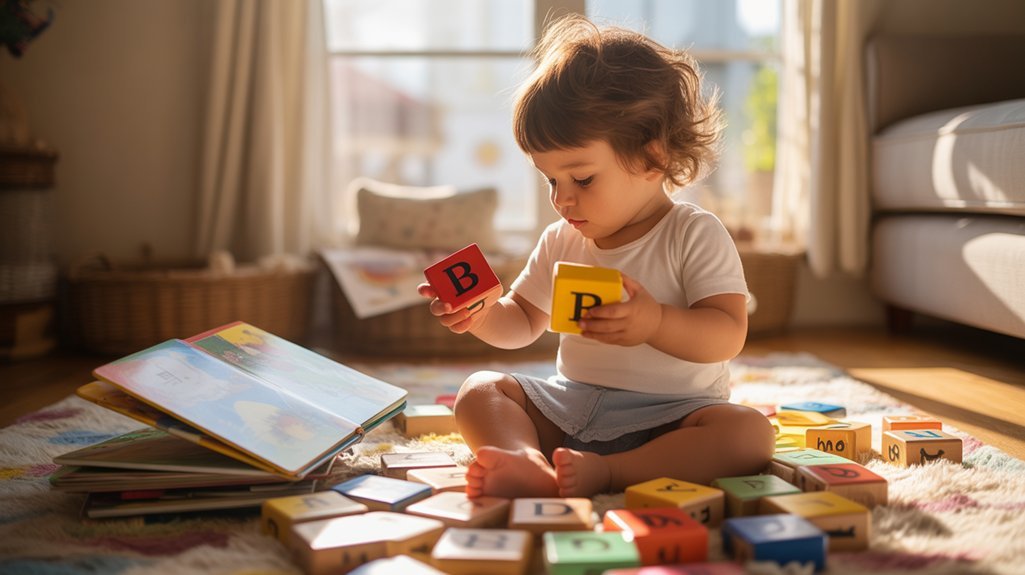
When children learn to pinpoint individual sounds within spoken words, they're developing phoneme isolation—a critical skill that forms the foundation for reading and spelling success. This essential component of phonemic awareness enables young learners to identify where specific sounds appear—whether at the beginning, middle, or end of words.

You'll find that phoneme recognition develops progressively. Most children master initial sound isolation by mid-kindergarten, while final and medial sounds typically emerge by late kindergarten or early first grade. These milestones guide your instructional timing and expectations.
Through targeted exercises, you're equipping students with sound manipulation abilities that directly support decoding and spelling. Activities like determining sound positions encourage critical listening skills, while engaging games convert practice into enjoyable learning experiences.
Targeted phoneme isolation exercises directly strengthen decoding and spelling abilities while transforming essential literacy practice into engaging, enjoyable learning experiences for young students.
Your consistent implementation of these exercises builds the phonological foundation children need to become confident readers and writers, making your role instrumental in their literacy development. Since the first three years are the most important for lifelong mental health and well-being, establishing strong phonemic awareness during early childhood creates lasting benefits for overall development.
Why This Matters for Your Family
As your child progresses through kindergarten and first grade, phoneme isolation skills directly influence their ability to decode unfamiliar words and spell with accuracy. Understanding phoneme importance equips you to support critical developmental milestones—initial sounds by mid-kindergarten, followed by final and medial sounds through early first grade.
Your family engagement in phoneme isolation exercises creates measurable impacts on literacy outcomes. Research consistently demonstrates that consistent home practice predicts future reading success, making your involvement essential rather than supplementary. When you dedicate time to these activities, you're building neural pathways that support phonological processing.
The investment you make now extends beyond immediate skill acquisition. By incorporating interactive, enjoyable phoneme isolation activities into daily routines, you establish a positive learning environment where your child naturally explores language structure.
This foundation enables confidence in reading tasks and reduces potential struggles later. Your deliberate practice with sound manipulation directly serves your child's long-term academic achievement and literacy development. Just as early immunizations follow specific developmental timing for maximum effectiveness, phoneme isolation exercises should align with your child's natural language acquisition stages.
Getting Started: What You'll Need
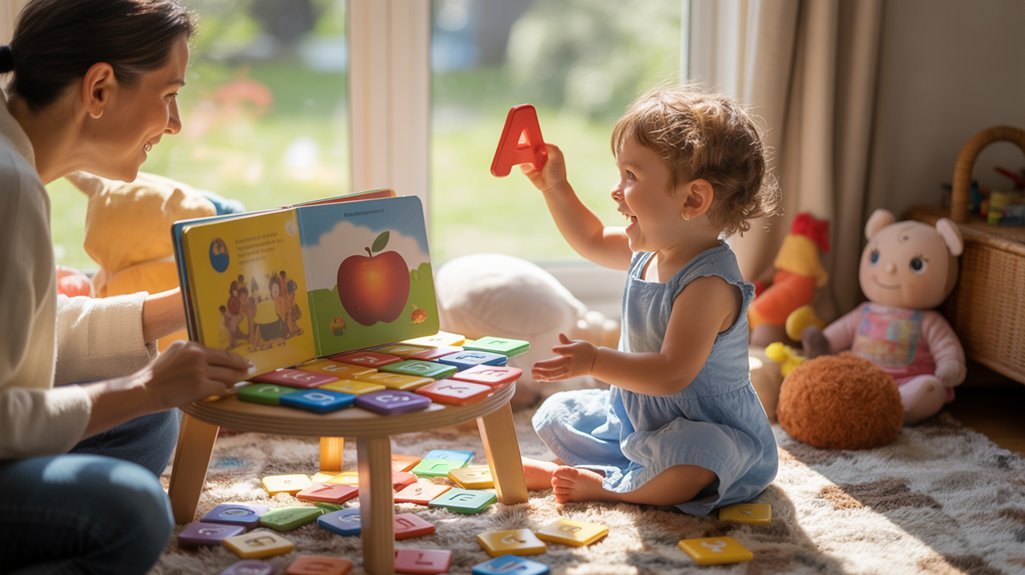
You'll need minimal materials to begin phoneme isolation practice with your child—most items you already have at home. Start by collecting simple, one-syllable words like “cat,” “dog,” and “bat” that segment easily into individual sounds. Manipulative materials such as blocks, chips, or buttons help children visualize each phoneme, making abstract sounds concrete and manageable.
Create a resource collection that supports sound identification:
- Picture cards or small objects representing target sounds (familiar items work best)
- Counters or blocks to represent each sound in a word physically
- A quiet, distraction-free space where your child can focus completely
- Simple word lists organized by sound patterns for systematic practice
These tools convert phoneme work into engaging, hands-on experiences. You're establishing foundational literacy skills that will serve your child throughout their reading journey.
The investment is minimal, but the developmental impact is substantial. As with all health and safety activities for young children, parental guidance ensures these literacy exercises are developmentally appropriate and support your child's overall learning progress.
The Complete Guide
You're about to explore a systematic approach to phoneme isolation that builds your child's foundational reading skills through targeted, research-backed exercises.
This guide walks you through essential concepts—from understanding what phoneme isolation actually means to implementing effective activities, recognizing common pitfalls, and monitoring your child's developmental progress.
These exercises are particularly valuable for children who may need additional support with learning disorders, as they provide structured methods to strengthen the fundamental skills necessary for reading success.
What Is Phoneme Isolation?
This phoneme recognition ability directly supports reading and spelling development by strengthening auditory discrimination skills.
You'll notice most students master initial sound isolation by mid-kindergarten, while final and medial sounds typically develop by late kindergarten or early first grade.
Through targeted exercises, you're equipping children to break down words into their component sounds—a critical step that converts spoken language into readable text.
This foundational skill enables young learners to decode unfamiliar words independently.
Benefits for Early Readers
When children develop strong phoneme isolation skills, they gain a decisive advantage in cracking the alphabetic code—the fundamental understanding that letters represent specific sounds in words.
You'll notice your students' confidence soar as they master this foundational skill by mid-kindergarten, positioning them for reading success throughout their academic journey.
Phoneme recognition exercises sharpen children's auditory skills, enabling them to distinguish between similar sounds with greater precision.
This improved sound discrimination directly translates to enhanced decoding abilities when students encounter unfamiliar words.
Research confirms that children with strong phoneme isolation abilities can manipulate sounds more effectively, making them considerably better equipped to tackle new vocabulary independently.
You're not simply teaching sound identification—you're building the essential framework that supports all future literacy development.
Simple Isolation Activities
Incorporate phoneme games like “Sound Detectives” to convert sound recognition into engaging detective work.
Students can play “Sounds I Spy,” identifying objects beginning with target phonemes.
Movement-based activities such as “Where is my sound?” combine kinesthetic learning with auditory discrimination.
You'll find that consistent 5-10 minute daily sessions yield measurable improvements in phonemic awareness.
Common Mistakes to Avoid
While phoneme isolation activities offer substantial benefits for early readers, several preventable errors can undermine their effectiveness. You'll want to avoid inconsistent practice—daily 5-10 minute sessions prove essential for mastery.
Don't neglect phoneme context by limiting sound identification to word-initial positions; children need exposure to sounds in beginning, middle, and end positions.
Skipping foundational skills like rhyme recognition and syllable awareness creates gaps that impede phonemic development. Without individual assessment, you can't identify struggling learners or adjust instruction appropriately.
Perhaps most critically, failing to implement engaging activities diminishes motivation—games and playful methods sustain children's interest.
Monitor each child's progress regularly, incorporate varied sound positions, maintain consistency, and make certain your activities remain interactive to enhance learning outcomes.
Progress Tracking and Assessment
Implement regular phoneme assessment through both formal and informal methods. Sound identification games reveal how children isolate initial, medial, and final phonemes during authentic interactions. Record their accuracy percentages weekly to establish clear improvement trajectories.
Structure your tracking progress system around specific developmental milestones. Document which sound positions children master first, noting patterns that inform your instruction.
When data shows a child struggling with medial phonemes, you'll intervene immediately rather than waiting months. This measurement approach guarantees struggling readers receive timely support while advancing students get appropriately challenging material—transforming assessment into purposeful action.
Tips for Success
Because phoneme isolation forms the foundation of reading success, consistency matters more than duration when implementing these exercises. You'll achieve better outcomes with brief, daily 5-10 minute sessions than sporadic longer practices. These success strategies convert learning into joyful discovery.
Your approach should balance structure with playfulness:
- Start simple: Begin with one-syllable words before advancing to complex patterns, building confidence through achievable wins.
- Layer engaging activities: Rotate between “Sound Detectives” for auditory focus and “Playdough Smash” for kinesthetic learners who thrive with movement tasks.
- Integrate visual supports: Use Elkonin boxes to help children map sound positions, strengthening their sound recognition accuracy.
- Monitor responsively: Track individual progress to adjust difficulty appropriately, ensuring each child experiences growth without frustration.
You're equipping young learners with essential literacy tools. When you combine systematic practice with interactive, multisensory approaches, you'll witness remarkable advances in their phonemic awareness and reading readiness.
Common Challenges and Solutions
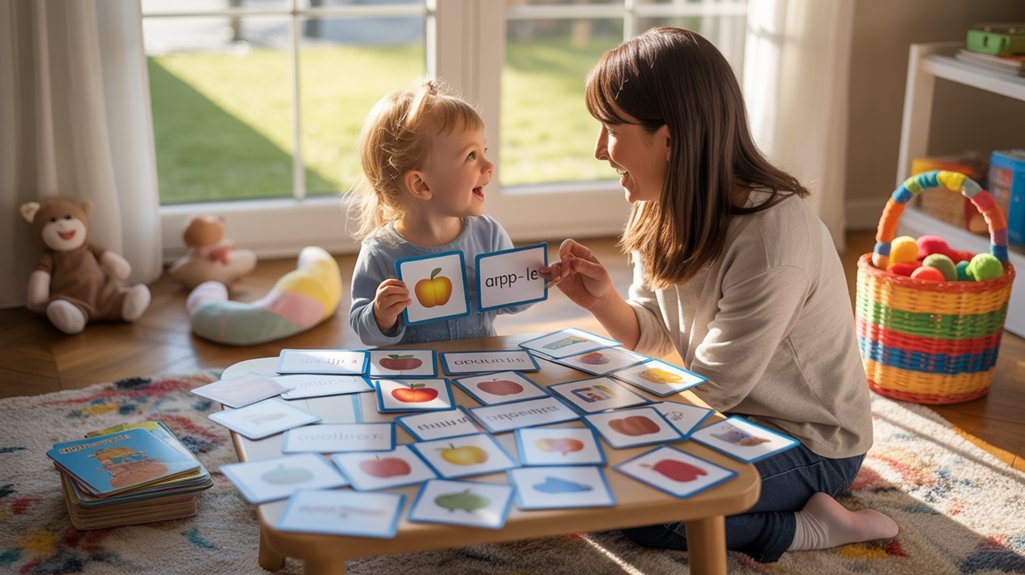
Even with consistent practice, you'll encounter predictable obstacles as children develop phoneme isolation skills. Medial sound identification presents the greatest challenge, as this ability emerges after initial sound mastery. Support struggling learners through sound segmentation activities like clapping or tapping each phoneme.
Begin with one-syllable words to build confidence before advancing to complex patterns. Visual aids—pictures and manipulatives—bridge auditory and visual processing, strengthening phoneme awareness.
| Challenge | Solution | Example Activity |
|---|---|---|
| Medial sound difficulty | Use physical movements | Tap out sounds in “cat” |
| Word complexity overwhelm | Start with CVC words | Practice “dog,” “sun,” “hat” |
| Abstract sound concepts | Provide visual supports | Sound boxes with counters |
| Inconsistent progress | Implement daily practice | 5-minute games each morning |
| Limited engagement | Incorporate play-based learning | Phoneme treasure hunts |
Research confirms that daily, interactive engagement accelerates mastery. You'll see significant progress when combining systematic instruction with enjoyable, purposeful activities.
Age-Appropriate Adaptations
You'll need to tailor phoneme isolation exercises to match your child's developmental stage, as cognitive and language abilities vary greatly across age groups.
Toddlers require multisensory, play-based approaches with simple sound recognition, while school-age children can handle more complex phonemic manipulation tasks that support their emerging literacy skills.
Tweens and teens benefit from phoneme work embedded in vocabulary development and spelling patterns, particularly when addressing persistent reading difficulties or learning a new language.
For Toddlers (Ages 2-4)
Toddlers between ages 2-4 need phoneme isolation activities that align with their developmental stage, where attention spans last just 5-10 minutes and learning happens through play and repetition.
Introduce phoneme games like “Sound I Spy,” where you'll guide children to identify initial sounds of familiar objects around them. You'll build sound recognition by engaging toddlers in rhythmic nursery rhymes and encouraging them to clap out sounds in their own names.
Use colorful picture cards to prompt first-sound identification, making each session interactive and visually stimulating.
You can implement simple sorting activities where toddlers group toys by their beginning sounds. These concrete, hands-on experiences convert abstract phonemic concepts into tangible learning moments.
Keep sessions brief, celebrate small victories, and remember that consistency matters more than duration at this developmental stage.
For School-Age Kids (Ages 5-10)
As children enter kindergarten and elementary school, their cognitive capacity for phoneme isolation expands considerably—they can now sustain attention for 15-30 minutes and handle more complex sound manipulation tasks.
You'll find phoneme games like “Sound Detectives” particularly effective, where students identify initial, final, or medial sounds in words. Adapt “Sounds I Spy” to target specific phoneme positions in familiar objects around them.
The “Where is My Sound?” activity strengthens auditory discrimination by having children pinpoint exact phoneme locations within words.
For kinesthetic learners, “Playdough Smash” alters abstract sounds into concrete representations—students physically manipulate materials to correspond with individual phonemes.
These sound activities develop the phonemic awareness essential for decoding unfamiliar words during reading, directly supporting literacy acquisition in ways that match their developmental readiness and learning preferences.
For Tweens and Teens (Ages 11+)
While many educators assume phoneme isolation becomes irrelevant for older students, tweens and teens who struggle with reading complex vocabulary actually benefit from targeted sound manipulation practice—particularly when activities align with their cognitive sophistication and social needs.
You'll find success implementing phoneme games that focus on multi-syllable words and advanced tasks like analyzing word roots to deepen language structure understanding. Auditory exercises involving sound identification in spoken series sharpen discrimination skills, while technology integration through apps enables independent practice.
Creative collaboration flourishes through rhyming challenges—encouraging students to compose poetry or lyrics that emphasize sound patterns. These activities respect adolescents' developmental needs while strengthening foundational skills.
Making It Your Own: Creative Variations
Once children grasp the foundational concepts of phoneme isolation, you'll find that creative variations convert these exercises from rote practice into memorable learning experiences.
By adapting activities to match individual interests and learning styles, you'll enhance engagement while reinforcing essential skills.
Tailoring phoneme activities to each child's unique interests transforms routine practice into dynamic, personalized learning that sticks.
Alter everyday moments into powerful learning opportunities:
- Silly Sound Game – Have children replace initial sounds in their names or familiar words with different phonemes, building creativity alongside sound recognition.
- Sound Scavenger Hunt – Challenge learners to find household objects beginning with specific phonemes, changing exploration into active phonological practice.
- Movement Activities – Incorporate kinesthetic elements by having children hop, clap, or jump for each isolated sound, connecting physical action with auditory discrimination.
- Creative Collaboration – Design group activities like “Human Dictionary,” where children represent phonemes with their bodies to form words together.
These variations guarantee phoneme isolation remains fresh, purposeful, and aligned with how young learners naturally discover their world.
Real Families Share Their Experience
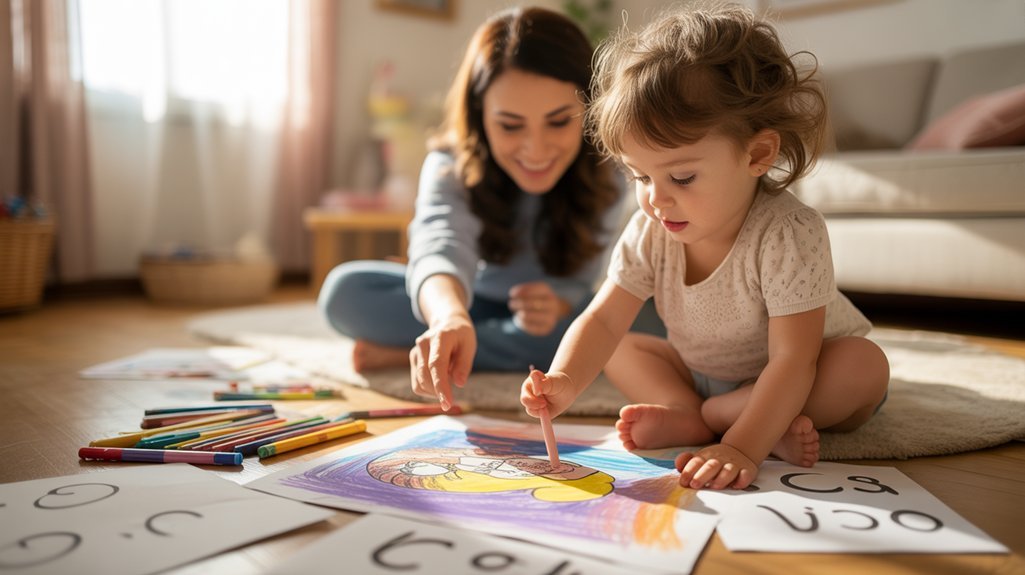
The proof of any teaching approach lives in the homes where families put these strategies into practice. Parents consistently report that their children master phoneme isolation through engaging games like “Sound I Spy” and the “Silly Sound Game,” where children replace initial sounds in familiar words.
These success stories reveal a common pattern: playful, brief practice sessions yield outstanding outcomes. Families have found that 5-10 minutes of daily phoneme isolation exercises greatly boost reading confidence.
Scavenger hunts for items starting with specific phonemes change abstract sound awareness into concrete, interactive learning. Parents emphasize that incorporating movement and manipulatives keeps children motivated during these exercises.
The feedback is clear—when you approach phoneme isolation as play rather than drill, children engage naturally with the concept. Whether replacing sounds in names or identifying initial phonemes in household objects, these practical applications demonstrate how accessible and effective phoneme isolation can be for early readers.
Quick Reference Guide
Busy parents and educators need efficient tools to implement phoneme isolation effectively. This reference chart organizes sound recognition activities by developmental stage, helping you select appropriate phoneme games for your child's current skill level.
| Developmental Stage | Focus Area | Fun Activities |
|---|---|---|
| Mid-Kindergarten | Initial sounds | Silly Sound Game with names |
| Late Kindergarten | Final sounds | “What's the last sound in ‘cat'?” |
| Early First Grade | Medial sounds | Sound hunt in three-letter words |
These learning strategies progress systematically from simple to complex tasks. Start with one-syllable words like “tap” or “sun” before advancing to multisyllabic words. You'll find consistent practice—even just five minutes daily—significantly improves literacy development. The Silly Sound Game particularly engages children by replacing initial sounds in familiar words, altering “Maria” into “Baria.” Research confirms that structured phoneme games accelerate reading readiness when implemented developmentally. Track your child's progress through each stage, celebrating mastery before advancing.
Your Next Steps
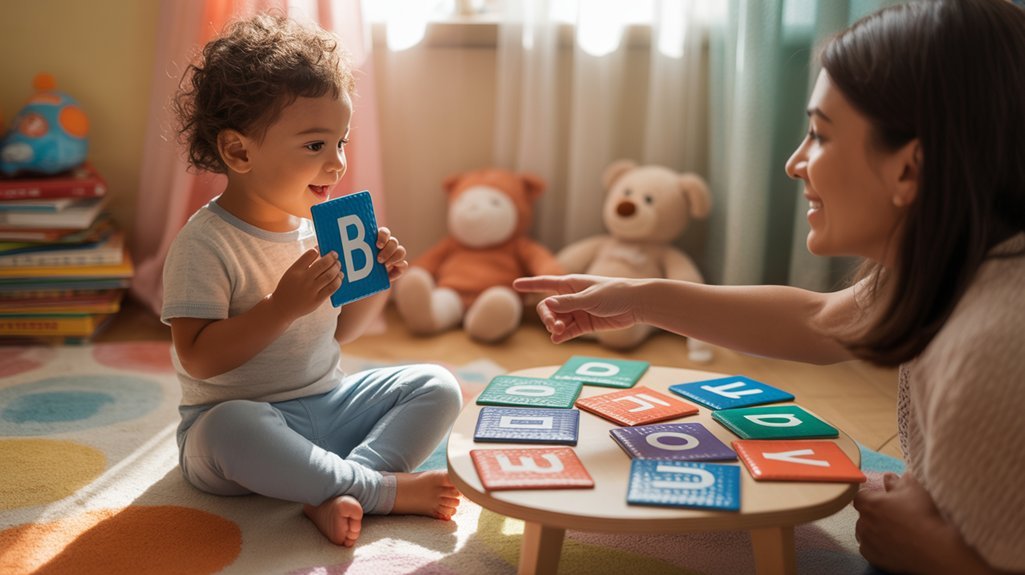
Now that you understand developmental stages and practice activities, commit to implementing these phoneme isolation techniques with consistency and intentionality. Schedule daily 5-10 minute sessions to target first, last, and medial sounds systematically.
Begin with “Sound Detectives” and “Sounds I Spy” phoneme games that capture young learners' attention while building essential skills. Integrate sound activities using manipulatives like playdough or sound boxes to strengthen tactile connections with phonemes.
Introduce the “Silly Sound Game” to spark creativity as children manipulate sounds in familiar words and names. Track each child's progress carefully, establishing clear benchmarks: initial sound mastery by mid-kindergarten, final sounds by late kindergarten.
Document observations regularly to adjust instruction based on individual needs. Your dedication to these evidence-based practices will directly impact reading success. Start tomorrow with one focused activity, then gradually expand your repertoire.
Every moment you invest in phoneme isolation strengthens the foundation your students need for literacy achievement.
Frequently Asked Questions
How Do Phoneme Isolation Exercises Differ From Phonics Instruction?
Phoneme isolation exercises develop phoneme awareness by having you focus on identifying individual sounds within words, while phonics instruction teaches you letter-sound correspondences for decoding.
You'll use isolation activities to strengthen auditory discrimination skills before connecting sounds to written symbols. This foundational work directly supports your students' reading fluency development.
While phoneme awareness is purely auditory, phonics bridges sound to print. You're building critical pre-reading skills through isolation exercises that make phonics instruction more effective and accessible for emerging readers.
Can Bilingual Children Practice Phoneme Isolation in Both Languages Simultaneously?
Yes, you can help bilingual children practice phoneme isolation in both languages simultaneously. Research shows this strengthens their metalinguistic awareness through language transfer.
You'll want to implement bilingual strategies that acknowledge shared and distinct phonemes across languages. Start by isolating sounds common to both languages, then address unique phonemes separately.
This approach doesn't confuse young learners—it actually improves their phonological processing skills and celebrates their linguistic assets while building foundational literacy competencies.
Are There Specific Learning Disabilities That Affect Phoneme Isolation Skills?
Yes, several learning disabilities greatly affect phoneme isolation abilities.
You'll most commonly encounter dyslexia impact, where children struggle to distinguish and manipulate individual sounds despite normal intelligence.
Auditory processing disorders also impair these skills, making it difficult for students to differentiate similar phonemes.
When you're working with struggling readers, early identification of these conditions enables you to implement targeted interventions and multisensory approaches that'll support their phonological awareness development effectively.
How Long Does Mastery of Phoneme Isolation Typically Take?
Most children achieve phoneme isolation mastery within 8-12 weeks of consistent practice—that's roughly the same time it takes to learn a musical scale!
Your students' phoneme development timeline varies based on age and prior exposure. You'll recognize mastery indicators when they're correctly identifying initial, final, and medial sounds 80% of the time independently.
Should Phoneme Isolation Be Taught Before or After Letter Recognition?
You'll want to introduce phoneme isolation *before* letter recognition. Research shows phoneme development begins with pure sound awareness—independent of visual symbols.
This literacy progression allows children to hear and manipulate sounds orally first, building vital phonological awareness. Once they've mastered isolating sounds in spoken words, they're better equipped to connect those sounds to letters.
You're fundamentally establishing the auditory foundation before adding the visual layer, which strengthens their overall decoding abilities.
Conclusion
You've learned twelve exercises that convert abstract sounds into concrete skills. Now comes the pivot: while these activities take mere minutes daily, their impact spans years of literacy development. Start with one exercise tomorrow—not all twelve. Research shows consistent, brief practice outperforms sporadic marathon sessions. Your child won't master phonemes overnight, but they'll build neural pathways strengthening reading foundations. Small moments create lasting readers. Which exercise will you try first?
Related Articles
- The Ultimate Guide to Sibling Conflict
- The Ultimate Guide to Family Meal Planning
- The Ultimate Guide to Kids Educational Games
- 20 Fun DIY Crafts to Strengthen Family Bonds
- The Ultimate Guide to Bedtime Routine

Written by Sarah Mitchell, M.S., CFLE
Founder & Lead Editor
Sarah is a Certified Family Life Educator with a Master's degree in Human Development and Family Studies from the University of Missouri. With 15+ years of experience as a parent educator and mother of three, she brings both professional expertise and real-world parenting wisdom to every article.
Credentials: M.S. in Human Development and Family Studies, Certified Family Life Educator (CFLE)