



You can prevent childhood obesity without food shaming by focusing on healthy behaviors rather than weight. Avoid labeling foods as “good” or “bad,” and allow all foods in moderation to prevent restriction-based anxiety. Teach your child to recognize hunger and fullness cues instead of enforcing portion rules. Prioritize family meals, involve kids in meal preparation, and aim for 60 minutes of daily physical activity together. These evidence-based approaches cultivate positive body image while building sustainable healthy habits that'll benefit your child throughout their life.
Key Takeaways
- Avoid labeling foods as “good” or “bad” to prevent shame and anxiety; focus on moderation and teaching hunger-fullness cues.
- Allow all foods in moderation, including treats, to promote balanced eating patterns and prevent restrictive behaviors that lead to disordered eating.
- Skip weight-focused conversations; emphasize healthy eating and joyful movement to support positive body image and sustainable habits.
- Involve children in meal planning and preparation to increase food acceptance and build autonomy while modeling healthy behaviors.
- Limit screen time to two hours daily and establish 60 minutes of active family time to integrate movement naturally.
Avoid Labeling Food as Good or Bad
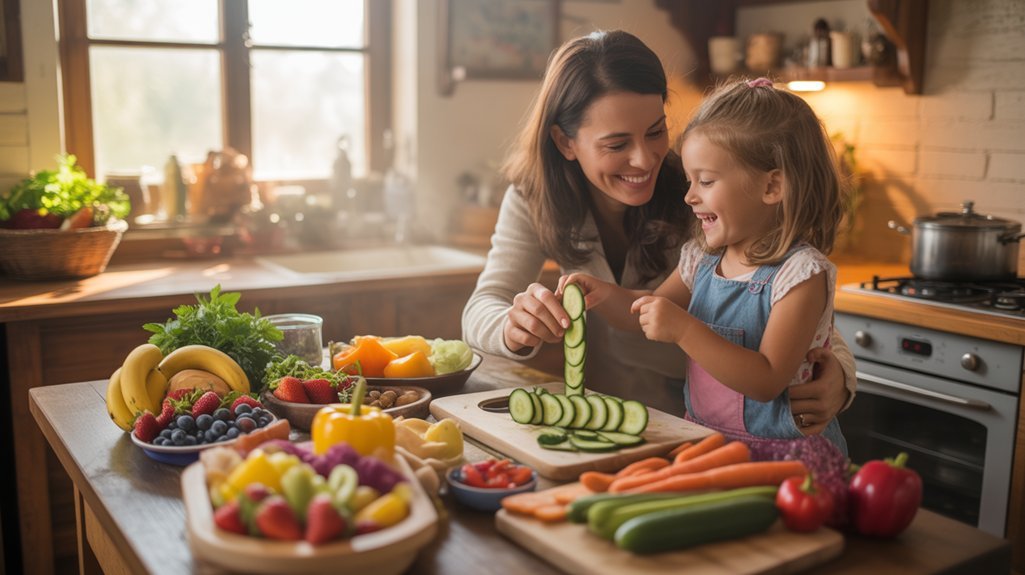
When you tell your child that cookies are “bad” and broccoli is “good,” you're inadvertently teaching them that their food choices reflect their moral worth. This labeling creates shame and anxiety, often leading children to hide foods they enjoy or develop guilt around eating.

Instead, focus on teaching moderation and balance. Help your child understand that all foods fit within healthy eating patterns—some foods provide energy and nutrients for daily activities, while others are simply enjoyable treats. This approach encourages self-regulation as children learn to listen to their hunger and fullness cues without judgment.
Offer diverse foods without negative commentary. When children explore various flavors without labels attached, they're more likely to develop adventurous eating habits and accept new foods naturally.
This non-judgmental environment supports positive body attitudes and removes the moral weight from mealtime decisions, allowing children to build a genuinely healthy relationship with food that lasts beyond childhood. Establishing these healthy eating foundations connects to overall health and helps children develop lifelong wellness habits that support their ability to thrive.
Allow All Foods in Moderation
Building on this foundation of neutral language, you'll want to guarantee your child has regular access to a wide variety of foods—including treats. When you allow all foods in moderation, you're helping children develop healthy habits and balanced eating patterns that last a lifetime.
Rather than restricting certain foods entirely, offer occasional indulgences while maintaining reasonable boundaries around unlimited access. This approach teaches self-regulation without creating forbidden foods that might lead to hiding or shame.
Engage your child in supportive conversations about their preferences. When they crave less nourishing options, introduce healthier alternatives that satisfy while maintaining balance. This illustrates that all foods fit within a healthy lifestyle.
Teaching moderation supports intuitive eating and body autonomy. Your child learns to recognize their own hunger and fullness cues, developing confidence in their ability to make balanced choices.
This child-centered approach nurtures a positive relationship with food while naturally supporting healthy weight management. Since early childhood development during the first three years establishes patterns that impact lifelong mental health and well-being, establishing these healthy eating habits early creates a foundation for lasting wellness.
Teach Kids How to Identify Appropriate Portion Sizes

How can you help your child recognize when they've had enough to eat? Start by encouraging them to tune into their hunger and fullness cues rather than enforcing a “finish your plate” rule. This approach respects their body autonomy and supports natural self-regulation of portion sizes.
Engage your child in conversations about how their body feels before, during, and after eating. Ask open-ended questions like “Does your tummy feel comfortable?” or “How does this food make you feel?” These discussions build body awareness essential for healthy eating patterns.
Make portion sizes relatable by using visual comparisons—a serving of protein might be palm-sized, while grains could resemble a baseball. These simple references help children understand appropriate amounts without complicated measurements.
Remember that maintaining your own self-care practices as a parent helps you stay balanced and present when guiding your child through these important conversations about food and body awareness.
Serve a Variety of Foods
Offering your child a wide range of foods—from different flavor profiles to various preparation methods—helps them develop a positive relationship with eating and reduces resistance to new options.
When you regularly introduce unfamiliar foods and present familiar ones in different ways, such as raw, roasted, or blended, you give your child multiple opportunities to discover their preferences.
This approach provides essential nutrients while making mealtimes more engaging and less monotonous for your family.
Understanding how much vitamin C kids and toddlers need in their diet can help you make informed choices when selecting fruits and vegetables to include in this variety.
Explore Different Flavor Profiles
Children's taste preferences develop through repeated exposure to diverse foods, making variety a cornerstone of healthy eating patterns. You'll enable children by offering foods prepared in multiple ways—roasted vegetables taste different from steamed ones, and these variations help expand acceptance.
When you introduce sweet, savory, tangy, and mild flavors regularly, you're building their confidence to try new healthy foods without pressure.
Create colorful plates that combine different textures and tastes, making mealtimes visually appealing and engaging. This approach naturally encourages healthy eating while reducing picky behaviors.
Prepare Foods Multiple Ways
When you prepare the same food in different ways, you change how children perceive and accept it. Offering carrots raw, steamed, roasted, or grilled introduces varied textures and flavors that can convert rejection into curiosity. This approach expands children's palates naturally, helping them discover preferences for healthy foods without pressure.
Regularly introducing fruits, vegetables, and whole grains in multiple preparations reduces food neophobia and builds familiarity. A colorful plate with diverse options makes mealtime inviting and encourages exploration.
As children encounter different flavor profiles consistently, they adapt and develop positive eating habits that support long-term wellness. You're not forcing acceptance—you're creating opportunities for discovery.
This patient, varied approach helps children build confidence with nourishing foods, establishing patterns that contribute to balanced nutrition and sustainable healthy eating habits throughout their development.
Introduce New Foods Regularly
Expanding your child's food repertoire requires consistent, low-pressure exposure to unfamiliar items. Research demonstrates that repeated exposure increases acceptance up to 20 times, making regular introduction of fruits, vegetables, and whole grains essential.
Don't be discouraged if your child initially rejects new foods—this response is normal and typically diminishes with continued exposure.
Create an environment where exploration feels safe rather than mandatory. Engage your kids by involving them in selecting and preparing healthy foods, which greatly enhances their willingness to try unfamiliar items.
Serve new foods alongside familiar favorites without pressure or coercion. This approach allows children to develop their taste preferences naturally while ensuring balanced nutrition.
Over time, this patient strategy fosters adventurous eaters who embrace diverse, nutritious options independently.
Avoid Weight Talk
How you talk about bodies matters more than you might think. Children internalize every comment about weight, often associating their value with the number on a scale. When you focus conversations on healthy eating and joyful movement rather than weight loss, you're protecting their developing body image.
Research demonstrates that weight-centered discussions increase shame and rarely lead to sustainable change. Instead, children who hear constant weight talk are more likely to develop disordered eating patterns and lifelong insecurity about their bodies.
You can promote wellness without mentioning pounds or sizes. Talk about how nutritious foods fuel their adventures, how physical activity makes them feel strong, and how bodies come in diverse shapes—all equally worthy of respect.
When you avoid weight talk, you're creating space for children to develop positive relationships with food and their bodies. This approach nurtures genuine health improvements while building confidence and self-acceptance that lasts far beyond childhood.
Model Healthy Habits as a Family

You have tremendous power to shape your child's relationship with food and physical activity through your own daily choices.
When you eat balanced meals together as a family, stay physically active, and embrace a healthy lifestyle, your children naturally learn to value these behaviors.
Your actions speak louder than any lecture—children who see their parents enjoying nutritious foods, moving their bodies, and making health a priority are far more likely to adopt these habits themselves.
Eat Together, Eat Well
When families gather around the table to share meals, they create powerful opportunities to shape children's lifelong eating habits. You'll find that regular family mealtimes encourage kids to try new foods and develop healthier preferences naturally. Research shows children consume more fruits, vegetables, and whole grains when eating with family.
| Mealtime Strategy | How It Helps | Your Action |
|---|---|---|
| Involve kids in cooking | Builds skills and investment | Assign age-appropriate tasks |
| Offer variety | Increases food acceptance | Serve colorful, diverse plates |
| Share the experience | Strengthens emotional bonds | Make conversation a priority |
| Model healthy choices | Demonstrates positive habits | Eat nutritious foods yourself |
| Create routine | Establishes consistency | Schedule regular mealtimes |
Active Family, Healthy Lifestyle
Children learn most powerfully through observation, making your daily choices the blueprint for their future habits. When you create an active family culture, you're modeling healthy living that extends far beyond lectures about nutrition or exercise.
Transform everyday moments into movement opportunities. Bike to the park, hike local trails, or dance in the living room together. These shared activities strengthen bonds while establishing physical activity as normal, not optional.
Prepare nutritious meals together, discussing ingredients without labeling foods as “good” or “bad.” Involve children in meal planning and cooking to build their confidence in making independent dietary choices.
Limit screen time to two hours daily, creating space for active play. Your consistent example teaches that healthy living isn't restrictive—it's simply how your family thrives together.
Make Healthy Eating Fun and Engaging
How can parents change nutritious meals from a daily battle into an adventure kids actually want to join?
Transform healthy eating into fun by inviting children into the kitchen. When kids help prepare meals, they're more likely to embrace nutritious choices. Let them wash vegetables, mix ingredients, or arrange food on plates—this involvement creates ownership over their meals.
Create visual excitement through colorful plates featuring a rainbow of fruits and vegetables. Children respond naturally to vibrant presentations that appeal to their senses.
Introduce taste tests as exploration opportunities. Offer small portions of various healthy foods without pressure, allowing children to discover new flavors and textures at their own pace.
Turn nutrition into play through games like scavenger hunts for different produce items. Establish family traditions such as “Meatless Monday” or themed food nights that generate anticipation and participation.
These approaches promote positive relationships with nutritious foods while respecting children's autonomy, making healthy eating an engaging experience rather than a conflict.
Focus Beyond the Scale

While scales display numbers, they don't measure your child's energy levels, emotional resilience, or joy in movement. Shifting your focus from weight to health behaviors creates a foundation for lifelong well-being. Research shows that emphasizing healthy eating, physical activity, and emotional wellness leads to better outcomes than weight-centered approaches.
Focus on health behaviors rather than weight to build your child's lifelong foundation for physical and emotional well-being.
Support your child's development by prioritizing:
- Body positivity and self-acceptance to reduce body dissatisfaction and protect mental health
- Family meals and shared physical activities that build healthy habits in a supportive environment
- Foundational wellness practices like adequate sleep and balanced nutrition that prevent obesity naturally
Address the broader picture by ensuring access to nutritious foods and safe spaces for activity—these social determinants greatly influence health outcomes.
When you celebrate what your child's body can do rather than how it looks, you're nurturing resilience and healthy eating patterns that extend far beyond childhood.
Parent FAQs Addressed
You likely have questions about steering specific challenges as you support your child's health journey.
From knowing when professional guidance would help to managing screen time boundaries, these common concerns deserve practical, evidence-based answers.
Let's address the questions parents ask most frequently about nurturing healthy habits without causing harm.
When to Seek Help
Recognizing when your child needs professional support can feel overwhelming, yet certain signs clearly indicate it's time to reach out for help.
Watch for extreme food restriction, binge eating, or expressions of body shame—these behaviors may signal developing eating disorders requiring immediate attention. Schedule regular pediatric check-ins to monitor growth patterns and receive guidance that prioritizes health over weight alone.
When your child voices negative body image concerns, consider consulting a mental health professional specializing in body positivity.
You'll help your child most effectively by engaging in open conversations about food and body feelings, which can reveal underlying issues.
Don't hesitate to seek support groups focused on positive food relationships if you're feeling overwhelmed managing these challenges alone.
Talking About Weight Positively
When parents worry about their child's weight, they often struggle with how to broach the subject without causing harm. Focus conversations on health behaviors rather than numbers on a scale. Emphasize activities your child enjoys and nutritious foods that fuel their body, promoting both healthy weight outcomes and positive body image.
| Instead of Saying | Try This Approach |
|---|---|
| “You need to lose weight” | “Let's find fun ways to move together” |
| “That food is bad for you” | “We can enjoy treats in moderation” |
| “You're getting too big” | “Your body is growing and changing” |
| “No dessert until you finish vegetables” | “Let's balance our meals with variety” |
| “You can't wear that; it's too tight” | “Let's find clothes that feel comfortable” |
Model acceptance of diverse body types and celebrate what bodies can do rather than how they look.
Handling Picky Eating Concerns
Picky eating frustrates many parents, yet it's a normal developmental phase that most children outgrow with patience and proper support. You can address this challenge by offering various healthy foods without pressure, allowing children to explore new flavors at their own pace.
Invite them to participate in meal preparation—this involvement naturally increases their willingness to try unfamiliar options.
Remember that acceptance takes time; you'll typically need 8-10 exposures before a child accepts a new food.
Model healthy eating behaviors yourself and maintain a stress-free mealtime atmosphere. Avoid labeling foods as “good” or “bad,” which can create shame and damage their relationship with eating.
Instead, focus on creating positive experiences that encourage exploration and gradual dietary expansion.
Managing Family Meal Resistance
Family meal resistance often stems from power struggles rather than food preferences themselves. You can reduce these battles by involving your children in meal and snack planning and preparation, which naturally increases their willingness to try new foods.
Offer a variety of healthful options and let them choose what and how much to eat, respecting their autonomy and internal hunger cues.
Focus conversations on the joy of spending time together as the whole family rather than what's being consumed. Avoid pressuring children to finish their plates, as this undermines their natural ability to self-regulate.
Research shows that consistent family mealtimes lead to better dietary habits and reduced obesity risk, making your efforts worthwhile. Creating positive mealtime experiences benefits everyone's relationship with food.
Screen Time and Activity
Although screens have become essential tools for learning and connection, excessive use displaces the physical activity children need for healthy development. You'll want to aim for two hours or less of screen time daily, creating space for active play and movement.
Consider developing a balanced media plan that naturally integrates physical activity into your family's routine. Bike rides, outdoor games, and organized sports provide opportunities for children to build social skills while staying active.
Your participation matters greatly—when you model healthy behaviors by joining these activities, you demonstrate that movement is valuable and enjoyable.
This approach isn't about restriction; it's about creating rhythms that support your child's well-being. By treating physical activity as an integral part of daily life rather than optional, you're establishing sustainable habits.
Practical Action Steps for Families
Creating sustainable habits at home starts with shared mealtimes—a cornerstone of childhood wellness that extends far beyond nutrition. Aim for family meals at least five times weekly, altering dinner into a family affair where you'll naturally discuss food choices without judgment.
Family meals five times weekly create judgment-free spaces where children naturally learn healthy eating habits through conversation and connection.
This consistency builds healthy eating habits while strengthening communication.
Make nutrition interactive by involving children in meal planning and preparation. When they help choose recipes and prepare ingredients, they're more likely to try new foods and understand balanced eating.
Essential Steps for Your Family:
- Stock your kitchen with accessible healthy snacks like cut vegetables, fruits, and whole grains while limiting ultra-processed options.
- Establish 60 minutes of daily moderate-to-vigorous physical activity as non-negotiable family time.
- Model positive body image by eliminating weight-focused language and celebrating what bodies can do.
Resources and Support Available

When steering childhood obesity prevention, you don't have to figure everything out alone—proven resources exist to guide your family's journey. Your pediatrician serves as your primary partner, offering compassionate support while screening for eating disorders and addressing weight concerns without shame. Many health care teams provide free or low-cost materials about nutrition and physical activity tailored to children's developmental needs.
| Resource Type | What's Available | Access Point |
|---|---|---|
| Professional Guidance | Pediatrician consultations, nutrition counseling | Your health care provider |
| Educational Materials | AAP webinars, evidence-based articles | Online platforms, clinic handouts |
| Community Programs | Healthy food access initiatives, safe activity spaces | Local health departments |
| Family Support | Parent workshops, lifestyle coaching | Healthcare teams, community centers |
| Prevention Tools | Growth monitoring, eating disorder screening | Pediatric appointments |
These resources emphasize positive lifestyle changes rather than restrictive dieting, helping you create sustainable habits that support your child's wellbeing.
Frequently Asked Questions
How Do I Handle Relatives Who Comment on My Child's Weight?
You'll need to set firm boundaries with relatives by privately explaining that comments about your child's body aren't helpful.
Redirect conversations toward body positivity by emphasizing health behaviors over appearance.
Request their family support in modeling positive attitudes about food and movement instead.
If comments continue, limit your child's exposure to those relatives.
What if My Child Refuses to Try New Healthy Foods?
Ever notice how kids need multiple exposures before accepting new tastes?
Make food exploration playful and pressure-free. You can offer new foods alongside familiar favorites without forcing bites. Use positive reinforcement by praising brave tasting attempts, not consumption amounts.
Let your child touch, smell, and observe foods before eating. Research shows it takes 10-15 exposures for acceptance.
Stay patient—you're building lifelong healthy relationships with food, not winning tonight's dinner battle.
How Much Screen Time Is Appropriate for Different Age Groups?
Screen time guidelines recommend no screen time for children under 18 months, one hour daily for ages 2-5, and consistent limits for older kids.
You'll want to follow age recommendations from the American Academy of Pediatrics while considering your child's individual needs.
It's not about perfection—prioritize quality content and co-viewing when possible.
Balance screens with physical activity, family meals, and outdoor play to support your child's healthy development without judgment.
Can Picky Eating Lead to Childhood Obesity or Nutritional Deficiencies?
Picky eating typically doesn't cause obesity but can create nutritional deficiencies if children consistently refuse entire food groups.
You'll want to focus on nutritional balance by offering varied options without pressure. Research shows repeated exposure—sometimes 10-15 times—helps children accept new foods.
Don't use dessert as a reward or label foods “good” or “bad.” Instead, you can model healthy eating and create positive mealtime environments where children learn to trust their hunger cues naturally.
Should I Be Concerned if My Child Asks for Seconds?
You shouldn't be concerned—it's actually healthy when children recognize their hunger cues!
Before offering seconds, wait 10-15 minutes to let their body register fullness. Ask if they're still hungry or just enjoyed the taste.
Focus on portion control by starting with reasonable servings, then allowing more if they're genuinely hungry.
This approach teaches self-regulation without restricting food or creating shame around natural appetite variations, supporting their long-term relationship with eating.
Conclusion
You might worry that dropping food rules means losing control, but the opposite is true. When you stop labeling foods and start building trust, you're teaching your child lifelong skills they'll actually use. This approach isn't about being permissive—it's about being purposeful. Research shows kids who grow up without food shame develop healthier relationships with eating and their bodies. You've got the tools now. Start with one small change today.
Related Articles
- The Ultimate Guide to Sibling Conflict
- The Ultimate Guide to Family Meal Planning
- The Ultimate Guide to Kids Educational Games
- 20 Fun DIY Crafts to Strengthen Family Bonds
- The Ultimate Guide to Screen Time Management

Written by Sarah Mitchell, M.S., CFLE
Founder & Lead Editor
Sarah is a Certified Family Life Educator with a Master's degree in Human Development and Family Studies from the University of Missouri. With 15+ years of experience as a parent educator and mother of three, she brings both professional expertise and real-world parenting wisdom to every article.
Credentials: M.S. in Human Development and Family Studies, Certified Family Life Educator (CFLE)