



Potty training regression happens when your previously trained toddler suddenly has repeated accidents over days or weeks, often triggered by major life changes like new siblings, moving homes, or starting preschool. It's a normal developmental phase that doesn't reflect your parenting. You can address it by maintaining consistent routines, avoiding punishment, offering gentle reassurance, and using positive reinforcement like sticker charts. Most regressions resolve within one to three weeks, though persistent setbacks beyond a month warrant professional evaluation to rule out underlying medical conditions or emotional concerns.
Key Takeaways
- Potty training regression is a temporary setback involving repeated accidents, often signaling major life changes or emotional struggles in toddlers.
- Common causes include new siblings, moving homes, starting preschool, developmental milestones, medical issues, or significant emotional stressors affecting security.
- Maintain consistency with routines, avoid returning to diapers, and use positive reinforcement like sticker charts to rebuild confidence and motivation.
- Stay calm and patient, provide extra reassurance, increase one-on-one time, and communicate openly to help children process their feelings.
- Most regressions resolve within one to three weeks; seek professional help if accidents persist beyond four weeks or medical symptoms appear.
What Is Potty Training Regression?

When your previously toilet-trained toddler suddenly starts having accidents again, you're likely experiencing potty training regression—a temporary setback that catches many parents off guard.

This common developmental phase differs from occasional accidents; it's a pattern of repeated incidents over days or weeks where your child reverts to behaviors you thought were resolved.
Understanding this child behavior helps you respond effectively. Regression often signals that your little one is processing significant changes—perhaps a new sibling, a move, or internal emotional struggles like anxiety or jealousy.
Potty training regression usually reflects your child's way of coping with major life changes or emotional stress.
While your carefully implemented potty training techniques seemed successful, regression doesn't mean you've failed as a parent or caregiver.
Most children experience this setback at some point during their toilet training journey. Recognizing it as a normal developmental occurrence rather than defiance allows you to approach the situation with patience and renewed strategies, ultimately helping your child return to consistent bathroom success.
Common Signs Your Child Is Experiencing Regression
How can you tell if your child is truly regressing rather than simply having an off day? Signs regression typically involves a consistent pattern of child behavior rather than isolated incidents.
You'll notice frequent daytime accidents after your child had achieved reliable dryness, marking a clear return to earlier habits.
Watch for active refusal to use the toilet despite previous willingness and cooperation. Your child might display increased resistance through tantrums or reluctance to sit on the potty during established routines. These behavioral shifts often signal genuine regression.
Emotional changes frequently accompany these physical signs. You may observe increased clinginess, irritability, or apparent anxiety around toileting. These reactions reflect your child's internal stress.
Regression often emerges when your child navigates other developmental milestones simultaneously—starting preschool, welcoming a new sibling, or adjusting to family changes.
Major traumatic news events can also trigger regression as children process stress and uncertainty in their environment.
Recognizing these patterns helps you respond with appropriate support rather than frustration.
Top Causes of Potty Training Setbacks

Understanding why your child is experiencing setbacks can help you respond with appropriate support rather than frustration.
The causes typically fall into three main categories: significant life changes that disrupt your child's sense of security, underlying medical conditions that create physical discomfort, and emotional stressors that trigger anxiety or regression to earlier behaviors.
Life Changes and Transitions
Life changes—even positive ones—can shake your toddler's sense of security enough to trigger potty training regression. When a new baby arrives, sibling rivalry and attention-seeking behaviors often manifest as bathroom accidents. Your child may unconsciously return to “baby” behaviors to reclaim your focus during this vulnerable time.
Moving anxiety disrupts established routines, making consistency nearly impossible when everything feels unfamiliar. Similarly, starting preschool or experiencing caregiver changes introduces uncertainty that overwhelms a child's coping capacity.
Family changes like divorce create emotional turmoil that redirects your child's energy away from maintaining newly learned skills.
Even illness—whether yours or theirs—shifts priorities and comfort needs. These new routines demand patience as your toddler processes change. Understanding that regression is a normal response helps you provide the reassurance needed during challenging changes.
Since the first three years are the most important for lifelong mental health and well-being, providing consistent emotional support during regression helps build resilience for future developmental challenges.
Medical and Physical Issues
While emotional upheaval often explains sudden bathroom accidents, physical discomfort may be the real culprit behind your child's potty training setbacks. Medical evaluations should precede behavioral interventions when regression persists.
| Medical Issue | Signs to Watch For |
|---|---|
| Urinary Tract Infection | Fever, irritability, urgent need to urinate, frequent accidents |
| Constipation | Stomach pain, infrequent bowel movements, toilet avoidance |
Constipation creates pressure that makes toileting uncomfortable, causing children to resist using the bathroom. UTIs trigger an overwhelming urge to urinate, making accidents inevitable despite your child's best efforts.
Physical assessments become essential when you notice persistent regression accompanied by pain, fever, or bowel changes. Consult your pediatrician promptly—addressing underlying medical conditions often resolves potty training challenges more effectively than behavioral strategies alone.
Emotional Stress and Anxiety
Your child's emotional world directly influences their bathroom habits, with major life changes—moving homes, welcoming a new sibling, or starting daycare—frequently triggering sudden regressions.
Stressful events like parental divorce or illness create insecurity that prompts children to revert to familiar behaviors for comfort.
Understanding these emotional triggers helps you respond with compassion rather than frustration. Your child isn't being difficult—they're processing overwhelming feelings through the only means they know.
Effective anxiety management begins with open communication. Acknowledge their feelings, provide extra reassurance, and maintain consistent routines where possible.
When jealousy toward a new sibling emerges, increase one-on-one time. If toilet fear develops, never force the issue.
Remember that maintaining your own well-being through self-care practices helps you stay patient and present during these challenging moments, ultimately modeling healthy coping strategies for your child.
When Medical Issues May Be to Blame

Sometimes a sudden reversal in potty training success isn't about behavior—it's your child's body signaling that something's wrong. Medical issues like urinary tract infections often cause urgency and discomfort, leading to accidents alongside fever and irritability.
Constipation creates pressure on the bladder from hard stools, prompting resistance to toilet use or unexpected accidents.
Symptom recognition becomes essential when you're supporting your child through regression. Watch for infrequent bowel movements, pain during urination, or visible discomfort.
Children with developmental disorders or physical disabilities may experience consistent challenges that require specialized support.
If regression continues despite your positive reinforcement and routine consistency, medical assessments are necessary. Don't hesitate to consult your pediatrician to rule out underlying conditions.
Your child depends on you to distinguish between behavioral phases and physical problems. Early identification guarantees they receive appropriate treatment, allowing them to return to confident toilet use without unnecessary struggle or shame. BabyCenter's medical advisory board includes respected pediatric experts who ensure evidence-based guidance for addressing these challenging parenting situations.
Stay Calm and Patient During Setbacks
When your child experiences potty training regression, your emotional response becomes just as important as the strategies you employ.
Children are remarkably attuned to parental stress, and they'll absorb your anxiety, which can intensify their own fears and prolong the setback.
Why Calmness Matters Most
One misstep during potty training regression can trigger a cascade of parental anxiety that directly impacts your child's ability to recover. When you remain calm, you create a calm environment where your child feels safe to navigate this developmental challenge.
Your composure prevents the transmission of stress that would otherwise heighten their anxiety and resistance to toilet use.
Research demonstrates that emotional support during setbacks accelerates recovery. Children who receive positive reinforcement and patient responses to accidents develop confidence rather than fear.
Your steady presence communicates that mistakes are normal, encouraging them to persist without shame. This approach isn't permissive—it's strategically effective.
Managing Your Own Frustration
Your frustration during potty training regression is valid, but it's also the single biggest obstacle to your child's progress. When you display frustration, your child absorbs that anxiety, which intensifies their resistance and emotional distress.
Effective frustration management starts with recognizing that regressions are temporary developmental phases, not failures of your parenting.
Practice emotional regulation by stepping away when you feel overwhelmed, taking deep breaths, or reminding yourself that punishment worsens the situation. Instead, channel your energy into positive reinforcement strategies—praising small successes and maintaining consistent encouragement.
Your calm presence creates the safe atmosphere your child needs to regain confidence. Remember, your ability to manage your emotions directly impacts their willingness to try again. Your patience models the resilience you're teaching them.
Avoiding Anxiety Transfer
Children possess remarkably sensitive emotional radar systems that detect parental stress with uncanny accuracy. When you're anxious about potty training setbacks, your child absorbs that tension, creating a cycle where your worry amplifies their own bathroom-related fears. Anxiety awareness starts with recognizing how your reactions shape their experience.
| Your Anxious Response | Your Calm Alternative |
|---|---|
| Hovering, frequent reminders | Trusting their body signals |
| Visible disappointment at accidents | Matter-of-fact cleanup together |
| Comparing to other children | Celebrating individual progress |
| Rushing the process | Maintaining consistent routines |
| Punishment or pressure | Positive reinforcement strategies |
Emotional safety flourishes when you respond with patience rather than frustration. By maintaining composure during setbacks, you communicate that toilet learning is manageable, not frightening. Your steady presence becomes their anchor.
Proven Strategies to Get Back on Track
When potty training regression disrupts your child's progress, implementing targeted strategies can restore their confidence and skills. Maintain consistency by avoiding diapers and establishing predictable bathroom routines—this reinforces positive child behavior patterns.
Use sticker charts or small rewards to celebrate successful visits, providing tangible motivation that rebuilds your child's self-assurance.
Open communication proves essential among effective potty training tips. Talk with your child about their feelings to uncover emotional stressors driving the regression. Track accident patterns to identify specific triggers, allowing you to adjust routines accordingly and provide personalized support.
If regression continues beyond a month, don't hesitate to take a temporary break. Removing pressure often allows children to reapproach potty training with renewed readiness.
The Power of Positive Reinforcement

Positive reinforcement converts potty training regression from a frustrating setback into an opportunity for renewed success. When your child experiences regression, reward systems become essential tools for rebuilding confidence and motivation. Research confirms that children repeat behaviors followed by praise or tangible rewards, making positive reinforcement particularly effective during challenging phases.
Sticker charts change potty training into an engaging game, visually tracking progress and celebrating achievements. Here's how to structure your approach:
| Reinforcement Type | Examples | Implementation |
|---|---|---|
| Verbal Praise | “You're doing amazing!” | Immediate, specific acknowledgment |
| Visual Tracking | Sticker charts, progress boards | Daily engagement with visible results |
| Small Rewards | Extra storytime, special snacks | After consistent successful attempts |
Celebrate every small success—staying dry for specific periods or attempting toilet use—to encourage accomplishment. Establish consistent routines incorporating positive reinforcement, creating supportive environments where children feel secure overcoming setbacks. This approach reduces anxiety about accidents while strengthening their developing capabilities.
When to Seek Professional Help
How do you know when potty training regression requires expert evaluation? If regression persists beyond a month without improvement, consulting professionals becomes vital to rule out medical conditions.
Persistent potty training regression lasting over a month signals the need for professional medical evaluation to exclude underlying health issues.
Watch for frequent accidents accompanied by discomfort, fever, or irritability—these symptoms may indicate urinary tract infections requiring immediate attention.
Your child's emotional well being matters equally. Significant distress, increased clinginess, or intensified tantrums alongside regression warrant guidance from a child psychologist.
These behavioral changes often signal deeper emotional needs requiring specialized support.
Regression following traumatic events—like losing a family member or experiencing major family changes—necessitates professional intervention.
These circumstances demand expertise beyond typical parenting strategies.
Monitor your child's overall development closely. If regression connects to broader developmental concerns, early intervention services provide essential assistance.
Understanding the Regression Causes

Understanding why your child suddenly struggles with potty training helps you respond with compassion rather than frustration. Recognizing the underlying causes allows you to develop effective coping strategies tailored to your child's specific needs.
Common triggers that disrupt established behavioral patterns include:
- Major life changes like welcoming a new sibling or moving homes, which create emotional insecurity
- Stressful events such as illness or changes in childcare settings that heighten anxiety levels
- Family relationships including divorce or parental conflict that generate feelings of jealousy or worry
- Medical conditions like UTIs or constipation that physically impair bladder control
- Developmental milestones that shift your child's focus away from toilet training temporarily
Each cause requires a different approach. Medical issues need prompt attention from your pediatrician, while emotional triggers benefit from extra reassurance and stability.
Duration and Medical Concerns
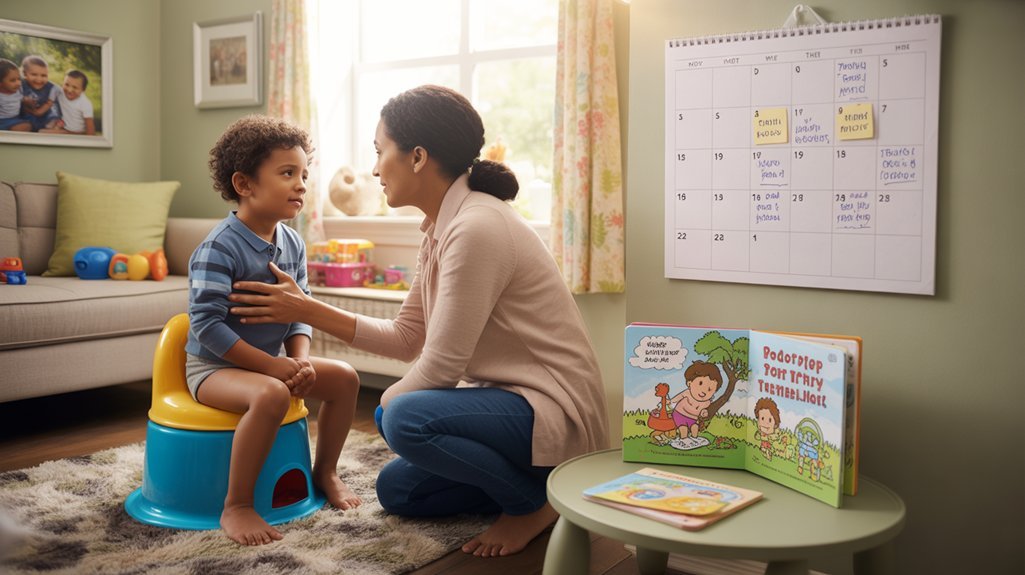
You'll likely wonder how long your child's potty training setback will last and whether it signals something more serious.
Most regressions resolve within days to a few weeks as your child adjusts to whatever triggered the change, but understanding normal timelines helps you recognize when professional guidance becomes necessary.
Knowing which symptoms warrant medical attention can give you confidence in supporting your child while protecting their physical health.
How Long It Lasts
When your child experiences a potty training regression, you'll likely wonder how long this frustrating phase will last. Most regressions resolve within days to weeks as children adjust to regression triggers like new routines or stressors.
Understanding this common developmental phase helps you manage expectations and maintain patience during setbacks.
However, if regression persists beyond a month, consult your pediatrician to rule out medical issues such as urinary tract infections or constipation. The duration depends on your child's emotional state and environmental changes—some regressions are temporary stress responses, while others need additional support.
Most children successfully resume toilet training after brief episodes. Implementing effective coping strategies and offering consistent encouragement creates the supportive environment your child needs to overcome this challenging but normal developmental hurdle.
Normal Duration Timeline
Most potty training regressions resolve within one to three weeks, though you'll notice variations depending on your child's individual circumstances. Setting normal expectations helps you provide consistent support during this developmental phase.
The regression timeline typically reflects your child's adjustment period to whatever triggered the setback—whether it's a new sibling, preschool change, or household move.
However, if accidents continue beyond four weeks, it's time to consult your pediatrician. Persistent regression may signal underlying medical concerns like urinary tract infections or constipation that require professional attention.
Watch for accompanying symptoms such as pain during urination, unusual clinginess, or behavioral changes. Remember, you're not alone in steering through this challenge. Understanding that most regressions are temporary enables you to maintain patience and create the supportive environment your child needs to regain confidence.
When to See Doctor
How do you know if your child's potty training setback requires medical attention? If regression persists beyond one month, schedule a pediatric consultation.
Watch for persistent accidents accompanied by fever or irritability—these symptoms may signal a urinary tract infection requiring prompt treatment. Increased constipation or infrequent bowel movements alongside regression calls for medical evaluations to identify physical causes.
Beyond physical symptoms, consider your child's emotional landscape. Regression following traumatic events like a family death warrants professional support through emotional assessments.
Monitor behavioral changes and stress indicators carefully. Your healthcare provider can determine whether interventions are needed to address underlying psychological factors affecting your child's toileting progress.
Trust your instincts. You're your child's best advocate, and seeking timely medical guidance guarantees thorough care addressing both physical and emotional well-being.
Red Flag Symptoms
Certain warning signs during potty training regression demand your immediate attention and shouldn't be dismissed as typical developmental phases.
Red flag indicators include regression lasting beyond one month without improvement, frequent accidents accompanied by fever or irritability, and physical symptoms like infrequent bowel movements or hard stools. These signs may point to urinary tract infections or constipation requiring medical evaluation.
Track your child's accident patterns and any behavioral changes carefully.
If regression coincides with refusal to use the toilet, pain during elimination, or significant emotional distress from life changes, consult your pediatrician promptly.
Understanding these warning signs enables you to distinguish between temporary setbacks and conditions needing professional intervention, ensuring your child receives appropriate support for healthy development.
Underlying Medical Conditions
When regression persists or appears alongside physical symptoms, medical conditions may be the underlying cause. Urinary tract infections can trigger frequent urination, pain, fever, and irritability—all disrupting your child's hard-won potty skills.
Constipation creates another challenge, as hardened stool and infrequent movements pressure the bladder, leading to unexpected accidents.
Symptom awareness helps you identify when regression signals more than behavioral changes. If setbacks continue beyond a month or you notice concerning physical signs, seek a medical evaluation from your pediatrician.
Early identification and treatment of UTIs or constipation greatly improve your child's potty training success and emotional well-being.
Your attentive response to these warning signs demonstrates the compassionate care that helps children overcome obstacles. A thorough evaluation rules out medical causes, allowing you to address regression with appropriate treatment and renewed confidence.
Emotional Support and Consistency

Potty training regression often stirs up intense emotions for both children and parents, but your response during this phase can make all the difference. Your child's setback frequently signals underlying stress or insecurity about changes in their world.
Through emotional communication and consistency strategies, you'll help them regain confidence.
Consider these evidence-based approaches:
- Maintain predictable routines – A consistent potty schedule creates security during uncertain times.
- Encourage emotional communication – Ask open-ended questions about their feelings regarding toilet use.
- Provide positive reinforcement – Praise efforts and celebrate small successes without pressuring perfection.
- Offer comfort without judgment – Validate their struggles while gently guiding them forward.
- Dedicate distraction-free connection time – Quality moments together reduce stress that triggers regression.
When you combine emotional attunement with structured consistency, you're addressing both the psychological and practical dimensions of regression.
This developmental-focused approach honors your child's emotional needs while supporting their continued growth toward independent toileting.
Knowing When to Pause

Sometimes the most supportive decision you'll make is recognizing that your child needs a break from potty training altogether. If regression persists beyond a month despite your consistent efforts, pausing may be the wisest approach.
Watch for key indicators: frequent accidents, outright refusal to use the toilet, or heightened anxiety around bathroom routines. These signs suggest your child isn't demonstrating adequate child readiness for continued training.
Stepping back isn't failure—it's strategic parenting. The pause removes performance pressure, allowing your child to rebuild confidence and emotional stability. Among essential potty training tips, knowing when to temporarily withdraw expectations ranks highly for long-term success.
When you do pause, communicate gently that diapers or pull-ups are okay for now. Revisit training when your child shows renewed interest and emotional preparedness.
This developmental-focused approach honors your child's individual timeline while preventing power struggles that can intensify regression. Gradual progress always outpaces forced advancement.
Frequently Asked Questions
Can Certain Foods or Drinks Make Potty Training Regression Worse?
Yes, certain foods and drinks can worsen regression.
You'll want to monitor for food sensitivities that may cause digestive upset or urgency, making accidents more likely. Excessive sugar, caffeine, and artificial additives can affect bladder control.
Additionally, poor hydration levels—both too little and too much liquid—can complicate your child's ability to recognize their body's signals.
Keep a food diary to identify triggers, and maintain consistent, balanced nutrition to support their developmental progress during this challenging phase.
Should I Switch Back to Diapers or Keep Using Underwear?
Ironically, the “easier” choice of diapers often prolongs regression.
You'll achieve better results by maintaining underwear confidence, even through accidents. Research shows children make faster progress when they feel wetness and understand consequences.
However, if your child's experiencing severe stress or medical issues, temporary diaper comfort at night isn't failure—it's compassionate support.
During daytime, stick with underwear while offering extra bathroom reminders. You're teaching resilience, not perfection, which ultimately serves your child's long-term independence and self-esteem beautifully.
How Do I Handle Regression During Travel or Vacations?
Maintain consistency by packing familiar potty equipment and sticking to your child's usual bathroom schedule.
These travel tips help minimize disruption to their routine. Before leaving, explain what to expect and locate bathrooms at your destination.
Build extra time into vacation routines for bathroom breaks, and don't stress over accidents—they're normal during changes.
Your calm, patient response helps your child feel secure despite environmental changes, supporting their continued progress with developmental understanding.
Will Daycare or Preschool Teachers Think My Child Isn't Ready?
Good teachers understand that regression doesn't indicate lack of readiness—it's developmentally normal.
They've seen countless children experience temporary setbacks while mastering this skill. Open teacher communication is essential: share what's happening at home and ask about their observations.
Most educators recognize standard readiness signs and distinguish between normal regression and true unreadiness.
They're your partners in supporting your child's development, not judges of your parenting or your child's capabilities.
Can Watching Potty Training Videos Help My Child Get Back on Track?
Yes, potty training videos can help your child regain confidence during regression. Research shows visual learning reinforces skills effectively at this developmental stage.
Choose age-appropriate content featuring relatable characters your child enjoys. However, videos work best as one of several motivational techniques—combine them with praise, consistent routines, and patience.
Don't rely solely on screens; your encouragement and presence remain the most powerful tools. Videos supplement, but can't replace, your supportive guidance through this temporary setback.
Conclusion
You're not alone in facing potty training setbacks—research shows that nearly 50% of children experience some form of regression during toilet training. What matters most isn't avoiding these bumps entirely, but how you respond to them. By staying patient, identifying underlying causes, and maintaining consistent routines, you'll help your child move forward at their own developmental pace. Remember, regression doesn't erase progress; it's simply part of your child's unique learning journey.
Related Articles
- The Ultimate Guide to Family Meal Planning
- The Ultimate Guide to Bedtime Routine
- The Ultimate Guide to Screen Time Management
- The Ultimate Guide to Family Bonding
- Family Budget Planning Guide

Written by Sarah Mitchell, M.S., CFLE
Founder & Lead Editor
Sarah is a Certified Family Life Educator with a Master's degree in Human Development and Family Studies from the University of Missouri. With 15+ years of experience as a parent educator and mother of three, she brings both professional expertise and real-world parenting wisdom to every article.
Credentials: M.S. in Human Development and Family Studies, Certified Family Life Educator (CFLE)