

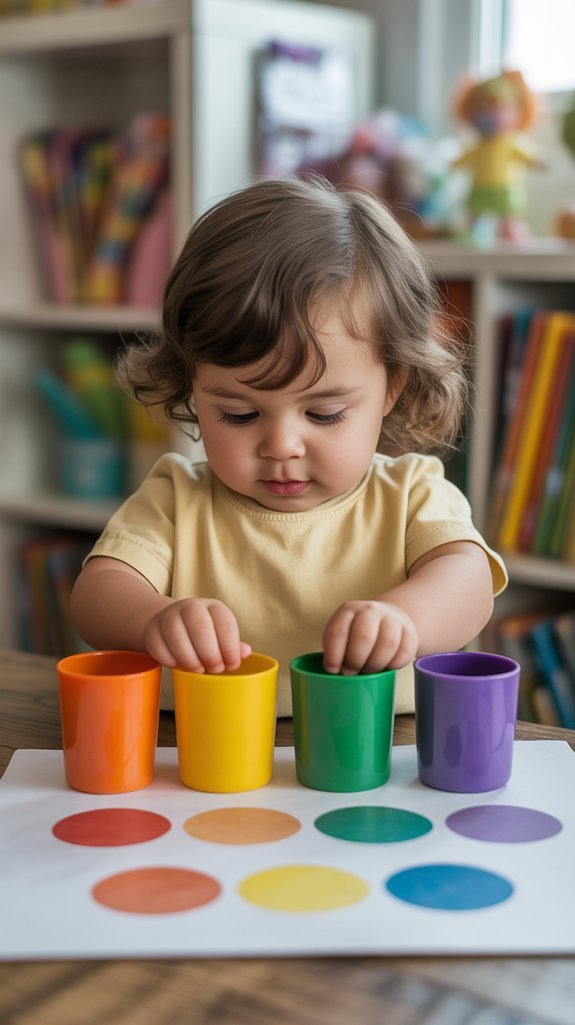

Start teaching colors around 18 months through everyday activities like sorting toys, creating sensory bins, and exploring rainbow rice. You'll find success with outdoor scavenger hunts, painting sessions, and color-themed stories that make learning feel like play. Use flashcards, collect natural objects, and build with colored blocks to reinforce recognition. Focus on primary colors first, celebrate small victories, and remember that mastery develops gradually through age three. The methods below change ordinary moments into colorful learning adventures your toddler will love.
Key Takeaways
- Use everyday objects like toys and clothing in color sorting activities to reinforce differentiation through active participation.
- Create sensory bins with colored materials like pom-poms and rice to provide multi-sensory exploration experiences.
- Conduct outdoor color scavenger hunts to strengthen observational skills while combining movement with discovery-based learning.
- Incorporate painting and color mixing activities using finger paints to teach color relationships through hands-on creative expression.
- Read colorful picture books and sing repetitive color songs to build vocabulary through memorable, joyful experiences.
Color Sorting With Everyday Objects
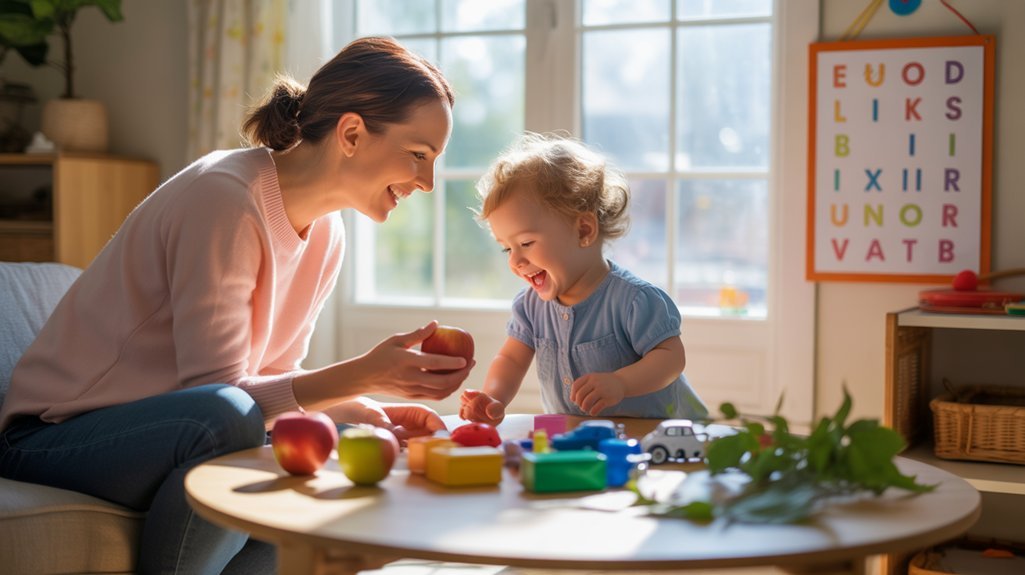
One of the most effective ways to introduce colors to toddlers is through everyday objects they already know and love. Color sorting alters ordinary household items into engaging activities that help children identify colors naturally. Gather toys, clothing, and food items with distinct hues—red apples, yellow bananas, blue blocks—to create meaningful connections between colors and familiar objects.

Set up sorting trays or containers labeled with color names, giving the activity structure while keeping it visually appealing. Invite your toddler to find and sort objects around the house based on color, turning learning into an exciting treasure hunt. This hands-on approach reinforces color differentiation through active participation rather than passive observation.
As children consistently practice these sorting activities, they'll expand their vocabulary and strengthen cognitive skills essential for future math and literacy development. These color learning activities support early childhood development during the critical first three years when foundational skills for lifelong learning are established.
You're not just teaching colors—you're building foundational learning abilities that'll serve them throughout their educational journey while making it fun and developmentally appropriate.
Sensory Bin Color Matching
Creating a sensory bin for color matching starts with selecting containers that your toddler can easily access and explore.
You'll want to choose objects and materials that are safe, varied in texture, and clearly represent the colors you're teaching—think pom-poms, fabric swatches, or plastic toys sorted into separate bins by color.
The key is matching the materials to your child's developmental stage while keeping the setup simple enough that they can focus on the learning goal: identifying and sorting by color.
Setting Up Sensory Bins
Why reach for flashcards when you can alter learning into a tactile adventure? Sensory bins cultivate color education into engaging, hands-on exploration. Start by selecting a color theme—red, blue, or yellow—then fill a shallow container with materials matching that hue. Colored rice, pasta, pom-poms, and everyday objects work beautifully as activities to teach colors effectively.
Include items with varying textures: soft fabric squares, smooth marbles, and hard blocks. This multi-sensory approach helps toddlers connect color concepts with physical sensations. Add scoops, tongs, and small containers to encourage sorting and matching, which strengthens fine motor skills.
Rotate themes weekly to maintain interest. You'll find that customizing bins based on your toddler's preferences deepens engagement.
These simple setups create meaningful learning opportunities while nurturing imaginative play and creativity. These hands-on experiences support healthy, active living by encouraging physical movement and exploration that helps kids thrive developmentally.
Choosing Objects and Materials
Your kitchen drawers and craft closet already contain most of what you'll need for effective color-matching sensory bins. Gather everyday objects like plastic bottle caps, wooden blocks, pom-poms, and colored pasta to create engaging learning experiences.
Natural materials such as leaves, stones, and flowers add texture while reinforcing color concepts your toddler encounters outdoors.
For the sensory bin base, consider dyed rice, beans, or water beads that support fine motor skills development as little hands dig and explore. Theme your materials around seasons—orange pumpkin erasers for fall or blue shells for summer—making color matching meaningful and memorable.
You'll find that simple household items work just as effectively as expensive educational toys. Mix textures, sizes, and weights to enhance sensory engagement while keeping the focus on color recognition through playful sorting activities.
Rainbow Rice Exploration
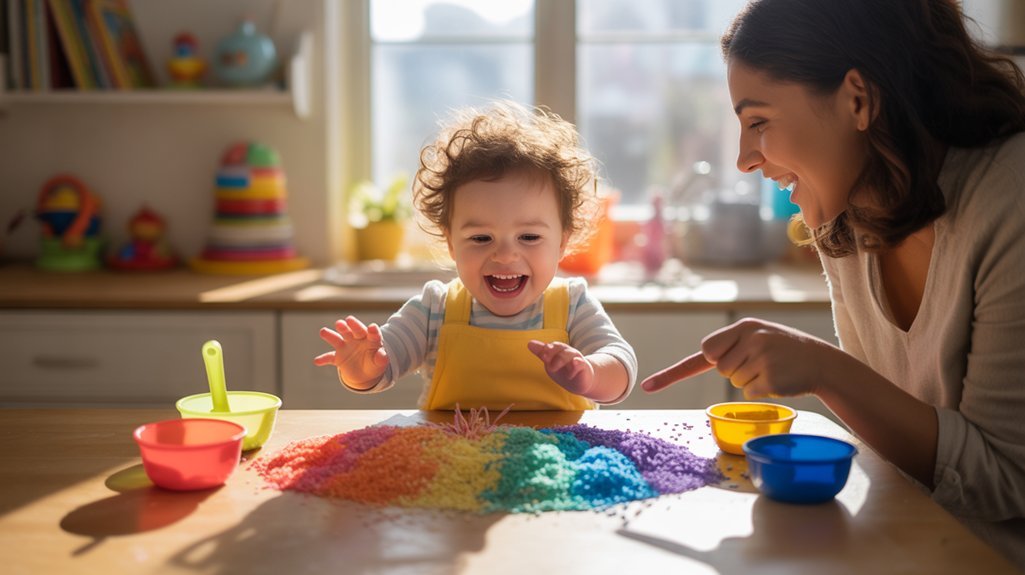
for hands-on color learning, rainbow rice sensory bins offer an irresistible combination of visual appeal and tactile engagement that captures toddlers' attention immediately.
You'll create this sensory experience by dyeing uncooked rice with food coloring and vinegar, then letting it dry completely before use.
The vibrant colors and varied textures make learning interactive rather than passive. As toddlers run their fingers through the rainbow rice, they're naturally drawn to identify and sort different hues while developing essential fine motor skills.
You can improve their exploration by adding measuring cups and scoops, which encourage imaginative play and strengthen hand coordination.
The beauty of this activity lies in its adaptability—customize bins for seasonal themes, focus on specific color families, or create learning challenges that match each child's developmental stage.
This simple yet effective approach alters color recognition into an engaging, multi-sensory experience that resonates with how young children naturally learn through play. These interactive learning experiences align perfectly with gentle parenting approaches that emphasize positive, responsive methods for child development.
Outdoor Color Scavenger Hunt
Nature provides the perfect classroom for color learning, and an outdoor scavenger hunt converts your neighborhood or backyard into an interactive color laboratory. Create a simple checklist with colored boxes representing different hues you'll search for together.
As you explore, your toddler will actively scan their environment, strengthening observational skills while discovering items matching each color. This outdoor scavenger hunt naturally encourages teamwork as you work side-by-side, celebrating each discovery together.
When your child spots a yellow dandelion or red mailbox, pause to discuss the find, reinforcing connections between objects and their colors. These meaningful conversations help toddlers learn color names through authentic experiences.
You can adapt this activity across seasons and locations—fall leaves offer different color opportunities than spring flowers. This flexibility keeps the learning process engaging while allowing you to teach colors through repeated, varied practice.
The combination of movement, discovery, and your supportive presence makes color recognition both memorable and developmentally appropriate. These active learning experiences also help you stay present and connected with your child while modeling enthusiasm for discovery and learning.
Painting and Color Mixing Activities

Painting changes color learning into a multisensory adventure where toddlers don't just see colors—they touch, blend, and create them. When toddlers start with finger painting, they'll discover how red and blue become purple or how yellow and blue convert into green. These painting activities naturally teach cause-and-effect as children watch their actions produce new results.
Set up your workspace with washable paints to make cleanup manageable while keeping the experience stress-free. Offer brushes, sponges, and cotton swabs so toddlers can experiment with different textures and application methods. These fun activities expand their sensory exploration beyond just color recognition.
As they paint, talk about the colors they're using: “You're mixing yellow and red! What's happening?” This dialogue strengthens their vocabulary and helps them articulate their creative decisions.
Color mixing through painting gives toddlers hands-on understanding of color relationships they'll remember far longer than passive observation alone.
Learning Colors Through Stories and Songs
Stories and songs change color learning into memorable experiences that tap into toddlers' natural love of rhythm and narrative. When you teach your child through picture books like “Brown Bear, Brown Bear, What Do You See?” you're reinforcing color words while building vocabulary. Interactive books with flaps and textures encourage hands-on exploration, helping toddlers connect colors to tangible experiences.
Songs about colors convert learning into joyful moments. Singing “Red, Yellow, Green, and Blue” during playtime creates natural repetition that strengthens retention. You'll find discussing illustrations together nurtures visual discrimination as your child identifies and names colors.
| Activity Type | Example | Key Benefit |
|---|---|---|
| Picture Books | Brown Bear book | Vocabulary development |
| Color Songs | Red, Yellow, Green song | Improved memorization |
| Interactive Books | Flap and texture books | Active participation |
Incorporate these methods throughout daily routines to make learning colors an engaging, multi-sensory experience that respects your toddler's developmental needs.
Building With Colored Legos
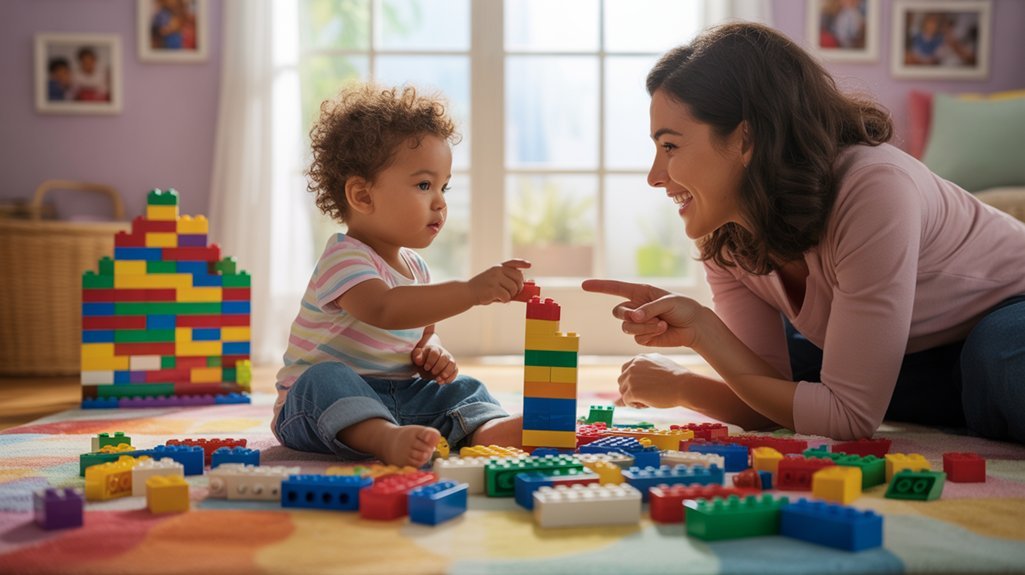
Building with colored Legos changes color learning into an engaging, hands-on experience your toddler will love.
You can start by sorting Legos into color groups, then progress to building color-themed creations like a red fire truck or blue ocean scene.
These activities naturally lead to color matching games where your child connects blocks while reinforcing color recognition through play.
Sort Legos by Color
Through the simple act of sorting, Legos become powerful learning tools that convert color recognition into an interactive game. You'll find that teaching colors through this hands-on approach strengthens your toddler's fine motor skills while they manipulate each block into its designated pile.
Start by asking your child to sort objects into basic color groups, then gradually introduce more complex challenges as their abilities grow. Engage colors with your child by requesting they build structures using only one color at a time—this reinforces both color names and categories effectively.
During these color activities, maintain ongoing conversations about their choices. Ask which colors they're using or encourage comparisons between different blocks.
Once sorted, invite them to combine their organized Legos into imaginative creations, blending focused learning with creative play.
Build Color-Themed Creations
After your toddler masters sorting, they're ready to convert those organized piles into imaginative color-themed projects. Encourage them to build color-themed creations using one specific color at a time—perhaps a red tower or blue car. As they construct, discuss each colored Lego they select, strengthening the connection between color names and visual identification. This hands-on approach reinforces color recognition while nurturing creativity.
You can extend these sorting activities by introducing color mixing concepts. Ask your child to combine different colored Legos in a single structure, then talk about how the colors look together. This real-time conversation during play helps cement their understanding through active engagement.
Play Color Matching Games
Color matching games with Legos alter simple play into powerful learning moments for your toddler. Start this engaging color activity by sorting Legos into separate piles by hue, allowing your child to physically group similar colors together. This hands-on approach will help your child learn through tactile exploration while strengthening fine motor skills.
As you play together, create matching challenges where your toddler finds bricks that correspond to specific colors you name. This interactive method makes teaching the names of colors natural and enjoyable.
Encourage collaborative building projects where you both construct colorful towers or structures, reinforcing color vocabulary throughout the process. The sensory experience of handling different colored pieces deepens their understanding while promoting creativity.
These intentional play sessions convert ordinary block time into meaningful opportunities that help your child learn colors effectively.
Playing With Colorful Playdough
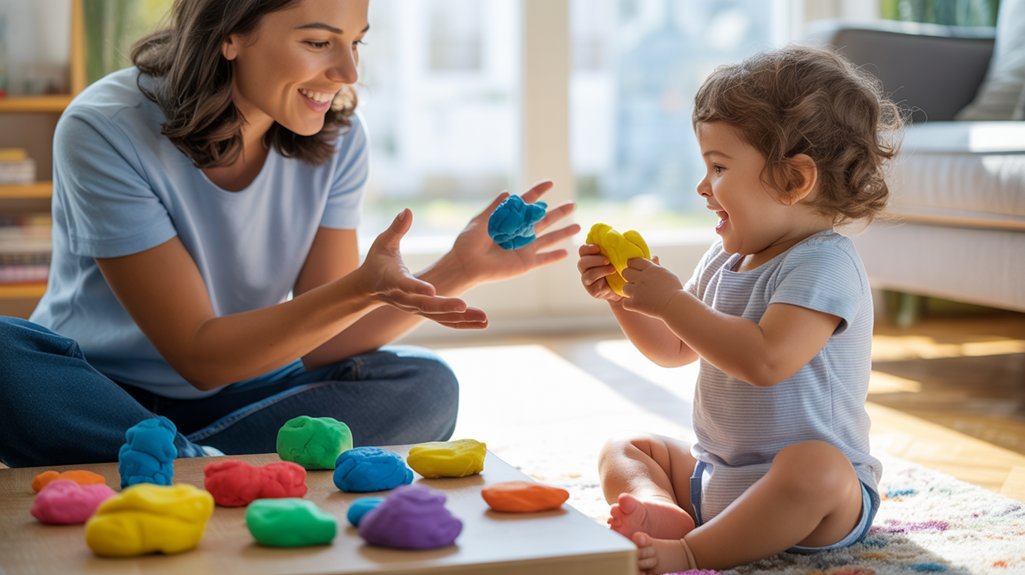
Playdough modifies color learning into a tactile adventure that captivates toddlers' natural curiosity. You'll find this simple activity remarkably effective as children squeeze, roll, and mold vibrant colors while naturally absorbing color names through hands-on exploration.
Set up your playdough station with multiple colors and watch as toddlers discover color mixing independently. When they combine red and blue to create purple, they're experiencing cause-and-effect relationships that deepen cognitive understanding.
You can improve these activities by adding cookie cutters, rolling pins, or textured tools that simultaneously develop fine motor skills.
Encourage your toddlers to describe their creations using color vocabulary. Ask open-ended questions like “What happens when you mix these colors?” This approach changes playtime into meaningful learning opportunities where children learn through experimentation rather than memorization.
The beauty of playdough lies in its adaptability—you can modify complexity as skills develop, making it perfect for serving toddlers at various developmental stages.
Using Color Flashcards
While hands-on activities build foundational understanding, visual learning tools offer another powerful approach to color education. Color flashcards help teach your kids by linking specific colors to familiar objects, strengthening memory and recognition abilities. These versatile tools naturally develop fine motor skills as toddlers handle and sort cards during learning sessions.
Choose flashcards featuring various patterns and textures to create a multi-sensory experience that keeps your little ones engaged. Regular use during playtime reinforces color names and helps children learn their colors by distinguishing between different shades.
Transform flashcard practice into fun and effective methods through interactive games. Try matching exercises where children pair cards of identical colors, or sorting activities that group similar shades together. These play-based approaches make color identification enjoyable while building essential cognitive skills.
Consistency matters—incorporate flashcards into daily routines to enhance learning outcomes and help toddlers confidently master their color vocabulary.
Finding Colors in Nature
Nature offers an ever-changing classroom where your toddler can discover colors through hands-on exploration and real-world connections.
You'll find countless opportunities to teach color recognition by exploring local parks together, gathering colorful leaves or flowers, and observing how nature's palette shifts with the seasons.
These outdoor experiences make learning colors meaningful because your child can touch, examine, and collect objects while building vocabulary through active discovery.
Explore Local Parks Together
Local parks change into living classrooms where toddlers can hunt for colors in their most authentic forms. When you explore local parks together, you're offering children nature's brilliant palette—from emerald leaves to sapphire skies—making colors meaningful through direct experience.
Guide your toddler to identify and name the hues they discover in flowers, trees, and wildlife. This practice strengthens vocabulary while sharpening observation skills. Each park visit presents unique color combinations that differ from home environments, broadening their visual understanding.
The beauty of this approach lies in its dual benefits: children develop cognitive abilities and memory through learning while gaining physical exercise and social interaction.
You're not simply teaching colors—you're nurturing curious minds through nature's most engaging classroom, where every discovery builds confidence and connection.
Collect Colorful Natural Objects
Changing your nature walks into treasure hunts creates irresistible learning opportunities for toddlers. When you collect colorful natural objects together, you'll help them learn through meaningful hands-on experiences. Encourage your toddler to gather different colors of leaves, flowers, stones, and petals during your outdoor adventures. This great way to teach color recognition alters simple outings into rich educational moments.
Once home, sort these treasures by color on a table or tray. Your toddler can group yellow dandelions together, separate red leaves from brown ones, and organize stones by shade. As you explore these collections, discuss each object's unique hue and texture.
Compare the brightness of a sunflower against softer yellows you've found. This active engagement reinforces color concepts while building vocabulary and cognitive skills through play-based discovery.
Seasonal Color Changes Outside
As the year unfolds, your toddler can witness nature's spectacular color palette change right before their eyes. Take them outside to explore their environment during each season—spring's vibrant greens, autumn's fiery oranges and reds, and winter's crisp whites offer rich learning opportunities.
These seasonal changes help children connect colors to familiar objects like flowers, trees, and animals, strengthening memory and cognitive development.
Organize simple scavenger hunts where your toddler searches for specific colors in nature. This playful approach reinforces color recognition while encouraging physical activity and exploration.
Discuss how leaves shift from green to yellow, introducing concepts of color blending naturally. By linking colors to real-world seasonal experiences, you'll help your toddler develop lasting understanding while nurturing their curiosity about the natural world.
Best Age to Start

Around 18 months, your toddler's brain becomes ready to start noticing and identifying colors, making this the sweet spot to introduce color concepts through play.
Understanding colors by age helps you set realistic expectations and create developmentally appropriate activities that help them understand without pressure.
Knowing typical color milestones lets you encourage learning through play rather than pushing your toddler to perform.
Here's what to expect as you support their color learning journey:
- 18 months to 2 years: Begin naming colors during everyday activities, focusing on early exposure to color concepts rather than testing knowledge.
- Age 2: Many toddlers can identify and name at least one color independently.
- 2 to 3 years: Most children recognize multiple colors and shapes with growing confidence.
- Through kindergarten: Continue reinforcing color names, as full mastery often takes several years.
Troubleshooting Learning Challenges
Every toddler learns at their own pace, and you'll likely encounter a few bumps along the way as your child explores the colorful world around them.
Whether your little one mixes up colors, loses interest in activities, or seems slower to grasp the concepts than expected, these challenges are normal parts of the learning process.
Let's explore practical strategies to help you navigate these common hurdles and keep color learning fun and effective for your toddler.
When Colors Don't Stick
While most toddlers grasp colors gradually through repeated exposure, some children need extra time and support to make these concepts stick. If your child struggles with color recognition by age four, consult a pediatrician or eye doctor to rule out vision issues affecting their ability to differentiate hues.
Start with primary colors rather than overwhelming them with numerous shades. Use contrasting colors during play to reduce confusion and strengthen basic understanding. Incorporate color names naturally into everyday conversations while engaging in activities that help reinforce learning through visual aids and hands-on exploration.
Remember that repetition is key—consistent exposure builds neural pathways that solidify color concepts. Celebrate each small victory in recognition to boost confidence and maintain enthusiasm.
Your patient, encouraging approach makes all the difference in helping struggling learners succeed.
Addressing Color Confusion Issues
Beyond patience and repetition, some toddlers need targeted strategies to overcome persistent color confusion. Start by focusing exclusively on basic colors—red, blue, and yellow—before introducing any variations.
Use contrasting pairs like black and white or red and green to simplify color differentiation and reduce overwhelm.
Weave color recognition into daily routines by naming colors in your child's clothing, toys, and snacks. This contextual approach reinforces learning naturally without pressure.
Once they've mastered primary colors, gradually introduce similar colors through comparison games. Ask questions like, “Is this light blue or dark blue?” to develop nuanced understanding.
If your child continues struggling with color differentiation by age four, consult your pediatrician or eye doctor to rule out vision issues that might be hindering their progress.
Supporting Different Learning Paces
Since each toddler develops at their own unique pace, you'll notice significant variation in when children grasp color concepts—some identify colors confidently by 18 months, while others need until age 3 or 4 to solidify this skill. Supporting different learning paces requires patience and flexibility in your approach.
Start with primary colors using contrasting examples like black, white, and red to help children understand the concept more easily. Hands-on activities and real-world exploration provide effective ways to help toddlers connect with early learning materials at their comfort level.
If your child struggles with color recognition beyond age 4, consult a pediatrician or eye doctor to rule out vision concerns.
Remember that repeated exposure through play-based activities naturally reinforces understanding without pressure, allowing each child to progress authentically through their developmental journey.
Overcoming Disinterest in Activities
When your toddler shows little interest in color activities, it's typically a sign they need more playful, child-led approaches rather than structured lessons. To engage toddlers effectively, integrate their beloved toys and characters into learning experiences. These fun and effective methods convert color identification into exciting adventures rather than educational tasks.
| Strategy | Implementation | Outcome |
|---|---|---|
| Sensory bins | Hide colored objects in rice or water | Hands-on exploration maintains focus |
| Character integration | Use favorite toys for color sorting | Personal connection increases motivation |
| Short sessions | Keep activities under 15 minutes | Prevents overwhelm and burnout |
Rotate activities regularly to maintain novelty and encourage them to use positive reinforcement generously. Celebrate every success, however small, to build confidence and sustain their enthusiasm for continued learning.
Managing Developmental Delays Concerns
While most toddlers grasp basic colors between ages two and three, some children need additional time and support to master this skill. If your child struggles with color recognition by age three or four, consult a pediatrician or eye doctor to rule out developmental delays or vision issues.
Support learning through consistent exposure by naming colors during everyday conversations and activities. Start with primary colors using high-contrast combinations like black and white to minimize confusion.
Incorporate hands-on activities such as sorting toys by color or engaging in sensory play with colored materials.
Build understanding gradually—introduce one or two colors at a time before adding more. Remember that children with learning challenges often thrive when given additional practice opportunities through playful, pressure-free interactions.
Proven Teaching Techniques That Work
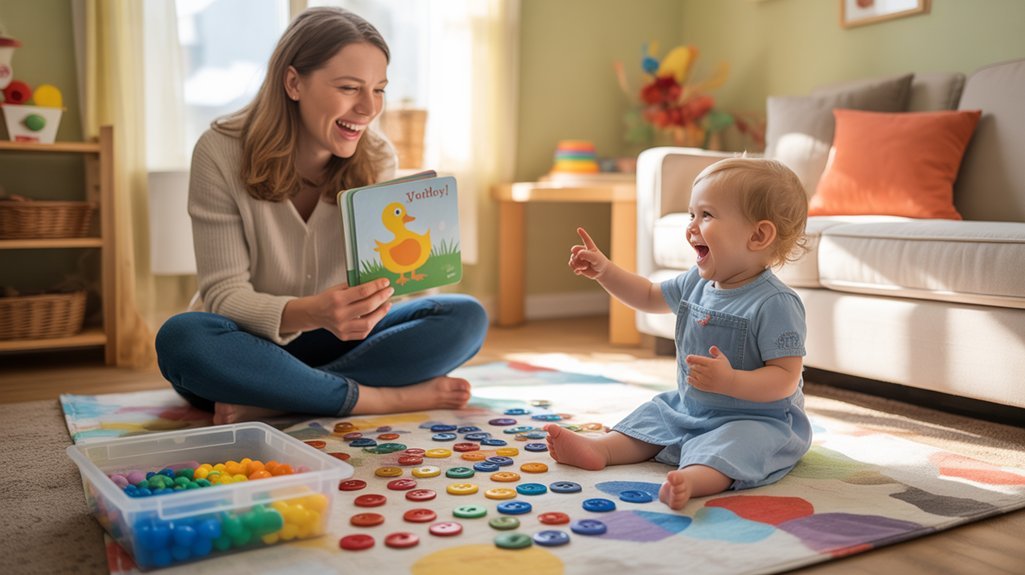
Teaching colors to toddlers becomes remarkably effective when you ground your approach in their natural curiosity and love of play. You can help your child learn color concepts by integrating them naturally into daily routines and activities they already enjoy.
Start with primary colors and introduce contrasting hues to build foundational understanding. Around 18 months, children begin recognizing colors, with full identification emerging by age 2.
Effective techniques include:
- Sorting activities – Use colored buttons, stickers, or shapes to engage fine motor skills while reinforcing color categories.
- Songs and stories – Incorporate narratives that emphasize color names for memorable, engaging learning experiences.
- Sensory exploration – Create colorful water play or sensory bins that provide tactile discovery opportunities.
- Everyday objects – Alter ordinary toys and household items into color-learning tools.
These research-informed methods respect developmental timelines while creating joyful learning moments that strengthen your toddler's growing understanding of their colorful world.
Celebrating Your Child's Progress

As your toddler begins recognizing and naming colors through playful activities, you'll want to acknowledge these exciting milestones in ways that fuel their motivation. Celebrating your child's progress strengthens their confidence and deepens their engagement with learning. Regularly praise their efforts when they correctly identify colors during everyday moments, creating positive learning experiences that stick.
Keep a visual chart where you track newly mastered colors together. This simple tool helps both of you see growth over time and provides concrete evidence of their achievements.
| Celebration Method | Activity Example | Learning Impact |
|---|---|---|
| Verbal Praise | “You found all the red toys!” | Immediate reinforcement |
| Progress Tracking | Adding stickers to color chart | Visual achievement record |
| Special Activities | Creating collaborative artwork | Hands-on color application |
Organize fun activities when your child masters a new color—perhaps a themed snack or craft project. These joyful moments make learning feel rewarding while reinforcing their developing color knowledge.
Frequently Asked Questions
What Is the Best Way to Teach Colors to Toddlers?
The best way is through play-based, hands-on experiences.
You'll find success with color recognition games that make learning fun, like sorting toys by shade. Encourage everyday color identification during walks or meals—”Look at that red apple!”
Incorporate sensory color exploration using finger paints or colored rice bins. Try color matching activities where they pair socks or blocks.
You're building their confidence through repetition and praise, making each discovery exciting. This approach respects their developmental stage while nurturing natural curiosity about the world.
What Are Fun Coloring Activities for Kids?
Watch your child's eyes light up like a painter's palette as they explore finger painting with vibrant primary hues, discovering color mixing magic firsthand.
You'll encourage joyful learning through rainbow crafts that celebrate the spectrum, while nature scavenger hunts change ordinary walks into colorful adventures.
These hands-on experiences aren't just entertaining—they're developmentally essential for building neural pathways.
How Do Montessori Teach Colors?
Montessori teaches colors through hands-on color sorting activities and sensory exploration with engaging materials.
You'll guide your toddler using natural materials like wooden blocks, colored beads, and real objects from nature.
These practical life exercises integrate color learning into everyday tasks—matching socks, sorting toys, or identifying foods.
Your child discovers color relationships independently through tactile experiences, building confidence while developing visual discrimination skills.
This research-informed approach connects color concepts to meaningful, real-world experiences that encourage deeper understanding and joy in learning.
How to Learn Color Easily for Kids?
You'll help kids learn colors easily by incorporating color recognition games into playtime and establishing daily color routines like naming colors during meals and walks.
Engage them with sensory color activities such as painting, play dough, and sorting objects by hue.
Read color themed stories together regularly to reinforce learning through repetition.
Keep sessions short, celebrate their efforts enthusiastically, and make every moment playful.
Consistency and your patient encouragement will naturally build their color vocabulary while nurturing their confidence.
Conclusion
You've planted the seeds of color learning, and now you'll watch them bloom in your toddler's bright eyes and curious hands. Remember, there's no finish line here—each child paints their learning journey with their own unique brush strokes. Trust the process, follow their lead, and celebrate every small victory. Your patience is the rainbow bridge they'll cross into a world bursting with color, wonder, and endless discovery.
Related Articles
- The Ultimate Guide to Sibling Conflict
- The Ultimate Guide to Family Meal Planning
- The Ultimate Guide to Kids Educational Games
- 20 Fun DIY Crafts to Strengthen Family Bonds
- The Ultimate Guide to Screen Time Management

Written by Sarah Mitchell, M.S., CFLE
Founder & Lead Editor
Sarah is a Certified Family Life Educator with a Master's degree in Human Development and Family Studies from the University of Missouri. With 15+ years of experience as a parent educator and mother of three, she brings both professional expertise and real-world parenting wisdom to every article.
Credentials: M.S. in Human Development and Family Studies, Certified Family Life Educator (CFLE)