



Whining signals your child's underdeveloped communication system struggling to express genuine needs. You'll reduce it by first identifying triggers like hunger, fatigue, or routine changes, then teaching alternative phrases through role-playing and consistent practice. Respond only to calm requests while validating their emotions, and create predictable routines that minimize anxiety. Your steady commitment to waiting for appropriate tone—paired with immediate praise for clear communication—builds emotional maturity and breaks the whining cycle. Understanding the deeper patterns behind this behavior alters your approach entirely.
Key Takeaways
- Identify whining triggers like hunger, tiredness, overstimulation, and routine changes to address root causes proactively.
- Respond only to calm requests, not whining, to avoid reinforcing the behavior and teach respectful communication.
- Teach simple replacement phrases and encourage “strong voice” usage through role-playing and consistent practice sessions.
- Establish predictable routines and calm environments to reduce anxiety-driven whining and facilitate mature communication.
- Provide immediate praise for appropriate communication and maintain consistent expectations to build long-term expressive confidence.
Understanding Why Children Whine and What It Really Means
When your toddler's voice shifts to that familiar high-pitched tone, they're not trying to manipulate you—they're communicating the only way they know how in that moment.

Whining isn't manipulation—it's your toddler's developmental language for feelings they can't yet articulate with words.
Understanding whining begins with recognizing it as a developmental bridge between crying and articulate speech. Your child resorts to this behavior when they can't express complex feelings like frustration, loneliness, or discomfort effectively.
Children whine more frequently when basic needs aren't met—they're hungry, tired, or overstimulated. Emotional triggers matter too: routine changes, developmental leaps, and boredom all increase whining episodes.
Here's what's essential: your emotional reaction shapes future behavior. When you respond with frustration, you inadvertently reinforce the pattern.
Instead, view whining as valuable information about your child's inner world. They feel disconnected, overwhelmed, or simply need your presence.
Just as traumatic news events can overwhelm children's emotional regulation systems, everyday stressors can push them toward whining when their communication skills fall short of their emotional needs.
Recognizing the Common Triggers Behind Whining Behavior
Before you can effectively address whining, you'll need to identify what's actually triggering it. Start by observing patterns around basic needs—hunger, exhaustion, and physical discomfort are primary culprits when children can't yet verbalize what's wrong.
Pay attention to environmental changes too. Disruptions in routine or unfamiliar settings often create anxiety that manifests as whining.
Your child's developmental stage matters greatly; teething, illness, or the cognitive load of mastering new skills can dramatically lower their frustration threshold.
Watch for emotional triggers as well. When children feel unheard or struggle to express complex feelings, whining becomes their fallback communication method.
Notice if your child's whining intensifies after interactions with peers or siblings who use similar tactics—this learned behavior spreads quickly in social settings.
Understanding these triggers is especially important if your child has learning disorders, as they may face additional challenges in processing emotions and expressing their needs clearly.
Finding the Positive Track: Shifting Your Perspective
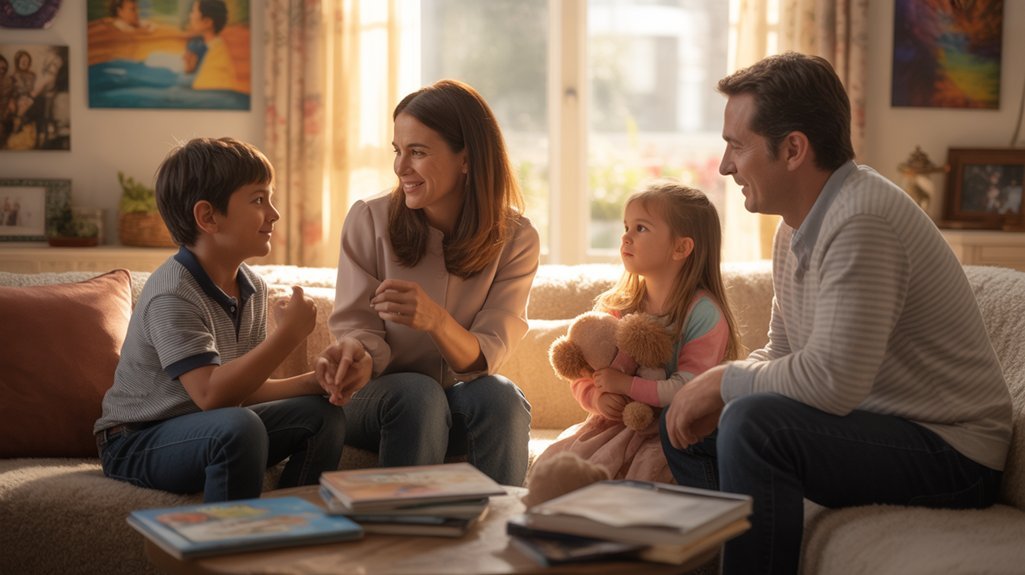
Understanding what triggers your child's whining gives you half the solution—the other half lies in altering your own response patterns.
Start by intentionally noticing your child's positive attributes throughout the day. When you catch yourself fixating on whining, pause and mentally list three strengths you've observed recently. This simple practice changes how your child feels perceived—shifting from adversary to ally.
Shift your focus from whining to strengths—when children feel seen positively, they become collaborators instead of opponents.
Share these observations aloud: “I noticed how patient you were waiting” or “You used such clear words to ask for help.” This verbal recognition builds their self-esteem and reinforces communication styles you want to see more often.
Your attention naturally gravitates toward behaviors you acknowledge, creating a positive feedback loop. The first three years are particularly crucial for establishing these communication patterns, as early childhood development research shows this period is most important for lifelong mental health and well-being.
Getting Curious About Your Child's Underlying Emotions
Why does your child's whining intensify at certain moments but disappear completely at others? The answer lies in understanding underlying emotions that drive the behavior. When you approach whining with curiosity rather than frustration, you'll discover what your child truly needs.
Each child's temperament creates unique patterns. By observing when whining occurs, you'll identify emotional triggers:
| Surface Behavior | Underlying Emotions | Your Curious Response |
|---|---|---|
| Persistent whining at bedtime | Fear, overstimulation | “You seem worried about something” |
| Whining during changes | Anxiety, loss of control | “Changes feel hard right now” |
| Whining when you're busy | Loneliness, disconnection | You're missing our time together |
| Whining about small things | Overwhelm, fatigue | “Your body needs rest” |
| Whining with siblings present | Jealousy, inadequacy | “You want to feel special” |
Validate these feelings openly. When children feel genuinely heard, they develop emotional awareness and learn to articulate needs without whining. Understanding these emotional patterns becomes especially important as you navigate age-specific challenges from toddlerhood through the teenage years, as each developmental stage brings unique communication needs and triggers.
Evaluating Your Response Patterns and Making Strategic Changes

Your reactions to whining matter more than you might realize—they're either breaking the cycle or feeding it.
Evaluating your response patterns reveals whether you're inadvertently reinforcing the behavior through frustration or inconsistency.
Your reactions to whining might be accidentally teaching your child that the behavior works.
Start by observing your typical reactions. Do you give in? Snap back? Each response teaches your child what works. When you respond with empathy or playfulness instead of irritation, you create space for genuine communication while demonstrating the calm tone you want them to use.
Consistency changes understanding into behavior change. When children experience predictable consequences for whining—such as waiting until they use their regular voice—they learn mature communication skills.
Notice what's already working. Acknowledge successful interactions where your calm response led to improved communication. These moments reveal your most effective strategies.
Consider role-playing appropriate communication techniques together. This hands-on practice reinforces expectations while strengthening your connection, making behavioral shifts feel collaborative rather than punitive.
Checking for Inadvertent Reinforcement of Whining
You might be unknowingly rewarding whining by giving it immediate attention—even negative reactions like scolding or explaining why the behavior bothers you can reinforce it.
Children quickly learn which communication styles get the fastest response, and if whining consistently works, they'll continue using it.
To change this pattern, you'll need to examine how you've been responding and identify which reactions have accidentally taught your child that whining is effective.
Recognizing Unintentional Behavioral Rewards
Although it may seem counterintuitive, the attention you give when your child whines—even when you're frustrated or saying “no”—can actually strengthen the behavior you're trying to eliminate.
Children learn quickly that whining creates interaction, regardless of your emotional response. These unintentional rewards occur when you immediately provide what they want, offer excessive comfort, or engage in lengthy explanations during whining episodes.
Take time to observe patterns in your responses. Do you tend to give in when stressed? Does whining prompt more attention than calm requests? Understanding these tendencies allows you to break the cycle.
Instead of reacting to whining, wait for appropriate communication before responding. This shift teaches your child that respectful expression, not whining, earns your engagement and support.
Breaking Old Response Patterns
When children persist with whining despite your best efforts, it's time to examine whether your responses have unintentionally made the behavior more appealing. Breaking old response patterns requires honest reflection about how you've historically reacted to child whining.
| Old Pattern | New Approach |
|---|---|
| Giving in after prolonged whining | Respond only to calm requests |
| Offering comfort immediately | Wait for appropriate tone |
| Negotiating during whining episodes | Defer discussions until composure returns |
| Providing lengthy explanations | Use brief, consistent phrases |
Track your responses for several days to identify patterns. Notice when you're most likely to reinforce whining—perhaps when tired or distracted. Replace automatic reactions with intentional strategies: acknowledge feelings without rewarding the behavior, redirect to playful interactions, and create opportunities for honest discussions about needs.
Teaching Children to Use Their Strong Voice Through Practice
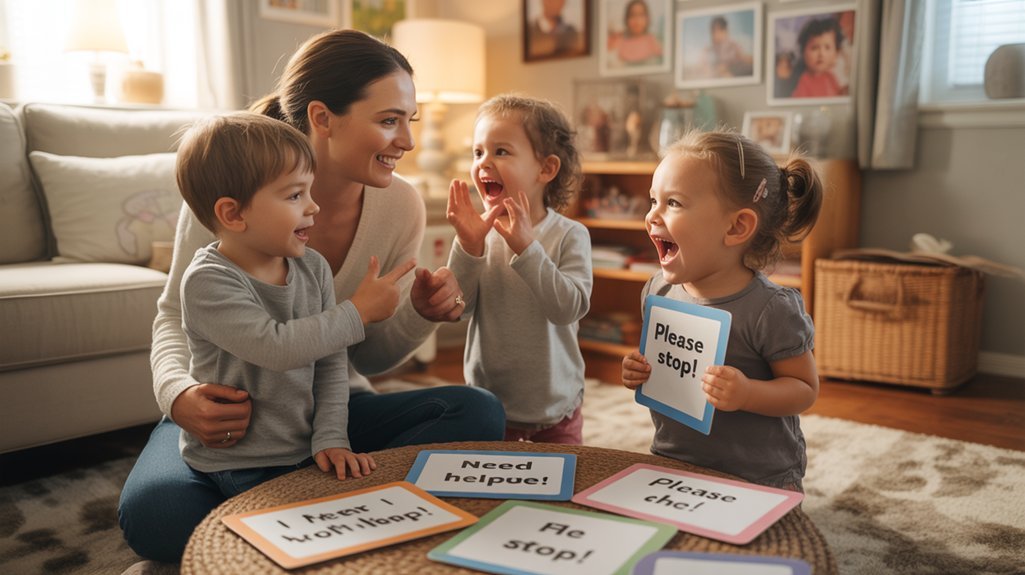
One of the most effective ways to help your child replace whining with clear communication is through deliberate practice when emotions are calm.
You can set up simple role-playing scenarios using dolls, stuffed animals, or pretend situations where your child practices asking for what they need in a confident, clear voice.
When you consistently acknowledge and respond positively to their “strong voice” attempts, you're teaching them that direct communication works better than whining ever will.
Role-Playing Communication Scenarios
Role-playing converts abstract communication concepts into concrete skills your child can master. You'll create role-playing scenarios where your child practices expressing needs clearly—asking for snacks, requesting playtime, or negotiating bedtime.
These controlled environments provide safe opportunities to rehearse assertive communication without real-world pressure.
Incorporate toys or dolls to help your child visualize different communication styles and responses. This makes practice engaging while demonstrating the contrast between whining and strong-voice communication.
You can even use playful responses to lighten the mood, ensuring learning remains enjoyable rather than punitive.
Regular practice across various situations reinforces clear communication patterns and builds confidence. As your child internalizes these strategies through consistent role-playing, you'll notice decreased whining and improved emotional regulation—evidence that these communication skills are becoming automatic responses.
Consistent Reinforcement Techniques
Reinforcement converts sporadic practice into lasting behavioral change—the difference between a child who occasionally uses their strong voice and one who consistently chooses clear communication.
Consistent reinforcement works through immediate acknowledgment. When your child asks clearly, respond with specific praise: “I love how you used your strong voice to ask for help.” This targeted feedback strengthens neural pathways associated with effective communication.
| Reinforcement Strategy | Implementation | Expected Outcome |
|---|---|---|
| Immediate Verbal Praise | Acknowledge strong voice within 3 seconds | Strengthens behavior connection |
| Family Discussion Practice | Weekly structured conversation time | Normalizes clear communication |
| Toy-Based Demonstrations | Use dolls to model communication styles | Makes learning engaging |
| Progress Recognition | Celebrate communication milestones | Builds long-term confidence |
Structure daily opportunities for practice, embedding strong voice usage into routine interactions rather than treating it as occasional correction.
What Doesn't Work: Avoiding Common Mistakes Parents Make
When parents feel frustrated by their child's whining, they often default to strategies that seem logical but actually make the problem worse. Ignoring the behavior doesn't extinguish it—instead, your child experiences increased emotional discomfort and desperate attention-seeking.
Yelling or displaying frustration creates a cycle of emotional dysregulation that affects both of you.
Your frustration triggers your child's emotional instability, creating a harmful feedback loop that escalates tension instead of resolving the whining behavior.
You might think comforting or reasoning during whining episodes helps, but it can inadvertently reinforce the behavior rather than address underlying needs. Over-talking overwhelms children, causing them to tune out your voice and rely more heavily on whining for communication.
Perhaps most notably, emotional disengagement or physical absence heightens your child's need to whine. When you disconnect, even unintentionally, you complicate the parent-child relationship and intensify the very behavior you're trying to eliminate.
Understanding these common mistakes allows you to approach whining with strategies that actually work—supporting both your child's development and family harmony.
Creating an Environment of Calm and Attentive Presence

Your child's nervous system responds directly to the emotional atmosphere you create. When you establish a calm environment by minimizing distractions and offering your undivided attention, you're providing the security children need to communicate maturely. This isn't about perfection—it's about intentional presence.
Start by reducing competing stimuli during conversations. Turn off screens, lower your voice, and position yourself at your child's eye level. These simple adjustments signal that you're fully available.
Implement predictable routines to minimize anxiety-driven whining. When children know what to expect, they feel safer and more capable of expressing themselves clearly.
Incorporate moments of silence into daily activities. This allows children to process emotions and develop self-awareness, building their capacity for effective communication.
Your patient, attentive presence teaches children that their feelings matter and that they possess the skills to express themselves without whining. You're not just stopping a behavior—you're nurturing emotional competence.
Understanding Whining's Root Causes

Before you can effectively address whining, you'll need to recognize what's driving it. Young children often lack the vocabulary to express discomfort, so they default to whining when basic unmet needs arise. By identifying these root causes, you'll serve your child more effectively and build stronger communication patterns.
Consider these common triggers:
- Physical discomfort: Hunger, thirst, fatigue, or teething can overwhelm a child's ability to communicate calmly.
- Emotional overwhelm: Frustration from developmental challenges, routine changes, or feeling unheard often manifests as whining.
- Learned patterns: Children may adopt whining after observing siblings or peers use it successfully.
Understanding the emotional context behind your child's behavior alters your response from reactive to responsive. When you're attuned to whether your child needs food, rest, comfort, or skill-building support, you can address the underlying issue rather than just the irritating sound.
Addressing root needs rather than surface behaviors transforms parenting from reaction to intentional response.
This developmentally-informed approach strengthens your relationship while teaching healthier expression.
Why Children Whine Frequently
Your child's frequent whining typically stems from a combination of developmental limitations and unmet needs rather than deliberate misbehavior.
When children lack the vocabulary or emotional regulation skills to express themselves clearly, they default to whining because it's worked before—capturing your attention and sometimes yielding results.
Recognizing that factors like fatigue, overstimulation, and emotional overwhelm intensify this behavior helps you address the underlying causes instead of just the symptom.
Unmet Emotional Needs
When children whine persistently, they're often communicating emotional needs they can't yet put into words. Your child may be signaling discomfort, loneliness, or boredom—feelings that overwhelm their limited vocabulary.
Even when you're physically present, whining can indicate they feel emotionally neglected and crave focused attention and connection.
Developmental changes like teething or routine alterations intensify these unmet emotional needs, making it harder for children to manage their feelings.
Physical factors matter too: hunger and exhaustion trigger whining in toddlers who can't articulate “I'm tired” or “I need food.”
The key to addressing whining lies in recognizing and validating what your child feels.
When you acknowledge their emotions with empathy, you help them develop communication skills while reducing the behavior's frequency and intensity.
Limited Communication Skills
Between ages one and three, most children understand far more words than they can speak. This comprehension-expression gap creates frustration when your child can't verbally communicate their needs. Limited communication skills naturally lead to whining as an alternative expression method.
Your child's whining intensifies during physical discomfort—hunger, fatigue, or teething—when they lack vocabulary to explain what's wrong. They're experiencing real distress without the words to describe it.
Children also learn whining by observing siblings and peers, making your communication modeling essential. When you consistently name emotions and provide simple phrases (“I'm hungry” or “I need help”), you're teaching effective alternatives.
As your child's language develops, whining typically decreases. Your patient guidance in helping them express feelings verbally creates lasting communication skills that replace those frustrating whines.
Attention-Seeking Behavior Patterns
Every parent recognizes that distinctive tone—the drawn-out, high-pitched plea that signals their child wants something now. This attention-seeking behavior often reveals your child's fundamental need for connection rather than mere manipulation.
When children feel emotionally disconnected—even while you're in the same room—they'll instinctively resort to whining because it's proven effective at capturing your focus.
Research shows children learn quickly: whining gets results. They observe siblings, peers, and test what works. However, this behavior typically masks deeper emotions like frustration or boredom that they can't yet articulate.
Before addressing the whining itself, check whether basic needs are met. Hunger and fatigue dramatically intensify attention-seeking behaviors.
A well-rested, nourished child possesses greater emotional regulation, making genuine connection possible.
Fatigue and Overstimulation
While emotional disconnection triggers whining, physical states create equally powerful conditions for this behavior. Fatigue stands as one of the most significant culprits—when your child hasn't gotten their necessary 10-14 hours of sleep, their emotional regulation crumbles. Similarly, overstimulation from excessive noise or activity overwhelms their developing nervous systems.
| Fatigue Signs | Overstimulation Signs | Prevention Strategies |
|---|---|---|
| Increased whining | Clinging behavior | Structured routines |
| Irritability spikes | Difficulty focusing | Regular quiet time |
| Tantrum frequency | Sensory overload | Consistent bedtimes |
| Poor focus | Withdrawal attempts | Activity monitoring |
| Emotional dysregulation | Heightened whining | Environmental control |
Watch for these indicators in your child. They're communicating discomfort through whining because they can't articulate their physical needs yet. Creating predictable rhythms with adequate rest and decompression opportunities will dramatically reduce these episodes.
Learned Response From Success
Your child's whining didn't emerge from nowhere—it developed because it worked. This learned behavior strengthens each time you respond by giving in, even occasionally.
When your toddler discovered that whining brought immediate attention or resulted in getting that snack they wanted, their brain filed this strategy as effective communication.
The cycle intensifies when children observe siblings or peers successfully using the same tactic, normalizing whining as acceptable behavior. Your emotional responses—whether frustration or acquiescence—inadvertently teach that persistence pays off.
Younger children particularly rely on whining when they can't articulate complex emotions verbally.
Understanding this pattern equips you to break it. By recognizing whining as a learned response rather than deliberate manipulation, you can implement consistent strategies that teach more effective communication methods.
Proven Communication Response Techniques
Five core communication strategies can change how you respond to whining and greatly reshape your child's behavior patterns.
These proven communication response techniques enable you to modify challenging moments into opportunities for connection and growth.
When your child whines, try playful responses that shift their emotional state. Encourage them to “use their strong voice” to promote clearer expression and self-advocacy.
Most importantly, acknowledge their feelings before addressing the behavior—this empathetic approach builds trust and reduces future whining episodes.
Essential techniques to implement:
- Redirect attention toward alternative activities when whining begins, pivoting their focus constructively
- Validate emotions while coaching better communication methods simultaneously
- Maintain consistency across all interactions to establish predictable, supportive patterns
Research confirms that consistent application of these strategies markedly reduces whining behaviors while strengthening your parent-child relationship.
You'll create a calmer home environment where both you and your child feel heard, respected, and emotionally connected.
Long-Term Consistency Brings Results

Although immediate results can feel gratifying, the real change in your child's whining behavior emerges through unwavering consistency over weeks and months. When you respond predictably to whining every time, you're teaching your child that clear communication works better than complaining.
Long-term consistency alters your approach from quick fixes into developmental building blocks. Your child learns to articulate needs effectively, developing emotional regulation skills that'll serve them throughout life. Many parents notice significant reductions within just one week, but the deeper benefits unfold gradually.
Consistency transforms quick fixes into developmental building blocks, teaching children emotional regulation skills that extend far beyond childhood.
Maintaining structured routines and calm responses builds trust in your relationship. Your child feels secure knowing what to expect, reducing the anxiety that often fuels whining. This predictable environment doesn't just stop unwanted behavior—it enables your child to mature emotionally.
Your steady commitment creates lasting change. You're not simply eliminating whining; you're nurturing a confident communicator who can express feelings appropriately.
Frequently Asked Questions
What Is the 7 7 7 Rule Parenting?
The 7-7-7 Rule guides you to maintain seven positive interactions for every seven corrective ones with your child.
This evidence-based approach helps you identify whining triggers by creating emotional safety through balanced communication.
When you're consistently positive, you'll notice your child's confidence grows and whining decreases.
How to Teach Kids Not to Whine?
Think of whining as a foghorn in the dark—your child's signal they need guidance reaching shore.
You'll teach them by modeling “whining alternatives” through calm dialogue: “Use your regular voice to tell me what you need.”
Validate their feelings while coaching better expression.
Establish predictable routines so they feel secure, offer age-appropriate choices to build autonomy, and consistently praise clear communication.
Research shows children mirror your patient responses, gradually replacing whines with words.
What Is the 70 30 Rule in Parenting?
The 70-30 rule in parenting promotes parenting balance by encouraging you to spend 70% of interactions being positive and nurturing, while limiting corrections to 30%.
This evidence-based approach strengthens your emotional connection with your child, helping them feel valued and heard.
When you prioritize positive reinforcement over constant correction, you'll notice improved communication and reduced whining.
This balance nurtures emotional regulation and creates a harmonious home where your child thrives emotionally and behaviorally.
What Are the 3 C's of Gentle Parenting?
The 3 C's of gentle parenting are Compassion, Connection, and Cooperation.
You'll build a Compassionate Connection by validating your child's emotions and listening attentively, which strengthens your bond and reduces whining behaviors.
Through cooperation, you'll enable your child to problem-solve collaboratively, helping them express needs respectfully.
Research shows this approach promotes emotional regulation and secure attachment.
When you consistently practice these principles, you're nurturing your child's development while creating a more peaceful, understanding home environment that benefits everyone.
Conclusion
Think of whining as your child's smoke signal—visible, persistent, impossible to ignore. You've learned to read the messages rising through that haze: unmet needs, big feelings, developmental limits. By responding with curiosity rather than frustration, you're building a bridge between their inner world and yours. This bridge won't appear overnight, but each calm interaction adds another plank. You're not just stopping whining; you're teaching your child how to cross over into clear communication.
Related Articles
- The Ultimate Guide to Sibling Conflict
- The Ultimate Guide to Family Meal Planning
- The Ultimate Guide to Kids Educational Games
- 20 Fun DIY Crafts to Strengthen Family Bonds
- The Ultimate Guide to Bedtime Routine

Written by Sarah Mitchell, M.S., CFLE
Founder & Lead Editor
Sarah is a Certified Family Life Educator with a Master's degree in Human Development and Family Studies from the University of Missouri. With 15+ years of experience as a parent educator and mother of three, she brings both professional expertise and real-world parenting wisdom to every article.
Credentials: M.S. in Human Development and Family Studies, Certified Family Life Educator (CFLE)