



Help your child manage test anxiety with these seven evidence-based techniques: teach deep breathing exercises (inhale for four counts, exhale for six), practice positive affirmations like “I've studied and I'm ready,” use the 5-4-3-2-1 grounding method to engage their senses, guide them through success visualization, and introduce progressive muscle relaxation. Match techniques to your child's age and developmental stage, establish pre-test calming routines, and focus on effort rather than outcomes. These strategies address both physical symptoms and negative thought patterns that fuel anxiety, and you'll discover specific implementation methods for each technique below.
Key Takeaways
- Deep breathing exercises calm the nervous system: inhale for four counts, hold briefly, then exhale slowly for six counts.
- Replace negative thoughts with positive affirmations like “I've studied and I'm ready” to build confidence before tests.
- Use the 5-4-3-2-1 grounding technique to redirect focus by engaging all five senses during anxious moments.
- Visualization of success helps children mentally rehearse positive outcomes and creates a sense of control over testing.
- Progressive muscle relaxation releases bodily tension by systematically tensing and relaxing different muscle groups before tests.
Teach Deep Breathing Exercises to Calm the Mind
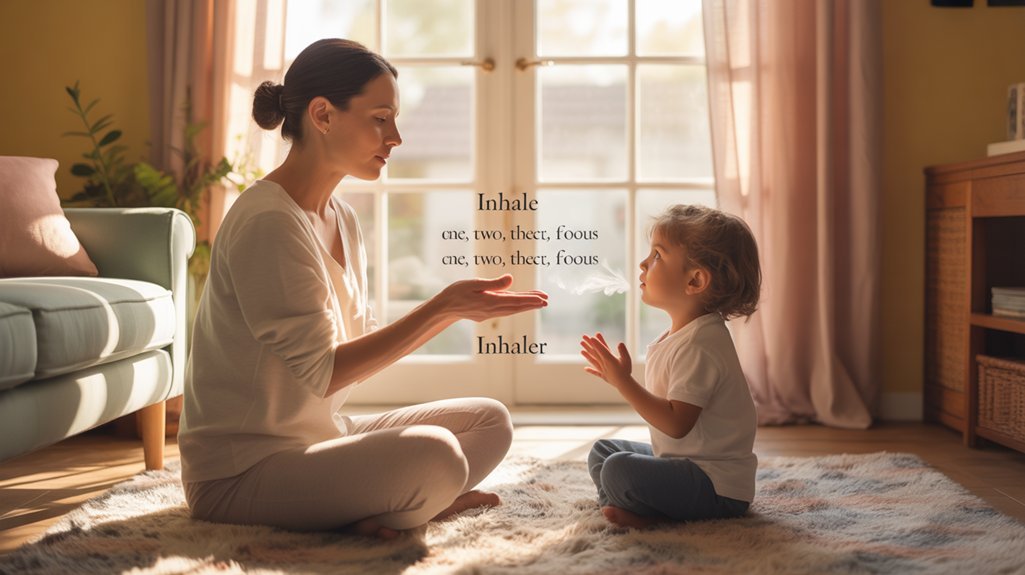
When your child's heart races and palms sweat before a test, deep breathing exercises offer an immediate, scientifically-backed tool to restore calm. This technique activates the body's relaxation response, directly counteracting anxiety symptoms.

Teach your child this simple method: inhale deeply through the nose for four counts, hold for four counts, then exhale slowly through the mouth for six counts. The extended exhale calms the nervous system, helping them manage anxiety effectively.
Just a few minutes of practice can noticeably lower stress levels and sharpen focus during tests. When you encourage regular practice, you're building your child's emotional regulation skills—equipping them to handle future testing situations with greater confidence.
Regular breathing practice builds lasting emotional regulation skills that empower children to face future tests with confidence and calm.
Enhance the technique by incorporating visualizations of calm and success during each breath. This combination cultivates a positive mindset, altering deep breathing from a simple exercise into a powerful tool for emotional well-being and academic performance.
Similar to how children need coping strategies when exposed to tragic news events through media, test anxiety requires age-appropriate techniques that help kids process and manage overwhelming emotions.
Practice Positive Self-Talk and Affirmations
When your child faces a test, their inner dialogue can either fuel anxiety or build confidence.
You can help them recognize and replace negative thoughts like “I'll fail” with personalized affirmations such as “I've studied and I'm ready for this challenge.
Teaching your child to craft their own confidence statements—tailored to their specific worries and strengths—creates a powerful tool they can use before and during any test.
Since 2003, Common Sense has provided trustworthy information to help families make informed decisions about their children's well-being and development.
Replace Negative Thought Patterns
Research shows that positive self-talk considerably reduces test anxiety and improves performance. Help your child identify their negative thoughts, then practice replacing them with realistic, encouraging statements.
This isn't about denying challenges—it's about shifting focus from fear to effort.
Regular practice strengthens this skill. Consider creating a list of go-to affirmations your child can mentally rehearse before tests, building resilience and confidence over time. As parents model these healthy behaviors for their children, they create a supportive environment that reinforces positive coping strategies.
Create Personalized Confidence Statements
Encourage daily practice of these affirmations, particularly before tests.
To deepen their impact, incorporate visualization—have your child picture themselves succeeding while repeating their statements. This combination helps kids remember their capabilities when anxiety strikes.
As your child progresses academically, revisit and update these affirmations together.
This practice maintains a growth mindset and builds lasting resilience, converting anxious thoughts into genuine self-assurance.
Just as establishing consistent routines helps with challenges like potty training, regular affirmation practice creates predictable moments of confidence-building that your child can rely on during stressful situations.
Use the 5-4-3-2-1 Grounding Technique

The 5-4-3-2-1 grounding technique offers your child a concrete way to redirect their focus from anxious thoughts to their immediate surroundings by engaging all five senses.
When your child learns to identify 5 things they can see, 4 they can touch, 3 they can hear, 2 they can smell, and 1 they can taste, they're actively interrupting the anxiety cycle and anchoring themselves in the present moment.
You'll find this technique becomes more effective when your child practices it regularly before test day, allowing them to build confidence in using it as a reliable tool during stressful situations.
How the Technique Works
When your child feels anxiety rising during a test, the 5-4-3-2-1 grounding technique offers an immediate way to interrupt the stress response and restore calm.
This method works by engaging multiple senses simultaneously—your child identifies five things they see, four they can touch, three they hear, two they smell, and one they taste.
This sensory awareness shifts focus from anxious thoughts to present-moment experiences, activating the body's relaxation response and lowering heart rate.
The technique helps children manage overwhelming feelings by creating a mental distraction that reduces panic.
With regular practice, your child develops a reliable tool to cope with test anxiety. They'll gain confidence knowing they can access this technique anytime stress threatens to derail their performance.
Practice Before Test Day
Just as athletes rehearse plays before competition, your child needs repeated practice with the 5-4-3-2-1 technique to use it effectively under pressure. Incorporate this grounding exercise into your daily routines—perhaps during breakfast or before bedtime—so it becomes second nature.
When children practice identifying their five senses regularly, they're building essential coping skills they can access automatically during high-stress moments.
Before test day, dedicate a few minutes to walking through the technique together. This rehearsal helps your child redirect anxious thoughts and promotes mindfulness, making them better equipped to manage overwhelm.
The more familiar they become with this 5-4-3-2-1 grounding technique, the more naturally they'll turn to it when anxiety surfaces. Regular practice converts this simple exercise into a reliable tool for maintaining calm and focus.
Incorporate Visualization of Success
Visualization of success offers children a powerful mental tool to combat test anxiety by helping them rehearse positive outcomes before they even enter the testing room. When you encourage your child to picture themselves confidently answering questions and completing their test successfully, you're activating the same neural pathways that actual experience would engage. This mental preparation builds self-efficacy and helps them feel less overwhelmed when test day arrives.
Guide your child through simple imagery exercises where they close their eyes and envision a calm, peaceful testing environment. Have them practice visualizing themselves reading questions carefully, recalling information easily, and working through problems with steady confidence. This mental rehearsal reinforces a positive mindset and creates a sense of control over anxiety-inducing situations.
With consistent practice, visualization becomes a reliable tool your child can access independently. They'll approach tests feeling more prepared, focused, and capable of demonstrating their true knowledge.
Try Progressive Muscle Relaxation

Progressive muscle relaxation (PMR) gives your child a concrete physical strategy to release the bodily tension that accompanies test anxiety. This technique teaches them to systematically tense and then relax different muscle groups, helping them recognize and control their body's stress response.
Guide your child to practice PMR in a quiet, comfortable space where they can fully concentrate. Have them tense each muscle group for five seconds, then release while noticing the contrast between tension and relaxation. Start with their hands, move through arms, shoulders, face, and down to their toes.
Regular practice improves your child's ability to manage test anxiety effectively. When combined with deep breathing, PMR becomes even more powerful for promoting calm and focus.
As your child develops this skill, they'll gain confidence in their capacity to self-regulate during high-pressure testing situations, ultimately enhancing their performance and emotional well-being.
Break Study Sessions Into Manageable Chunks
When children face large amounts of material to study, they often feel paralyzed by the sheer volume of information—a major trigger for test anxiety. You can help by introducing a study method that divides content into smaller, achievable segments.
The Pomodoro Technique works exceptionally well: your child studies for 25 minutes, then takes a 5-minute break. This approach maintains concentration while preventing burnout.
| Traditional Cramming | Chunked Study Sessions |
|---|---|
| Overwhelming and exhausting | Manageable and energizing |
| Increases anxiety levels | Reduces stress naturally |
| Poor long-term retention | Improves memory through spaced repetition |
| Creates sense of defeat | Builds accomplishment with each completed section |
| Child continues to feel anxious | Child gains confidence progressively |
When your child completes each segment, they'll experience genuine accomplishment rather than defeat. Spaced repetition—reviewing material over increasing intervals—further strengthens retention. Regular breaks refresh their mind, changing study time from an anxiety-inducing marathon into a series of manageable, productive sprints.
Create a Pre-Test Calming Routine

Just as athletes prepare their minds before competition, your child needs a reliable pre-test routine to activate their best mental state. A pre-test calming routine establishes predictability during stressful moments, helping your child feel more confident as they approach assessments.
Begin with three minutes of deep breathing exercises to lower stress hormones and promote relaxation. Follow this with a brief mindfulness session where your child focuses on the present moment, releasing anxious thoughts about outcomes.
Three minutes of focused breathing followed by present-moment awareness creates the mental clarity your child needs before any assessment.
Incorporate light physical activity—a short walk or simple stretches—to trigger endorphin release and reduce tension. Add positive affirmations tailored to your child's abilities: “I've prepared well” or “I can handle this challenge.” These reinforce capable thinking patterns.
The routine's foundation starts the night before: guarantee adequate sleep and provide a nutritious breakfast on test day. Cognitive function and emotional regulation depend greatly on these basic needs being met consistently.
Understanding Test Anxiety Signs
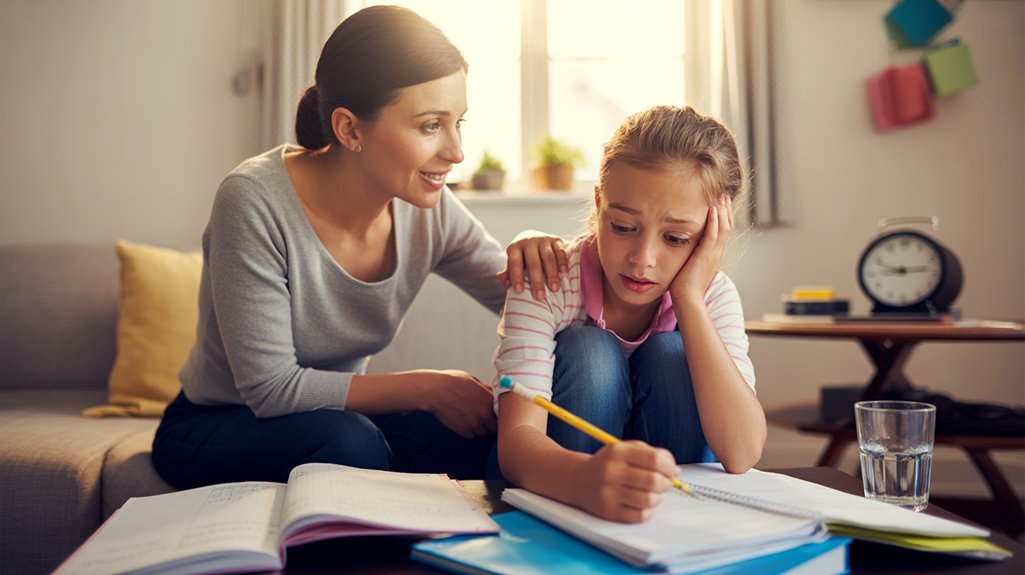
Before you can address your child's test anxiety, you'll need to recognize how it appears in their daily life. Test anxiety manifests through multiple channels that often overlap and intensify each other.
Watch for these key warning signs:
- Physical symptoms – Racing heart, sweaty palms, dizziness, and headaches that emerge before or during exams, making concentration nearly impossible for your child.
- Behavioral changes – Procrastination around studying, avoiding homework sessions, or constantly second-guessing answers they've already written down.
- Negative self-talk – Statements expressing hopelessness or inadequacy about their abilities, such as “I'm going to fail” or “I'm not smart enough.”
Understanding these signs helps you intervene early. When your child is feeling anxious, their brain activates a fight-or-flight response, treating the test as a genuine threat.
Recognizing this physiological reaction enables you to develop targeted strategies that address both the symptoms and underlying fears.
Real Parent Concerns Answered
You're not alone in facing challenging situations when helping your anxious child prepare for tests.
Common concerns—from refusal to study and physical symptoms to perfectionism and knowing when professional help is needed—can leave you feeling uncertain about the right approach.
Let's address these specific scenarios with practical, research-backed strategies that support your child's well-being without adding pressure.
My Child Wont Study
One of the most frustrating challenges parents face is watching their child shut down when it's time to study. This resistance often stems from test anxiety and feelings of overwhelm rather than laziness. Your child may fear failure so intensely that avoidance feels safer than trying.
Start by having an open conversation to understand their specific triggers. Then, establish a consistent study routine that breaks material into manageable chunks—this reduces the paralysis that anxiety creates.
Create a calm, distraction-free study space where your child feels supported, not pressured.
Celebrate small victories along the way. When your child completes even a brief study session, acknowledge their effort. This builds confidence and gradually shifts their association with studying from threatening to achievable, helping them approach test preparation with less resistance.
Physical Symptoms Before Tests
When your child complains of a stomachache on test morning or their hands shake as they pick up a pencil, you're witnessing anxiety's physical grip—not excuses or dramatics. Up to 40% of students experience these symptoms because their brain triggers a fight-or-flight response, perceiving tests as genuine threats.
| What Kids Feel | Why It Happens | How You Can Help Your Child |
|---|---|---|
| Racing heart, sweaty palms | Brain activates stress response | Teach deep breathing techniques |
| Headaches, dizziness | Muscle tension from anxiety | Practice progressive muscle relaxation |
| Trouble concentrating | Mind overwhelmed by worry | Establish pre-test calming routines |
Understanding this mind-body connection enables you to help your child develop effective coping strategies. When you validate their physical experience and provide relaxation tools, you're equipping them with lifelong anxiety management skills.
Perfectionism and Fear Failing
If your child freezes at the thought of scoring less than perfect, you're dealing with something deeper than ordinary test nerves—perfectionism alters every assessment into a referendum on their self-worth.
This fear of failing activates their fight-or-flight response, making concentration nearly impossible when they need it most.
Research shows perfectionism fuels damaging self-talk like “I must be perfect,” intensifying anxiety and feelings of inadequacy.
You can counter this by cultivating a growth mindset that emphasizes effort and learning over flawless performance.
Open conversations about their perfectionism create space for your child to voice concerns.
When they articulate these fears, you can provide targeted strategies to manage anxiety.
This developmental shift—from fearing mistakes to valuing progress—fundamentally redefines how they approach assessments.
When Anxiety Becomes Severe
While building a growth mindset addresses many anxiety challenges, sometimes test anxiety escalates beyond what standard coping strategies can manage. When your child experiences persistent physical symptoms like headaches or stomachaches, or avoids school on test days, professional intervention becomes necessary. Approximately 25% of students face significant test anxiety that impacts both performance and self-esteem.
| Warning Signs | Impact | Action Steps |
|---|---|---|
| Physical symptoms (headaches, dizziness) | Reduced academic performance | Consult mental health professional |
| School avoidance | Disrupted learning experience | Implement tailored coping strategies |
| Extreme procrastination | Decreased self-confidence | Communicate with teachers |
| Panic responses | Social withdrawal | Request testing accommodations |
| Persistent worry | Sleep disturbances | Combine calming techniques with therapy |
Mental health professionals provide specialized interventions that standard calming techniques alone cannot address.
Supporting Without Added Pressure
Many parents unknowingly amplify their child's test anxiety through well-intentioned comments like “You'll do great!” or “Just don't stress about it.”
Research shows that children interpret these reassurances as added expectations, creating a paradox where attempts to reduce pressure actually increase it.
Supporting without added pressure requires shifting your focus from test outcomes to daily effort. Celebrate when your child completes homework or practices a challenging concept, reinforcing that growth matters more than grades.
Maintain open dialogue where they can express fears without hearing dismissive responses. When they're anxious, stay calm yourself—children mirror your emotional state.
Most importantly, explicitly separate test scores from their worth. Say, “Tests measure what you know today, not who you are.”
This growth mindset approach reduces performance anxiety while building resilience.
Age-Specific Calming Methods
Children respond differently to stress at each developmental stage, which means the calming techniques that work for a five-year-old won't necessarily help a fifteen-year-old. Understanding these differences enables you to offer more effective support when kids face test anxiety.
Age-Appropriate Tips to Help Your Child:
1. Preschool through Early Elementary: Guide younger children through simple breathing exercises—count to three together while taking deep breaths.
Elementary-age kids benefit from visualization, imagining peaceful places or successful test experiences to build confidence.
2. Middle School: Introduce progressive muscle relaxation, where they systematically tense and release different muscle groups.
This technique gives them tangible control over their physical stress response.
3. High School: Teach mindfulness practices like the 5-4-3-2-1 grounding method, which helps teens identify five things they see, four they touch, three they hear, two they smell, and one they taste.
Encourage creating calming playlists with soothing music for study sessions.
Match your approach to your child's developmental capabilities for maximum effectiveness.
Long-Term Success Strategies
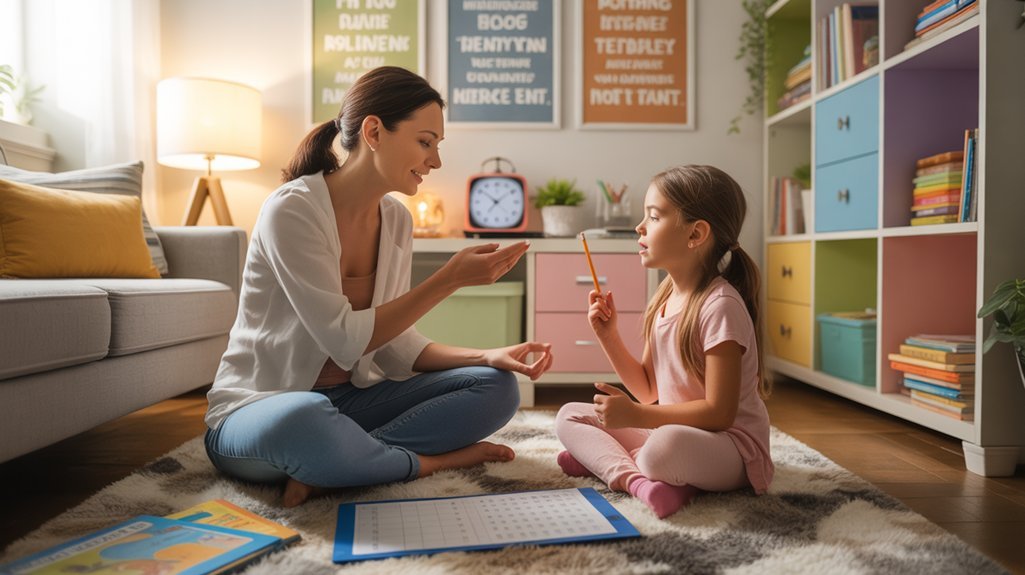
These immediate calming techniques work best when paired with a wider approach to managing test anxiety.
You'll see lasting results when you help your child establish a consistent study routine that incorporates regular breaks, reducing anxiety while improving retention over time.
Teaching relaxation techniques like deep breathing and progressive muscle relaxation gives your child practical tools they can use independently during stressful moments.
Encourage a growth mindset by reinforcing that effort and persistence matter more than immediate results, building resilience against test-induced stress.
Regular practice with coping strategies—visualization and grounding techniques—enhances your child's ability to manage anxiety during actual tests.
Support their developing positive self-image through consistent praise and celebrating small successes, no matter how modest they seem.
This all-encompassing approach changes calming techniques from temporary fixes into permanent skills.
Your child will gradually approach tests with greater confidence, equipped with multiple strategies for managing anxiety effectively throughout their academic journey.
Frequently Asked Questions
What Are the Best Strategies for Test Anxiety?
The best strategies combine mindfulness techniques like deep belly breathing and the 5-4-3-2-1 grounding method with positive affirmations your child can repeat before testing.
You'll want to teach progressive muscle relaxation and visualization exercises, where they imagine succeeding calmly.
Encourage brief physical activity beforehand to release tension.
These evidence-based approaches work together to activate your child's natural relaxation response, building their confidence while reducing anxiety's physical and emotional symptoms during tests.
What Is the 3 3 3 Rule for Anxiety Kids?
The 3-3-3 rule is one of the most effective mindfulness techniques you can teach your anxious child. It works beautifully alongside breathing exercises: have them name three things they see, three sounds they hear, and three objects they can touch.
This simple grounding method redirects their racing thoughts to the present moment, calming their nervous system during stressful situations like tests.
You'll find it's remarkably effective because it engages multiple senses simultaneously, anchoring them when anxiety strikes.
What Is the Best Therapy for Test Anxiety?
Cognitive-behavioral therapy (CBT) is the most effective treatment for your child's test anxiety. It helps them identify and reframe negative thoughts about testing while building practical coping skills.
Exposure therapy, a key CBT component, gradually introduces test-like situations to reduce fear through desensitization.
You'll find that combining professional therapy with mindfulness techniques and at-home practice creates the strongest foundation.
When paired with your supportive involvement, these evidence-based approaches greatly enhance your child's confidence and performance.
How to Help a Kid With Test Anxiety?
Think of anxiety as a wave your child can learn to ride rather than be pulled under by.
You'll help them most by teaching mindfulness exercises like deep belly breathing and the 5-4-3-2-1 grounding technique.
Guide them in creating positive affirmations such as “I'm prepared and capable.”
Encourage visualization of success and practice progressive muscle relaxation together.
These evidence-based strategies build emotional resilience, enabling your child to face tests with growing confidence and calm.
Conclusion
Research shows that up to 40% of students experience some form of test anxiety, but you've now got seven powerful techniques to help your child navigate these challenges. By teaching your child these calming strategies—from deep breathing to visualization—you're building their emotional toolkit for life. Remember, you're not just helping them pass tests; you're nurturing resilience and self-regulation skills they'll carry into adulthood. Start practicing these techniques today, even when tests aren't looming.
Related Articles
- The Ultimate Guide to Sibling Conflict
- The Ultimate Guide to Family Meal Planning
- The Ultimate Guide to Kids Educational Games
- 20 Fun DIY Crafts to Strengthen Family Bonds
- The Ultimate Guide to Screen Time Management

Written by Sarah Mitchell, M.S., CFLE
Founder & Lead Editor
Sarah is a Certified Family Life Educator with a Master's degree in Human Development and Family Studies from the University of Missouri. With 15+ years of experience as a parent educator and mother of three, she brings both professional expertise and real-world parenting wisdom to every article.
Credentials: M.S. in Human Development and Family Studies, Certified Family Life Educator (CFLE)