


When your toddler melts down in public, stay calm first—your nervous system directly influences theirs. Acknowledge their feelings with phrases like “I see you're upset” while maintaining clear boundaries. Before outings, pack distraction tools and schedule around nap times to prevent triggers. If a tantrum starts, try redirecting attention, offering simple choices, or moving to a quieter space. Practice deep breathing together and crouch to their eye level for better connection. The strategies below will help you change these challenging moments into opportunities for emotional growth.
Key Takeaways
- Stay calm and use a soothing tone to serve as an emotional anchor, as children mirror adult responses during meltdowns.
- Acknowledge the child's feelings with simple validation statements like “I see you're frustrated” before setting firm boundaries.
- Pack distraction tools such as sensory toys, games, and comfort items to redirect attention when tantrums begin.
- Schedule outings around nap times and meals while ensuring basic needs are met to prevent triggers.
- Practice deep breathing together or count slowly aloud to help the child regain emotional control during outbursts.
Prepare Before You Leave the House
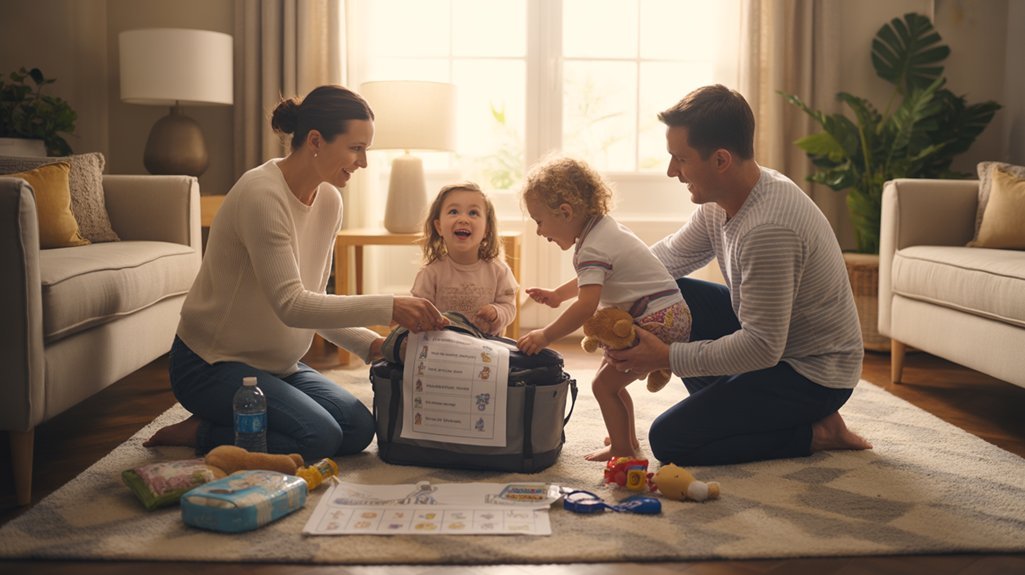
Before stepping out the door, you'll want to identify your child's specific tantrum triggers and plan accordingly.

Consider timing considerations like scheduling outings around nap times and meals to avoid fatigue-related meltdowns. Pack a strategic toolkit with small games, coloring books, and sensory toys that can redirect attention during challenging moments.
Strategic timing and a well-stocked distraction toolkit transform potential meltdown moments into manageable situations during outings with your child.
Prepare your child using visual schedules or social stories that outline what they'll experience. This reduces anxiety by setting clear expectations about the outing. Allow them to choose a comfort item—whether it's a favorite toy or blanket—that provides security during changes.
Your outfit selection matters too; dress your child in comfortable clothing that won't add unnecessary irritation.
Create a mental checklist of potential trigger scenarios, such as toy aisles or crowded spaces, and develop specific strategies to address them. When media exposure from screens or advertisements in public spaces might overwhelm your child, having prepared coping strategies becomes even more crucial. This proactive approach helps you remain calm and focused on your child's needs when challenges arise.
Stay Calm and Model Emotional Regulation
When your child has a meltdown in public, your ability to stay calm becomes their anchor.
Research shows that children mirror adult emotional responses, meaning your composure directly influences how quickly they can regain control through co-regulation.
Calmness Spreads to Children
Your ability to stay calm during a public tantrum serves as your child's most powerful guide toward emotional regulation.
Research confirms that children mirror adult emotions, making your calm presence a pivotal tool during meltdowns. When you maintain composure, you're practicing co-regulation—actively helping your child navigate overwhelming feelings toward stability.
This emotional mirroring works bidirectionally. Your soothing demeanor and gentle phrases like “Do you just need a big hug?” directly influence your child's capacity to self-regulate.
Each time you respond with steadiness rather than frustration, you're teaching essential emotional management skills.
Regular practice strengthens this ability. The more consistently you model calmness during challenging moments, the more effectively your child learns to manage their own emotions, creating a foundation for lifelong emotional resilience.
By prioritizing self-care resources and maintaining your own emotional balance, you can stay present and model these healthy behaviors for your children even during their most challenging moments.
Use Soothing Verbal Phrases
The words you choose during a tantrum carry remarkable power to shift your child's emotional state. Soothing phrases like “I'm here for you” and “It's okay to feel upset” provide emotional validation that helps your child feel understood during overwhelming moments.
When you maintain a calm tone and steady pacing, you're practicing co-regulation—guiding your child toward self-regulation through your composed presence.
Children naturally mirror your emotional state, so your calm demeanor becomes their anchor.
Try phrases that acknowledge their feelings: “I see you're frustrated” or “Your feelings matter to me.”
Practicing these responses beforehand prepares you to respond effectively when stress peaks, benefiting both you and your child as you navigate public tantrums together with greater confidence and compassion. Remember that early childhood development during the first three years is crucial for lifelong mental health, making your calm, supportive responses during these challenging moments an investment in your child's emotional foundation.
Practice Co-Regulation Techniques
Beyond verbal validation, your physical and emotional presence shapes how your child navigates their big feelings. Co-regulation practices require you to model the calm you want to see, as children mirror your emotional state. When you maintain composure during public meltdowns, you're teaching emotional regulation through example.
This emotional connection builds their capacity for self-soothing. Try these evidence-based techniques:
| Co-Regulation Strategy | How It Helps |
|---|---|
| Deep breathing together | Activates calming response |
| Offering a reassuring hug | Provides physical security |
| Counting slowly aloud | Redirects attention |
| Maintaining steady tone | Models emotional control |
| Staying physically present | Reinforces safety |
Each tantrum you handle calmly strengthens your resilience and your child's developing emotional competence. Consistent practice changes challenging moments into teaching opportunities. Understanding your child's developmental milestones helps you set realistic expectations for their emotional regulation abilities during different stages of growth.
Acknowledge Feelings Without Negotiating Boundaries
When your child melts down in public, you can honor their emotions while holding your ground on limits.
Start by naming what you observe: “You're really upset that we can't buy the candy right now.
This validation helps your child feel heard without opening the door to negotiation, allowing you to maintain the boundary with both firmness and compassion.
Validate Emotions With Simplicity
Acknowledging your child's feelings during a public tantrum requires a delicate balance between empathy and firmness. Simple validation statements like “I see you're upset” provide emotion recognition without opening negotiations about established limits. This approach helps your child feel understood while you maintain necessary boundaries.
| Instead of This | Try This |
|---|---|
| “Stop crying or we're leaving!” | “I see you're disappointed we can't get that toy.” |
| “Why are you acting this way?” | “You're feeling frustrated right now.” |
| “You're fine, it's not a big deal.” | “I understand you're upset.” |
| “We'll talk about this later.” | “You really wanted that.” |
| “If you stop, I'll consider it.” | “I hear you're angry.” |
Removing your child from the triggering environment allows better focus on their emotions while your calm presence models effective emotional regulation.
Maintain Firm, Kind Limits
While validation opens the door to connection, maintaining firm limits provides the structure your child needs to feel secure. Setting boundaries during tantrums establishes safety while reinforcing security in their understanding of acceptable behavior.
Use clear, simple phrases like “We're not buying that toy today” rather than lengthy explanations that invite confusion or negotiation. Acknowledge feelings with statements such as “I understand you're upset” while upholding your boundary. This approach helps your child feel heard without undermining your authority.
Maintain eye contact and physical closeness to improve communication effectiveness. Your child will better process the limit you're setting when you're present and engaged.
Consistent responses teach children what's acceptable, reducing future outbursts. When you kindly yet firmly maintain boundaries, you're helping them develop emotional regulation skills they'll carry throughout life.
Redirect Attention or Change the Environment

One of the most effective strategies during a public tantrum is redirecting your child's attention away from the trigger and toward something engaging or calming. Redirect strategies work by shifting focus to positive alternatives—games, sensory toys, or favorite objects.
Try phrases like “Let's go find the sparkly pillows you love” to guide their emotional state in a new direction.
Environmental shifts can be equally powerful. Moving to a quieter or more familiar space alleviates overstimulation and provides relief for both you and your child. This break from the triggering environment creates opportunity for reset and calmer interaction.
When implementing these techniques, crouch down to your child's eye level. This simple adjustment improves connection and communication, making them more receptive to redirection.
Give Your Child a Meaningful Role or Task
Children thrive when they feel purposeful and engaged, making task assignment a significant preventative tool against public meltdowns. Task delegation alters ordinary errands into collaborative experiences.
At the grocery store, equip your child with a clipboard and crayon, then assign them items to locate from your list. This simple act of child encouragement converts shopping into an engaging scavenger hunt, keeping them focused and invested.
A clipboard and simple shopping list transforms your child from passive observer into active participant, turning mundane errands into purposeful adventures.
As your child checks off each discovered item, they're simultaneously developing motor skills and experiencing genuine accomplishment. This sense of responsibility directly combats the boredom and frustration that typically trigger tantrums. When children occupy meaningful roles, they feel valued and included rather than helpless bystanders.
The benefits extend beyond immediate behavior management. You're teaching cooperation, building confidence, and creating positive associations with necessary outings.
Know When It's Time to Leave and Try Again Later

Despite your best preventative efforts, some situations will deteriorate beyond management, and recognizing this reality represents skilled parenting rather than defeat. Watch for timing cues that signal escalation—increased volume, physical aggression, or complete unresponsiveness to redirection. When these intensify, prioritize emotional well-being over completing your errands.
Conduct quick emotional check-ins with yourself too. If you're feeling overwhelmed, leaving becomes essential for both of you. Many parents abandon outings mid-tantrum, and there's no shame in this decision. Exiting provides space for everyone to reset and regain composure.
Consider each departure a strategic pause rather than failure. Your child learns that overwhelming emotions require management, and you'll approach the next outing with fresh perspective.
Tomorrow offers another opportunity to practice these skills together. The grocery store will still be there, but preserving your relationship and teaching healthy emotional regulation holds far greater value than any errand completion.
Debrief and Build Emotional Skills After the Tantrum
Once the storm has passed and everyone has regained composure, you'll find the most valuable learning happens. Engage your child in calm discussion to help them articulate what triggered their distress. Use reflective phrases like, “You seemed really upset when we'd to leave the toy store,” which validates their experience while opening dialogue.
The most powerful teaching moments arrive after the meltdown ends, when calm returns and hearts are ready to listen.
This debriefing strengthens your child's emotion vocabulary—teaching them to recognize and name feelings builds healthier expression patterns. When children can identify frustration, disappointment, or overwhelm, they're better equipped to communicate before escalating.
Introduce coping strategies through role-playing scenarios where they practice managing similar situations. These rehearsals build resilience and prepare them for real-world frustrations.
Consistently reviewing incidents and discussing alternative responses deepens emotional understanding. Ask, “What could we try differently next time?”
This collaborative approach reduces future tantrums while enabling your child with essential self-regulation skills that serve them throughout life.
Quick Wins for Parents

When you're facing a public tantrum, having practical strategies ready makes all the difference between chaos and controlled resolution.
These quick wins enable you to serve your child's needs while maintaining composure in challenging moments.
Three Essential Strategies:
- Preparation prevents escalation – Pack emotional tools like small games or coloring books before outings. Anticipating tantrum triggers helps you stay one step ahead, altering potential meltdowns into manageable moments.
- Master the art of strategic distraction – Redirect your child's attention to engaging nearby activities or change environments entirely. This technique diffuses tension without power struggles, honoring your child's emotional state while guiding them toward regulation.
- Set boundaries with clarity – Use simple, firm language to establish safety and limits. Avoid lengthy negotiations during heightened emotions; clear communication demonstrates authority while respecting your child's developing capacity for self-control.
Understanding Why Tantrums Happen

Before you can effectively manage your child's public meltdowns, you need to understand what's driving them.
Tantrums aren't manipulation or bad behavior—they're your child's response to developmental limitations, overwhelming emotions, and unmet needs they can't yet articulate.
Recognizing the specific triggers behind these outbursts, from sensory overload to their emerging independence, will help you respond with confidence rather than frustration.
Developmental Stages and Emotions
Understanding why tantrums happen begins with recognizing that your toddler's brain is still under construction. The prefrontal cortex, responsible for emotional regulation, won't fully develop until their mid-twenties. This means your child literally can't control intense feelings the way adults do.
During these vital stages of emotional development, toddlers experience overwhelming emotions without the verbal skills to express them. They're learning to navigate complex feelings like frustration, disappointment, and anger for the first time. When hunger, fatigue, or overstimulation strikes, these big toddler emotions quickly exceed their limited coping abilities.
You'll also notice your child testing boundaries—this isn't defiance but essential learning about independence and cause-and-effect.
Overstimulation and Sensory Overload
Public places bombard your toddler's developing sensory system with an intensity that adults often overlook. Loud announcements, fluorescent lighting, and crowded spaces create overwhelming sensory processing challenges that directly impact your child's ability to regulate emotions.
When excessive stimuli exceed their coping capacity, tantrums become their primary communication method.
Research confirms that chaotic, unpredictable environments greatly increase meltdown frequency, especially when children are already tired, hungry, or anxious. These conditions compromise their self-regulation abilities, making emotional triggers more powerful.
You'll recognize early warning signs: ear-covering, withdrawing, or increased agitation. These behaviors signal impending sensory overload, giving you vital intervention time.
Unmet Needs Trigger Meltdowns
When your toddler's basic needs go unmet, their immature nervous system can't compensate the way yours does—they lack the neurological infrastructure to override physical discomfort or delay gratification.
Hunger cues, fatigue, and overstimulation directly trigger emotional dysregulation because young children can't verbalize their distress effectively. Their tantrums become their primary communication tool.
Before venturing into public spaces, assess these fundamental needs systematically. Pack nutrient-dense snacks, maintain consistent nap schedules, and bring familiar comfort items that provide emotional comfort in unfamiliar environments.
Recognize that changes between activities heighten anxiety—prepare your child by describing what'll happen next in concrete terms.
Limited Communication Skills
Between eighteen months and three years, your child's comprehension vocabulary vastly outpaces their expressive language—they understand hundreds of words but can articulate only a fraction of them. This gap creates intense frustration when they can't communicate needs effectively, making tantrums their primary tool for expression.
You'll notice these outbursts particularly in public settings where overstimulation, fatigue, or hunger further diminish their already-limited coping abilities.
Implementing simple communication strategies helps bridge this divide. Teach basic signs for “more,” “all done,” and “help” to provide alternative emotional expression methods.
Label their feelings during calm moments: “You're feeling frustrated because…” This validates their experience while building vocabulary.
When you identify specific triggers—transitions, unfamiliar environments, or crowds—you can anticipate their needs and intervene before overwhelm occurs.
Testing Boundaries and Independence
Your toddler's brain is hardwired to push against limits—this isn't defiance but developmental necessity. Through boundary testing, children actively explore their expanding autonomy while learning critical cause-and-effect relationships.
When your child throws a tantrum after hearing “no,” they're conducting a crucial experiment: What happens when I resist this restriction?
This independence exploration serves multiple developmental purposes. Your toddler gauges your reactions, processes emotional regulation, and discovers where boundaries truly lie.
Since they can't yet verbalize complex feelings, tantrums become their primary communication tool for expressing frustration with imposed limits.
Understanding this developmental context alters how you'll approach public meltdowns. Rather than viewing tantrums as behavioral problems, recognize them as your child's natural way of asserting themselves while maneuvering their growing capabilities within necessary boundaries.
Prevention and In-the-Moment Techniques

Before your child melts down in the checkout line, you can take concrete steps to prevent public tantrums from occurring in the first place. Preparation means anticipating emotional triggers like toy aisles or extended wait times, then having distraction techniques ready—small games, coloring books, or engaging conversations that redirect attention before frustration builds.
When prevention isn't enough, these in-the-moment techniques prove invaluable:
- Model calm emotional regulation by maintaining your own composure, as your child mirrors the energy you project during stressful moments.
- Set clear boundaries using simple phrases that provide structure without lengthy explanations, helping your child understand expectations despite their heightened emotions.
- Prioritize emotional well-being over completion by changing environments or leaving entirely when tantrums escalate, demonstrating that your child's needs matter more than any shopping list.
These evidence-based strategies equip you to support children through difficult moments while maintaining the dignity and respect every developing person deserves.
Building Your Confidence Forward

The journey from feeling overwhelmed by public tantrums to managing them with assurance doesn't happen overnight, but each successfully handled meltdown strengthens your parenting toolkit.
Confidence building requires intentional practice—preparing mental checklists of triggers and response techniques before outings, keeping distraction tools like sensory toys accessible, and rehearsing calm validation phrases.
Remember that 75% of toddlers experience regular tantrums; you're steering through a developmental norm, not a parenting failure. Your emotional preparedness grows through repetition and self-compassion.
When you maintain composure during a public meltdown, you're modeling emotional regulation your child will eventually internalize.
Seek out evidence-based parenting resources, expert-led classes, and community support groups. These connections provide effective techniques while reminding you that you're not alone in this challenge.
Each tantrum you handle with increasing calm isn't just crisis management—it's an investment in your long-term confidence and your child's emotional development.
Frequently Asked Questions
How Do I Handle Judgmental Stares From Other People During a Tantrum?
Focus on your child rather than onlookers—you're meeting their needs, which matters most.
Practice self-acceptance by reminding yourself that tantrums are normal developmental behaviors, not parenting failures.
Effective coping strategies include taking deep breaths, maintaining calm body language, and remembering that strangers lack context about your situation.
Most parents have experienced this themselves and empathize more than you'd think.
You're modeling emotional regulation for your child, which is valuable teaching even when it feels uncomfortable.
What Should I Do if My Child Becomes Physically Aggressive in Public?
Immediately remove your child from the situation to protect everyone's safety.
Move to a quiet, safe space where you can calmly address the aggressive behavior without an audience.
Stay composed and use simple language: “I won't let you hurt others.”
Once calm, help them practice emotional regulation by naming their feelings and teaching alternative responses.
If aggressive behavior persists, consult your pediatrician or child psychologist for additional support strategies.
Are Tantrums in Public a Sign of Bad Parenting or Discipline Problems?
Don't let judgment cloud your perspective—public tantrums aren't badges of parenting failure.
They're normal developmental stages reflecting your child's immature emotional regulation, not discipline problems. Research shows tantrum triggers include overstimulation, hunger, and fatigue, which affect all children regardless of parenting quality.
What matters are your parenting strategies moving forward: staying calm, validating feelings, and teaching coping skills.
You're building essential life skills in your child, and that's compassionate, effective parenting in action.
How Can I Prevent Sibling Conflicts From Triggering Public Tantrums?
You'll prevent many public meltdowns by addressing sibling rivalry proactively before leaving home.
Teach conflict resolution skills during calm moments, establishing clear expectations about public behavior.
When you're out, immediately separate squabbling siblings and redirect their attention to individual tasks.
Pack separate snacks and activities to minimize competition triggers.
If tension escalates, calmly acknowledge both children's feelings while enforcing consistent boundaries.
Should I Apologize to Store Staff or Other Customers After a Tantrum?
You don't need to over-apologize, but a brief acknowledgment shows respect. Managing guilt is important—remember, tantrums are developmentally normal.
Simple apologizing etiquette includes a quick “Sorry for the disruption” to directly affected staff or customers. Focus your energy on your child rather than lengthy explanations. Most people understand parenting challenges.
Research shows excessive apologizing can increase your stress without helping the situation. Model grace under pressure, then move forward confidently.
Conclusion
You've learned that public tantrums aren't about your parenting failures—they're about your child's developing brain struggling to regulate emotions under pressure. Research confirms what you've now experienced: preparation, calm responses, and consistent boundaries actually rewire neural pathways over time. Each tantrum you handle with empathy strengthens your child's emotional intelligence. You're not just surviving these moments; you're teaching resilience. Trust the process. Your consistency today builds their self-regulation tomorrow.
Related Articles
- The Ultimate Guide to Sibling Conflict
- The Ultimate Guide to Family Meal Planning
- The Ultimate Guide to Kids Educational Games
- 20 Fun DIY Crafts to Strengthen Family Bonds
- The Ultimate Guide to Screen Time Management

Written by Sarah Mitchell, M.S., CFLE
Founder & Lead Editor
Sarah is a Certified Family Life Educator with a Master's degree in Human Development and Family Studies from the University of Missouri. With 15+ years of experience as a parent educator and mother of three, she brings both professional expertise and real-world parenting wisdom to every article.
Credentials: M.S. in Human Development and Family Studies, Certified Family Life Educator (CFLE)