



Handle sibling rivalry by staying neutral during conflicts and teaching your children to use “I messages” to express feelings without blame. Encourage collaborative problem-solving where they propose solutions together, and reinforce successful conflict resolution with positive acknowledgment. Create a cooperative environment through shared activities and family meetings while avoiding comparisons between siblings. Watch for signs like persistent physical aggression or emotional withdrawal that indicate you'll need professional support. Understanding these strategies helps you change everyday squabbles into opportunities for developing lifelong relationship skills.
Key Takeaways
- Teach children conflict resolution skills using “I messages,” structured sharing schedules, and collaborative problem-solving techniques.
- Foster teamwork through shared activities and family meetings while avoiding comparisons or favoritism between siblings.
- Establish clear household rules for disagreements and consistently reinforce positive conflict resolution behaviors with acknowledgment.
- Monitor for warning signs requiring professional help, including persistent physical aggression, emotional withdrawal, or declining school performance.
- Recognize that sibling conflicts are developmentally normal and provide valuable opportunities for building social and emotional skills.
Understanding Why School-Age Siblings Fight
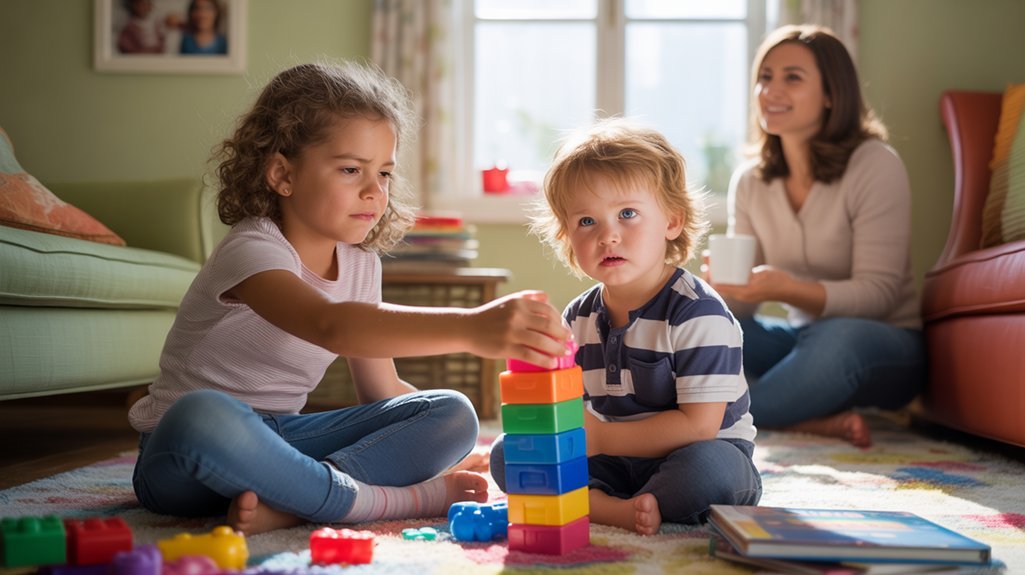
While sibling squabbles might feel overwhelming in the moment, they're actually a normal part of your children's development. Understanding the roots of sibling rivalry helps you respond with greater compassion and effectiveness.

Your children compete for parental attention as they navigate critical developmental changes. They're acutely aware of perceived inequalities—whether it's privileges, toys, or your affection. Individual temperaments matter too; some children naturally experience more frustration than others.
Family changes, like welcoming a new baby or experiencing parental stress, can intensify these interactions as your children seek reassurance through your focus.
Here's the encouraging part: these conflicts aren't just problems to solve. They're valuable opportunities for your children to develop essential social skills. Through disagreements, they're learning conflict resolution, negotiation, and communication.
Your role isn't to eliminate all fighting, but to guide them toward healthier interactions that build lifelong relational competencies. Just as active living helps children thrive physically, navigating sibling relationships contributes to their emotional and social development.
Stay Neutral and Avoid Taking Sides
When your children clash, your instinct might be to determine who started it and defend the “victim.” This approach, however well-intentioned, often backfires. Taking sides during sibling conflict increases resentment and rivalry while undermining your authority.
Instead, stay neutral to teach kids essential problem-solving skills they'll use throughout life. Supporting both children equally creates space for open communication. When you intervene without bias, you model how to navigate disagreements constructively.
Your children learn to express their feelings and perspectives without fearing judgment or favoritism. Use collaborative language like “Let's figure this out together” to encourage teamwork rather than competition. This approach helps siblings see each other as partners rather than adversaries.
Avoiding blame allows each child to take ownership of their actions and responsibilities, promoting emotional growth and healthier interactions. When you stay neutral, you're not dismissing the conflict—you're enabling your children to resolve it themselves. Remember that maintaining your own balance through self-care resources helps you stay present and model healthy behaviors during these challenging moments.
Teach Children to Resolve Conflicts Independently
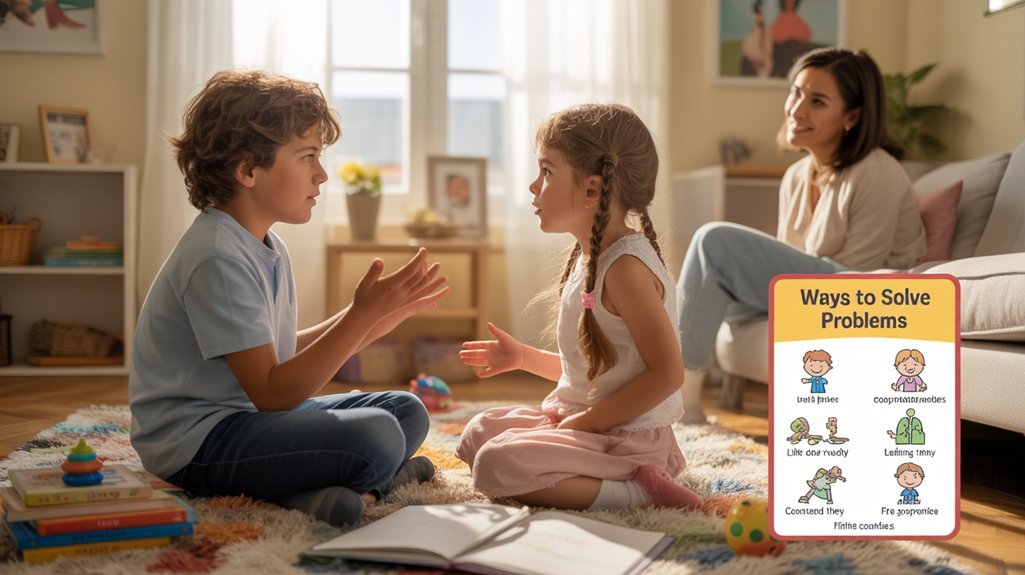
Enabling your children to resolve their own disagreements builds confidence and critical life skills that extend far beyond childhood. When you teach your children to view conflict as an opportunity for growth, they develop essential problem-solving abilities and emotional intelligence.
Start by encouraging your kids to express their feelings using “I messages” rather than blame-focused statements. This promotes respectful communication and mutual understanding.
Implement structured sharing schedules with timers for disputed items, teaching the value of taking turns.
Step back and let your children negotiate solutions themselves, intervening only when necessary. This independence encourages ownership of the resolution process.
Role-play various scenarios together, demonstrating compromise techniques and mutually beneficial approaches they can apply.
Emphasize that sibling disputes are normal learning experiences. When your children successfully solve the problem themselves, acknowledge their efforts. This reinforcement strengthens their interpersonal skills and prepares them for future collaborative relationships. Remember that early childhood development research shows these foundational years are crucial for establishing healthy patterns of social interaction and emotional regulation.
Create a Cooperative Family Environment
Creating a cooperative family environment changes your home into a space where siblings view each other as allies rather than competitors.
Foster cooperation at home by helping your siblings see each other as teammates working together, not rivals fighting for attention.
You'll promote teamwork by organizing shared activities that naturally encourage bonding—think family game nights, collaborative projects, or cooking together.
Avoid comparisons and favoritism at all costs. When you recognize each child's unique strengths, you're reducing rivalry while building individual self-esteem.
Establish clear rules for resolving disagreements, giving your children a predictable framework they can rely on.
Schedule regular family meetings where everyone expresses feelings openly. This practice improves understanding and empathy among siblings who often compete for parents‘ attention.
Consider providing one-on-one time with each child, which satisfies their individual need for connection.
Celebrate cooperative behavior through positive reinforcement. When you notice sharing, turn-taking, or supportive interactions, acknowledge them immediately.
These practices create a cooperative family environment where siblings naturally support rather than undermine each other's growth.
For additional guidance on maintaining family health and safety during these developmental years, parents can access helpful resources designed specifically for their children's age group.
Recognize When Professional Help Is Needed
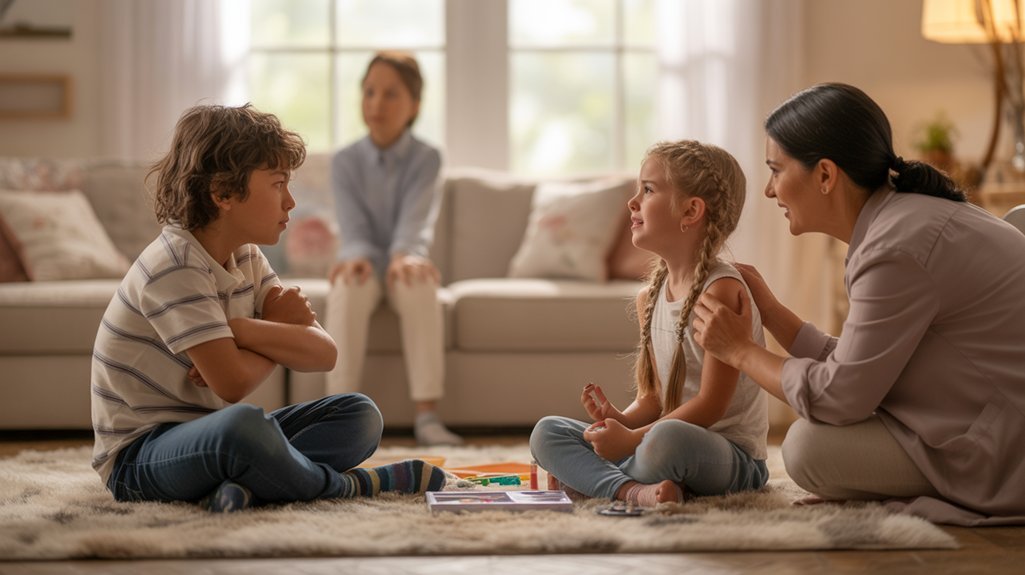
While most sibling conflicts resolve with consistent parenting strategies, some situations require professional intervention.
You'll need to seek professional help when rivalry disrupts daily functioning or causes significant emotional strain within your family.
Watch for warning signs including persistent fighting, behavioral changes, withdrawal from family activities, declining academic performance, and heightened irritability.
These indicators suggest your children's sibling interactions have escalated beyond typical developmental conflicts.
Consulting a doctor or therapist provides important perspectives into your family's unique patterns and needs.
A professional can assess whether your children require therapeutic support to develop effective conflict resolution skills and coping strategies.
Early intervention prevents long-term damage to sibling relationships and family cohesion.
*What Works, What Doesn't**
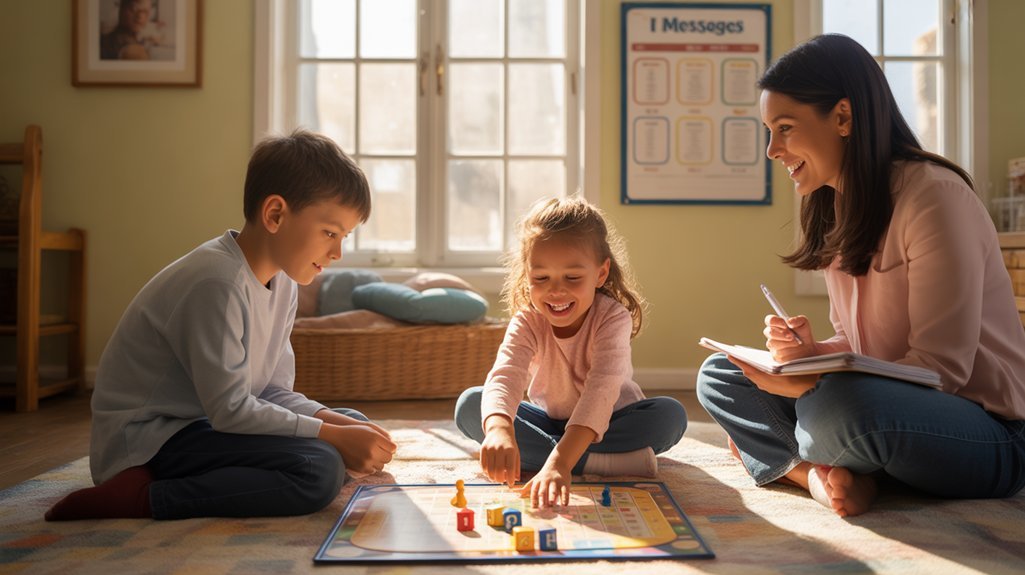
Understanding which strategies reduce sibling rivalry and which inadvertently fuel it helps you respond more effectively when conflicts arise.
What works:
- Teach “I messages” to help children express emotions clearly, reducing conflict-driven misunderstandings.
- Praise cooperative behavior and celebrate kindness between siblings, strengthening their children's relationship through positive reinforcement.
- Address the root cause of disputes—whether competition for attention or resources—rather than just managing surface-level arguments.
- Set clear expectations like scheduled sharing times, creating predictable solutions for recurring conflicts.
What doesn't work:
Comparing siblings, taking sides without understanding context, or solving every disagreement for them undermines their developing conflict resolution skills.
Punishing both children equally ignores individual circumstances and breeds resentment. Dismissing emotions (“Stop crying”) teaches suppression rather than regulation.
Allow age-appropriate struggles where children practice managing disappointment independently.
Your role isn't eliminating all conflict—it's equipping them with tools to navigate disagreements constructively while nurturing mutual respect.
When to Seek Help
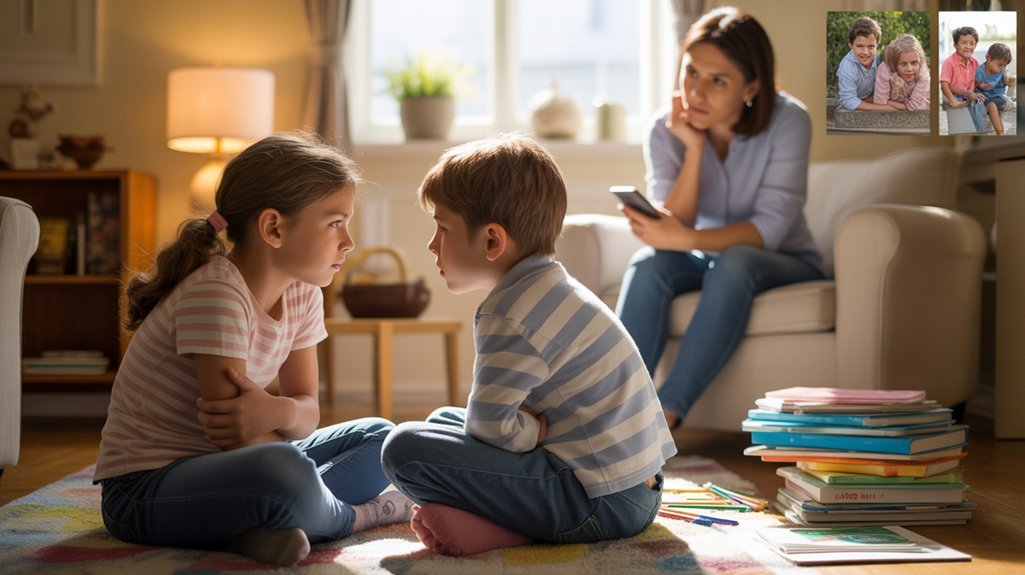
While sibling conflict is developmentally normal, certain warning signs indicate you'll need professional support.
If you're noticing persistent physical fights, emotional withdrawal, declining school performance, or behavior that greatly disrupts your family's daily functioning, it's time to consult your pediatrician or a mental health professional.
Early intervention can address underlying issues before they intensify, helping your children develop healthier ways to relate to each other.
Persistent Physical Aggression Occurs
When sibling conflicts move beyond typical squabbles and become physically aggressive on a regular basis, you're facing a situation that demands immediate attention. Persistent physical aggression often signals underlying emotional issues that require professional support. If you're observing frequent fights causing injury, considerable family disruption, or fear-based avoidance behaviors, it's time to consult a child psychologist or family therapist.
| Warning Signs | Recommended Action |
|---|---|
| Regular physical fights with injuries | Schedule professional evaluation |
| One child shows fear or avoidance | Seek immediate therapeutic support |
| Daily family life considerably disrupted | Contact family therapist |
Early intervention protects sibling relationships and prevents long-term emotional challenges. Professionals can provide targeted strategies for managing aggression while addressing root causes, ultimately helping your children develop healthier interaction patterns.
Emotional Distress Signs Present
Physical aggression isn't the only red flag—emotional distress can be equally damaging to your children's wellbeing, even when it leaves no visible marks.
Watch for persistent withdrawal from family activities, declining academic performance, and noticeable changes in social interactions. When kids exhibit increased irritability or mood changes that disrupt daily functioning, sibling rivalry may be affecting their mental health more seriously than you realized.
If conflicts escalate to bullying or emotional harm, don't hesitate to consult a pediatrician or child psychologist. These professionals can identify behavioral patterns and recommend appropriate interventions.
Early action prevents long-term damage to sibling relationships and overall family interactions. Remember, seeking help isn't admitting failure—it's demonstrating your commitment to supporting each child's emotional distress and nurturing healthier family connections.
Family Dynamics Severely Disrupted
If you notice your entire household revolving around managing constant sibling conflicts, your family interactions have likely crossed into crisis territory.
When mealtimes become battlegrounds, activities are avoided to prevent fighting, and parents feel emotionally exhausted from constant mediation, it's time to seek professional help.
Research shows that severe sibling rivalry disrupts attachment security and healthy development across the family system.
You might observe withdrawal from family gatherings, declining academic performance, or persistent irritability in your children. These indicators suggest underlying issues requiring expert assessment.
Mental health professionals can help reduce conflict intensity by identifying triggers, teaching communication skills, and addressing individual needs.
Counseling services provide evidence-based strategies that restore balance, allowing each sibling to thrive while strengthening overall family cohesion and well-being.
Behavior Affects School Performance
As sibling conflicts intensify at home, your child's academic performance often becomes an early warning system for deeper problems.
When sibling rivalry creates emotional distress, you'll notice concentration difficulties, declining grades, or school avoidance. Your child may withdraw from classroom participation or display behavioral issues like disruptions and difficulty following instructions.
Watch for these critical signs: persistent irritability, reluctance to attend school, or increased anxiety about home situations.
If disputes escalate to frequent depression or anxiety in either child, professional intervention becomes necessary. Don't wait until academic performance severely declines.
Previous Interventions Haven't Worked
When your consistent efforts to mediate sibling conflicts yield no improvement—or tensions continue escalating despite your best strategies—professional support becomes essential.
Recognize that persistent rivalry affecting one child more severely, causing withdrawal or declining academic performance, warrants intervention. A mental health professional can assess your family relationships and identify underlying issues contributing to ongoing discord.
Professional help provides evidence-based conflict resolution techniques tailored to your children's developmental stages. Therapists equip you with practical strategies for establishing healthier interaction patterns and communication skills.
Don't view seeking assistance as failure—it demonstrates commitment to your children's well-being. Behavioral health resources offer the specialized guidance needed when standard approaches prove insufficient, ultimately nurturing stronger sibling bonds and restoring family harmony.
Teaching Conflict Resolution Skills
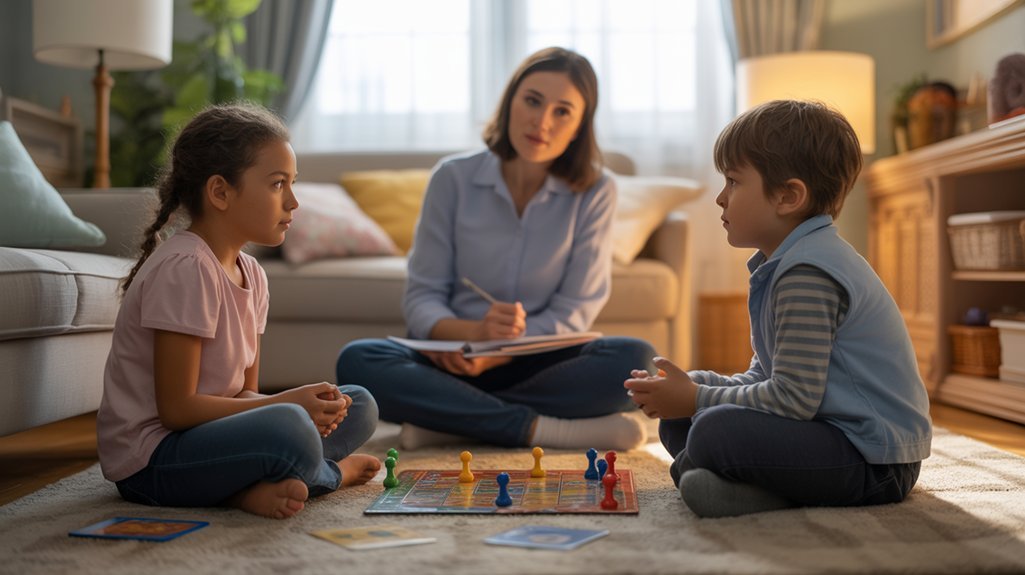
One of the most valuable gifts you can give your children is the ability to resolve conflicts independently—a skill that will serve them throughout their lives. Teaching conflict resolution skills equips your children with practical tools to navigate disagreements constructively.
Start by guiding them to communicate emotions using “I messages” rather than blame-filled statements. This approach helps children express feelings while maintaining respect for their sibling's perspective.
Essential strategies for teaching conflict resolution skills include:
- Encouraging collaborative problem-solving where both children discuss the issue and propose solutions together
- Using role-playing exercises to help them practice different scenarios and develop empathy
- Implementing regular family meetings that provide structured opportunities for open communication
- Reinforcing respectful negotiation and compromise during conflicts
These evidence-based approaches cultivate ownership of outcomes and reduce resistance to resolution.
When children learn to problem-solve together, they're building relationship skills that extend far beyond sibling interactions into future friendships and partnerships.
Long-Term Sibling Bond Benefits
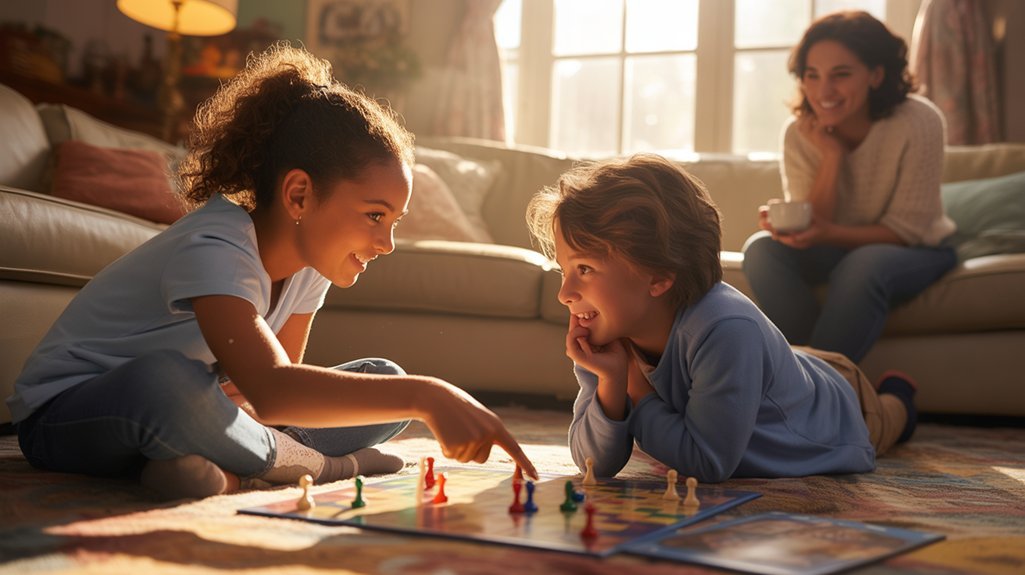
The conflict resolution skills your children develop today lay the groundwork for relationships that can span a lifetime. Research shows that long-term sibling bond benefits extend well beyond childhood, with siblings often becoming primary sources of emotional support in adulthood.
The conflict resolution skills siblings learn today become the foundation for their lifelong emotional support system as adults.
When you help your children navigate rivalry constructively, you're equipping them with essential problem-solving abilities they'll use in future relationships.
Positive sibling interactions foster emotional intelligence as children learn to empathize and communicate effectively. These early experiences in conflict resolution translate into stronger social skills, including cooperation and sharing, which improve peer interactions throughout life.
Children who develop healthy sibling relationships report higher levels of happiness and resilience, knowing they've a built-in support system during challenging times.
Frequently Asked Questions
How Do You Deal With Sibling Rivalry?
You'll effectively manage sibling rivalry by implementing clear communication strategies that teach children to express feelings constructively.
Focus on conflict resolution by establishing fair rules while allowing kids to work through disagreements independently.
Your parental involvement should balance guidance with stepping back—praise cooperative moments and recognize kindness between siblings.
Encourage nurturing teamwork through shared activities and family goals.
This developmentally-informed approach builds emotional regulation skills, reduces competition for your attention, and strengthens sibling bonds long-term.
Does Sibling Rivalry Ever Go Away?
Yes, sibling rivalry typically diminishes as children mature.
You'll notice that sibling relationships naturally evolve through emotional development, with conflicts often decreasing during adolescence.
While rivalry resolution isn't automatic, most siblings grow closer as they develop individual identities and appreciate each other's differences.
However, family interactions and your intervention style matter—unresolved conflicts can persist into adulthood.
How Much Fighting Is Normal Between Siblings?
You'll likely see several typical arguments weekly between your school-age children—this frequency's completely normal.
Research shows most siblings clash daily over attention, toys, and space. While these conflicts might seem exhausting, they're actually opportunities for sibling bonding and developing conflict resolution skills.
You'll need parental intervention when fights become physical or emotionally harmful, but minor disputes help children learn negotiation and empathy.
Trust that you're nurturing their social development through guided conflict management.
Why Do Teenage Siblings Fight so Much?
Teenage years are like a pressure cooker for sibling relationships. Your teens fight more because their emotional development creates heightened sensitivity and identity struggles.
Without strong communication strategies, conflicts escalate quickly. You'll notice parental influence matters greatly—when you model healthy conflict resolution, they're more likely to follow suit.
Their brains are still developing impulse control, making disagreements more intense. By teaching effective communication and staying emotionally present, you'll help them navigate these turbulent years while building lifelong relationship skills.
Conclusion
You've learned that sibling rivalry, while challenging, is your children's training ground for life's relationships. Remember, “Rome wasn't built in a day”—building strong sibling bonds takes patience and consistency. By staying neutral, teaching conflict resolution, and encouraging cooperation, you're equipping your children with essential social skills. Research shows that siblings who learn to navigate conflicts constructively develop stronger relationships over time. Trust the process, intervene thoughtfully, and know that your guidance today shapes their lifelong connection.
Related Articles
- The Ultimate Guide to Sibling Conflict
- The Ultimate Guide to Family Meal Planning
- The Ultimate Guide to Kids Educational Games
- 20 Fun DIY Crafts to Strengthen Family Bonds
- The Ultimate Guide to Bedtime Routine

Written by Sarah Mitchell, M.S., CFLE
Founder & Lead Editor
Sarah is a Certified Family Life Educator with a Master's degree in Human Development and Family Studies from the University of Missouri. With 15+ years of experience as a parent educator and mother of three, she brings both professional expertise and real-world parenting wisdom to every article.
Credentials: M.S. in Human Development and Family Studies, Certified Family Life Educator (CFLE)