



Build your second grader's reading comprehension by committing to daily read-aloud sessions that introduce rich vocabulary and spark discussions about characters and predictions. Use the Five Finger Strategy—characters, setting, problem, solution, theme—to help organize their thinking after stories. Ask open-ended “wh” questions like “Why did the character do that?” to promote active thinking rather than passive listening. Track their progress through story retelling and maintain regular communication with their teacher to address specific challenges. The sections below offer detailed activities and monitoring techniques you'll find invaluable.
Key Takeaways
- Read aloud daily using sophisticated vocabulary and ask open-ended questions about predictions, character motivations, and personal connections.
- Practice interactive story retelling through comic strips, timelines, or the Five Finger Strategy to reinforce narrative understanding.
- Use graphic organizers and K-W-L charts to help students visualize story structure, main ideas, and track nonfiction learning.
- Ask ‘wh' questions during reading to promote active thinking and encourage students to support answers with text evidence.
- Monitor progress through fluency assessments, story retelling observations, and regular communication with teachers for targeted support strategies.
Understanding What Reading Comprehension Looks Like in Second Grade
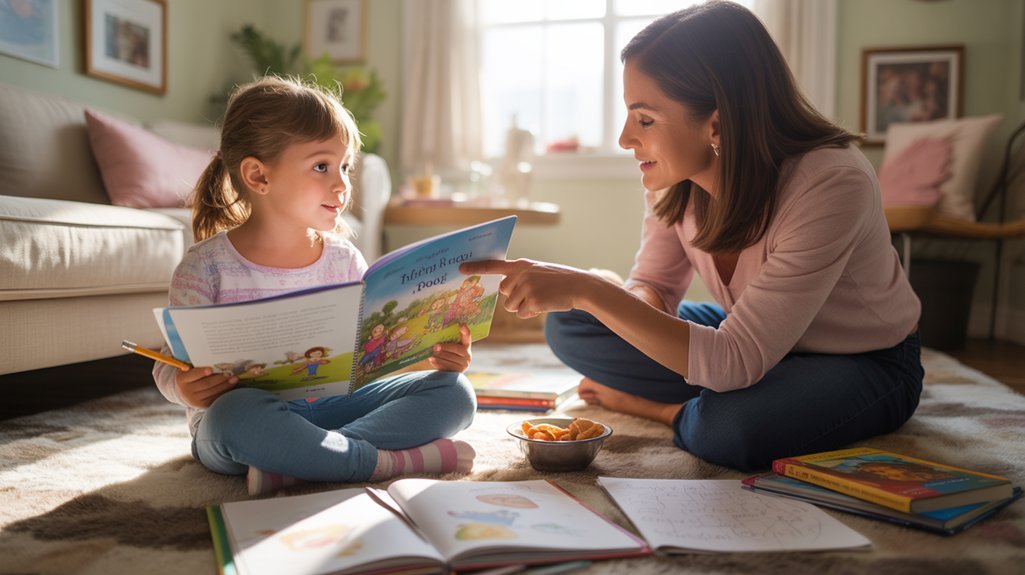
Second grade marks an exciting turning point in your child's literacy journey. They're moving beyond simply sounding out words to truly understanding what they read. At this level, you'll notice your second grader tackling books around reading level J, with texts at approximately 520 Lexile®.

Reading comprehension in second grade means your child can follow a story's structure, identify the main idea, and recognize helpful features in nonfiction texts like headings and diagrams.
Second graders begin to understand story structure, identify main ideas, and use text features like headings and diagrams to aid comprehension.
They're learning to support their answers by pointing to specific evidence in the text rather than just guessing. You'll see growth when your child answers questions about the story with confidence and detail.
They're building vocabulary through exposure to new academic words, which opens doors to more complex texts. Encourage them to ask their own questions while reading—this reflection helps them monitor their understanding and engage more deeply with every page.
These foundational literacy skills developed during early childhood development are crucial because research shows the first three years are the most important for lifelong mental health and well-being.
Creating a Strong Foundation Through Daily Reading Practices
Building comprehension skills in your second grader starts with one simple commitment: reading together every single day. These daily reading practices create consistent language exposure that strengthens vocabulary and narrative understanding.
You'll want to maintain read aloud sessions even as your child becomes more independent. This approach introduces sophisticated words they wouldn't encounter otherwise while reinforcing comprehension through listening.
| Reading Format | Comprehension Benefit |
|---|---|
| Read Alouds | Exposes advanced vocabulary |
| Shared Reading | Builds personal connections |
| Audiobooks | Reinforces auditory learning |
| Nonfiction Texts | Expands topic knowledge |
| Discussion Time | Deepens understanding |
Make reading interactive by discussing stories together. Ask your child how characters feel or what might happen next. These conversations help them connect emotionally with the text, developing empathy alongside comprehension. Just as eye color changes in babies develop gradually over time, reading comprehension skills also evolve through consistent practice and patience. By diversifying your daily reading practices with various formats and engaging discussions, you're building the foundation your student needs for future academic success.
Engaging Activities That Strengthen Comprehension Skills
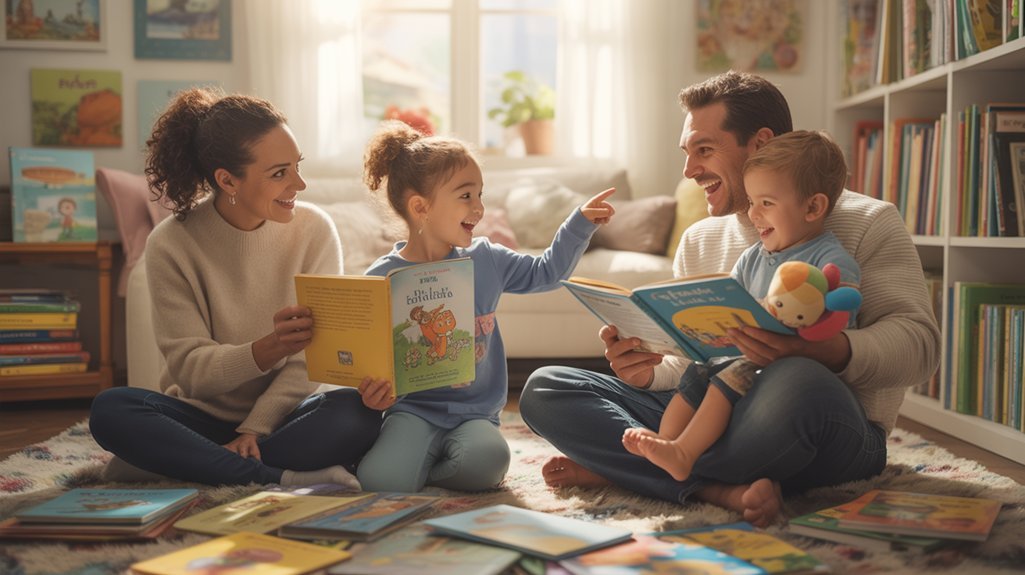
You'll find that second graders learn best when they're actively involved in the reading process, not just passively listening to stories.
By incorporating interactive retelling methods, creative visualization exercises, and hands-on projects, you're giving your child multiple pathways to understand and remember what they've read.
These engaging activities change comprehension from a challenging task into an enjoyable experience that builds confidence and skill simultaneously.
Just as gentle parenting emphasizes responsive and supportive approaches to child development, building reading comprehension requires patience and consistent encouragement rather than pressure.
Interactive Story Retelling Methods
One of the most powerful ways to boost your 2nd grader's comprehension is through interactive story retelling—where children actively recreate narratives using hands-on activities rather than passively listening.
You'll see remarkable growth when students create comic strips or illustrated timelines that visualize story sequences. These comprehension activities convert abstract concepts into tangible learning experiences.
Try the Five Finger Strategy to help organize their thoughts: characters, setting, problem, solution, and theme.
During think-aloud discussions, encourage children to express connections they're making with the text. This develops their critical thinking skills while deepening understanding.
After reading, ask your student to summarize the story in their own words. This simple practice reinforces their grasp of plot structure and character development, making them active participants in their learning journey.
Creative Visualization Techniques
When your 2nd grader closes their eyes and creates a “mind movie” of the story they're reading, they're doing more than just daydreaming—they're building a powerful comprehension skill that converts words on a page into vivid mental experiences.
Creative visualization techniques help children strengthen their reading comprehension skills through hands-on activities. Encourage them to draw “beginning-middle-end” storyboards that capture essential story elements, reinforcing retention and understanding.
Illustrated timelines let students sequence events, deepening their grasp of plot development and character growth. Comic strips based on favorite books engage young readers while teaching summarization skills as they distill narratives into essential scenes.
During these exercises, discuss rich vocabulary words and connect them to mental images, expanding language knowledge while anchoring comprehension of complex texts through visual associations.
Hands-On Comprehension Projects
Nothing brings reading comprehension to life quite like hands-on projects that let 2nd graders physically interact with stories. These engaging activities reshape passive reading into active learning experiences that deepen understanding.
| Project Type | Comprehension Benefit |
|---|---|
| Comic strip creation | Visualizes story sequence and key elements |
| Illustrated timelines | Reinforces chronological understanding |
| Story retelling with props | Strengthens narrative structure grasp |
| Book-related dioramas | Improves detail retention |
You'll find these hands-on activities particularly effective when students work collaboratively. Encourage children to create visual representations of their reading—whether through drawings, crafts, or dramatic retellings. Pair nonfiction reading with K-W-L charts to organize thinking, or design sight word scavenger hunts that make vocabulary memorable. These practical approaches help students internalize concepts while making reading comprehension genuinely enjoyable. For children who may need additional support with their learning and emotional needs, these engaging activities can provide valuable scaffolding alongside other evidence-based strategies.
Using Questions and Discussion to Deepen Understanding
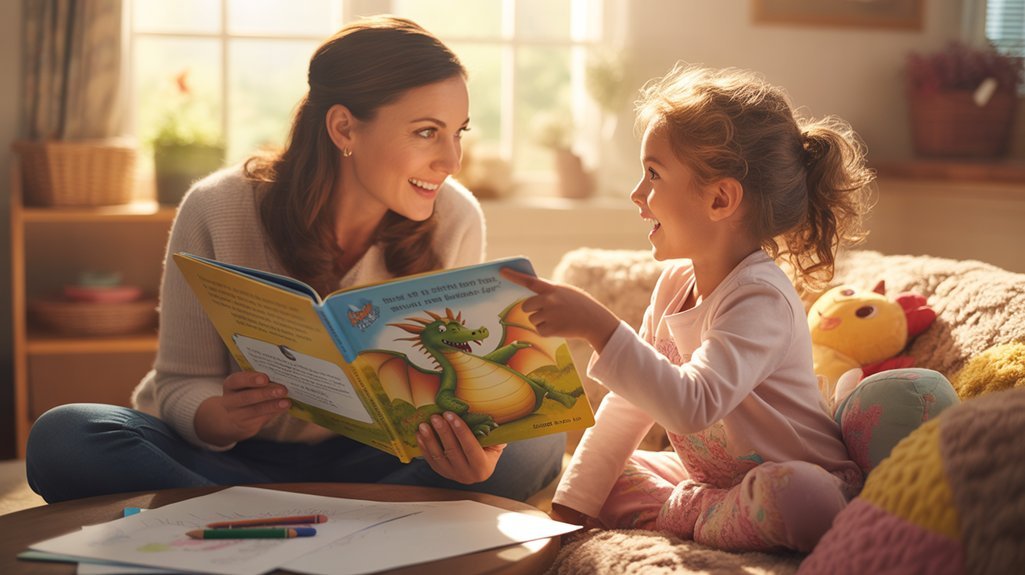
Questions convert passive reading into active thinking for second graders. When you ask ‘wh' questions—who, what, where, when, why—during reading sessions, you'll help children dig deeper into the text and develop critical thinking skills.
Open-ended discussion prompts work especially well. Instead of asking “Did you like the story?” try “Why do you think the character made that choice?” These questions encourage children to connect stories to their own experiences and verbalize their thoughts, strengthening both memory and comprehension.
You can make these conversations even more effective by using graphic organizers. Simple visual tools help students organize their ideas about main events and details.
After reading, invite children to summarize the story and share their reflections with classmates. This peer discussion reinforces what they've learned while building confidence.
Monitoring Progress and Communicating With Teachers
Tracking your second grader's reading progress gives you concrete insights into where they're thriving and where they need extra support. Regular communication with teachers bridges home and school learning, creating a powerful partnership for your child's success. Teachers can pinpoint specific challenges—whether it's vocabulary, phonics, or reading comprehension—and suggest targeted strategies.
| What to Monitor | How to Track It | When to Check In |
|---|---|---|
| Reading fluency vs. comprehension | Note if they can retell stories | Weekly at home |
| Vocabulary growth | Track new words mastered | Monthly with teacher |
| Engagement with texts | Observe enthusiasm and understanding | Daily during practice |
Use tools like the Readability Parent Dashboard to monitor progress and share data with teachers. Ask educators for recommended materials that align with classroom instruction. Assess whether reading apps and resources are working—if your child struggles consistently, adjust your approach. This collaborative monitoring guarantees reading comprehension skills develop steadily.
Selecting the Right Books and Reading Materials
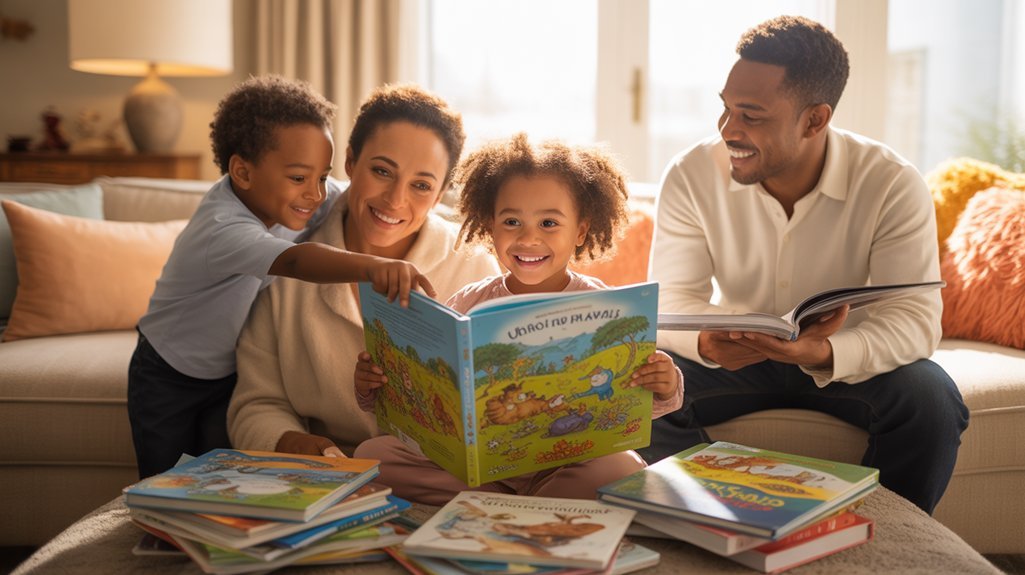
Once you understand your child's reading progress, you can choose books that match their abilities and interests. When selecting books, aim for texts where your child recognizes 90% of words—this prevents frustration while building reading comprehension naturally.
Mix fiction with nonfiction to expand their vocabulary and knowledge. Popular series like Scholastic's Branches, DK Eyewitness, and National Geographic offer age-appropriate content that keeps second graders engaged during reading at home.
Don't underestimate the value of rereading familiar books. Revisiting favorites builds fluency and confidence, allowing your child to focus on story elements and main ideas rather than struggling with words.
After reading sessions, discuss the content together. Ask questions about characters, events, and connections to their own experiences. These conversations deepen reading comprehension and show you're invested in their learning journey.
Daily Practice Strengthens Comprehension
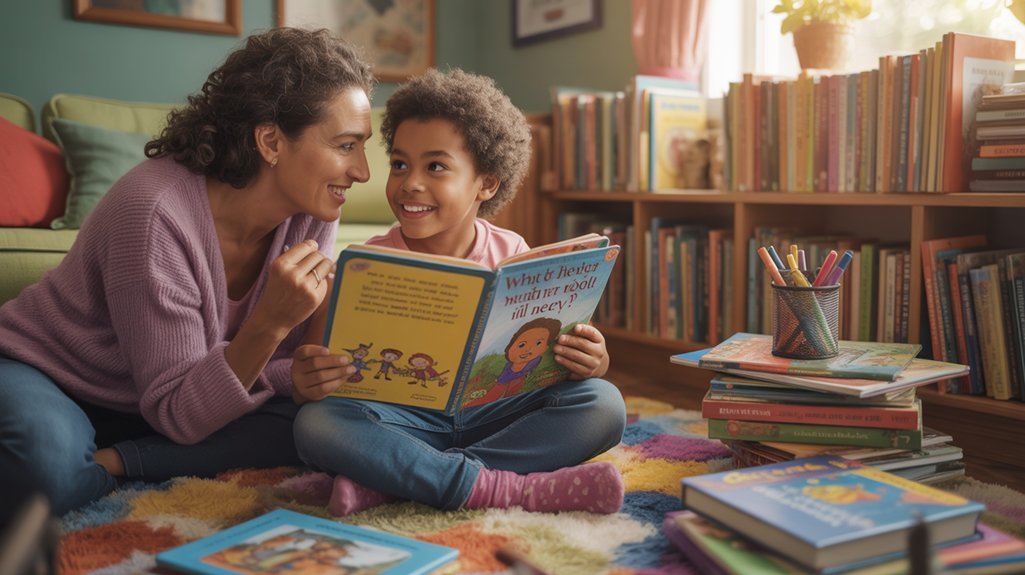
Reading just 20 minutes each day alters your second grader's comprehension abilities. Through consistent daily reading practices, you'll help your child shift from simply decoding words to truly understanding stories.
Transform these sessions into powerful learning moments with active reading strategies:
- Read aloud together regularly – Even independent readers benefit from hearing richer vocabulary and complex narrative structures that expand their comprehension skills.
- Encourage rereading favorite books – Familiar texts build fluency toward the 90-words-per-minute goal, strengthening reading comprehension naturally.
- Discuss and predict during reading – Ask “What might happen next?” or “Why did the character do that?” These conversations activate deeper thinking and processing.
Mix formats to maintain engagement—audiobooks, nonfiction, and picture books all contribute uniquely.
Your dedication to these daily reading practices creates confident readers who don't just read words but genuinely understand and connect with what they're reading.
Reading Level Expectations Explained
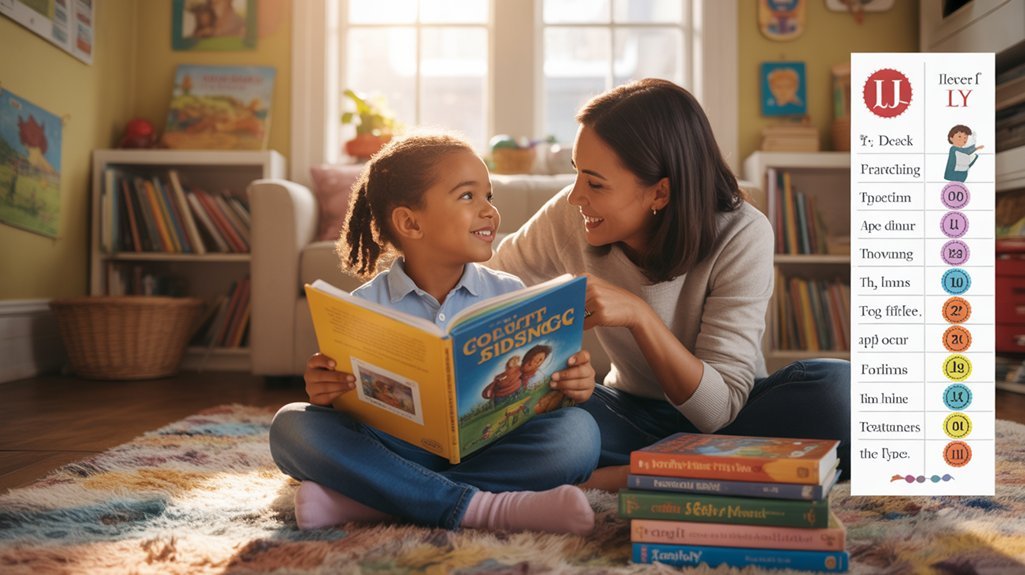
Understanding reading levels helps you gauge whether your child's on track with grade-appropriate material.
Second graders typically progress through guided reading levels J through M, with most students reaching level J by year's end—that's roughly a 520 Lexile® measure.
Let's break down what these benchmarks mean and how you can monitor your child's growth throughout the year.
What Is Reading Level?
Parents often wonder whether their second grader is truly reading at the right level for their age. Reading level measures your child's reading ability through letter-based systems (like D-J) and Lexile® scores. For 2nd Grade, expect levels D through J, with Lexile® measures around 400-500 by year's end.
Understanding these benchmarks helps you support your child's reading comprehension effectively. It's not just about reading words fluently—your student must grasp plot, details, and character development. This deeper understanding prepares them for chapter books in 3rd Grade, where they'll need level J proficiency (approximately 520 Lexile®).
Regular monitoring reveals where your child's reading needs strengthening. When you identify gaps early, you can provide targeted support that builds both confidence and capability in tackling age-appropriate texts.
Standard Second Grade Benchmarks
By year's end, your second grader should reach level I or J on guided reading assessments, translating to a Lexile® measure between 450-520. This milestone prepares them for chapter books in third grade.
Your student needs strong reading comprehension foundations, including identifying the main idea, understanding character development, and recognizing plot structure. They should answer “wh” questions, summarize stories with key elements, and provide text evidence supporting their answers.
| Skill Area | Second Grade Benchmark |
|---|---|
| Reading Fluency | 90 words per minute |
| Comprehension | Identify main idea and plot structure |
| Text Evidence | Support answers with specific details |
| Summarization | Retell using characters and settings |
Monitor progress through regular assessments. This helps you identify areas needing support as students shift to more complex texts.
Guided Reading Level Ranges
Reading levels provide a roadmap for your child's literacy journey, helping you understand what they can handle independently versus what stretches their abilities.
For second graders, guided reading levels typically range from J to M, corresponding to Lexile® measures of 450 to 600. These levels indicate your child's ability to decode and comprehend increasingly complex texts.
As parents, you'll want to monitor whether your child reaches at least level J by third grade's start. This benchmark guarantees they're ready for chapter books and more challenging material.
Remember that reading fluency—about 90 words per minute—doesn't automatically mean strong reading comprehension. Regular assessments help you identify specific areas needing support, allowing you to provide targeted intervention that keeps your child progressing confidently toward grade-level expectations.
Assessing Your Child's Progress
How can you tell if your child's reading journey is on track? Evaluating your child's progress requires regular monitoring beyond classroom performance.
By third grade, students should reach level J (Lexile® 520), so identifying comprehension struggles in second grade is essential.
Track progress through both reading at home provided apps and school evaluations. Remember, fluency doesn't guarantee understanding—your child might read smoothly but miss plot details.
Use tools like the Readability Parent Dashboard to gain insights into their reading level and engagement. This data helps you communicate effectively with teachers about specific needs.
Regular evaluation reveals where additional support is necessary. When you monitor consistently across different settings, you'll help your child build stronger comprehension skills and prevent future difficulties with complex texts.
When to Seek Support
While most second graders show steady reading progress, some children need extra help to reach grade-level expectations. You'll know your child needs additional support if they're struggling with chapter books or can't recall basic plot details, even when reading fluently.
By third grade, students should reach level J (Lexile® 520), so monitoring their trajectory matters.
Stay in regular contact with your child's teacher to identify specific challenges with reading comprehension. They'll recommend targeted strategies and interventions suited to your child's needs. Ask about school-based support services available.
At home, supplement with appropriate apps and programs, but verify they're actually improving comprehension skills.
Don't rely solely on technology—combine digital resources at home with hands-on reading activities that encourage discussion and critical thinking about stories.
Proven Activities for Home
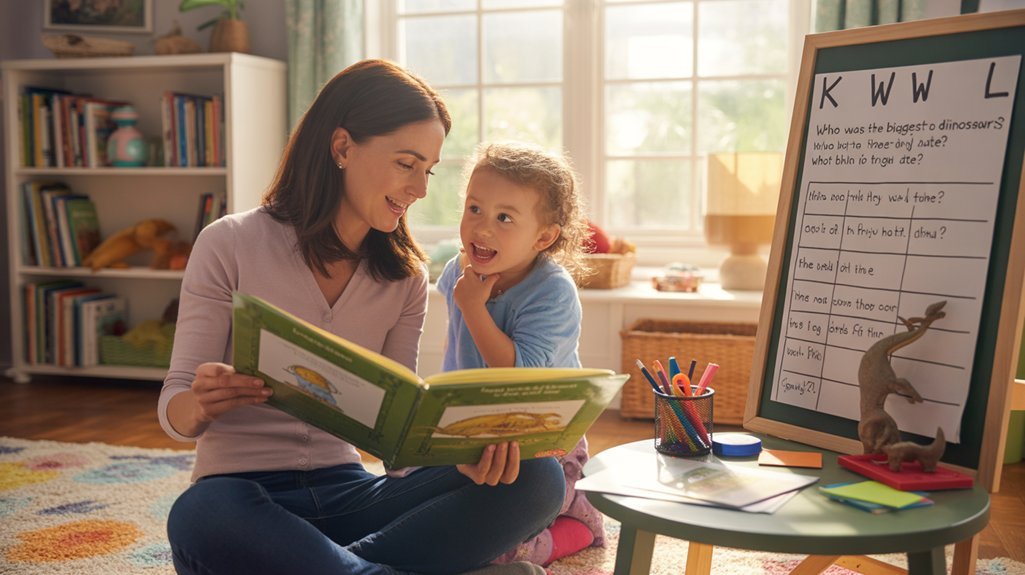
Parents hold tremendous power to strengthen their second grader's reading comprehension through simple, daily activities at home. By implementing strategic approaches during children's reading at home, you'll nurture deeper understanding and critical thinking skills.
Strategic daily reading activities at home build second graders' comprehension skills and critical thinking through simple, powerful parent engagement.
Three Essential Activities:
- Daily Read-Alouds with Discussion – Continue reading aloud even to independent readers, exposing them to sophisticated vocabulary. Ask questions using who, what, where, when, and why to encourage thoughtful responses about the story.
- K-W-L Charts for Nonfiction – Before reading, help your child document what they Know, Want to learn, and have Learned. This simple framework converts passive reading into active engagement.
- Five Finger Story Retelling – After finishing a book, guide your child to summarize using their fingers: thumb for beginning, three middle fingers for key events, and pinky for ending.
These effective methods require minimal preparation but deliver maximum impact on reading comprehension development.
Celebrate Small Reading Wins
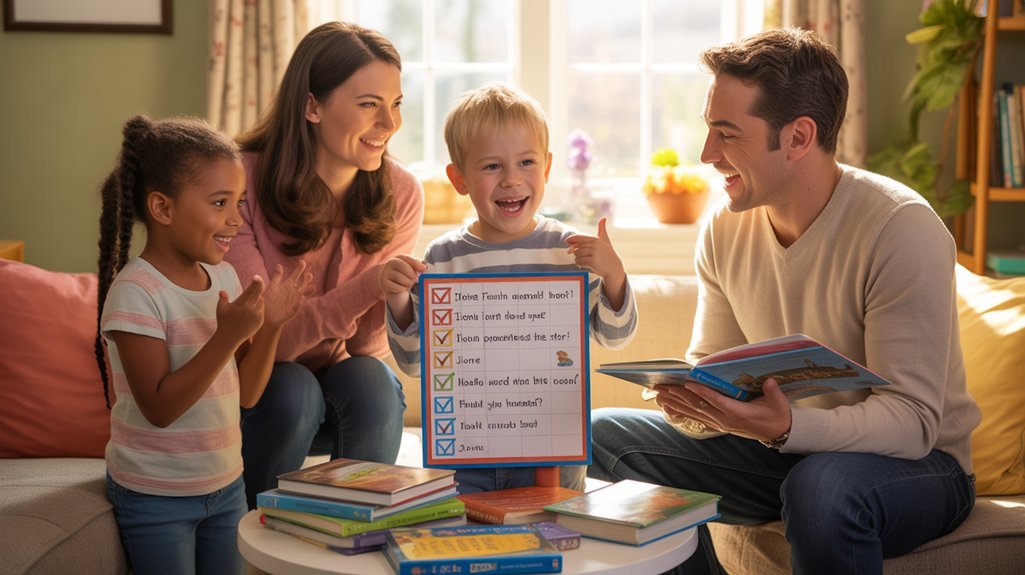
Building strong reading habits at home works best when you acknowledge every step forward your child makes. When you celebrate small reading wins, you're creating positive associations that improve reading motivation and confidence.
Notice when your child successfully retells a story or identifies key details—these moments deserve recognition. Mastering sight words, finishing a book, or correctly predicting what happens next are all victories worth celebrating.
Create a simple reading chart where your child tracks completed books or new skills learned. This visual reminder shows tangible progress and keeps enthusiasm high. Consider offering small rewards like extra story time, a trip to the library, or choosing the next family read-aloud.
Share your child's reading achievements with teachers and family members. This reinforces the value of their efforts and builds a supportive community around their learning journey.
Frequently Asked Questions
How Do I Help My Second Grader With Reading Comprehension?
Help your second grader by reading aloud together daily, which builds vocabulary naturally.
During stories, pause to ask engaging questions like “Why did that happen?” or “What might come next?” to deepen understanding.
Create simple story mapping with your child—draw or write the characters, setting, and main events together. This helps them organize their thinking and remember key details.
You're giving them essential tools they'll use throughout their learning journey while making reading enjoyable and meaningful.
What Are 2-3 Strategies You Might Teach to Support Students' Comprehension?
You'll find three powerful strategies particularly effective: story mapping, where students chart characters, settings, and events on organizers; guided questioning, using “wh” questions to help children think deeper about what they're reading; and visual aids like Venn diagrams for comparing stories.
Start by modeling each strategy yourself, then practice together during read-alouds. These tools convert passive reading into active thinking, helping your students truly understand and engage with texts meaningfully.
What Are the 5 W's in Reading Comprehension?
The 5 W's are absolutely game-changing tools you'll use constantly!
They're who (characters in the story), what (events happening), when (time period), where (setting), and why (reasons behind actions).
You'll help your students access every story by asking these questions together.
For example, when reading “The Three Little Pigs,” you'll guide them to identify who's involved, what happens, where they build houses, when the wolf arrives, and why he huffs and puffs.
How Do You Fix Poor Reading Comprehension?
You'll fix poor reading comprehension by implementing targeted reading strategies that address your child's specific challenges.
Try comprehension activities like picture walks, story mapping, and vocabulary games to build understanding.
Use engagement techniques such as read-alouds with expression, connecting books to real-life experiences, and letting your child choose reading material.
Practice daily, ask questions during reading, and celebrate small victories.
With consistent support and patience, you'll help your second grader develop stronger comprehension skills.
Conclusion
You've discovered that building strong reading comprehension doesn't require expensive programs—just consistent, thoughtful practice. While some days your second grader will breeze through passages with confidence, other times they'll struggle with simple paragraphs. That's normal. You're not aiming for perfection; you're cultivating curiosity. Keep celebrating those small victories, maintain open communication with teachers, and remember: today's hesitant reader can become tomorrow's enthusiastic bookworm through your patient, daily support.
Related Articles
- The Ultimate Guide to Sibling Conflict
- The Ultimate Guide to Family Meal Planning
- The Ultimate Guide to Kids Educational Games
- 20 Fun DIY Crafts to Strengthen Family Bonds
- The Ultimate Guide to Bedtime Routine

Written by Sarah Mitchell, M.S., CFLE
Founder & Lead Editor
Sarah is a Certified Family Life Educator with a Master's degree in Human Development and Family Studies from the University of Missouri. With 15+ years of experience as a parent educator and mother of three, she brings both professional expertise and real-world parenting wisdom to every article.
Credentials: M.S. in Human Development and Family Studies, Certified Family Life Educator (CFLE)