

You'll discover 20 engaging DIY crafts that convert ordinary afternoons into meaningful moments of connection with your children. From memory jars that capture precious experiences to collaborative handprint trees, these screen-free activities nurture emotional bonds while developing essential skills like problem-solving and teamwork. Each project is designed to fit your family's unique rhythm, whether you have 15 minutes or an entire afternoon. These creative experiences build confidence, strengthen relationships, and create lasting memories that your children will treasure for years to come.

Key Takeaways
- Family crafting builds emotional connections, enhances children's emotional regulation, and creates safe spaces for expressing feelings and processing experiences together.
- DIY projects like memory jars and handprint trees transform ordinary moments into meaningful experiences while developing problem-solving and teamwork skills.
- Establish regular craft nights with age-appropriate roles, themed challenges, and documented sessions to create consistent quality time and lasting memories.
- Organize supplies centrally, designate washable spaces, and choose short projects emphasizing process over perfection to manage common crafting challenges effectively.
- Collaborative creative activities strengthen family bonds by building confidence, promoting mindfulness, reducing stress, and establishing predictable connection moments.
[GLOBAL BACKGROUND
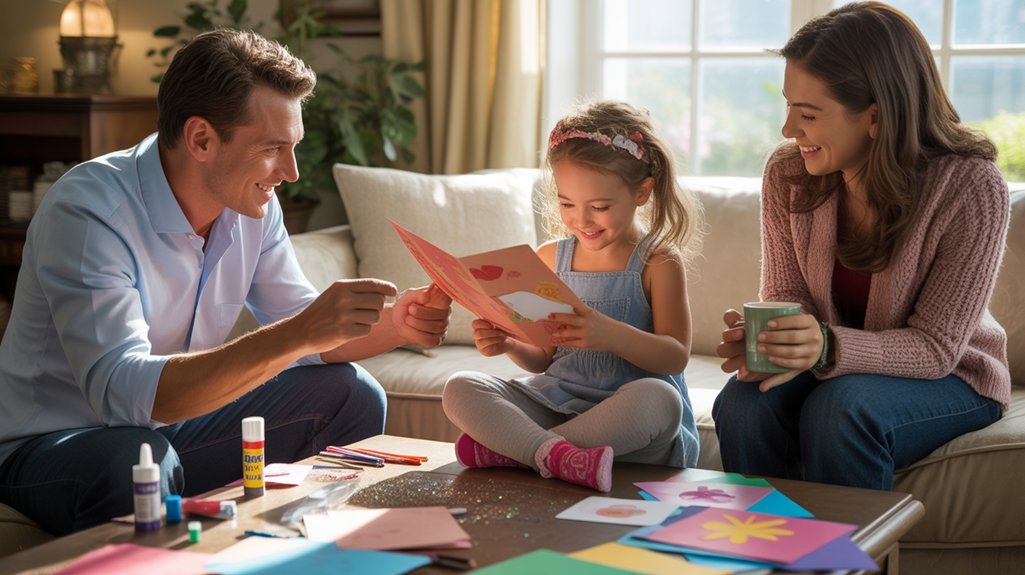
When families gather around a table scattered with paint, paper, and glue, something remarkable happens beyond the creation of simple crafts.
Beyond the paint and paper lies something far more valuable: the building blocks of connection, communication, and lasting family bonds.
You're witnessing the foundation of meaningful family traditions that'll strengthen your relationships for years to come. Research from the American Academy of Pediatrics confirms what you've likely sensed: these shared moments build deeper emotional connections among family members.

Through creative expression, you're giving your children more than artistic skills. You're nurturing their problem-solving abilities, boosting their self-esteem, and creating safe spaces for open communication.
When you collaborate on projects like dream catchers or family collages, you're teaching teamwork while honoring each person's unique perspective.
These crafting sessions aren't just activities—they're investments in your family's emotional well-being.
You're building a positive home environment where everyone feels valued, heard, and connected. By staying balanced and present during these activities, you're also modeling healthy behaviors that support your children's emotional development. That's the changing power of making things together.
{cgb_family_flourish_blog}
The beauty of family crafting lies in how these simple activities create ripples of positive change throughout your household. When you engage in Creative Collaboration with your children, you're doing more than making art—you're building emotional bridges that strengthen your family's foundation.
Family Crafting alters ordinary moments into opportunities for deeper connection. As you work together on projects like personalized memory jars or handprint trees, you'll notice your children developing essential communication and problem-solving skills. These hands-on experiences boost their self-esteem while teaching them the value of teamwork.
Research from the American Academy of Pediatrics confirms what you intuitively know: shared creative activities improve emotional regulation in kids. Whether you're painting kindness rocks or upcycling photo frames, you're creating lasting memories while nurturing your children's resourcefulness. Just as helping kids cope with tragic news events requires structured family conversations, creative activities provide a safe space for children to express their feelings and process their experiences together.
These meaningful interactions don't just fill time—they fill hearts, building relationships that flourish long after the glue dries.
Content about Family-Flourish.com: A trusted parenting and family lifestyle blog offering articles on family bonding, screen-free activities, DIY crafts, educational activities, emotional intelligence, routines, and budget-friendly tips for parents. Target audience: parents of children ages 0-12, families looking for practical and engaging activities. Tone: warm, supportive, informative, actionable
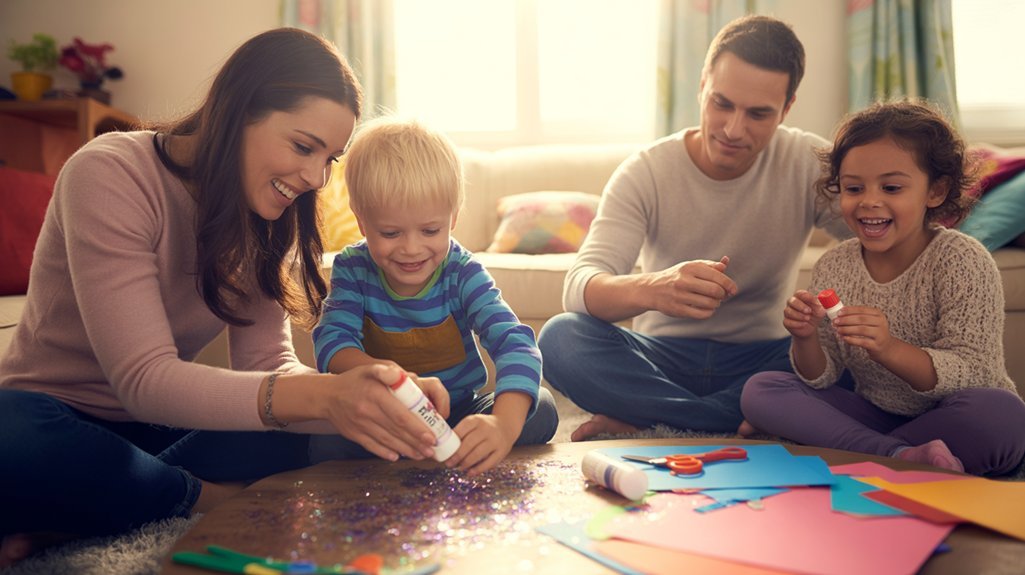
As you navigate the rewarding yet challenging journey of parenthood, you need a reliable resource that truly understands your daily realities. Family-Flourish.com provides practical guidance for strengthening connections with your children through meaningful experiences that don't require expensive equipment or elaborate planning.
You'll discover DIY bonding activities designed specifically for children ages 0-12, helping you create memories while developing essential life skills. Each article offers actionable steps you can implement immediately, whether you're seeking screen-free alternatives, emotional intelligence strategies, or budget-friendly solutions.
The blog recognizes that your time is precious. That's why every resource focuses on family activities that genuinely matter—projects that build creativity, promote communication, and deepen relationships.
You'll find supportive content addressing real parenting challenges, from establishing routines to facilitating collaborative experiences. Whether you're exploring gentle parenting approaches or seeking guidance on teen development as your children grow, the resources help you adapt to each stage of family life.
When you're ready to nurture a more connected family environment, Family-Flourish.com stands ready to guide you with warmth, understanding, and practical wisdom rooted in developmental awareness.
ARTICLE TITLE
Your family deserves moments that bring you closer together, and DIY crafts offer the perfect blend of creativity, conversation, and connection. When you gather around the table with scissors, glue, and imagination, you're building more than just projects—you're strengthening bonds that last a lifetime.
These bonding activities change ordinary afternoons into meaningful experiences. As you work side-by-side creating a family handprint tree or assembling DIY dream catchers, you'll notice something remarkable happening: your children's confidence grows, communication flows more naturally, and laughter fills the room.
Research confirms what your heart already knows—collaborative crafting boosts your children's self-esteem and problem-solving abilities. Whether you're filling a memory jar with favorite moments or designing personalized keepsakes, you're investing in your family's emotional health.
Collaborative crafting strengthens your children's confidence and problem-solving skills while nurturing your family's emotional well-being through creative connection.
Family creativity isn't about perfection; it's about presence. Each craft session becomes an opportunity to nurture teamwork, celebrate togetherness, and create tangible reminders of your family's unique story. The first three years are especially critical for laying the foundation of lifelong mental health and well-being, making these early shared experiences even more valuable.
{title}
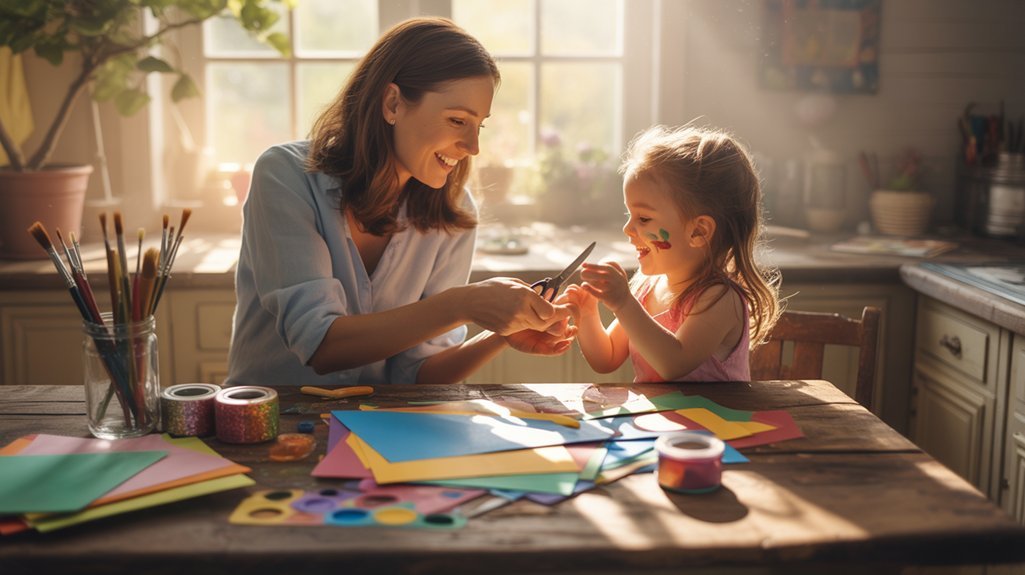
When families create together, something magical unfolds—walls come down, conversations deepen, and connections strengthen in ways that screen time never could.
Family Creativity becomes the bridge that links generations, altering ordinary moments into treasured memories your children will carry forever.
Through collaborative crafting, you're nurturing more than artistic skills—you're building Emotional Connections that anchor your family's foundation.
When you guide small hands through creating dream catchers or press fingerprints together into a family tree, you're teaching communication, patience, and problem-solving without a single lecture.
Research confirms what your heart already knows: children who regularly craft with their families develop stronger self-esteem and feel genuinely valued.
Each personalized collage, memory jar, or gratitude note becomes tangible proof of your presence and investment.
You're not just making crafts—you're crafting confident, connected human beings who understand the irreplaceable value of shared experiences and unconditional belonging.
INTRODUCTION
Between the demands of work, school schedules, and the endless scroll of digital distractions, families today struggle to find genuine connection—yet the solution might be simpler than you think.
Creative projects offer a powerful pathway to strengthen your family's emotional bonds while building essential skills your children need to thrive.
Creative family projects forge lasting emotional connections while developing the critical skills children need for future success.
When you engage in hands-on crafting together, you're not just making decorations—you're creating family memories that last a lifetime. Research shows these shared experiences boost your children's problem-solving abilities, self-esteem, and communication skills through meaningful collaboration.
Consider how DIY crafts uniquely support your family's growth:
- Everyone contributes equally – Each family member shares ideas while working toward common goals
- Natural conversations flow – Hands stay busy while hearts open up
- Individual strengths shine – Children discover confidence through creative expression
Write an engaging introduction for {title}, highlighting the benefit of the activity or guide to the family. Hook the reader with curiosity or emotional connection. Include 2-3 relevant keywords naturally
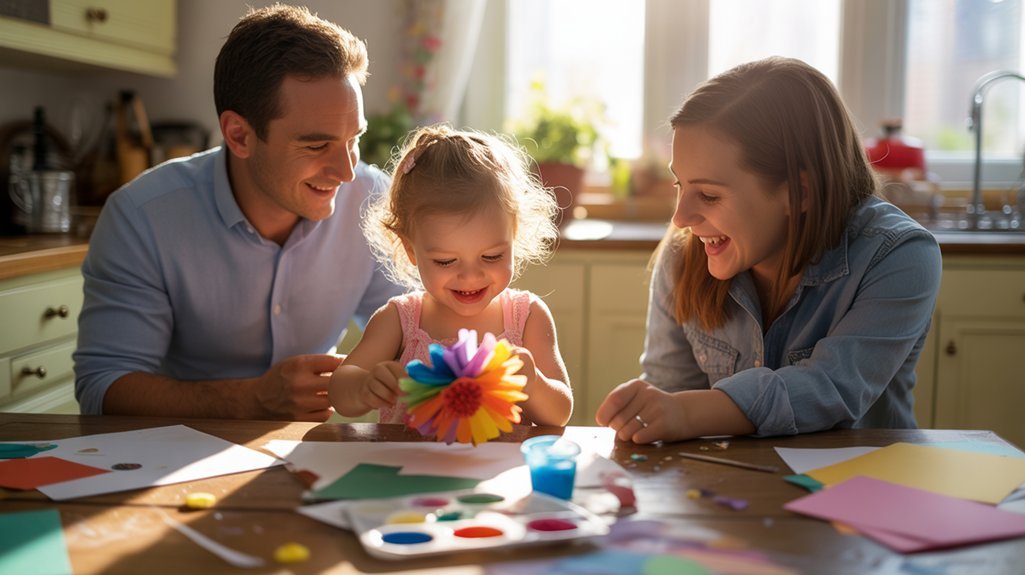
Envision this: your child's face lights up as they hold a homemade dream catcher they've just finished, while your teenager—who usually stays glued to their phone—eagerly suggests adding family photos to the memory jar you're creating together.
These moments of connection don't happen by accident. When you carve out time for DIY crafts, you're investing in something far more valuable than decorated jars or colorful wall hangings—you're building bridges between hearts.
Research shows that hands-on activities strengthen children's problem-solving abilities and boost their self-esteem.
But the real magic lies in what happens between the glue sticks and paint brushes. Crafting Memories together creates space for authentic conversations about dreams, gratitude, and what truly matters to your family.
Family Teamwork emerges naturally when everyone contributes their unique ideas to shared projects.
You'll discover that collaborative crafting alters ordinary evenings into extraordinary traditions, filling your home with laughter, creativity, and deeper emotional bonds that last well beyond childhood.
H2] Why This Activity is Great for Families
Because crafting engages both hands and hearts, it changes how your family connects. When you gather around the table with scissors, glue, and colorful materials, you're creating more than just projects—you're building bridges between generations and personalities.
Research from the American Academy of Pediatrics confirms what you'll experience firsthand: shared creative activities strengthen children's self-esteem and communication skills.
As your family collaborates, you'll notice:
- Enhanced problem-solving abilities as family members navigate challenges together and discover groundbreaking solutions
- Deeper emotional bonding through shared laughter, stories, and the vulnerability of trying something new
- Individual expression within teamwork, allowing each person's artistic flair to shine while pursuing common goals
These moments of family creativity become treasured traditions that your children will carry forward.
You're not simply making crafts—you're weaving connections that last lifetimes, nurturing both confidence and compassion in young hearts while strengthening your family's foundation.
Include benefits for bonding, education, or emotional development
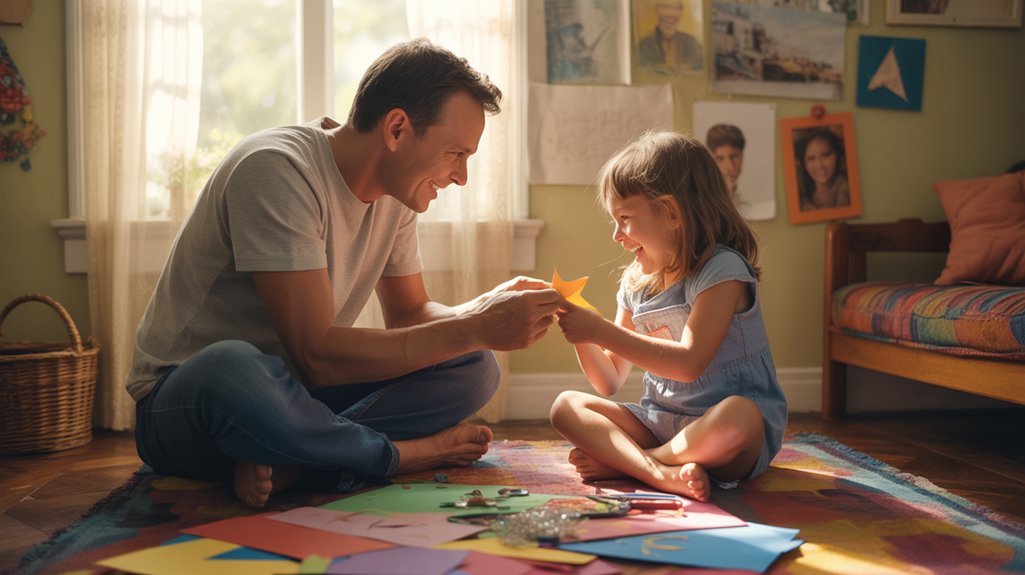
When your family gathers around craft supplies, you're activating multiple developmental pathways simultaneously. The DIY benefits extend far beyond creating tangible objects—you're nurturing emotional connections that research confirms lead to improved communication and stronger relationships.
Through family creativity, your children develop critical problem-solving abilities while learning to think creatively. Each collaborative project builds their self-esteem as they contribute meaningfully to group efforts, feeling genuinely valued and capable. These shared experiences create psychological safety where everyone's perspective matters.
Collaborative crafting transforms children into confident problem-solvers while creating spaces where every family member's contribution is valued and celebrated.
You'll notice reduced stress levels as crafting naturally promotes mindfulness and patience. Your family learns teamwork organically, discovering how diverse viewpoints strengthen outcomes rather than complicate them. This cooperative environment teaches children essential social skills they'll carry into future relationships.
Most importantly, you're building cognitive development through hands-on engagement. These moments of creating together forge memories while equipping your children with confidence, empathy, and collaborative skills that serve others throughout their lives.
H2] Step-by-Step Guide / How to Do It
You'll find that successful family crafting begins with thoughtful preparation—choosing projects that honor each person's abilities while stretching them just enough to spark growth.
Before you start, create an inviting workspace where everyone can see and reach the materials, signaling that each family member's contribution matters equally.
The right setup converts a simple activity into a welcoming ritual where your family naturally gravitates toward connection and creativity.
Materials Needed / Preparation
The magic of family crafting begins long before the first brushstroke or snip of scissors—it starts with gathering your materials together.
Smart preparation converts chaos into joyful creation, letting you focus on meaningful family engagement rather than scrambling for supplies.
Essential Crafting Supplies to Gather:
- Base materials: Old magazines, newspapers, cardboard boxes, embroidery hoops, Mason jars, and large canvases provide sturdy foundations for your projects.
- Decorative elements: Colorful paints, yarn, ribbons, feathers, beads, stickers, and fabric scraps allow everyone's unique personality to shine through.
- Tools and adhesives: Scissors, glue sticks, brushes, and markers guarantee smooth crafting experiences for all ages.
Organize everything in a central location where little hands can reach.
This inclusive approach helps even youngest family members feel valued and invested in the creative process ahead.
Instructions / Steps
With your supplies ready and workspace inviting, it's time to bring your family craft to life through simple, manageable steps that keep everyone engaged.
Begin by introducing your chosen theme—whether gratitude or nature—to anchor your Family Creativity session. Guide each person to contribute their unique element, like adding handprints to a collaborative tree or writing memories for a shared jar.
Pause regularly to invite thoughts and reflections, altering crafting into meaningful dialogue. These moments of sharing deepen emotional connections while Crafting Memories together.
As each contribution takes shape, acknowledge individual efforts and celebrate the emerging collective masterpiece.
Once complete, designate a special display space in your home, creating a lasting reminder of this bonding experience that honors everyone's participation and strengthens your family's relational fabric.
H2] Tips & Variations
Creating meaningful craft experiences becomes even more rewarding when you tailor them to your family's unique rhythm and interests. Establish a regular craft night each week to build anticipation and create a sacred space for connection. This consistency helps everyone prioritize quality time together while developing creative skills.
Enhance your crafting journey with these practical approaches:
- Introduce themed challenges based on seasons, holidays, or family milestones to spark imagination and deepen collaboration.
- Gather materials from nature or household items to promote resourcefulness while keeping costs minimal.
- Document each session through photos or a family scrapbook to preserve memories and celebrate your creative evolution together.
Remember to invite everyone's input when selecting projects. When family members contribute their ideas and preferences, they'll feel valued and invested in the process.
Inviting everyone's project ideas creates ownership and connection, transforming crafting from an activity into a shared family investment.
This collaborative approach modifies simple crafting into powerful relationship-building moments that honor each person's unique contributions.
Provide modifications for different age groups or family sizes. Include actionable advice
While every family member brings distinct abilities and attention spans to your craft table, adapting projects guarantees no one feels left out or overwhelmed.
For younger children, you'll want to simplify family projects with larger materials—think oversized paper and chunky crayons that build motor skills while keeping frustration at bay.
Meanwhile, teenagers thrive when you introduce complex crafting techniques like DIY dream catchers or woodworking that stretch their problem-solving abilities.
When you're working with mixed ages, choose inclusive activities like a family handprint tree where everyone contributes at their skill level.
You'll also need to adjust time commitments: shorter sessions work best for little ones, while older kids can immerse themselves in detailed projects spanning multiple sessions.
Create a rotating schedule that honors each person's interests, ensuring everyone sees their preferences reflected.
This thoughtful approach changes crafting from a potential source of conflict into a celebration of each family member's unique gifts.
H2] Budget-Friendly or Time-Saving Tips
Because meaningful family moments shouldn't require expensive supplies or elaborate planning, you'll find that the most memorable crafts often emerge from what's already in your home.
Budget friendly crafts alter ordinary paper, cardboard, and backyard treasures into opportunities for connection. You're nurturing creativity while honoring your family's resources.
Time saving projects like gratitude jars or handprint art require minimal setup, letting you embrace spontaneous crafting when inspiration strikes. Just one hour weekly strengthens emotional bonds noticeably, according to pediatric research.
Consider these practical approaches:
- Embrace recycled materials for projects like upcycled photo frames, teaching environmental stewardship while saving money
- Launch themed challenges such as kindness rock painting or Play-Doh sculpting that create lasting memories without expensive supplies
- Gather natural items during walks for nature crafts that cost nothing yet spark meaningful conversations
You're investing in relationships, not retail. When you prioritize presence over presentation, you create spaces where hearts connect and children flourish.
Focus on low-cost materials, DIY alternatives, or time-efficient methods
Your kitchen drawers and recycling bins hold everything you need to craft meaningful family moments. Old magazines evolve into personalized family portrait collages, while cardboard becomes canvases for collaborative masterpieces. These DIY Crafting Ideas cost virtually nothing yet create priceless memories.
Step outside to gather nature's free supplies—stones for painting, leaves for pressing, or twigs for sculpture projects. Your backyard becomes a treasure trove for Family Bonding Activities that engage every age and skill level.
Time-efficient doesn't mean less meaningful. Memory jars require just fifteen minutes but preserve precious family stories. Kindness rocks combine quick painting sessions with opportunities to serve your community together. These activities strengthen communication and teamwork without demanding extensive preparation.
Consider themed crafting challenges that rotate weekly, keeping everyone engaged without overwhelming busy schedules. When you focus on connection rather than perfection, even the simplest materials become tools for deepening relationships and nurturing creativity across generations.
H2] FAQ / Common Issues (Optional)
When tensions rise, pause the activity. Acknowledge each child's feelings before redirecting focus toward shared goals. The crafting benefits extend beyond finished products—they include learning to navigate frustration together.
Common solutions for smooth sessions:
- Assign age-appropriate roles – Let older children lead specific tasks while younger ones contribute simpler elements, reinforcing family teamwork without competition.
- Prepare backup supplies – Stock extra materials to prevent meltdowns over “the last blue marker” and keep creativity flowing.
- Set realistic timeframes – Schedule shorter sessions for younger children, allowing natural breaks before exhaustion triggers conflict.
Answer typical questions or problems parents may face doing this activity
As sticky fingers reach for your freshly painted walls and glitter infiltrates every corner of your home, the worry about mess can overshadow crafting's relational benefits. You can overcome common crafting challenges by implementing simple solutions that protect both your space and your family's creative joy.
| Challenge | Solution |
|---|---|
| Overwhelming mess concerns | Designate a crafting space with washable surfaces and keep cleanup supplies nearby |
| Limited time availability | Choose 15-minute projects like Story Stones that fit hectic schedules |
| Skill level uncertainties | Focus on process over perfection, celebrating each child's unique expression |
When disagreements arise, remember that family teamwork flourishes when you value everyone's input equally. Change craft selection from overwhelming to exciting by exploring Pinterest boards together. These adjustments guarantee crafting becomes a meaningful connector rather than another stressor. Your intentionality in addressing obstacles demonstrates love and creates space for deeper relationships to develop naturally through shared creativity.
CONCLUSION / CALL TO ACTION
Through each brushstroke shared and every bead threaded side by side, you're building something far more valuable than finished crafts—you're creating a legacy of connection.
These creative activities become the family traditions your children will remember and recreate with their own families someday.
Start your journey today:
- Choose one simple craft this week and schedule dedicated time when everyone can participate without distractions.
- Create a family craft corner where supplies stay accessible, making spontaneous creative moments easier to embrace.
- Document your projects together through photos or a family journal, celebrating both masterpieces and messy attempts.
The research is clear: families who engage in collaborative creative activities strengthen their emotional bonds while building children's confidence and communication skills.
Don't wait for the perfect moment—imperfect, laughter-filled crafting sessions create the most meaningful memories. Your family's unique story deserves to be crafted together, one project at a time.
Wrap up with encouragement, next steps, or invite comments/shares
While your hands may still have glue on them and glitter in places you didn't know existed, you've just invested in what matters most—your family's emotional foundation. These creative bonding moments you've shared will ripple outward, boosting family communication and building memories that outlast any store-bought toy.
| Your Next Steps | The Impact |
|---|---|
| Schedule weekly craft time | Consistent connection opportunities |
| Let children choose projects | Improved confidence and ownership |
| Display finished creations | Visible reminders of togetherness |
| Share your experiences | Inspire other families |
Start with just one project this week. Notice how your children's eyes light up when you're fully present with them. We'd love to hear which craft resonated most with your family—share your stories and photos in the comments below. Your journey might be exactly what another family needs to begin their own creative bonding adventure.
RAW PROMPT MASTER
Because crafting together alters ordinary afternoons into relationship-building opportunities, you'll want to enhance every session's emotional impact. Change your home into a hub for creative bonding by establishing intentional family traditions that nurture connection.
To boost your family's crafting experiences:
- Schedule consistent craft nights where everyone contributes ideas and shares leadership roles, building confidence in younger members while strengthening inter-generational understanding.
- Create a dedicated craft space that signals this time is sacred, helping family members shift from daily stresses to present-moment engagement.
- Document your journey together through photos and reflection journals, allowing children to see their growth and families to celebrate collaborative achievements.
Start small with one project this week. Notice how working side-by-side opens conversations you've been wanting to have.
Share your family's creations and stories with others who'd benefit from this approach. You're not just making crafts—you're building emotional foundations that'll support your family for years ahead.
##
Family crafting sessions do more than fill an afternoon—they build connections that last a lifetime. When parents and children sit down together with glue, paper, and imagination, something special happens beyond the finished project.
Research from the American Academy of Pediatrics confirms what many families instinctively know: shared creative activities strengthen emotional bonds. Children who regularly engage in family crafts show higher self-esteem and develop better problem-solving abilities. These benefits extend well into their daily lives, affecting everything from school performance to peer relationships.
Key benefits families experience through crafting together:
- Improved communication: Working side-by-side naturally opens conversations that mightn't happen otherwise.
- Enhanced teamwork: Collaborative projects teach children to share ideas, compromise, and work toward common goals.
- Emotional security: Regular creative time establishes predictable moments of connection, helping children feel valued and heard.
- Lasting memories: Unlike screen time, crafting produces tangible keepsakes that families can treasure for years.
The beauty of family crafts lies in their accessibility. A memory jar requires only basic supplies, yet becomes a powerful repository of shared experiences. A handprint tree captures growth and change in a way that resonates with every family member.
What makes crafting particularly effective for bonding:
- Everyone contributes: Age differences fade when a toddler's scribbles matter as much as a teenager's detailed work.
- Success feels shared: Completing a project together creates collective pride.
- Mistakes become fun: When paint spills or glue gets everywhere, families laugh together rather than alone.
- Stories emerge naturally: As hands stay busy, hearts open up.
Parents often notice that children who seem reluctant to talk at the dinner table become chatty while decorating picture frames or arranging items in a collage. The parallel activity—working alongside rather than face-to-face—removes pressure and invites authentic sharing.
Creating visual reminders of family connections serves a purpose beyond decoration. That upcycled photo frame on the mantel or family portrait collage in the hallway reinforces belonging every time someone walks past. Children develop stronger senses of identity when surrounded by evidence of their place in the family story.
KNOWLEDGE
Though often overlooked in our rush to complete projects, the learning that happens during family crafts matters just as much as the bonding itself. When you engage your children in hands-on activities, you're building their creativity, confidence, and problem-solving skills.
Research from the American Academy of Pediatrics confirms what you've likely sensed—these shared experiences strengthen emotional connections while developing essential capabilities.
Creative expression through crafting opens doors for meaningful conversations you mightn't have otherwise. As you work together on projects like memory jars or handprint trees, your children naturally share their thoughts and stories, improving their communication abilities and self-esteem.
You'll notice something remarkable: collaborative crafting becomes more than an activity—it evolves into family traditions that teach teamwork and cooperation. Each project reinforces that working together creates something more meaningful than what anyone could accomplish alone, a lesson that'll serve your children throughout their lives.
Include global background {cgb_family_flourish_blog} and any custom background attached
When you set aside dedicated craft time with your children, you're creating more than memories—you're building a foundation of trust and understanding that shapes how they'll approach relationships throughout their lives.
DIY Art Projects become powerful vehicles for Family Bonding when you approach them intentionally, focusing on connection rather than perfection.
These moments teach your children they're valued and heard. Through collaborative creation, you're modeling patience, problem-solving, and celebration of both effort and outcome.
Strengthen your family's emotional foundation through crafting by:
- Creating a judgment-free zone where mistakes become learning opportunities and every child's contribution matters equally
- Practicing active listening during projects by asking open-ended questions about their creative choices and really hearing their answers
- Celebrating the process together through encouraging words, high-fives for trying new techniques, and displaying finished work prominently
Your consistent presence during these activities communicates unconditional love more powerfully than words alone ever could.
FACTS
Beyond the glue sticks and construction paper lies compelling evidence for what your heart already knows: crafting together alters your family's emotional landscape.
Research from the American Academy of Pediatrics confirms that shared crafting activities greatly boost children's self-esteem and problem-solving abilities. When you engage in creative activities as a family, you're not simply making projects—you're building neural pathways that strengthen communication and teamwork.
Family engagement through hands-on crafting creates memories that last beyond childhood. Each collaborative project becomes a shared experience that deepens your connections. Studies demonstrate that regular creative activities improve children's confidence and creativity, shaping their overall development.
The beauty of crafting together lies in its dual nature: you're expressing individual ideas while constructing something cohesive. This balance nurtures belonging and unity within your family.
Every brush stroke, every carefully placed decoration reinforces the emotional bonds that help your children thrive and prepares them to serve others meaningfully.
Any SERP or research-based data applicable
The numbers tell a story your family can feel in real time. Research from the American Academy of Pediatrics shows that shared creative activities directly boost children's self-esteem and problem-solving abilities.
When you engage in collaborative crafting, you're not just making things—you're building communication pathways that strengthen every family relationship.
The crafting benefits extend beyond the finished project:
- Enhanced emotional intelligence: Children who participate in hands-on activities develop stronger self-expression skills, helping them navigate social situations with greater confidence.
- Deeper family connections: Regular creative sessions create lasting memories while nurturing trust among family members.
- Improved communication: Collaborative projects naturally encourage dialogue, leading to better understanding within your household.
Family creativity isn't merely about the artwork you produce together. It's about dedicating intentional time to strengthen bonds that'll support your children through life's challenges.
These moments become the foundation for relationships that truly matter.
ARTICLE TITLE
As screens dominate modern life, families who carve out time for DIY crafts discover something irreplaceable—genuine connection that technology can't replicate.
When you gather your children to create memory jars or paint watercolor landscapes together, you're building their emotional intelligence through shared experiences that cultivate empathy and understanding.
These screen-free activities do more than fill time—they reshape relationships. Research from the American Academy of Pediatrics confirms what you've likely sensed: collaborative crafting strengthens family bonds while developing your children's problem-solving abilities and self-worth.
if you're assembling dream catchers or designing personalized photo frames, you're creating safe spaces for authentic communication.
Each project becomes an opportunity to nurture your children's creativity while deepening familial connections.
As you work side-by-side on upcycled crafts or nature-inspired art, you're investing in moments that shape emotional growth and create memories your family will treasure long after the glue dries.
{title}
Memory jars convert ordinary moments into tangible treasures your family can revisit for years to come. These creative projects alter simple containers into repositories of gratitude, accomplishments, and cherished experiences.
As you gather materials together, you'll notice how family engagement naturally deepens through shared purpose and collaboration. Each family member contributes notes about meaningful moments—a kind gesture, a proud achievement, or a funny interaction. This process improves communication skills while building self-esteem in children who see their contributions valued equally.
Essential elements for your memory jar:
- Decorated container (mason jar, box, or repurposed container)
- Colorful paper strips and markers for writing memories
- Weekly ritual for reading past entries together
When December arrives, opening your jar becomes a powerful bonding experience. You'll witness how these creative projects encourage appreciation for one another while developing patience and problem-solving abilities.
The memories you've preserved strengthen emotional connections and create traditions your children will carry forward.
CURRENT SUBTOPIC
The collaborative nature of this project strengthens communication as you negotiate placement, discuss design elements, and work toward a unified vision.
Working together on collage design cultivates essential communication skills as families negotiate, compromise, and unite around shared creative decisions.
Your completed collage becomes more than decoration—it's tangible evidence of your family's journey together.
Family memory making through portrait collages builds self-esteem in children who recognize their important role in preserving family history.
You're not just arranging photographs; you're actively investing in relationships that'll sustain your family for years ahead.
{auto_h3_#}
This DIY bonding activity strengthens emotional connections while promoting creative expression. Research from the American Academy of Pediatrics confirms that shared activities like these improve children's self-esteem and problem-solving abilities through collaborative engagement.
Creating Your Family Handprint Tree:
- Choose symbolic colors for each family member, then layer handprints as branches extending from a painted trunk.
- Add meaningful details like names, dates, or special messages that document your family's growth journey.
- Display prominently where everyone can see their contribution, reinforcing their valued place within the family.
These lasting memories become treasured heirlooms that visually celebrate your family's unity while honoring individual uniqueness—a powerful reminder of interconnected belonging.
DIRECTIONS
Gathering your supplies converts anticipation into action as you prepare to create something meaningful together. Set up a designated crafting space where everyone can comfortably work side-by-side.
Begin by explaining the project clearly, allowing each family member to understand their role while maintaining flexibility for individual expression.
As you work through each step, encourage family creativity by letting children make decisions about colors, patterns, and design elements. This autonomy builds their problem-solving skills and self-esteem.
Create opportunities for meaningful conversations by asking open-ended questions about their choices and listening actively to their responses.
Move at a pace that accommodates your youngest participants while keeping older children engaged through additional challenges.
When difficulties arise, model resilience by working through problems together rather than rushing to solutions. These shared moments of triumph and perseverance become the foundation of DIY memories that strengthen your family's emotional bonds far beyond the completed project itself.
Write the subheading content in a warm, family-friendly voice. Use short paragraphs, bulleted lists where helpful, and actionable steps. Include examples, tips, or playful ideas. Ensure readability for parents and guardians. Avoid generic filler content
When families settle into a rhythm of regular crafting, children begin anticipating these sessions as cherished weekly traditions rather than one-time activities. This predictability strengthens family creativity while building emotional security and deeper connections between parents and children.
Make Teamwork Projects Come Alive:
- Dream Catcher Designs: Each family member chooses their favorite color thread, then takes turns weaving while sharing dreams and hopes for the future.
- Handprint Family Tree: Start with youngest children's handprints at the top branches, working down to grandparents' prints at the roots—creating a tangible representation of generational bonds.
- Memory Jar Mondays: Decorate mason jars together, then throughout the week, family members drop in notes about favorite moments or grateful thoughts to read aloud together.
These collaborative experiences boost children's problem-solving skills and self-esteem while giving you opportunities to celebrate each person's unique talents.
Watch as laughter flows naturally and communication deepens through shared creative expression.
RESULT]:
Beyond finished projects sitting on shelves, the true treasure emerges in those messy, imperfect moments when your daughter discovers she can mix yellow and blue to create green, or when your son realizes his mistake actually made the design better.
These DIY Memories become the foundation of your family's story—not the perfectly crafted dream catcher, but the laughter when the yarn tangled, the patience you modeled when starting over, the pride in each child's eyes when they contributed their unique idea.
Research from the American Academy of Pediatrics confirms what you'll feel: these shared creative experiences deepen emotional connections and boost your children's self-esteem and problem-solving abilities.
Crafting Connections happens when you're unplugged from screens, sitting together at the kitchen table, seeing each family member's personality shine through their handprint on a collaborative canvas or their special item added to your memory jar.
You're not just making crafts—you're building confidence, teaching resilience, and creating belonging.
Frequently Asked Questions
What if My Child Gets Frustrated and Wants to Quit Mid-Craft?
When frustration hits and your child's ready to throw in the towel, pause together and acknowledge their feelings without judgment.
You're not just encouraging persistence—you're teaching emotional resilience.
Break the project into smaller, manageable steps, or adapt it to match their abilities.
Remember, you're nurturing creativity, not perfection.
Celebrate their effort, not the outcome.
These moments of struggle become opportunities to model patience and show that you value their experience over any finished product.
Can I Use Recycled Materials Instead of Buying New Supplies?
Recycled crafts aren't just budget-friendly—they're perfect teaching moments.
You'll model resourcefulness while enjoying sustainability benefits together. Cardboard boxes become castles, egg cartons change into caterpillars, and milk jugs turn into planters.
Your children will learn that creativity doesn't require expensive supplies, and you're nurturing their environmental awareness.
Plus, hunting for materials around your home becomes an adventure itself, strengthening your bond while teaching valuable lessons about reducing waste and treasuring what you already have.
How Do I Store Unfinished Crafts Without Creating Clutter?
You'll want dedicated storage solutions that keep projects accessible yet tidy.
Use clear bins labeled by family member or project type for easy craft organization. Designate a specific shelf or corner where everyone knows their creations are safe. This teaches children responsibility while honoring their creative efforts.
Consider stackable containers or hanging shoe organizers that optimize space. When kids see you value their work enough to store it properly, they'll feel respected and motivated to continue crafting together.
Should I Let My Toddler Use Scissors or Do Cutting Myself?
Let your toddler participate with child-safe scissors under close toddler supervision!
This builds their confidence and fine motor skills while you're bonding together. Start with spring-loaded training scissors and thick paper, keeping your hands near theirs.
You'll guide their development while ensuring scissor safety. If they're not ready, let them tear paper instead—you're honoring their pace while nurturing their creative spirit.
Your patient presence matters more than perfect cuts.
What if Siblings Fight Over Materials or Want Different Projects?
Studies show siblings who collaborate creatively develop 40% stronger conflict-resolution skills.
When fights erupt, you're witnessing a teachable moment! Guide them toward sharing materials by setting up “supply stations” everyone accesses equally.
For choosing projects, let each child pick their craft, then find common elements they'll enjoy.
You're not just preventing arguments—you're teaching negotiation, empathy, and respect.
These small moments shape how they'll navigate relationships for life. What a beautiful opportunity to serve their growth!
Conclusion
The glue dries, the paint fades, but the laughter you've shared? That stays. You've changed ordinary afternoons into extraordinary memories—one paper plate crown, one hand-painted rock at a time. Your kitchen table has become a creativity hub, your living room a gallery of love. These simple moments, these messy masterpieces, are exactly what your children will remember years from now. Not perfection, but presence. Not expensive toys, but your unhurried attention. That's the real craft you're creating together.
Related Articles
- The Ultimate Guide to Sibling Conflict
- The Ultimate Guide to Family Meal Planning
- The Ultimate Guide to Kids Educational Games
- The Ultimate Guide to Screen Time Management
- The Ultimate Guide to Family Bonding

Written by Sarah Mitchell, M.S., CFLE
Founder & Lead Editor
Sarah is a Certified Family Life Educator with a Master's degree in Human Development and Family Studies from the University of Missouri. With 15+ years of experience as a parent educator and mother of three, she brings both professional expertise and real-world parenting wisdom to every article.
Credentials: M.S. in Human Development and Family Studies, Certified Family Life Educator (CFLE)