

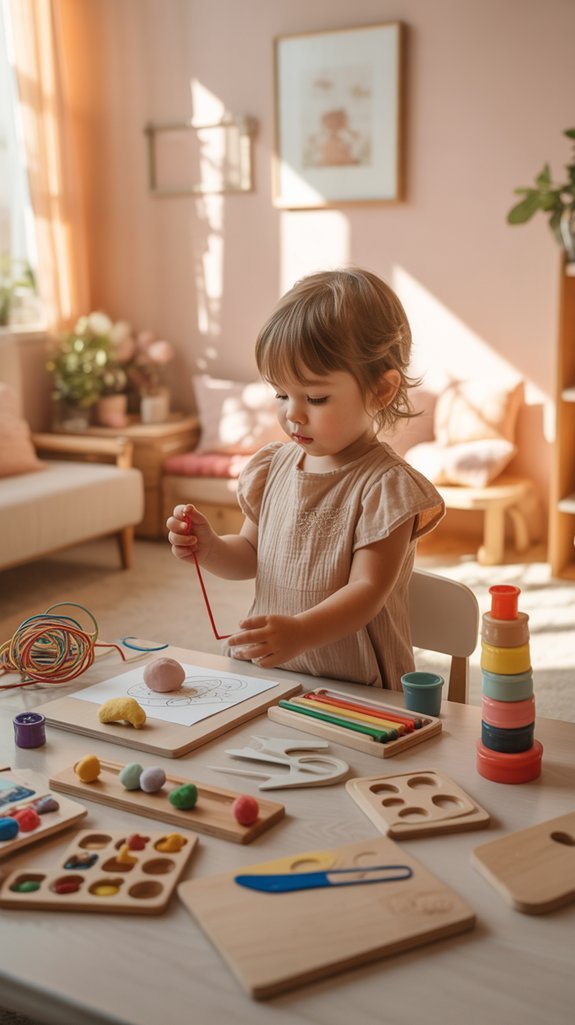

You'll strengthen your preschooler's fine motor skills through engaging activities like peeling stickers, stringing Cheerios, ripping paper, and playing with clothespins. Try sorting with tweezers, creating playdough art, building with blocks, and practicing cutting skills. Pouring water, punching holes, and drawing with sidewalk chalk build hand strength, while games like Pick Up Sticks add fun challenges. Match activities to your child's developmental stage, always supervise small objects, and progress from simple to complex tasks as they master each skill for the best results.
Key Takeaways
- Sticker peeling, paper tearing, and clothespin games strengthen pincer grasp and hand muscles essential for writing and self-care tasks.
- Stringing beads, sorting with tweezers, and pouring activities develop hand-eye coordination and precise motor control through engaging challenges.
- Playdough manipulation, block building, and construction toys enhance hand strength, force control, and bilateral coordination skills.
- Cutting with safety scissors, hole punching, and chalk drawing build finger dexterity and preparation for academic tasks.
- Activities should match developmental stages: chunky crayons for toddlers, buttons for preschoolers, and safety scissors for older children.


Play-Doh Mega Pack (36 Cans)
Best Fine Motor Tools & Manipulatives
These tools help preschoolers develop the pincer grasp, hand strength, and coordination they need for writing.


Best Threading & Stringing Toys
Threading activities develop pincer grasp and hand-eye coordination while teaching patterns and sequencing.

Melissa & Doug Primary Lacing Beads
- 30 colorful wooden beads in various shapes
- Develops pincer grasp and hand-eye coordination
- Teaches colors, shapes, and patterns
- Comes with wooden storage tray
Building Toys for Hand Strength
Construction toys build hand strength and bilateral coordination while kids create and problem-solve.


Crayola My First Jumbo Crayons
- Extra thick for small hands to grip
- Break-resistant for heavy-handed colorers
- Perfect for developing proper grip
- Great pre-writing preparation tool
Peeling and Placing Stickers
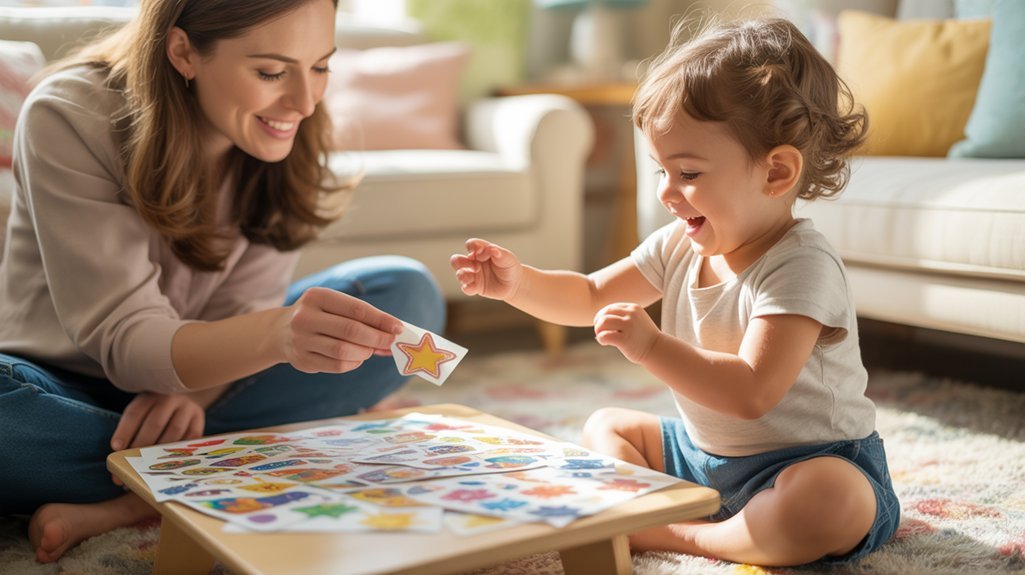
Stickers convert fine motor practice into an irresistible game for preschoolers. When your little learners peel stickers from their backing, they're strengthening the pincer grasp—that vital thumb-and-finger coordination needed for buttoning clothes and holding pencils. You'll notice their hand strength growing with each sticker they remove.
Set up placement challenges by drawing circles or shapes on paper where children can aim their stickers. This targets visual coordination as they concentrate on accurate positioning. You can easily adapt the activity to match each child's developmental stage by varying sticker designs from large, simple shapes to smaller, more intricate options.
Draw target shapes on paper and watch children strengthen their visual-motor skills through playful, precision-based sticker placement challenges.
The beauty of this activity lies in its simplicity and joy factor. Children don't realize they're building dexterity—they're just having fun decorating their masterpieces.
You're encouraging positive learning attitudes while developing essential skills that'll support future writing, self-care tasks, and countless other daily activities requiring precise hand movements. These fine motor achievements during early childhood development contribute to building the foundation for lifelong learning and academic success.
Stringing Cheerios and Beads
You'll find that stringing Cheerios and beads offers your preschooler an excellent opportunity to strengthen their hand-eye coordination while having fun.
This simple activity builds essential fine motor skills through repetitive threading motions that develop pincer grasp and two-handed coordination.
Let's explore how to set up this engaging activity, what materials work best, and how you can gradually increase the challenge as your child's abilities grow.
These hands-on activities also support STEM learning by introducing early concepts of patterns, counting, and spatial reasoning in an engaging way.
Benefits of Stringing Activities
When your preschooler threads Cheerios or beads onto a string, they're building essential fine motor skills that'll serve them throughout their learning journey.
You'll notice their two-handed coordination improving as they stabilize the string with one hand while threading with the other. These stringing techniques naturally improve visual motor skills, requiring careful alignment and hand-eye coordination.
Your thoughtful bead selection matters—start with larger Cheerios before progressing to smaller beads, creating achievable challenges that build confidence.
You're cultivating concentration as they focus intently on threading without dropping items. Watch their pincer grasp strengthen through repeated practice, developing the finger control they'll need for writing.
Each successful threading motion refines their dexterity, preparing them for increasingly complex fine motor tasks ahead. These fine motor development activities connect to overall health and support your child's ability to thrive in various learning environments.
Materials and Setup Tips
Setting up your stringing station takes just minutes and creates lasting learning opportunities. You'll need a tray to organize materials, making independent access simple for little hands. Start with cheerio variations and different threading challenges to match each child's developing abilities.
| Material | Purpose |
|---|---|
| Pipe cleaners | Beginner-friendly, rigid threading tool |
| Uncooked spaghetti | Intermediate option for steadier hands |
| String | Advanced challenge requiring greater control |
| Cheerios & beads | Items to thread in various shapes/sizes |
| Small container | Holds materials within easy reach |
Demonstrate the threading process first, showing how actions create results. This connection motivates children to persist through challenges. Encourage pattern-making with colors and shapes—sequencing builds cognitive skills alongside hand-eye coordination. Progress gradually from rigid tools to flexible string as two-handed coordination strengthens. These fine motor activities complement gentle parenting approaches by allowing children to develop skills at their own pace without pressure.
Progression and Skill Development
As your child masters the basics of stringing, you'll notice their hands working together with increasing precision and purpose. This bilateral coordination strengthens naturally as they progress from large Cheerios to smaller beads and laces.
You're supporting essential visual motor development when you introduce these progressive challenges—each smaller bead requires more focused hand-eye coordination and controlled movements.
Watch how your preschooler's concentration deepens while threading beads, creating patterns and sequences that boost cognitive growth alongside dexterity.
You can gradually increase difficulty by offering varying bead sizes and different string types, from thick yarn to thinner laces. These escalating challenges build muscle control systematically, preparing little hands for future tasks like writing and self-care activities.
You're nurturing capabilities that'll serve them throughout their educational journey.
Ripping and Crumpling Paper
Ripping and crumpling paper offers your preschooler a simple yet powerful way to strengthen those tiny hand muscles needed for writing, buttoning, and zipping.
As your child tears paper into pieces, they're building bimanual coordination and developing the tripod grasp that'll make holding a pencil feel natural.
You can change this exercise into creative mosaic art projects where torn paper becomes colorful collages, turning skill-building into an imaginative activity your child will love.
Benefits of Paper Activities
When your preschooler tears colorful paper into tiny pieces or crumples sheets into tight balls, they're building vital hand strength that'll serve them throughout their lives.
These simple paper tearing exercises develop the small muscles needed for buttoning shirts, tying shoes, and eventually holding pencils with confidence.
You'll notice your child naturally uses both hands together during these activities, encouraging essential bimanual coordination. Crumpling techniques specifically help establish a proper tripod grasp—the foundation for effective writing.
Watch as they change torn pieces into beautiful mosaic crafts, blending skill development with creative expression.
These engaging tasks also sharpen focus and concentration as your little one completes each satisfying rip and crunch.
You're providing meaningful practice disguised as joyful play.
Creative Mosaic Art Projects
Convert ordinary magazine pages and construction paper into stunning mosaic masterpieces with your preschooler. As they rip and crumple different papers, they'll strengthen those vital hand muscles needed for writing and buttoning clothes. This hands-on activity naturally promotes bimanual use of a tripod grasp, building toward a mature pencil grip.
Encourage mosaic color exploration by gathering papers in various hues. Your child will develop hand-eye coordination while placing each small piece precisely where they envision it. The paper texture variety—from glossy magazines to textured construction paper—offers rich tactile experiences that engage multiple senses.
Guide them in sorting torn pieces by size or color before gluing, adding another layer of fine motor refinement.
You're not just creating art together; you're nurturing fundamental developmental skills through creative expression.
Playing With Clothespins
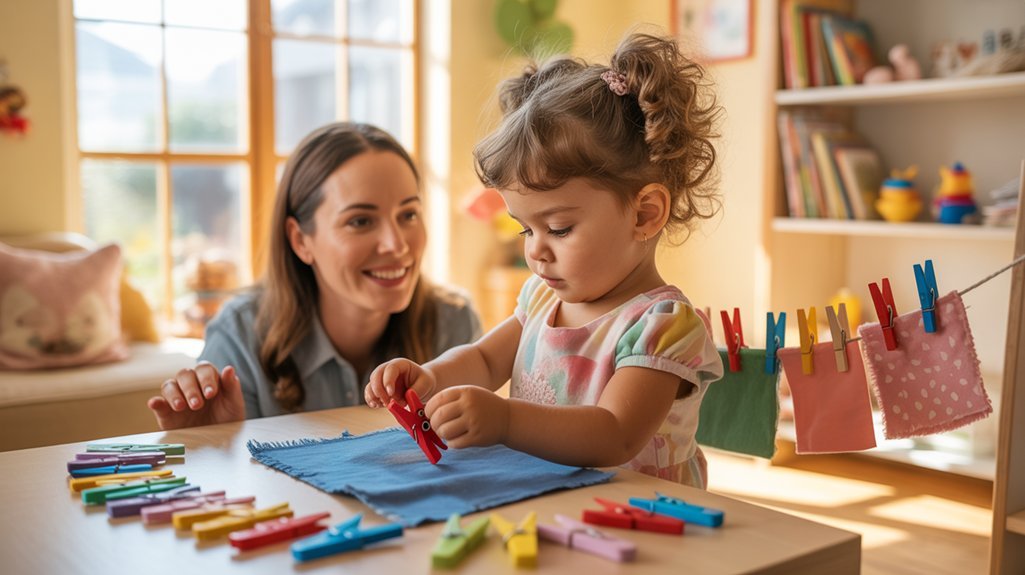
Clothespins offer a surprisingly powerful tool for building your preschooler's hand strength and coordination. The simple pinching and gripping motions required to open clothespins directly develop the muscles needed for a mature pencil grasp.
Start by letting your child clip clothespins onto board books, cardboard boxes, or clothing items. This straightforward activity strengthens hand muscles while improving dexterity. You'll notice their grip becoming more controlled with practice.
Simple clipping activities with everyday objects build the precise hand muscles preschoolers need for writing success.
Expand learning through sorting and matching activities. Attach letter stickers to clothespins and have your child match them to corresponding labels, combining visual perceptual skills with letter recognition.
Clothespin art projects spark creativity while refining motor control. Your preschooler can build structures, create sculptures, or design unique crafts.
Meanwhile, clothespin games like “Clothespin on a Box” change skill-building into playful challenges. These engaging activities serve your child's development through purposeful play, preparing them for future writing tasks while keeping learning enjoyable and hands-on.
Sorting Activities With Tweezers and Tongs
Sorting activities with tweezers and tongs offer your preschooler an exciting way to strengthen their pincer grip while sharpening hand-eye coordination.
You'll need simple tools like child-safe tweezers, kitchen tongs, and colorful materials such as pom-poms, beads, or buttons to create engaging sorting challenges.
These activities can start with larger objects and gradually progress to smaller items as your child's precision and control improve.
Benefits of Sorting Practice
When your preschooler picks up small objects with tweezers or tongs, they're building essential fine motor skills that'll prepare them for everyday tasks like writing, buttoning clothes, and using utensils.
These activities strengthen the pincer grasp while improving hand-eye coordination as children focus on accurately selecting and placing items.
You'll notice bilateral coordination developing too, since both hands work together during sorting practice. Start with larger items, then gradually introduce smaller objects to match your child's growing abilities.
Beyond physical skills, sorting strategies boost cognitive development as children learn to categorize by color, size, or shape.
This combination of motor practice and mental organization creates meaningful learning experiences that support multiple areas of growth simultaneously, preparing your preschooler for future academic and life skills.
Tools and Materials Needed
Getting started with tweezers and tongs activities doesn't require fancy equipment—you'll find most items around your home already.
You'll need child-safe tweezers or kitchen tongs as your primary tools. For sorting materials, gather beads, coins, pom-poms, colored buttons, or small blocks. Use muffin tins, ice cube trays, or small bowls as sorting containers.
Start with basic tweezers techniques using larger items before progressing to smaller objects. Kitchen tongs work wonderfully for beginners who need a wider grip.
As children master these skills, introduce tongs challenges by adding ice cubes, cotton balls, or slippery items that require more concentration.
Keep materials organized in labeled containers so you can quickly set up engaging activities that develop both fine motor skills and cognitive abilities through categorization practice.
Age-Appropriate Sorting Ideas
Young preschoolers thrive when you match sorting activities to their developing abilities. Start with large, easy-to-grasp items like pom-poms or foam shapes, allowing children to sort by obvious differences in color.
As their pincer grasp strengthens, introduce smaller objects such as buttons or beads that require more precision with tweezers and tongs.
Creative sorting challenges grow with them—try separating mixed pasta shapes, organizing craft supplies, or grouping natural materials like shells and pebbles. These activities naturally incorporate sensory exploration while building hand-eye coordination and visual perceptual skills.
You'll support bilateral integration by encouraging children to stabilize containers with one hand while manipulating tongs with the other.
Adapt difficulty levels by adjusting object size, tool type, or sorting criteria, ensuring every child experiences success while preparing for more complex tasks ahead.
Creating Art With Playdough and Putty
As your preschooler pinches, rolls, and squishes playdough between their fingers, they're building the same hand strength needed for holding pencils and buttoning shirts. These simple movements strengthen tiny muscles while sparking creativity through colorful playdough sculptures.
Every pinch, roll, and squeeze transforms playful moments into essential practice for buttoning, writing, and daily independence skills.
You'll improve their learning by introducing cookie cutters and rolling pins, which teach force control and precision. Watch as they press shapes into dough, discovering how much pressure creates the perfect impression. This hands-on exploration develops the coordination they'll need for future writing tasks.
Create engaging challenges by hiding small objects in putty for your child to discover. As they grasp and pull treasures from the putty, they're simultaneously problem-solving and strengthening their grip. Encourage them to make putty patterns by flattening, twisting, and coiling the material into designs.
Transform these activities into themed adventures—dinosaur worlds, bakery shops, or underwater scenes. You're not just facilitating play; you're nurturing essential developmental skills that'll serve your preschooler throughout their educational journey.
Threading and Lacing Cards
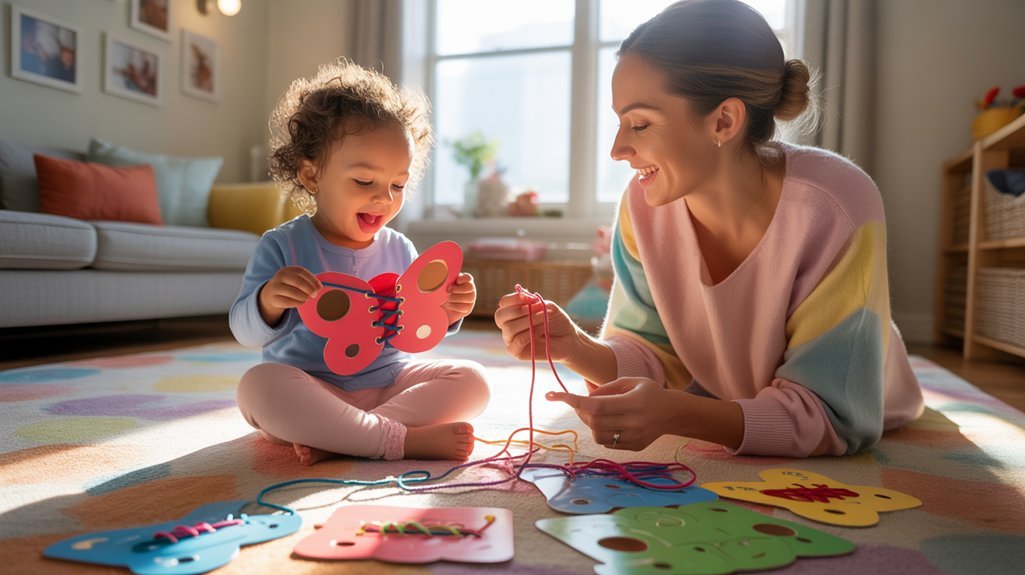
Threading beads onto strings converts simple materials into powerful tools for developing your preschooler's hand coordination and focus. You'll notice their pincer grasp strengthening as they manipulate laces through small openings, building essential bilateral coordination skills.
Start with large beads before introducing threading challenges that use smaller ones. This progression helps your child develop precision and control naturally. You can create lacing cards from cardboard or felt, offering creative lacing techniques that spark imagination while reinforcing motor development.
These activities support cognitive growth too. Your preschooler will practice sequencing as they follow specific patterns or create their own designs. Watch them concentrate as both hands work together—one holding the card steady while the other guides the lace through holes.
The beauty of threading and lacing lies in their versatility. You're providing meaningful practice that strengthens tiny hand muscles while keeping your child engaged and excited about learning.
Building With LEGOS and Blocks
Building with LEGOs and blocks converts playtime into a powerful workout for your preschooler's developing hands. As your child manipulates these small pieces, they'll strengthen hand muscles and improve dexterity essential for future writing tasks.
You'll notice them using both hands simultaneously, which builds bilateral coordination they'll need throughout life.
Watch as your preschooler develops spatial awareness while designing structures and solving construction challenges. They're naturally learning about balance, symmetry, and basic engineering principles through hands-on experimentation.
Block play teaches balance, symmetry, and engineering concepts through hands-on exploration while building spatial awareness in young learners.
Their hand-eye coordination sharpens as they carefully align pieces and stack blocks without toppling their creations.
You can enrich this learning by introducing simple LEGO challenges that encourage specific building goals or friendly block competitions where children recreate structures they've designed.
These activities change ordinary play into purposeful skill-building that prepares your child for academic success while keeping them engaged and excited about learning through construction and creativity.
Pouring and Color Mixing
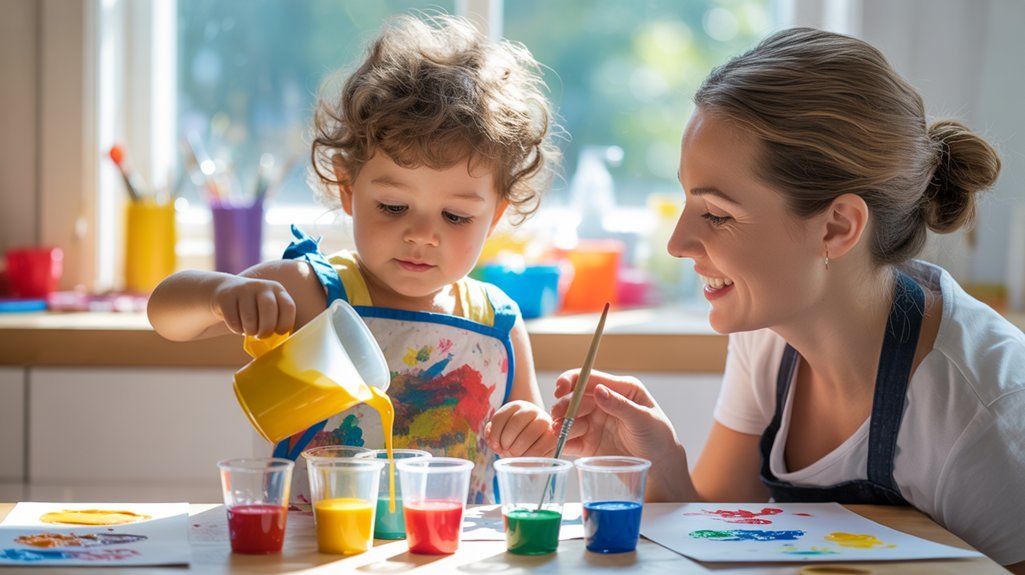
When your preschooler pours water from one cup to another, they're building essential hand muscles and refining the controlled movements they'll need for writing and self-care tasks. This simple liquid transfer activity strengthens hand-eye coordination while keeping children engaged and focused.
Transform basic pouring into exciting color exploration by adding food coloring to water. Give your child primary colors—red, yellow, and blue—and watch them discover how to create orange, green, and purple through mixing. This hands-on experimentation makes learning tangible and memorable.
Enhance these activities by introducing measuring cups, funnels, or syringes. These tools require more precise hand control, helping children develop the fine motor skills necessary for detailed tasks.
You'll need minimal supplies: cups, water, and food coloring. Set up a tray or use a water table to contain spills. This accessible activity fits easily into daily routines, giving your preschooler regular opportunities to practice while expressing creativity through their colorful creations.
Cutting and Hole Punching
Scissors change into powerful learning tools as your preschooler guides blades through paper, building the hand strength and coordination needed for countless daily tasks. Start with simple straight lines before progressing to curves and shapes.
Teaching scissor safety early—proper grip, cutting away from the body, and walking with closed blades—protects your child while encouraging independence.
Hole punchers complement cutting activities beautifully. These tools demand precise pressure and positioning, strengthening little hands while developing concentration.
Demonstrate proper punch techniques: stabilizing paper with one hand while pressing firmly with the other. Your child's grip strength grows with each satisfying click.
Transform these skills into creative projects. Cut shapes for collages, punch holes to create lacing cards, or design paper chains.
These hands-on activities prepare your preschooler for writing, buttoning, and self-care tasks. Watch their confidence soar as they master these essential tools through playful, purposeful practice.
Classic Sidewalk Chalk Drawing
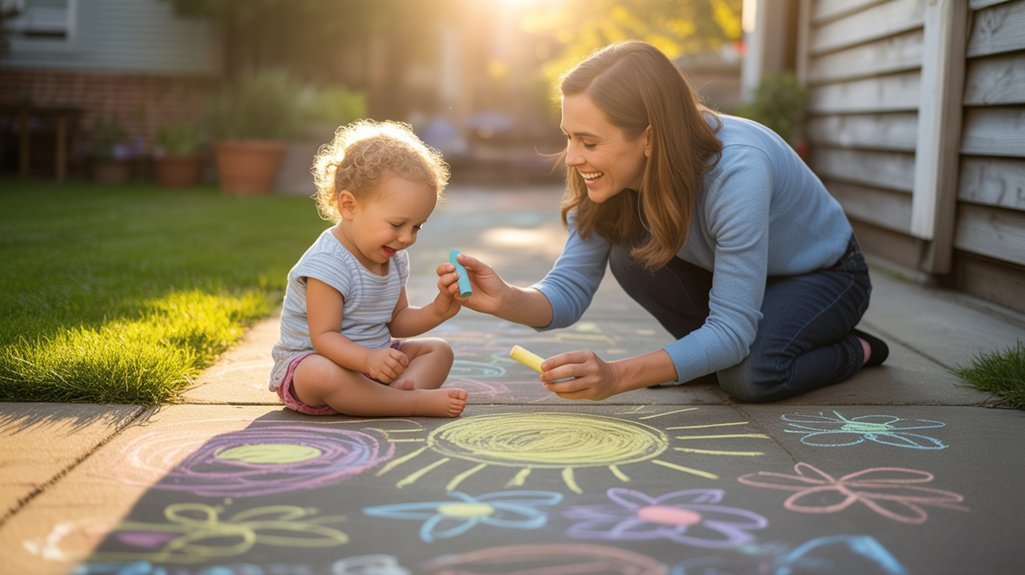
Colorful chalk sticks change any driveway or sidewalk into an outdoor canvas where your preschooler's fine motor skills flourish with every stroke. This inexpensive tool strengthens hand and finger muscles as children grip and maneuver chalk to create designs.
You'll notice improved coordination as they practice drawing shapes, letters, and pictures. Encourage chalk color exploration by inviting your child to trace letters or outline shapes. These activities develop the pencil grasp and control they'll need for future writing.
You're supporting essential skill development while they enjoy outdoor creativity. Sidewalk chalk naturally promotes collaborative play. Set up drawing stations where multiple children can work together on murals or games like hopscotch.
You'll nurture both fine motor development and social interaction simultaneously. The beauty of chalk activities lies in their simplicity—no preparation required, just hand your preschooler chalk and watch them create.
You're providing meaningful practice that doesn't feel like work, making skill-building both effective and enjoyable.
Playing Fine Motor Games
Change playtime into skill-building sessions with classic fine motor games that preschoolers love. “Pick Up Sticks” and “Operation™” naturally develop dexterity as your child carefully removes pieces without disturbing others.
“Kerplunk™” and “Jenga™” take skill improvement further by combining coordination with strategic thinking. Your preschooler learns hand control while planning their next move.
“Connect 4™” integrates hand-eye coordination as children drop discs precisely into the grid.
Create homemade fine motor games using everyday materials. The “Spider Web Game” with tweezers or clothespins strengthens grip and refines the pincer grasp essential for writing. Set up sorting activities where children transfer small objects between containers using tongs.
These fine motor games offer more than individual skill development. They encourage social interaction as children take turns and communicate strategies with peers.
You'll witness growth in both motor abilities and social skills as preschoolers engage together, making learning purposeful and enjoyable.
Boost Hand Strength and Dexterity
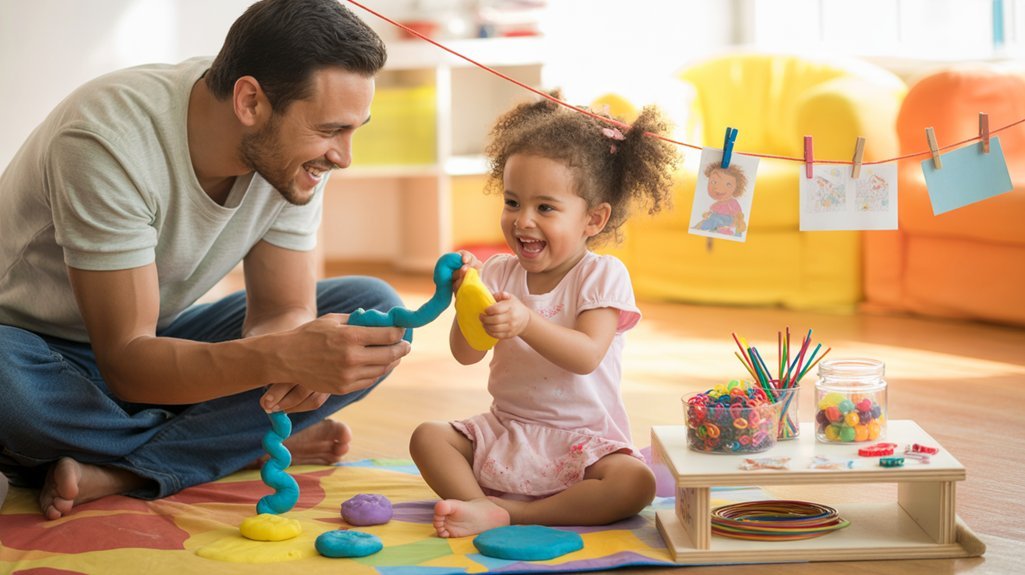
Building powerful little hands requires activities that challenge your preschooler's grip and finger control. Through purposeful hand exercise, you'll help develop the muscle coordination necessary for future writing success.
Strong hand muscles don't develop by accident—they grow through intentional, playful activities that target your preschooler's grip and finger coordination.
Transform everyday materials into strength-building opportunities:
- Squeeze and mold play dough into snakes, balls, and pancakes to work those tiny hand muscles.
- Use clothespins to attach artwork to a line or pick up pom poms for sorting games.
- String colorful beads onto pipe cleaners or yarn to refine grip strength.
- Manipulate small objects like buttons or coins during counting activities.
- Practice with tweezers or pipettes to transfer items between containers during water play.
These engaging activities strengthen hand muscles while maintaining your child's enthusiasm.
You'll notice improved dexterity as they peel stickers, lace cards, or carefully cut with safety scissors. Each repetitive action builds the foundation for holding pencils, tying shoes, and managing classroom tasks independently.
Age-Appropriate Activity Selection
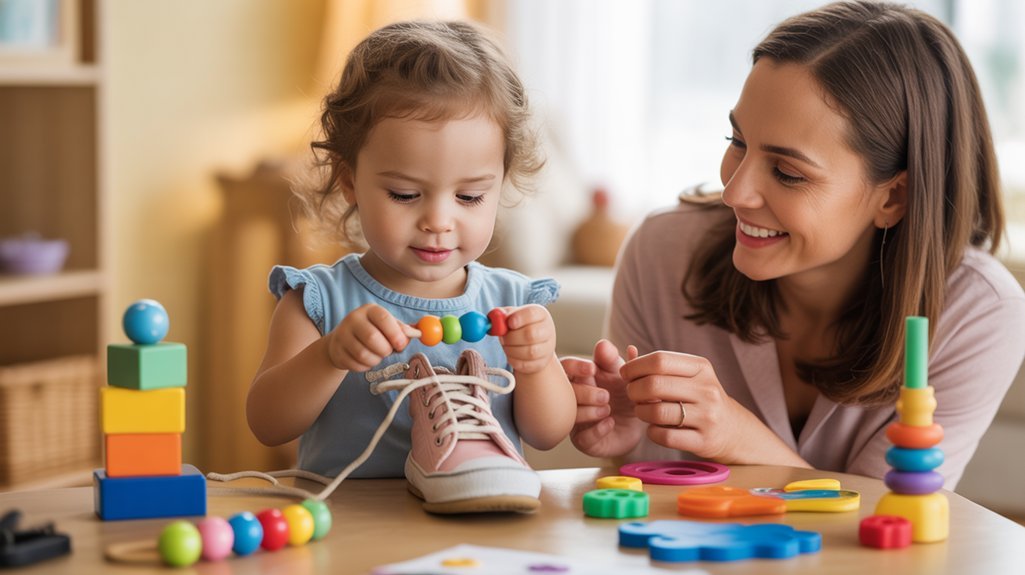
Choosing the right fine motor activities means understanding where your preschooler is in their developmental journey and what they're ready to tackle next.
You'll want to match tasks to your child's age and abilities—from simple stacking for toddlers to more complex threading for older preschoolers—while keeping safety at the forefront of every activity.
Remember that each child develops at their own pace, so watch for signs of readiness and adjust activities to build confidence as skills progress from basic to more challenging tasks.
Understanding Developmental Milestones
When you're planning fine motor activities for your preschooler, understanding what they can actually do at each stage makes all the difference.
Fine motor milestones provide a roadmap for choosing activities that challenge without frustrating your child.
At ages 2 to 3, you'll notice your child drinking from open cups and turning book pages independently—perfect timing for utensil practice and interactive reading sessions.
As they reach 3 to 4 years, they're ready for block stacking, circle drawing, and self-dressing with minimal help.
Matching Skills to Ages
Knowing what your child can do is only half the puzzle—the other half is selecting activities that match their current abilities. When you choose age specific challenges, you're setting your child up for success rather than frustration.
For your 1-to-2-year-old, offer simple stacking toys and chunky crayons. As they reach 2 to 3 years, introduce open cups and child-sized utensils to build independence.
Your 3-to-4-year-old's developmental readiness allows for drawing circles and practicing buttons. By ages 4 to 5, they'll thrive with coloring books, shape-copying exercises, and safety scissors.
Adjust bead sizes accordingly—larger ones for younger hands, smaller ones as coordination improves. You'll nurture their confidence and skills by matching activities precisely to their developmental stage.
Safety Considerations Matter Most
While nurturing your preschooler's fine motor development is exciting, safety must guide every activity choice you make. Always match tasks to your child's developmental stage, selecting age-appropriate tools like child-sized scissors and large beads that little hands can manage safely.
Safety guidelines require constant vigilance with small items such as coins or beads that pose choking risks. The supervision importance can't be overstated—your watchful presence prevents accidents and guarantees proper handling of materials.
Create a secure activity space by choosing non-toxic, chemical-free supplies for sensory play and art projects. Before each session, assess your environment to remove sharp objects and potential hazards.
Your careful attention to these safety considerations allows children to explore confidently, building skills while staying protected.
Progression From Simple to Complex
As your preschooler masters basic movements, you'll want to build their skills through carefully sequenced activities that grow with their abilities. Start with foundational tasks like peeling stickers and placing coins in piggy banks to build confidence. With parent involvement, you'll notice when they're ready for increased challenges.
| Beginning Level | Intermediate Level | Advanced Level |
|---|---|---|
| Peeling stickers | Stringing large beads | Threading small beads |
| Play dough squeezing | Using tweezers | Intricate sewing cards |
| Simple mazes | Tracing shapes | Controlled cutting |
| Piggy bank coins | Hole punching | Complex patterns |
| Sensory exploration bins | Controlled movements | Precise manipulation |
This progression supports natural development while maintaining engagement. Creative activities incorporating sensory exploration, like textured play dough or varied bead sizes, keep children motivated while systematically advancing their dexterity and hand-eye coordination.
Individual Readiness Varies Widely
Every child develops fine motor skills at their own pace, so you'll need to match activities to your preschooler's current abilities rather than their age alone. Individual differences in skill acquisition mean that one three-year-old might excel at threading beads while another is still mastering basic crayon grip.
Observe your child's interests and capabilities carefully. If they're struggling with scissors, step back to simpler tearing activities. When they're succeeding easily, introduce more challenging tasks to maintain engagement. You'll build their confidence by selecting activities that stretch their abilities without causing frustration.
Remember that repetition drives mastery. Offer hands-on activities that match their developmental level, and you'll support steady progress. Your attention to their unique readiness guarantees they'll develop skills while maintaining enthusiasm for learning.
Therapist-Recommended Progression Techniques
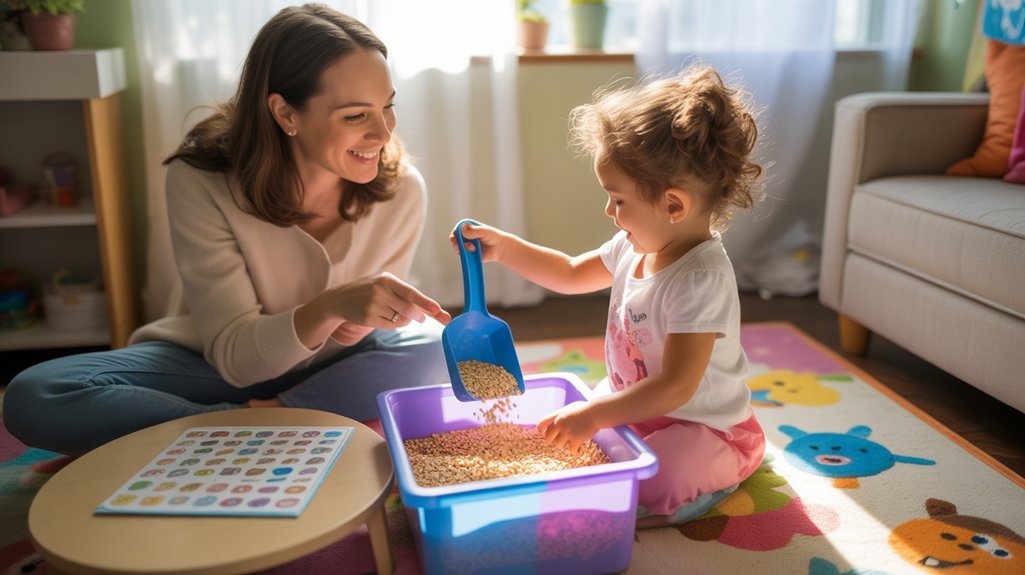
When your preschooler starts building fine motor skills, you'll want to follow a natural progression that matches their developing abilities. Occupational therapists recommend beginning with sensorial exploration through activities that naturally encourage playful engagement while strengthening small hand muscles.
Start with foundational exercises like peeling stickers and progressing through these developmental stages:
Begin with simple sticker peeling, then gradually advance through carefully sequenced activities that match your preschooler's emerging fine motor capabilities.
- Sensory bins filled with colored oats where little fingers dig, scoop, and manipulate different textures
- Paper tearing activities that gradually advance to child-safe scissors for purposeful cutting
- Strategic games like Kerplunk™ and Jenga™ that challenge hand-eye coordination through exciting play
- Threading beads and using tweezers to refine pincer grasp precision
- Real-life tasks like buttoning clothes and sorting coins that build independence
You're creating meaningful opportunities when you incorporate these progression techniques into daily routines.
Watch your child's confidence grow as they master each skill level, and remember that patience and celebration of small victories make the journey rewarding for both of you.
Celebrate Each Small Victory
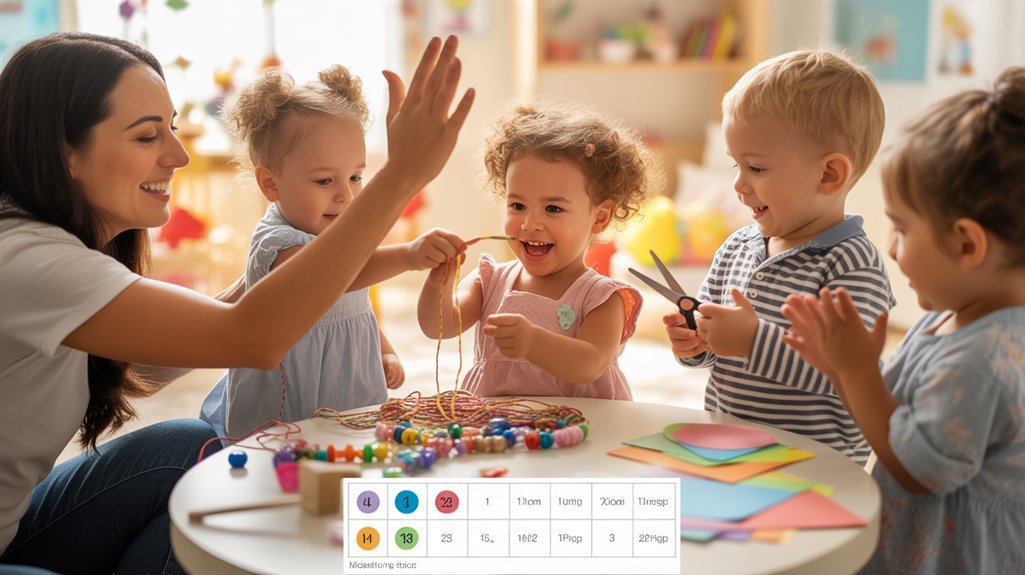
Milestone tracking helps you both visualize progress. Create a simple chart displaying completed tasks like puzzle mastery or improved scissor control.
When children see their growing accomplishments, they'll develop resilience and embrace challenges confidently.
Make celebrations immediate and genuine. A high-five after completing a threading activity or choosing a favorite sticker for mastering tweezers reinforces their efforts.
This supportive approach builds a growth mindset where children understand that practice leads to improvement. You're not just teaching skills—you're nurturing confident learners who'll enthusiastically tackle tomorrow's challenges.
Frequently Asked Questions
How Often Should Preschoolers Practice Fine Motor Skills Activities Each Day?
You'll want to incorporate fine motor activities into your preschooler's routine 2-3 times daily for about 10-15 minutes each session.
This daily practice guarantees steady skill progression without overwhelming young learners. You can weave activities throughout the day—threading beads during morning play, using playdough after snack time, and practicing with safety scissors before nap.
Keep sessions short and engaging, following your child's lead. Remember, you're building their confidence and abilities through consistent, joyful practice that'll serve them well.
What Signs Indicate My Child May Have Fine Motor Skill Delays?
Like puzzle pieces that don't quite fit, fine motor delays become noticeable when your child struggles with age-appropriate tasks.
Watch for difficulty holding crayons, trouble using scissors, or challenges with buttons and zippers. If your little one isn't meeting fine motor milestones—like poor hand-eye coordination or weak grip strength—you'll want to seek developmental assessments.
Early intervention makes a tremendous difference, so trust your instincts and consult your pediatrician if you're concerned about your child's progress.
Can Screen Time Negatively Affect Fine Motor Skill Development in Preschoolers?
Yes, excessive screen time can hinder fine motor development since passive scrolling doesn't engage the small muscles children need to strengthen.
When you're supporting preschoolers, balance screen time with hands-on activities like building blocks, playdough manipulation, and finger painting.
These tactile experiences provide the repetitive practice essential for developing fine motor skills.
You'll notice remarkable progress when children spend more time creating, building, and exploring with their hands rather than watching screens.
Every hands-on moment counts!
Should Left-Handed Children Use Different Techniques for Fine Motor Activities?
Ever noticed your left-handed preschooler struggling with right-handed scissors?
Yes, left-handed children benefit from specific left handed techniques to develop their skills confidently.
You'll want to provide left-handed scissors, position paper on their left side, and demonstrate activities while mirroring their perspective.
These fine motor adaptations aren't about special treatment—they're about removing barriers.
When you adjust materials and teaching methods to match their natural hand dominance, you're helping them build confidence while mastering essential developmental skills.
When Should I Consult an Occupational Therapist About My Child's Progress?
You should consult an occupational therapy professional if your child consistently struggles with age-appropriate tasks like holding crayons, using scissors, or buttoning clothes by age four.
Trust your instincts about child development—if you're concerned about significant delays, persistent frustration during activities, or regression in skills, reach out for guidance.
Early intervention makes a tremendous difference! An occupational therapist can assess your child's needs and provide targeted strategies to support their growth and confidence.
Conclusion
Think of your child's fingers like tiny seedlings—with the right care and practice, they'll grow stronger every day. Research shows that children who regularly practice fine motor activities demonstrate up to 60% better hand-eye coordination. As you've explored these twelve activities, remember there's no rush. Whether they're wrestling with their first sticker or confidently stringing beads, you're nurturing skills they'll use for a lifetime. Grab those tweezers and start playing—you've got this!
Related Articles
- The Ultimate Guide to Sibling Conflict
- The Ultimate Guide to Family Meal Planning
- The Ultimate Guide to Kids Educational Games
- 20 Fun DIY Crafts to Strengthen Family Bonds
- The Ultimate Guide to Screen Time Management

Written by Sarah Mitchell, M.S., CFLE
Founder & Lead Editor
Sarah is a Certified Family Life Educator with a Master's degree in Human Development and Family Studies from the University of Missouri. With 15+ years of experience as a parent educator and mother of three, she brings both professional expertise and real-world parenting wisdom to every article.
Credentials: M.S. in Human Development and Family Studies, Certified Family Life Educator (CFLE)