

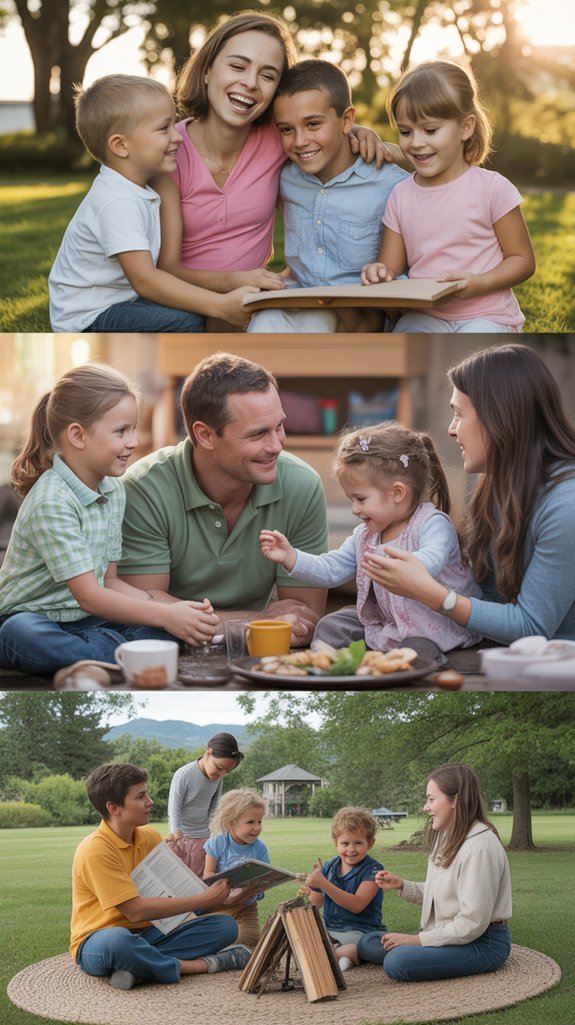

You can strengthen your family's attachment without spending a dime through activities like kitchen dance parties during meal prep, backyard campouts that promote cooperation, creative game nights with improvisation challenges, nature walks paired with sketching, and DIY art projects using recycled materials. These evidence-based approaches build secure connections through shared experiences, whether you're volunteering together at community events, sharing family stories, or changing cardboard into sculptures. The strategies below will show you exactly how to implement these bonding moments and overcome common participation challenges.
Key Takeaways
- Kitchen dance parties combine cooking tasks with music and movement to create joyful memories while teaching teamwork and responsibility.
- Backyard campouts offer accessible bonding through tent setup, simple meal preparation, storytelling, and stargazing under the stars together.
- Nature walks with outdoor sketching reduce screen time while building observation skills, creativity, and opportunities for meaningful side-by-side conversations.
- DIY storytelling challenges using household objects encourage collaborative creativity, turn-taking, and flexible thinking through evolving narratives.
- Volunteering at food banks or community clean-ups strengthens family bonds while developing empathy, communication, and shared values through service.
Kitchen Dance Party: Turn Up the Music and Let Loose

While cooking together already strengthens family bonds, changing meal preparation into a kitchen dance party amplifies connection through joyful movement and shared laughter.

You'll change routine tasks into memorable experiences by playing upbeat music and encouraging everyone to dance while they cook or set the table.
Assign age-appropriate kitchen tasks like washing vegetables or stirring, then incorporate dance breaks between activities to maintain high energy and encourage teamwork.
Give each family member a kitchen job matched to their abilities, then dance together between tasks to keep everyone energized and connected.
You can introduce silly dance moves or freeze dance challenges while waiting for food to cook, creating spontaneous moments of family fun that everyone enjoys regardless of age.
This attachment-building activity promotes physical movement and emotional connection simultaneously.
The spontaneous nature encourages creative expression, helping children feel valued and heard.
You're not just preparing a meal—you're creating joyful memories that strengthen relationships.
This zero-cost approach turns an ordinary chore into meaningful bonding time, supporting healthy family interactions through play and collaboration.
These energetic activities contribute to healthy, active living by encouraging children to move their bodies while building strong family connections.
Backyard Campout Under the Stars
Just as kitchen dance parties bring families together indoors, a backyard campout extends that bonding into the natural world right outside your door. This backyard campout alters your outdoor space into a meaningful environment where family members can strengthen their connections through shared experiences. You'll use existing or borrowed camping gear, making this one of the most accessible free activities available.
| Campout Activity | Bonding Benefit |
|---|---|
| Setting up tent together | Develops cooperation and problem-solving skills |
| Cooking simple meals | Encourages teamwork and self-sufficiency |
| Storytelling around fire | Strengthens emotional connections and communication |
| Stargazing before sleep | Promotes wonder and reflective conversations |
These fun activities create opportunities for quality time together while nurturing secure attachments. You'll roast marshmallows, share stories, and sing songs—simple acts that research shows greatly influence family cohesion. The combination of nature's beauty and home's proximity makes this experience both adventurous and comfortable for all ages. These shared experiences during the first three years are particularly crucial for establishing the foundation of lifelong mental health and well-being.
Family Game Night With Creative Twists
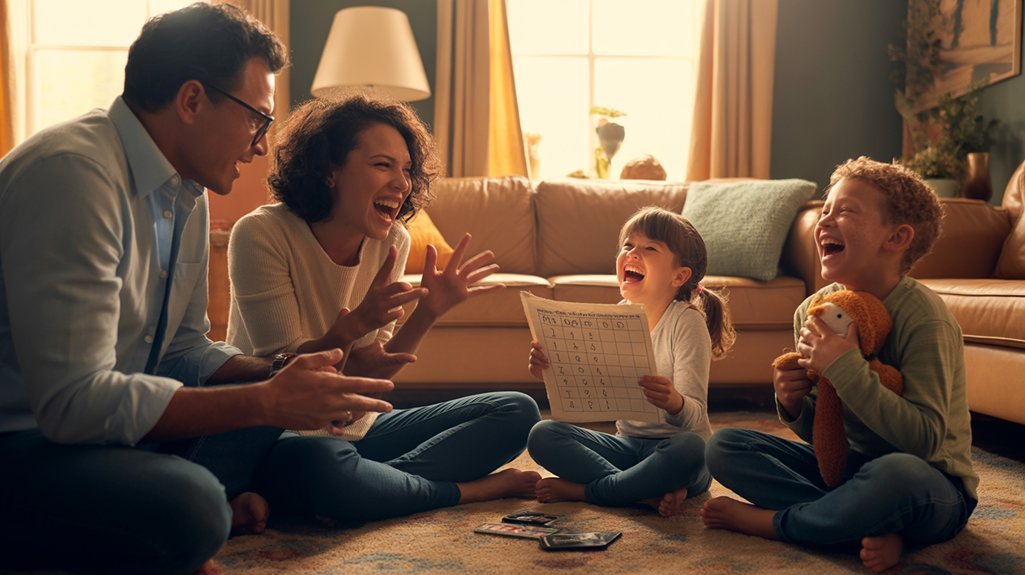
You can deepen family connections through improvisation and acting games that encourage emotional expression and perspective-taking—essential skills for secure attachment.
When your children engage in DIY storytelling challenges, they develop narrative coherence, which research shows strengthens their ability to process experiences and emotions.
These creative activities create a safe space where family members practice vulnerability and active listening, building trust through shared imagination and collaborative play.
By prioritizing these meaningful interactions, parents model healthy behaviors that support their children's emotional development while maintaining their own well-being.
Improvisation and Acting Games
When families gather for game night, improvisation and acting games change ordinary evenings into lively experiences that strengthen emotional bonds and nurture essential social skills.
You'll find that “Whose Line Is It Anyway?” style activities encourage quick thinking while promoting secure attachments through shared laughter during Family Time.
The “Yes, And…” exercise builds collaborative skills as members affirm and expand each other's contributions, creating developmental opportunities for communication mastery.
Storytelling games where each person adds one sentence develop collective narratives that boost imagination and connection.
Movement-based activities like charades promote physical engagement and cognitive flexibility.
Consider hosting themed talent shows where each member performs an improv skit, creating supportive environments that validate individual expression while reinforcing family cohesion through creative exploration.
These activities provide particularly valuable opportunities for teenage family members to express themselves creatively while maintaining strong connections with parents and siblings.
DIY Storytelling Challenges
Building on the momentum of improvisational play, DIY storytelling challenges offer families structured frameworks that develop narrative competence while maintaining spontaneous creativity.
You'll strengthen attachment bonds when each member contributes one line to an evolving story, creating shared narratives that reflect your family's unique voice.
Transform everyday objects into story prompts, encouraging children to practice flexible thinking and perspective-taking.
Create Story Dice by decorating cubes with characters and themes—rolling determines which elements you'll weave together.
Games like “Once Upon a Time” teach turn-taking and collaborative problem-solving as you build collective tales within thematic boundaries.
Record or act out your finished stories.
These family bonding activities preserve memories while validating each person's creative contributions, reinforcing that everyone's voice matters in your family's narrative.
Nature Walks and Outdoor Sketching Adventures
As families increasingly struggle with screen time and digital distractions, nature walks paired with outdoor sketching offer a powerful antidote that strengthens both parent-child attachment and developmental growth.
These outings create essential opportunities for co-regulation as you walk side-by-side, observing and discussing the natural world together. When your children sketch what they see—whether it's leaf patterns, cloud formations, or wildlife—they're developing fine motor skills, attention span, and spatial awareness.
The beauty of outdoor sketching lies in its accessibility. You'll need only basic materials: paper and pencils. This simplicity removes barriers while encouraging creativity and mindfulness. Each drawing becomes a meaningful keepsake that documents your family's shared experiences.
Regular nature walks establish predictable rhythms that children find reassuring, building secure attachment through consistent, quality time.
You're not just creating art together—you're nurturing observation skills, emotional connection, and appreciation for the environment. These adventures reshape local parks into classrooms for comprehensive development.
DIY Art Projects Using Household Materials
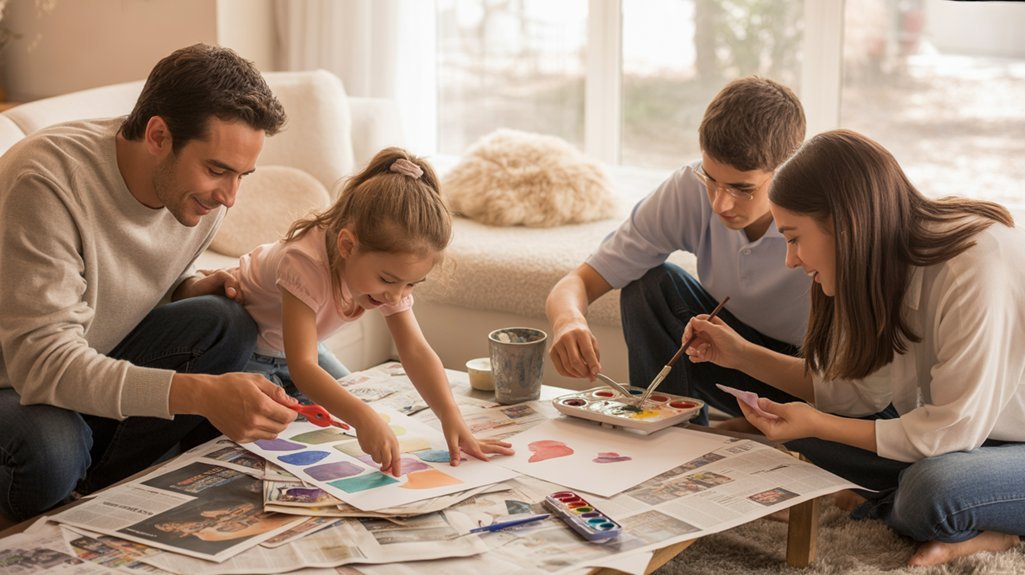
You'll strengthen family connections when you convert everyday items like cardboard boxes, fabric scraps, and glass jars into meaningful art projects together.
Research shows that collaborative creative activities increase oxytocin levels and build secure attachment bonds, especially when children see their ideas valued and preserved.
Recycled Materials Art Ideas
Every household contains a treasure trove of materials that can spark creativity and strengthen family bonds through hands-on art projects. You'll find cardboard boxes, plastic bottles, egg cartons, and fabric scraps can become meaningful sculptures, collages, or functional pieces like planters.
These recycled materials convert waste into opportunities for developmental growth. When families work together on these projects, children naturally develop fine motor skills and problem-solving abilities as they construct their visions.
You're also modeling environmental stewardship, teaching the value of reusing items rather than discarding them. Consider hosting a “recycled art challenge” where each family member receives identical materials to create unique pieces.
This approach encourages both collaboration and healthy competition while reinforcing that creativity doesn't require expensive supplies—just imagination and togetherness.
Creating Family Memory Keepsakes
Beyond the immediate joy of creating with recycled materials, families can convert these artistic moments into tangible keepsakes that preserve memories for years to come.
Creating keepsakes like decorated flower pots or personalized photo frames alters ordinary household items into meaningful treasures that document your family's journey together.
These projects nurture secure attachment through collaborative experiences where each member contributes their unique perspective.
When you work together on handmade greeting cards or family murals, you're establishing communication patterns that strengthen relationships developmentally.
Online tutorials provide guidance for exploring various techniques, making the process accessible regardless of artistic skill level.
The lasting impact extends beyond the physical objects themselves—these keepsakes become anchors for shared stories, reinforcing family identity while promoting emotional connection through creative expression.
Neighborhood Scavenger Hunts
When families step outside together with a list of clues in hand, they're activating multiple developmental benefits that extend far beyond simple entertainment. Neighborhood scavenger hunts strengthen secure attachment through collaborative problem-solving, as family members work together toward shared goals.
Neighborhood scavenger hunts transform ordinary family time into powerful opportunities for building secure attachment and collaborative problem-solving skills.
You'll notice children's executive functioning skills develop as they decode clues, plan routes, and adapt strategies. Creating personalized clues tailored to your neighborhood's unique features deepens spatial awareness and community connection.
Your family discovers local parks, historical markers, and overlooked details that convert familiar spaces into learning environments. This exploration costs nothing while building cognitive flexibility and observational skills.
The versatility of scavenger hunts supports diverse developmental stages—younger children practice categorization and following directions, while older participants engage in abstract thinking and leadership.
Homemade Fort Building Competitions
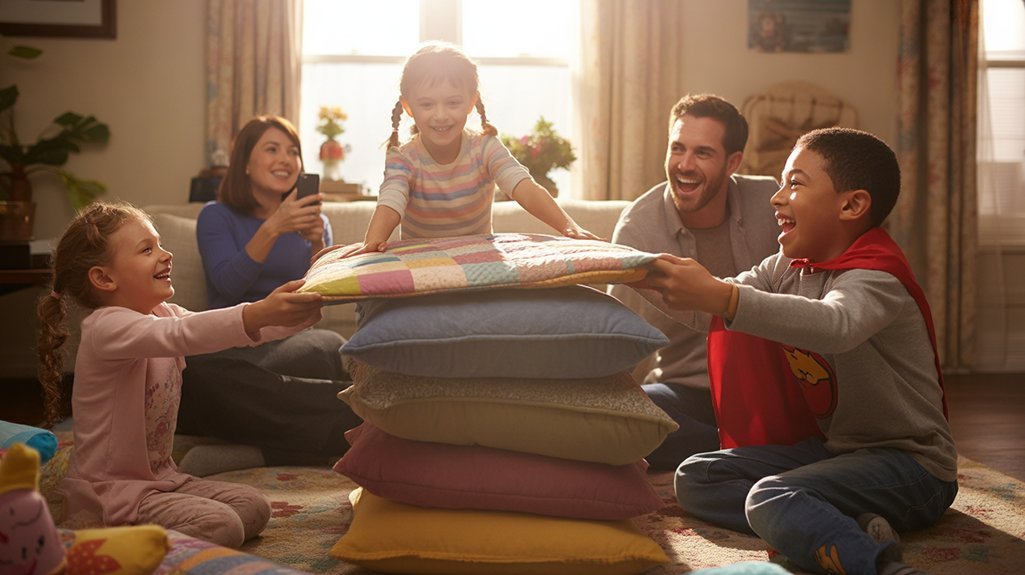
Before you begin construction, you'll want to work together as a family to gather materials like blankets, pillows, couch cushions, and chairs—a collaborative effort that naturally builds communication skills and shared decision-making.
Research shows that when children participate in planning activities, they develop stronger executive functioning and feel more invested in the outcome.
Establishing clear competition rules together, such as time limits and judging criteria, teaches negotiation skills while ensuring everyone understands expectations and feels the process is fair.
Gathering Creative Building Materials
The foundation of any memorable fort-building competition lies in the materials you collect, and research shows that open-ended resources spark greater creativity in children than predetermined construction sets.
You'll find everything needed within your home: blankets offer flexible walls, pillows create cushioned spaces, cardboard boxes convert into structural elements, and furniture provides stable frameworks.
This creative gathering process itself becomes meaningful family time. When you involve children in material collection, they develop problem-solving skills and spatial awareness. They'll discover how everyday objects gain new purposes through imagination.
Consider each item's potential—chairs become doorways, sheets change into roofs, and cushions serve as foundations.
Setting Competition Rules Together
Once you've assembled your materials, collaborating on competition guidelines transforms fort-building from free play into structured family learning.
Sit together and establish judging criteria—creativity, stability, material use—that develop critical thinking while honoring each family member's contributions. Setting time limits creates healthy urgency, teaching children to problem-solve under pressure alongside supportive adults.
Encourage themed elements connecting to favorite books or movies, deepening emotional expression through construction. This attachment-oriented approach validates individual interests within collective activities.
After building, promote structured presentations where each family member describes their creation, strengthening communication skills and mutual respect.
Introduce secret ballot voting to guarantee fairness in competition outcomes. These bonding experiences teach democratic principles while creating meaningful memories.
You're not just building forts—you're constructing frameworks for lifelong collaboration and emotional security.
Free Community Events and Local Festivals
Community events and local festivals create powerful opportunities for families to build lasting memories while strengthening emotional connections. You'll find free community events throughout your area that support developmental growth across all ages.
Your local library offers storytime sessions and craft workshops that improve literacy and creativity in young children. These structured activities provide consistent, attachment-building experiences where you're fully present with your kids.
Farmers' markets combine sensory exploration with community engagement through live music, cooking demonstrations, and interactive children's games. You're modeling healthy eating habits while your family discovers local food sources together.
City-sponsored parades and seasonal festivals deliver shared joy through entertainment and cultural experiences that broaden your children's worldview.
Community centers organize free sports leagues and outdoor fitness classes, promoting physical health alongside social development. You're teaching cooperation, resilience, and teamwork while participating together.
These regular gathering points strengthen both family bonds and neighborhood connections, creating supportive networks that benefit everyone involved.
Family Cooking Challenges in Your Own Kitchen
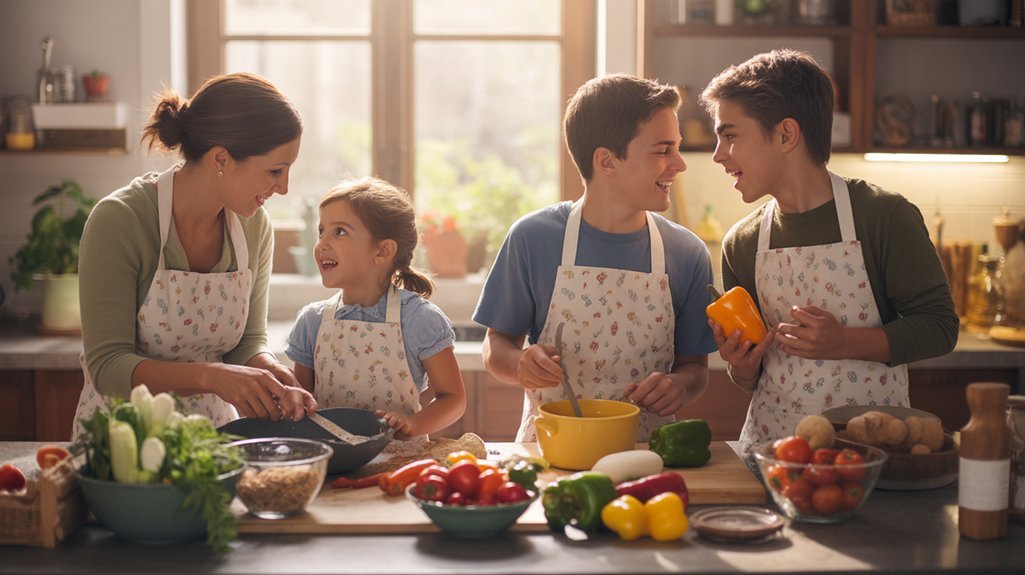
When you convert your kitchen into a creative laboratory, family cooking challenges strengthen attachment bonds while building practical life skills across developmental stages. You'll nurture secure connections through collaborative meal creation using limited ingredients, encouraging resourcefulness and problem-solving abilities.
Rotate theme selection among family members—from international cuisine to healthy snacks—ensuring each person feels valued and heard. Children naturally develop mathematical reasoning through measuring ingredients and calculating cooking times, while taste tests and presentation scores add playful competition that maintains engagement across age groups.
| Challenge Theme | Developmental Benefits |
|---|---|
| Mystery Ingredient Baskets | Creative thinking, adaptability |
| International Cuisine Night | Cultural awareness, exploration |
| Healthy Snack Competition | Nutritional literacy, wellness |
| Budget-Friendly Meals | Resource management, planning |
| Family Recipe Recreation | Intergenerational connection, heritage |
Document your family cooking challenges through photos or videos, creating shareable memories that reinforce positive experiences. These recorded moments become treasured artifacts demonstrating growth, competence, and collaborative success within your family system.
Picnics at the Park or in Your Backyard
As you spread a blanket across grass or patio stones, you're creating an accessible attachment ritual that combines nourishment with environmental enrichment. This budget-friendly activity alters ordinary meals into opportunities for secure connection, whether you're utilizing your backyard or exploring local parks.
You'll strengthen family bonds by preparing simple, homemade foods together beforehand. This collaborative kitchen time builds executive functioning skills and promotes interdependence among family members.
The picnic setting itself encourages face-to-face interaction without typical household distractions, allowing genuine conversation to emerge naturally. Incorporating movement-based activities like frisbee or catch during your outing supports physical development while maintaining relational engagement.
You're simultaneously addressing nutritional needs, sensory experiences, and attachment security. When you establish regular picnic outings as family traditions, you're investing in long-term relational health.
These consistent, predictable experiences create neural pathways associated with safety and belonging—essential foundations for children's emotional regulation and social competence throughout their developmental journey.
Volunteering Together as a Family
By engaging in volunteer activities together, you're establishing powerful neural connections between prosocial behavior and family attachment security. When your family works at food banks or participates in local clean-ups, you're spending time creating shared meaning through service.
This collaborative engagement bolsters attachment bonds while developing your children's capacity for empathy and perspective-taking.
Research demonstrates that families who volunteer together experience improved communication patterns and greater alignment around core values. Your children observe and internalize civic responsibility through direct participation rather than abstract instruction.
They develop essential competencies including accountability, compassion, and community awareness.
These service experiences offer dual benefits: strengthening internal family cohesion while extending care outward. You'll find that working toward common altruistic goals deepens mutual understanding and creates emotionally significant memories.
Most community service opportunities require no financial investment, making volunteerism an accessible pathway for families to build secure attachments while contributing meaningfully to others' wellbeing.
Memory Sharing and Storytelling Sessions
Through regular memory sharing and storytelling sessions, you're activating your family's attachment system while constructing a coherent family identity.
When you create space for family members to recount personal experiences—from significant milestones to humorous anecdotes—you're strengthening emotional bonds and nurturing genuine belonging.
These sessions develop critical skills in your children. As they listen to others' perspectives, they're building empathy and active listening capabilities essential for healthy relationships.
You're teaching them that everyone's experiences matter and deserve attention.
Document these stories using a family scrapbook or journal. This tangible record becomes a living archive your children can revisit, reinforcing their understanding of where they came from and who they're becoming.
Memory sharing costs nothing yet provides profound developmental benefits.
Through consistent storytelling, you're offering your family opportunities for reflection, connection, and growth—gifts that strengthen attachment security across generations.
Free Fun Strengthens Family Bonds
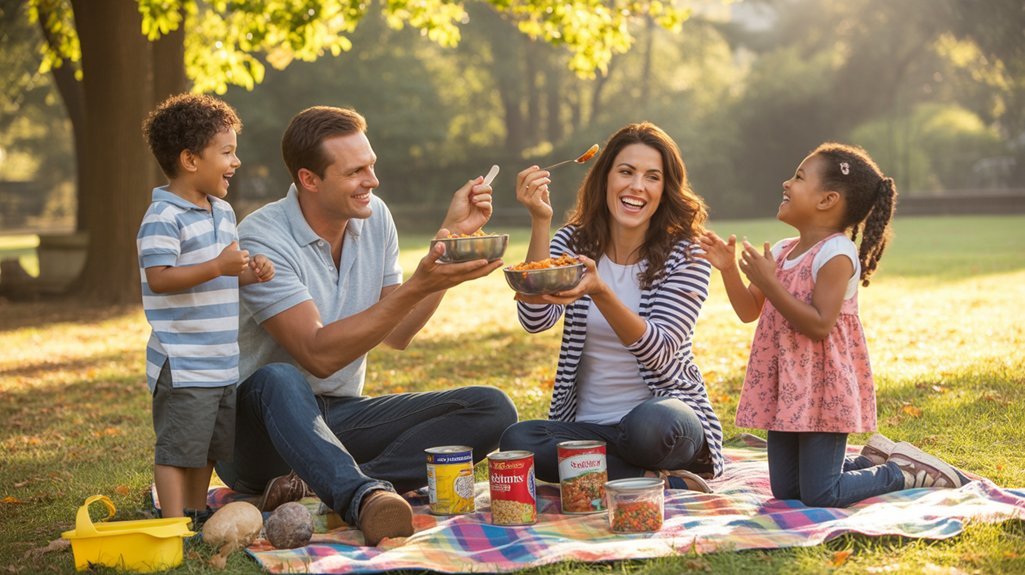
When financial resources feel tight, your family's attachment needs remain unchanged—and remarkably, many of the most bonding activities cost nothing at all. Free fun strengthens emotional security through shared presence and collaborative experiences that money can't purchase.
Research confirms that connection stems from attentiveness, not expenditure. Consider these evidence-based approaches:
- Nature exploration together—hiking trails, observing wildlife, or collecting interesting leaves—releases stress hormones while creating shared memories in outdoor settings.
- Community engagement—attending library programs, local festivals, or volunteering as a family unit—builds empathy while demonstrating values through action.
- Home-based challenges—organizing neighborhood scavenger hunts or cooking competitions with pantry ingredients—develops problem-solving skills through playful collaboration.
These activities fulfill attachment needs by providing undivided attention, physical proximity, and cooperative goals.
When you prioritize presence over presents, you're modeling servant leadership while nurturing secure family bonds that withstand economic fluctuations. Your investment of time communicates worth more powerfully than purchased entertainment ever could.
Overcoming Implementation Challenges
You'll likely encounter predictable obstacles when introducing family bonding activities, from resistant teenagers to scheduling conflicts that seem impossible to resolve.
Research shows these challenges follow common patterns across developmental stages, and understanding the attachment needs underlying each issue makes them manageable rather than insurmountable.
When Kids Resist Participation
Resistance to family activities often signals underlying needs rather than simple defiance. When you understand this, you'll invest time in discovering what's truly blocking participation.
Involve your children in planning from the start—their choices increase genuine investment. Alter activities into friendly competitions that spark natural excitement while maintaining emotional safety.
You can offer meaningful incentives like selecting tomorrow's activity, acknowledging their autonomy. Flexibility demonstrates respect for their preferences; casual participation without rigid expectations reduces opposition.
Create an environment focused on connection rather than performance. When kids feel safe from judgment, they'll naturally engage. This attachment-oriented approach recognizes that resistance often reflects a need for control, understanding, or simply a different entry point into family connection.
Managing Different Age Groups
While age gaps can feel like obstacles to meaningful family time, they actually provide rich opportunities for developmental growth across your entire household. Creating intentional time together requires strategic planning that honors each child's capabilities.
| Age Group | Role in Activities |
|---|---|
| Older children (10+) | Lead tasks, mentor younger siblings, plan complex elements |
| Middle children (5-9) | Complete moderate challenges, bridge communication gaps |
| Younger children (2-4) | Participate in simplified versions, observe modeling |
Hold regular family meetings where everyone voices preferences for upcoming activities. Rotate activity choices to reflect varied interests. Design collaborative experiences like scavenger hunts that require multi-level participation. Establish technology-free periods to encourage face-to-face connection, particularly bridging teenager-sibling divides. This approach builds teamwork, mutual respect, and secure attachments across developmental stages.
Dealing With Time Constraints
Between school runs, work deadlines, and household responsibilities, finding time for family bonding can feel impossible—yet research shows that connection doesn't require hours of uninterrupted time. You can build attachment through brief morning gratitude sharing during breakfast or impromptu kitchen dance parties after school.
These micro-moments create consistent touchpoints that strengthen family bonds. Establish a shared family calendar to organize priorities effectively, ensuring bonding activities aren't overlooked.
Weekdays can feature short interactions, while weekends accommodate longer outings like picnics or hikes. When you engage teens in planning these experiences, you'll increase their buy-in and reshape activities into meaningful traditions.
Remember: consistency matters more than duration. Even five-minute connections, repeated daily, nurture the secure attachments that help families thrive together as a family.
Handling Sibling Conflicts
When siblings clash over toys, attention, or seemingly trivial matters, you're witnessing a natural developmental process—but one that requires your intentional guidance to evolve into healthy relationship skills.
Start by establishing clear family rules that minimize resource competition during bonding activities. Institute brief family meetings where children can voice concerns in a structured environment, building their capacity for open communication.
Teach concrete conflict resolution strategies like compromise and active listening, equipping siblings to navigate disagreements independently. When you notice positive interactions—sharing materials during a craft project or taking turns fairly—acknowledge these moments explicitly. This reinforcement strengthens their relationship foundation.
Staying Consistent Long-Term
The greatest predictor of family bonding success isn't the activities you choose—it's your ability to maintain them through life's inevitable disruptions. Designate one specific day weekly for free family activities, allowing everyone to anticipate and protect this bonding time. Involve teenagers in planning to reduce resistance and honor their developmental need for autonomy.
| Strategy | Implementation |
|---|---|
| Track patterns | Use a family calendar highlighting favorite moments |
| Build gradually | Add one new activity monthly while maintaining successful ones |
| Stay responsive | Evaluate and adjust based on family feedback regularly |
This systematic approach strengthens attachment security through predictable connection opportunities. When family members see their preferences valued, they're more invested in maintaining participation, creating sustainable bonding patterns that endure.
Making Activities Age-Appropriate
Creating meaningful family connections requires activities that engage every member authentically, which means you'll need to match challenges to developmental stages. Research shows children thrive when expectations align with their capabilities, nurturing secure attachment through successful participation.
Authentic family engagement flourishes when activities match each child's developmental stage, creating opportunities for meaningful contribution and secure attachment.
Consider these adaptations to make activities truly inclusive:
- Scavenger hunts: Design simple picture-based clues for preschoolers while challenging teens with riddles and coordinates that require problem-solving skills.
- Storytelling games: Engage younger children with straightforward narratives featuring familiar themes, while older participants craft complex plots with moral dilemmas.
- Outdoor play: Organize age-scaled physical activities where younger kids enjoy tag and relay races while teens lead competitive team games like capture the flag.
Empower older children by assigning them leadership roles in planning and facilitating these fun experiences. This developmental approach strengthens their confidence while modeling service-oriented behavior.
When you thoughtfully adjust complexity levels, you're creating opportunities for every family member to contribute meaningfully and experience genuine connection.
Start Connecting Today
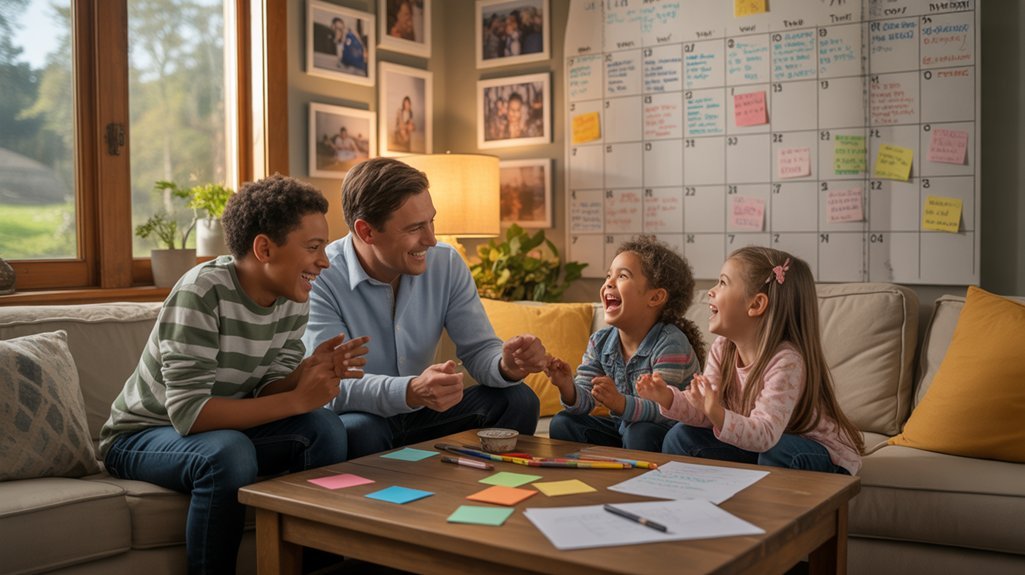
Because families strengthen their bonds through consistent, intentional interactions rather than grand gestures, you can begin building deeper connections right now with activities that require nothing more than your presence and commitment.
Start tonight by scheduling a weekly family meeting where each family member shares ideas for upcoming activities and contributes to planning. This establishes open communication patterns that research shows improve attachment security across all ages.
Tomorrow, explore your neighborhood through a nature walk or organize a backyard camping experience. These simple activities create the shared memories that solidify family identity.
Consider volunteering together at a local community service project. When family members collaborate to serve others, they develop stronger interpersonal bonds while modeling compassion and civic responsibility.
Visit your local park this weekend to discover free events that promote physical activity and community connection. These readily available resources support your family's wellness while requiring zero financial investment—only your willingness to show up together.
Frequently Asked Questions
What Is the Cheapest Family Activity?
Nature walks are the cheapest family activity you can choose.
They're completely free and offer profound developmental benefits for children while strengthening parent-child attachment through shared discovery.
You'll cultivate physical health, environmental awareness, and meaningful conversations as you explore together.
Research shows that time in nature reduces stress and improves emotional well-being for all family members.
What Do People Do for Fun That Doesn't Cost Money?
You'll find that nature walks offer profound opportunities for connection and growth.
Research shows that spending time outdoors together reduces stress while strengthening family bonds. As you explore trails with your children, you're nurturing their curiosity and developmental learning through natural discovery.
These walks create secure attachment moments through shared experiences and meaningful conversations. You're also modeling healthy habits while building memories that'll last a lifetime—all without spending a single dollar on your family's wellbeing.
What Are Some Cheap Team Building Activities?
Ironically, the best Team Challenges don't require expensive props—they're hiding in your everyday surroundings.
You'll strengthen bonds through scavenger hunts where everyone creates clues together, or volunteer as a team at local organizations. Research shows these collaborative experiences build trust and communication skills that paid activities can't match.
Host game nights with what you've got, or co-create art projects using household items. When you're focused on serving others together, you'll discover genuine connection naturally follows.
What Are Some Activities That Can Be Done Together With Family?
You'll strengthen family bonds through Outdoor Adventures like nature hikes and backyard camping, which research shows improve secure attachments.
These activities encourage cooperative problem-solving and emotional connection. You can also organize neighborhood scavenger hunts that promote teamwork, or host game nights that stimulate communication.
Consider volunteering together—it'll develop empathy while serving your community. Each experience creates opportunities for meaningful interaction, helping children develop resilience and social skills while deepening family relationships through shared purposeful activities.
Conclusion
Your family is a garden that flourishes not with expensive fertilizer, but with consistent sunlight and water. Research shows these zero-cost moments create neural pathways of security in developing brains, strengthening attachment bonds that last lifetimes. Like seeds planted today, you're cultivating roots of connection that'll weather tomorrow's storms. You don't need a budget—you need presence. Each shared laugh, each starlit conversation, each spontaneous kitchen dance becomes the soil where resilient, emotionally healthy children grow.
Related Articles
- The Ultimate Guide to Sibling Conflict
- The Ultimate Guide to Family Meal Planning
- The Ultimate Guide to Kids Educational Games
- 20 Fun DIY Crafts to Strengthen Family Bonds
- The Ultimate Guide to Screen Time Management

Written by Sarah Mitchell, M.S., CFLE
Founder & Lead Editor
Sarah is a Certified Family Life Educator with a Master's degree in Human Development and Family Studies from the University of Missouri. With 15+ years of experience as a parent educator and mother of three, she brings both professional expertise and real-world parenting wisdom to every article.
Credentials: M.S. in Human Development and Family Studies, Certified Family Life Educator (CFLE)