



Your child's back talk signals underdeveloped communication skills rather than pure defiance. For ages 5-7, validate their emotions while modeling respectful language and enforcing consistent consequences. With 8-10 year-olds, use open-ended questions to help them articulate feelings and teach negotiation skills. Stay calm, acknowledge their frustration, and set clear boundaries about what respectful dialogue looks like. When back talk persists despite these strategies or disrupts daily functioning, it's time to reflect on whether deeper emotional needs require professional support to restore healthy family communication.
Key Takeaways
- Back talk reflects underdeveloped communication skills and unmet emotional needs rather than pure defiance or disrespect.
- Ages 5-7 benefit from validating emotions, modeling respectful language, and using simple phrases to encourage emotional expression.
- Ages 8-10 respond well to open-ended questions, calm modeling, and teaching negotiation skills for constructive problem-solving.
- Ages 11+ require validating feelings while maintaining clear communication boundaries and discussing impacts of disrespectful behavior.
- Reinforce positive communication immediately with specific praise and establish consistent family routines for open, respectful dialogue.
Understanding What Back Talk Really Means

Back talk—that sharp-tongued response that makes your blood pressure spike—isn't just disrespect in disguise. It's actually your child's underdeveloped communication skills attempting to express something deeper.

When you're facing sass from your 5-to-10-year-old, you're witnessing a developmental milestone: they're testing boundaries and forming their identity.
Understanding what's really happening requires looking beyond the rudeness. Your child's sharp words often signal unmet emotional needs—frustration they can't articulate, a desire for validation, or feeling misunderstood.
They lack the emotional regulation tools adults have spent decades developing.
Rather than viewing back talk as pure defiance, recognize it as a communication breakdown. Your child is telling you something important, just poorly.
Supporting your child through these moments requires addressing both their learning and emotional needs while maintaining appropriate boundaries.
Why Children Use Back Talk at Different Ages
Your child's back talk isn't random—it's driven by specific developmental needs that shift as they grow.
Between ages 5-7, they're testing boundaries and expressing frustration they can't yet articulate, while 8-12 year olds use it to challenge authority and assert their emerging identity.
Recognizing these age-specific motivations helps you address the real issues behind the words: their need for autonomy, emotional expression, and a sense of control in their expanding world.
Understanding early childhood development patterns during these formative years provides crucial insight into how children's communication styles evolve as their brains develop and they seek greater independence.
Testing Limits and Identity
When children challenge your authority with sassy remarks or defiant responses, they're often engaging in a developmentally normal process of self-discovery rather than simply being disrespectful.
Between ages 5-10, your child is actively testing limits to understand boundaries and establish their emerging identity. This back talk serves as their experimental language for asserting independence and determining where they fit within family interactions.
You'll notice this behavior intensifies during changes like starting school or entering adolescence, when they're maneuvering new social landscapes.
They're not trying to hurt you—they're learning how much power their words hold and how to express themselves.
During these challenging moments, maintaining your child's overall health includes supporting their emotional development while setting appropriate boundaries.
Expressing Unmet Emotional Needs
Behind the sassy words and defiant responses lies a more fundamental reality: most back talk emerges when children can't yet articulate what they're feeling or needing. Your child may be struggling with frustration, anger, or a deep desire for autonomy—all normal developmental milestones, especially between ages 5-10.
When children can't express emotional needs through words, they often resort to oppositional language. This signals they're overwhelmed and need your help developing better communication skills. Physical factors like tiredness, hunger, or overstimulation frequently intensify these outbursts.
Rather than viewing back talk as pure defiance, recognize it as your child's imperfect attempt to communicate something important. By responding with empathy instead of frustration, you'll create space for them to learn healthier ways to express their emotions and build stronger emotional regulation skills. Parent resources can provide additional guidance on age-appropriate strategies to help your family navigate these challenging moments while keeping communication open and supportive.
Seeking Power and Control
As children grow, their back talk evolves alongside their cognitive development and deepening need for autonomy. What appears as defiance often reflects a healthy, albeit frustrating, developmental milestone where children test boundaries to understand their place within family structures.
| Age Range | Power-Seeking Behavior | Effective Response |
|---|---|---|
| 3-5 years | Testing parental reactions | Set boundaries calmly and consistently |
| 6-8 years | Negotiating rules | Offer limited choices within limits |
| 9-12 years | Challenging authority directly | Acknowledge feelings while maintaining expectations |
Recognizing back talk as a power struggle helps you respond without personalizing the behavior. When you set boundaries firmly yet respectfully, you model the communication skills you want your children to develop. This approach acknowledges their growing independence while maintaining necessary structure, ultimately reducing the intensity of future conflicts.
Identifying the Root Causes Behind Disrespectful Communication
Though your child's sharp words may sting in the moment, they're rarely about disrespect alone. Back talk typically signals unmet needs—whether physical exhaustion, hunger, or an emotional deficit like feeling powerless.
Children test boundaries as they develop their identity, using disrespectful communication to assert independence and navigate their growing autonomy.
Understanding triggers is essential. Overstimulation, feelings of inadequacy, or lack of emotional regulation skills can all fuel hurtful tones.
When your child hasn't learned to process frustration effectively, words become their outlet.
Practice open communication by approaching these moments with curiosity rather than judgment. Ask yourself what underlying need might be driving this behavior.
Is your child overwhelmed? Seeking control? Struggling to express complex feelings?
Effective Responses for Younger Children (Ages 5-7)

When your five-year-old snaps “You're mean!” or your seven-year-old retorts “You can't make me,” their brain development tells an important story. At this age, children are still developing impulse control and emotional regulation skills, making respectful responses challenging.
Your most effective strategy starts with validating emotions: “I see you're upset about turning off the TV.” This simple acknowledgment diffuses tension while teaching emotional literacy.
Next, model respectful communication through your own calm responses—they're watching and learning from every interaction.
Set clear expectations about acceptable language and establish consistent consequences. When boundaries are crossed, follow through without lengthy explanations.
Equally important, use positive reinforcement when they communicate respectfully: “I appreciate how you asked for help calmly.”
Empower problem-solving by asking, “What could you do differently?” This builds their capacity to express needs constructively, altering back talk moments into valuable teaching opportunities that strengthen your relationship.
Communication Strategies for Older Children (Ages 8-10)
Between ages eight and ten, your child's cognitive abilities expand dramatically—they're now capable of abstract thinking, understanding multiple perspectives, and engaging in genuine negotiation.
When talking back occurs, use open-ended questions to help them articulate what's driving their behavior: “What's making you feel this way?” This teaches your child to identify and express emotions constructively.
Model the communication strategies you want to see by responding calmly: “I hear you, and you must be really upset to say something like that.” You're validating feelings while maintaining boundaries.
Establish clear expectations by discussing specific disrespectful behaviors and their impact.
When your child communicates respectfully, recognize it immediately—positive reinforcement creates lasting change.
Implement consequences focused on learning rather than punishment. These teachable moments help children understand accountability and the value of respectful dialogue, equipping them with essential skills they'll carry into adolescence and beyond.
Teaching Respectful Dialogue Through Modeling and Practice
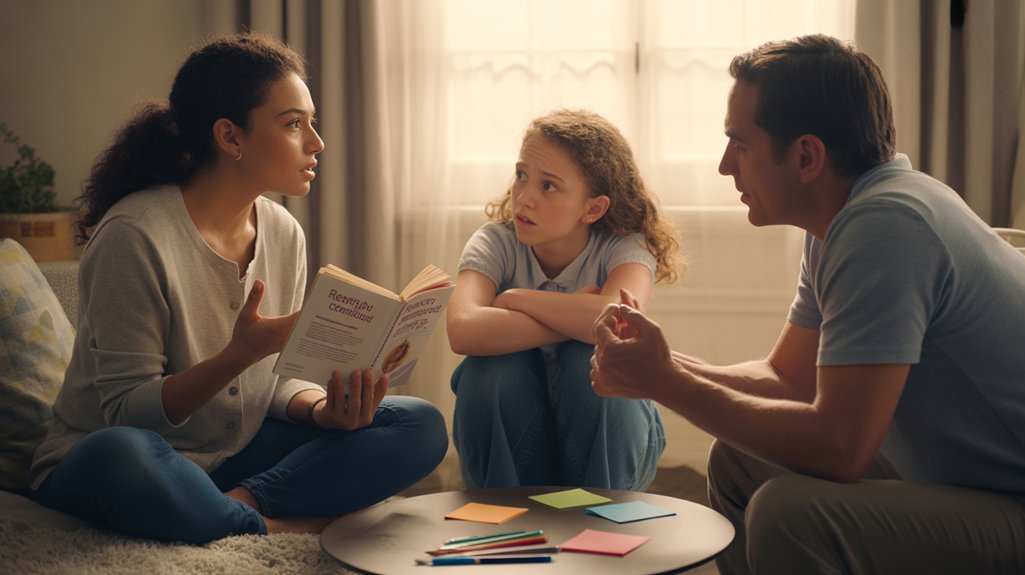
Children learn communication patterns primarily by watching the adults around them. Your calm, composed responses to challenging moments become their template for handling frustration. When you model respectful dialogue by saying, “I see you're upset, but let's talk about this differently,” you're demonstrating the exact behavior you want reflected back.
Establish clear expectations for acceptable communication. Define what respectful dialogue looks like in your home, explaining that everyone—including you—follows these standards. This creates mutual accountability.
Practice responses together during peaceful moments. Role-play scenarios where your child feels frustrated, helping them articulate feelings respectfully before real conflicts arise. This rehearsal builds confidence and competence.
Use positive reinforcement when they communicate appropriately. Acknowledge their effort with specific praise: “I appreciated how you told me you were frustrated instead of yelling.” This encouragement strengthens their emotional intelligence and motivates continued practice of respectful communication skills.
Reinforcing Positive Communication and Celebrating Progress
Every positive interaction your child has represents an opportunity to reinforce respectful communication habits. When you notice your child using polite language or expressing feelings appropriately, acknowledge these specific efforts immediately. This recognition boosts their confidence and encourages continued growth in positive communication.
You don't need grand gestures—simply naming what you observe matters most. “I noticed you used a calm voice when you were frustrated” helps children connect their actions with your approval. These small acknowledgments make children feel valued and seen.
Simple, specific observations about your child's positive communication choices create powerful moments of connection and reinforce respectful habits.
Consider building celebration into your family routine. A weekly appreciation night where family members share moments of respectful communication creates lasting positive associations.
This practice not only highlights progress but also strengthens emotional wellbeing across your household.
Age-Specific Response Tactics

When your child talks back, your response needs to match their developmental capacity—what works for a five-year-old won't resonate with a teenager.
Implementing age-specific response tactics guarantees you're meeting your child where they're developmentally while cultivating respectful communication.
Age-Specific Response Tactics:
- Ages 5-7: Use simple phrases like “I can see you're upset” to encourage emotional expression while maintaining your authority.
- Ages 8-10: Ask open-ended questions such as “How could you say that differently?” to promote critical thinking and ownership of their words.
- Ages 11-13: Validate their feelings with statements like “I know you're frustrated, but we need to talk respectfully” to acknowledge emotions while reinforcing boundaries.
- Ages 14+: Focus on impact by saying “That tone makes it hard for me to listen; can we try again?” to promote constructive dialogue.
These tailored approaches improve understanding and build the foundation for lifelong respectful communication skills.
When to Seek Professional Help

While occasional back talk is developmentally normal, you'll need to recognize when it crosses into concerning territory that requires professional support.
If your child's verbal outbursts become persistently aggressive, if back talk disrupts their daily functioning at school or home, or if family interactions are deteriorating into a toxic cycle, it's time to seek expert guidance.
A mental health professional can assess whether underlying issues—such as anxiety, depression, or behavioral disorders—are fueling the defiance and provide targeted interventions to restore healthier communication patterns.
Persistent Aggressive Verbal Outbursts
Although most backtalk represents a normal phase of child development, persistent aggressive verbal outbursts signal a different concern that warrants your attention.
When your child's verbal aggression escalates in intensity or frequency, especially alongside physical aggression, it's time to seek professional assessment.
These outbursts often indicate your child struggles with emotional regulation and needs support developing healthier communication skills.
Watch for disruptions in family relationships, declining school performance, or damaged social connections—these are clear indicators therapy could help.
Early intervention is essential for your child's emotional wellbeing.
Mental health professionals can equip your child with effective coping strategies and improved emotional regulation skills.
Don't hesitate to reach out when persistent aggressive verbal outbursts interfere with your child's development and relationships.
Underlying Mental Health Concerns
Sometimes back talk serves as your child's only vocabulary for deeper emotional struggles they can't yet articulate. When persistent defiance accompanies mood changes, social withdrawal, or aggressive escalation, underlying mental health concerns like anxiety or depression may be present.
You'll want to seek professional help if back talk continues despite consistent boundaries and positive reinforcement. Early intervention proves vital when these patterns interfere with daily functioning or signal self-esteem struggles.
Consider consulting a mental health expert when you notice:
- Back talk paired with significant behavioral changes
- Emotional distress that won't resolve
- Aggressive outbursts beyond typical development
Your commitment to your child's emotional wellbeing means recognizing when support exceeds what you can provide alone. Professional guidance offers essential resources for addressing deeper needs.
Backtalk Disrupting Daily Functioning
Beyond recognizing mental health warning signs, you need to assess whether back talk has begun interfering with your child's ability to function in their everyday life.
When backtalk consistently disrupts school performance or damages social relationships, professional intervention becomes necessary. Pay attention if the back talk escalates into aggressive behaviors or causes significant emotional distress for your child or family members.
Life changes like divorce or relocation often trigger deeper emotional issues that manifest as increased backtalk. A child psychologist can help your child process these changes effectively.
Family therapy creates a supportive space to explore communication challenges together, while parenting coaches offer practical strategies when backtalk generates substantial family conflict.
These professionals provide evidence-based tools to help your child develop healthier communication patterns and restore household harmony.
Family Dynamics Growing Toxic
When back talk changes into a constant cycle of hostility and disrespect, your family's emotional foundation begins to crack. Persistent arguments, boundary violations, and children expressing fear signal that family interactions have shifted beyond typical developmental challenges.
You'll notice communication breakdowns affecting everyone's emotional wellbeing, creating an environment where trust erodes and connection feels impossible.
These patterns indicate deeper relational issues requiring professional intervention. Family therapy provides evidence-based tools to rebuild communication, restore respect, and heal emotional wounds. A trained therapist can identify underlying causes—whether trauma, unmet needs, or learned behaviors—and guide your family toward healthier interactions.
Early intervention prevents long-term psychological effects on your children. Seeking help isn't failure; it's a courageous step toward protecting your family's wellbeing and modeling healthy problem-solving for those you serve.
Professional Assessment and Intervention
Recognizing when your family needs outside support requires honest assessment of what's happening in your home. If back talk consistently disrupts relationships or accompanies other behavioral concerns, a professional assessment can identify underlying issues you might miss.
Therapists and child psychologists offer tailored interventions addressing communication breakdowns and emotional regulation difficulties specific to your child's needs.
Early intervention prevents escalation and strengthens family connections before patterns become entrenched. These specialists develop strategies that work for your unique situation, giving both you and your child practical tools for healthier interactions.
Consider support groups and expert-led workshops as valuable resources. They provide evidence-based guidance while connecting you with parents facing similar challenges.
Seeking help isn't admitting failure—it's demonstrating your commitment to your child's wellbeing and your family's harmony.
De-escalation Techniques That Work
As tension rises during a heated exchange with your child, your body's stress response activates—heart racing, temperature climbing, thoughts spiraling. This is when effective de-escalation techniques become essential.
Remember that back talk is a normal part of child development, signaling growing independence rather than deliberate disrespect.
Back talk reflects your child's developing autonomy and independence, not intentional defiance or a personal attack on your parenting.
Implement these reliable methods to restore calm:
- Pause and breathe deeply before responding, allowing your nervous system to reset and preventing reactive words you'll regret.
- Lower your voice intentionally, which naturally encourages your child to match your calmer tone.
- Acknowledge their emotion first (“I see you're frustrated”) before addressing the disrespectful behavior.
- Create physical space by suggesting you both take a brief break to collect your thoughts.
When emotions settle, you can then address respectful communication expectations.
This approach models emotional regulation while maintaining your authority, ultimately teaching your child valuable skills for managing their own intense feelings.
Building Respectful Communication Together

Use open-ended questions to help children articulate what's bothering them. “What were you trying to tell me?” encourages ownership and problem-solving rather than defensiveness.
Your communication style becomes their template. When you model calm, respectful responses during conflicts, you're teaching emotional regulation through example. Kids learn more from what they observe than what they're told.
Reinforce progress consistently. When your child manages to communicate feelings respectfully, acknowledge it: “I appreciate how you explained that calmly.” This recognition motivates continued effort.
Create regular opportunities for feelings-focused conversations outside conflict moments. Using empathetic language—”That sounds challenging” or “Help me understand”—builds the family intimacy and cooperation that naturally reduces back talk over time.
Frequently Asked Questions
How to Respond to Backtalk?
When you're facing backtalk, respond with effective communication strategies that validate your child's feelings while maintaining authority.
You'll want to stay calm and acknowledge their emotions: “I hear you're upset.”
Set clear boundaries by explaining what's unacceptable, then focus on teaching respectful dialogue rather than punishing.
Praise moments when they communicate appropriately, reinforcing positive behavior.
This developmentally-informed approach helps children learn emotional regulation while preserving your connection and nurturing mutual respect in your relationship.
What Is the 7 7 7 Rule Parenting?
The 7-7-7 Rule means spending seven focused minutes daily with your child doing what they enjoy.
This dedicated time strengthens effective communication and helps you understand child behavior patterns better. When children feel genuinely heard, they're less likely to engage in back talk.
You'll find setting boundaries becomes easier because your child trusts the relationship you've built. These intentional moments create emotional security, reducing power struggles and promoting cooperation naturally through consistent, meaningful connection.
What Is the 1/2/3 Discipline Method?
You'll find the 1/2/3 discipline method delivers deliberate, developmentally-sound steps for behavior management.
First, you'll give a gentle reminder about the specific behavior needing change.
Second, you'll emphasize seriousness through clear communication strategies, allowing reflection time.
Third, you'll provide a final warning before implementing predetermined consequences.
This progressive approach among effective discipline techniques helps children understand cause-and-effect relationships while maintaining respectful dialogue.
It's particularly powerful because it promotes accountability without resorting to reactive responses during challenging moments like back talk.
What Is the 30% Rule in Parenting?
The 30% rule is a parenting feedback approach where you guarantee at least 30% of your interactions are positive and affirming.
This 30% communication strategy helps you balance corrective moments with encouragement, strengthening your child's self-worth and cooperation.
When managing emotional responses during back talk, you'll find this ratio creates trust and reduces defensiveness.
Conclusion
Remember, Rome wasn't built in a day—and neither is respectful communication. You've learned evidence-based strategies tailored to your child's developmental stage, from understanding the emotions behind their words to implementing age-appropriate responses. As you practice these techniques consistently, you'll notice gradual changes in how your family communicates. Stay patient with yourself and your child. When you model respect, set clear boundaries, and validate feelings, you're building lifelong communication skills that'll serve your entire family.
Related Articles
- The Ultimate Guide to Sibling Conflict
- The Ultimate Guide to Family Meal Planning
- The Ultimate Guide to Kids Educational Games
- 20 Fun DIY Crafts to Strengthen Family Bonds
- The Ultimate Guide to Bedtime Routine

Written by Sarah Mitchell, M.S., CFLE
Founder & Lead Editor
Sarah is a Certified Family Life Educator with a Master's degree in Human Development and Family Studies from the University of Missouri. With 15+ years of experience as a parent educator and mother of three, she brings both professional expertise and real-world parenting wisdom to every article.
Credentials: M.S. in Human Development and Family Studies, Certified Family Life Educator (CFLE)