

Building strong family bonds requires consistent, intentional effort. You'll strengthen relationships by making daily family meals a priority, creating meaningful traditions, and scheduling one-on-one time with each family member. Practice active listening and open communication while planning regular technology-free activities to foster genuine connections. Set clear values and boundaries, and share responsibilities as a team. These proven strategies will help you create the close-knit family you envision.

Key Takeaways
- Make family mealtimes a daily priority by sitting down together, turning off distractions, and engaging in meaningful conversations.
- Create and maintain family traditions that align with shared values, from weekly game nights to annual vacation rituals.
- Schedule regular one-on-one time with each family member to build deeper connections through undivided attention and active listening.
- Practice open communication by listening actively, showing empathy, and creating a judgment-free environment for sharing thoughts and feelings.
- Plan regular technology-free activities that encourage bonding through shared experiences like outdoor adventures or family game nights.
Make Family Meals a Daily Priority
Sitting down together for regular family meals sets the foundation for meaningful connection and open communication. You'll find that dedicating time each day to share meals creates a consistent space for family members to reconnect and strengthen their bonds. Even on busy days, prioritizing these gatherings shows your loved ones they matter.

Turn meal preparation into a bonding opportunity by involving everyone in the cooking process. Assign age-appropriate tasks, teach family recipes, and create a collaborative atmosphere in the kitchen. This shared responsibility builds teamwork and creates lasting memories.
During mealtime conversations, practice active listening and encourage each family member to share their day's experiences. Keep discussions positive and inclusive by asking open-ended questions that invite deeper dialogue. You can make these moments more special by turning off phones and eliminating other distractions that might interrupt your family's valuable time together.
Create Meaningful Family Traditions
While daily routines keep families connected, establishing meaningful traditions creates lasting bonds that span generations. You'll find that traditions help cultivate gratitude and provide a sense of belonging that strengthens family ties.
Start by identifying activities that align with your family's values and interests. Whether it's weekly game nights, annual camping trips, or holiday rituals, choose traditions that bring joy and unite everyone. You can establish routines like Sunday afternoon storytelling, where family members share memories or read together, creating a regular tradition that builds anticipation.
Remember to keep traditions manageable and adaptable as your family grows. Simple activities often become the most cherished memories – decorating cookies during holidays, celebrating half-birthdays, or having monthly family service projects. By involving everyone in choosing and maintaining these traditions, you'll create a legacy of shared experiences that your children will likely pass on to future generations.
Schedule Regular One-on-One Time

Although group activities strengthen family bonds, dedicating individual time to each family member creates deeper connections and understanding. When you schedule regular one-on-one time, you show each person they're uniquely valued. Quality time scheduling doesn't need to be elaborate; even 15 minutes of undivided attention makes a difference.
| Family Member | Activity Ideas | Conversation Starters |
|---|---|---|
| Spouse | Evening walks | Dreams and goals |
| Teen | Coffee dates | School and friends |
| Young child | Park visits | Their favorite things |
Make dedicated conversation time a priority by blocking specific times in your calendar. Turn off notifications, maintain eye contact, and listen actively. You'll discover new aspects of your loved ones' personalities and concerns. Ask open-ended questions and follow up on previous discussions to show you remember what matters to them. These individual connections build trust, encourage openness, and create safe spaces for sharing both joys and challenges.
Practice Active Listening and Open Communication
Because effective communication forms the foundation of healthy relationships, mastering active listening skills can transform your family dynamics. When you practice active listening, you're showing your loved ones that their thoughts and feelings matter, fostering empathetic understanding within your home.
Make eye contact, put away distractions like phones, and focus entirely on the speaker. Respond with thoughtful expressions that demonstrate you're engaged, such as nodding or saying "I understand." Ask clarifying questions to guarantee you've grasped their message completely.
Create a safe space where family members feel comfortable sharing their feelings without fear of judgment. When it's your turn to speak, express yourself clearly and calmly, using "I" statements to convey your emotions. Remember that open communication isn't just about talking – it's about creating meaningful connections through genuine interest in each other's perspectives and experiences.
Plan Weekly Technology-Free Activities

As modern technology increasingly dominates our daily lives, setting aside dedicated time for tech-free family activities has become essential for maintaining meaningful connections. You'll discover that creating regular unplugged moments allows for deeper conversations and genuine interactions among family members.
Start by scheduling weekly unplugged game nights where everyone can engage in board games, card games, or charades without digital distractions. You'll notice how these simple activities spark laughter, encourage healthy competition, and create lasting memories. Consider organizing regular family hikes or nature walks to combine physical activity with quality time. These outdoor adventures provide opportunities for spontaneous discussions and shared discoveries.
Remember to involve everyone in choosing activities, making it a collaborative effort rather than an imposed rule. When you consistently prioritize these tech-free moments, you'll strengthen family bonds and establish traditions that your children will likely carry into their own families.
Set Clear Family Values and Boundaries
Recommended for You
🛒 Family Board Games
As an Amazon Associate we earn from qualifying purchases.
Strong family bonds built through unplugged time become even more meaningful when supported by clear values and boundaries. When you establish consistent discipline and foster mutual respect, you create a secure environment where family members can thrive. Start by gathering everyone to discuss and define your family's core principles, ensuring each person feels heard and valued in the process.
- Feel the pride when your children make choices aligned with your family's values
- Experience the peace that comes from having clear, understood expectations
- Share the joy of seeing family members respect and support one another
- Embrace the comfort of knowing everyone understands their role and boundaries
Remember to revisit and adjust these guidelines as your family grows and changes. By maintaining open dialogue about values and boundaries, you'll create a foundation of trust and understanding that strengthens your family's connection and helps each member develop a strong moral compass.
Share Responsibilities and Work Together
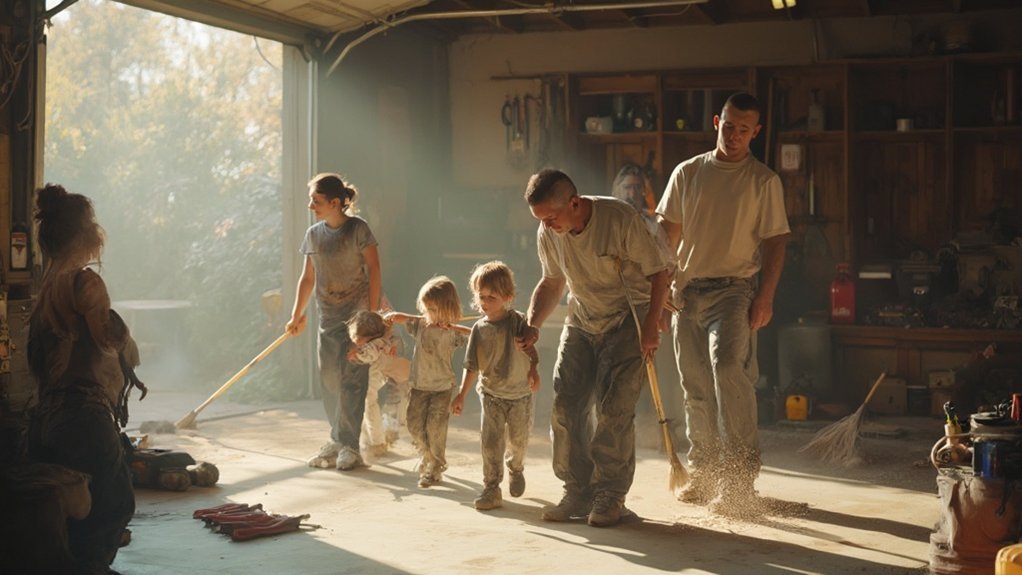
Working together as a family unit creates deeper connections while teaching valuable life skills. When you divide household chores and collaborate on family projects, you're building trust and teaching responsibility. You'll find that shared tasks become opportunities for quality time and meaningful conversations.
| Task Type | Benefits | Skills Learned |
|---|---|---|
| Meal Prep | Family bonding | Planning |
| Yard Work | Physical activity | Teamwork |
| Home Projects | Problem-solving | Creativity |
| Cleaning | Shared ownership | Organization |
| Event Planning | Memory making | Communication |
Create a fair system that considers each family member's abilities and schedules. Younger children can sort laundry while teens tackle more complex tasks. Remember to rotate responsibilities to guarantee everyone learns different skills. When you work as a team, you're not just maintaining your home – you're strengthening relationships and teaching valuable life lessons that will serve your children well into adulthood.
Conclusion
Building strong family bonds takes dedication and consistent effort, but the rewards are worth it. Research shows that children who eat regular family dinners are 40% more likely to get better grades and have healthier relationships. By implementing these seven strategies, you'll create lasting connections, meaningful memories, and a supportive home environment where every family member can thrive. Start small, stay committed, and watch your family grow stronger together.
Related Articles
- The Ultimate Guide to Family Meal Planning
- The Ultimate Guide to Screen Time Management
- The Ultimate Guide to Family Bonding
- Family Budget Planning Guide
- Positive Parenting Techniques

Written by Sarah Mitchell, M.S., CFLE
Founder & Lead Editor
Sarah is a Certified Family Life Educator with a Master's degree in Human Development and Family Studies from the University of Missouri. With 15+ years of experience as a parent educator and mother of three, she brings both professional expertise and real-world parenting wisdom to every article.
Credentials: M.S. in Human Development and Family Studies, Certified Family Life Educator (CFLE)
