



Your child's body image starts forming as early as age three, so model positive self-talk and avoid commenting negatively about your own appearance. Focus conversations on what bodies can do rather than how they look, and discuss body diversity regularly. Create judgment-free spaces where your child can express concerns, monitor their social media exposure during adolescence, and watch for warning signs like restrictive eating or excessive appearance concerns. Understanding age-specific developmental stages will help you provide targeted support throughout their growth.
Key Takeaways
- Parents should model positive body image through self-acceptance, body-neutral language, and focusing on health over appearance.
- Start age-appropriate conversations early about body diversity, functionality, and self-worth beyond physical appearance.
- Promote intuitive eating by offering varied nutritious foods without labeling them “good” or “bad.”
- Monitor for warning signs like self-critical comments, restrictive eating, avoidance behaviors, or excessive reassurance-seeking.
- Limit social media exposure, especially during adolescence, and discuss unrealistic beauty standards together critically.
Understanding Body Image Development Across Different Ages
While many parents assume body image concerns emerge during adolescence, children actually begin forming perceptions about their bodies as early as age three. At this tender age, your child absorbs societal standards about appearance and starts making comparisons.

During preschool years, they're already processing feedback from peers and adults, which shapes their developing self-concept.
Young children absorb messages about appearance from everyone around them, actively constructing their body image through daily interactions and observations.
As your child approaches puberty, hormonal changes intensify body awareness. Research shows that girls who mature early face increased body dissatisfaction and psychological challenges.
You'll notice that adolescents become particularly vulnerable to peer influence, where social comparisons and teasing can trigger long-term issues.
Understanding these developmental stages helps you cultivate a healthy relationship with your child's body image. By recognizing that concerns don't suddenly appear in the teen years, you can provide age-appropriate positive reinforcement throughout childhood, building resilience against the pressures they'll inevitably face. Creating a foundation of healthy, active living during these formative years supports not only physical development but also positive self-perception as children grow.
The Role of Parents in Modeling Positive Body Image
Your child watches everything you do, especially how you treat your own body. When you criticize your appearance or obsess over weight, they're absorbing those attitudes. Research shows that parents who practice positive self-talk create children with healthier body perceptions.
You can shape your child's relationship with their body through intentional modeling. Demonstrate that healthy eating focuses on nourishment and energy rather than restriction or guilt. Show them that exercise celebrates what bodies can do, not what they should look like.
Open conversations matter deeply. Avoid negative comments about anyone's weight or appearance, including your own. Instead, emphasize body functionality and health over aesthetics.
When you accept and appreciate your body, you're creating a safe space for your child to do the same. Your supportive dialogue acts as a buffer against societal pressures. By modeling body acceptance, you're giving your child the foundation for positive body image and lasting self-esteem.
Prioritizing self-care as a parent helps you stay balanced and present, which enables you to model these healthy behaviors more effectively for your children.
Creating Open Communication About Bodies and Self-Worth
Because children begin absorbing societal messages about appearance as early as age three, you need to establish open dialogue about bodies and self-worth from the start. Use positive language that emphasizes personal characteristics rather than physical appearance, helping children develop healthy self-worth beyond looks.
As your child approaches puberty, discuss how physical changes are normal and expected. This proactive conversation reduces anxiety about weight gain and body alteration during adolescence. When you normalize these changes, you're providing essential emotional support.
Engage your children in analyzing media messages together. Ask questions about the images they see, encouraging them to critically evaluate unrealistic beauty standards. This practice strengthens their ability to recognize manipulated content and promotes body positivity.
Help your children question media images and recognize unrealistic beauty standards to build critical thinking and body confidence.
Create a judgment-free environment where feelings about bodies can be expressed openly. When you establish open communication without criticism, children feel safe sharing concerns, doubts, and questions. This foundation proves invaluable for their ongoing emotional well-being and self-acceptance throughout developmental stages.
Remember that early childhood development research emphasizes the critical importance of the first three years for lifelong mental health and well-being, making your early conversations about body image particularly impactful for your child's future relationship with their physical self.
Establishing Healthy Eating Habits Without Food Shaming
When you introduce a variety of nutritious foods alongside your child's familiar favorites, you're creating opportunities for exploration without triggering anxiety or resistance. This approach supports healthy eating patterns while protecting body image development.
Rather than labeling foods as “good” or “bad,” emphasize that all foods serve a purpose in nourishment and enjoyment. This balanced perspective helps children develop healthy habits without shame or restriction.
Encourage your child to recognize their hunger cues and eat until satisfied. This internal regulation cultivates a positive relationship with food and prevents disordered eating patterns that can damage body image.
Make nutrition engaging by involving children in meal preparation and age-appropriate discussions about how food fuels their bodies. Consider offering healthy snacks that are both nutritious and appealing to help children develop positive associations with wholesome foods.
When you praise positive interactions with food rather than focusing on amounts or choices, you're creating a supportive environment where children feel enabled about their eating decisions, strengthening both their nutritional foundation and self-worth.
Encouraging Physical Activity for Joy and Function

Physical activity becomes a celebration of what bodies can do when you shift the conversation away from calories burned or weight control. You'll promote a healthy body image by emphasizing movement for joy, function, and connection rather than appearance.
Make physical activity a family affair through walks, bike rides, or dance parties that create positive associations. These shared experiences help children link movement with quality time rather than obligation. You're also supporting their physical and mental well-being—regular activity improves mood, sleep quality, and cognitive function.
| Instead of Saying | Try This |
|---|---|
| “Exercise to stay thin” | “Move to feel strong and energized” |
| “Burn off those calories” | Let's have fun being active together |
| “You need to work out” | “What movement makes you feel good?” |
Introduce varied activities so children discover their preferences. When they experience movement as enjoyable and functional, they'll develop lasting active lifestyles while appreciating what their bodies can accomplish.
Navigating Social Media and Cultural Beauty Standards
Your child encounters thousands of digitally altered images before they're old enough to understand what editing means. These manipulated photos distort their perception of normal bodies, creating impossible standards that erode self-worth.
Research shows children as young as five internalize these beauty ideals, with social media algorithms amplifying the problem by prioritizing content that fits narrow attractiveness definitions.
Children absorb unrealistic beauty standards by age five, while algorithms relentlessly push content that reinforces these harmful, narrow definitions of attractiveness.
You can counteract these influences by teaching media literacy early. Help your child recognize that filtered images aren't reality. Discuss how photos are edited and why companies use these tactics.
When scrolling together, point out digital alterations and talk about diverse body types.
Monitor their social media exposure, especially during adolescence when body image concerns peak. Follow accounts that celebrate varied appearances and authentic representation.
Recognizing Warning Signs of Poor Body Image
Even with strong media literacy skills and protective parenting, some children will still struggle with how they view their bodies. You'll need to recognize warning signs early to provide effective support.
| Warning Sign | What to Watch For |
|---|---|
| Self-Critical Comments | Frequent negative thoughts about appearance or abilities that signal poor body image |
| Reassurance-Seeking | Repeatedly asking “Do I look okay?” or “Am I fat?” indicating underlying insecurity |
| Avoidance Behaviors | Difficulty choosing outfits or refusing to leave home due to appearance concerns |
| Restrictive Eating | Skipping meals, obsessive calorie counting, or abandoning healthy eating patterns |
When you notice these signs, initiate open conversations about your child's feelings. Create a judgment-free space where they can share concerns without fear. Early intervention prevents negative thoughts from becoming entrenched patterns. Remember, addressing body image struggles isn't about dismissing their feelings—it's about helping them develop realistic, compassionate self-perception while maintaining healthy eating habits and overall well-being.
When to Seek Professional Support for Body Image Concerns
While open communication forms the foundation of supporting your child's body image, certain warning signs indicate it's time to involve a mental health professional.
You'll want to watch for persistent self-criticism, excessive reassurance-seeking about appearance, and significant changes in eating behaviors or clothing choices that don't respond to your supportive interventions.
Early professional support can prevent body image concerns from developing into more serious conditions like eating disorders or depression, especially when these issues begin affecting your child's social relationships and academic performance.
Warning Signs Requiring Intervention
How can you tell when normal childhood concerns about appearance cross into territory requiring professional support? Understanding warning signs helps you intervene before concerns escalate into eating disorders or mental health crises.
| Warning Sign | What to Watch For |
|---|---|
| Self-Critical Behavior | Frequent dissatisfaction with appearance; constant reassurance-seeking |
| Decision Paralysis | Difficulty leaving home due to outfit concerns |
| Restrictive Eating | Avoiding foods, excessive dieting, rigid food rules |
| Emotional Distress | Anxiety or distress when discussing body concerns |
| Social Withdrawal | Avoiding activities due to appearance worries |
Early intervention prevents serious complications. When children express persistent distress about their bodies, seek professional support promptly. Open conversations create opportunities to assess severity and connect families with mental health specialists who understand developmental needs.
Finding the Right Professional
Recognizing warning signs represents only the first step—selecting the right professional determines whether your child receives effective support.
Start by consulting a child's primary care provider, who can assess concerns and provide referrals to specialized mental health professionals experienced in childhood body image issues. Look for therapists trained in eating disorder prevention, cognitive-behavioral approaches, or family-based interventions.
Early intervention prevents poor body image from escalating into serious eating disorders or mental health conditions.
Qualified professionals offer evidence-based strategies to help your child develop resilience against social pressures while teaching families to create supportive home environments.
Don't hesitate to seek help—this proactive step demonstrates your commitment to your child's well-being. The right professional partnership equips your family with tools for lasting positive change.
Early Influences Shape Self-Perception
Long before children can articulate concerns about their appearance, they're already internalizing messages about how bodies should look. Research shows these early influences begin shaping body image as young as three years old, making your role as a caregiver essential from the start.
Understanding developmental milestones helps you protect children's self-perception:
- Preschool years (3-5): Children absorb societal pressures about appearance through everyday observations and what parents say about their own and others' bodies.
- Elementary years (6-11): Peer comparisons intensify, with teasing greatly impacting body satisfaction and self-worth.
- Early puberty: Hormonal changes affect body perception dramatically, with early-maturing girls facing heightened risks of negative body image.
- Teen years: Social media amplifies insecurities through constant exposure to curated, unrealistic images.
You can counteract these influences by encouraging open communication about body diversity and critically discussing media portrayals with children throughout their development.
Warning Signs and Solutions
You'll be better equipped to support your child when you can identify the early warning signs of poor body image.
Research shows that seemingly small behaviors—like frequent negative self-talk about appearance, reluctance to leave the house due to outfit choices, or sudden changes in eating patterns—often signal deeper struggles that require your attention.
Recognizing Poor Body Image
How can parents identify when their child's relationship with their body has shifted from normal developmental awareness to genuine concern?
Watch for self-critical comments about appearance, which often trigger low self-esteem and social withdrawal. Children seeking constant reassurance about their looks may be comparing themselves to peers or media images.
Notice if they're struggling to choose outfits or refusing to leave home due to insecurities—these signal negative body image and anxiety.
Restrictive eating patterns demand immediate attention. When children skip meals, reject healthy food, or obsessively count calories, they're exhibiting serious concerns requiring professional intervention.
Create space for open conversations about their feelings and experiences. These discussions help children process emotions around their body, preventing more severe psychological issues from developing.
Social Media Warning Signs
In today's digital landscape, social media adds another layer of complexity to body image concerns. Watch for warning signs: your child spending excessive time online, frequently comparing themselves to others, or desperately seeking validation through likes on appearance-based posts.
These behaviors can trigger anxiety, depression, and even eating disorders in vulnerable adolescents.
You can help by monitoring their online activity while maintaining open communication about their experiences. Encourage critical thinking by discussing how images are digitally altered and unrealistic.
Ask questions that help them recognize manipulated portrayals: “Do you think that's what they really look like?” Create safe spaces where they'll share concerns without judgment.
When children understand social media's constructed reality, they're better equipped to resist negative body image influences.
Disordered Eating Red Flags
Recognizing disordered eating early can make the difference between swift recovery and years of struggle. Watch for self-critical comments about appearance, excessive preoccupation with food choices, or constant reassurance-seeking about body image.
Notice behavioral shifts: avoiding social events due to outfit concerns, skipping meals, or adopting extreme dietary restrictions. Pay attention when children make frequent remarks about body shape or weight gain, particularly around peers, as these comments often signal deeper insecurities.
Drastic eating pattern changes demand immediate attention. Create safe spaces for open dialogue about body acceptance and self-worth.
Early intervention through compassionate conversations helps children develop resilience against societal pressures. Remember, your attentive presence and willingness to address these warning signs directly can prevent minor concerns from escalating into serious eating disorders.
Emotional and Behavioral Changes
When your child suddenly withdraws from activities they once loved or spends excessive time scrutinizing themselves in mirrors, their body image concerns have likely moved beyond fleeting worries into emotional distress.
Watch for increased self-criticism, constant reassurance-seeking about appearance, or avoiding specific clothes despite having no practical reason.
These emotional changes often accompany behavioral shifts—refusing social events, comparing themselves to peers, or developing restrictive patterns that interfere with good eating.
During puberty's rapid physical alterations, anxiety about bodily changes intensifies, especially when combined with peer teasing.
Address these warning signs through regular, judgment-free conversations.
Create safe spaces where your child can express concerns without fear.
Early intervention prevents temporary insecurities from solidifying into persistent body image struggles that compromise their wellbeing.
Taking Action as Parents
As your child's primary role model, your own relationship with your body shapes their developing a healthy self-image more powerfully than any single conversation ever could. Practice positive self-talk and demonstrate balanced eating habits. Create open communication channels where your child feels safe expressing concerns about their appearance.
| Warning Sign | Your Action Step |
|---|---|
| Self-critical comments about body | Model body-neutral language; focus on function over appearance |
| Constant reassurance-seeking | Redirect attention to character strengths and abilities |
| Changed eating patterns | Consult healthcare provider; avoid commenting on food choices |
| Social media fixation | Set device limits; discuss unrealistic beauty standards together |
| Withdrawn behavior | Seek mental health professional support your child needs |
Early intervention prevents long-term struggles with body image and self-worth.
Age-Specific Guidance for Parents
Understanding your child's developmental stage allows you to tailor your approach to building healthy body image in ways that truly resonate. Here's how to support them through each phase:
- Birth to Age 5: Start conversations about health and self-acceptance early. Your attitudes shape their initial body perceptions, so model appreciation for what bodies can do rather than how they look.
- Ages 6-10: Demonstrate positive self-talk and healthy eating habits without labeling foods as “good” or “bad.” They're watching your every move and internalizing your relationship with food and your body.
- Ages 11-14: Open discussions about puberty become essential. Address hormonal changes directly and challenge unrealistic media standards together as they navigate increasing peer influence.
- Ages 15-18: Encourage critical media literacy as social comparisons intensify. Help them question appearance-focused messages and consistently emphasize health over looks while celebrating diverse body types.
Resources for Continued Support
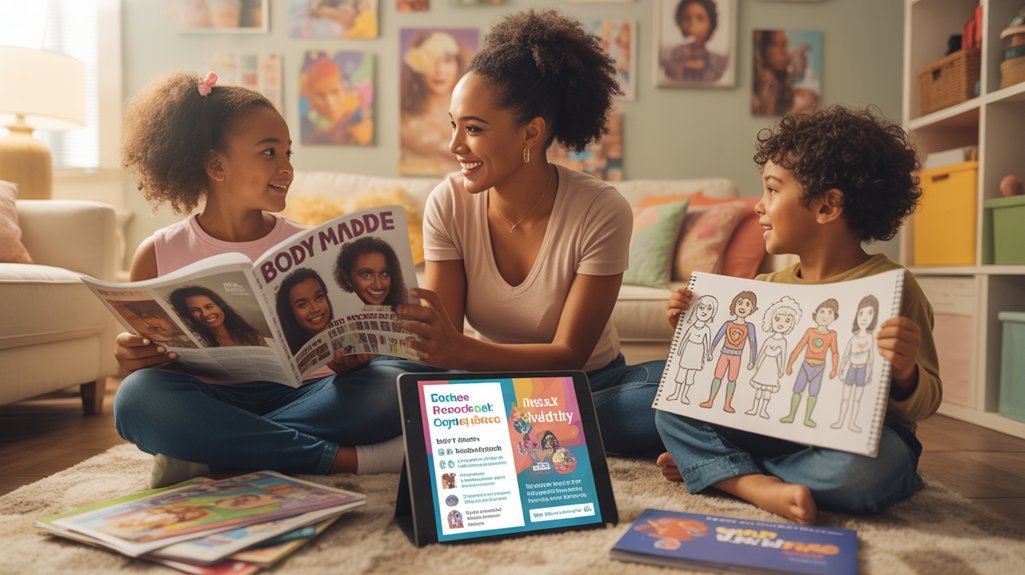
While age-specific strategies provide the foundation for supporting your child's body image development, you don't have to navigate this journey alone. Numerous resources exist to strengthen your efforts and provide continued support.
Professional help from pediatricians and mental health specialists offers essential guidance when body image concerns arise. Organizations like the National Eating Disorders Association (NEDA) provide evidence-based tools and guidelines tailored for parents nurturing healthy development.
Educational programs focusing on media literacy equip children with critical thinking skills to analyze body image portrayals and resist harmful messaging. Community workshops and support groups create safe spaces where you and your child can openly discuss concerns alongside others facing similar challenges.
Online platforms and apps dedicated to body positivity offer accessible information and ongoing encouragement. These digital resources complement face-to-face support, providing families with thorough strategies to maintain healthy body image throughout childhood and adolescence.
Leveraging these resources enables you to create lasting positive change.
Frequently Asked Questions
How to Help Teenage Daughter With Body Image?
You'll help your teenage daughter by creating a supportive environment where she feels safe discussing insecurities.
Actively counter media influence by analyzing unrealistic images together, explaining filters and photoshop.
Model body positivity through your own self-talk and celebrate what her body can do, not just how it looks.
Focus conversations on health, strength, and character rather than appearance.
If she shows concerning signs like excessive criticism or disordered eating, don't hesitate to seek professional guidance.
Why Is Body Image Important to Teenagers?
Body image profoundly shapes your teenager's mental health and self-worth during their most vulnerable developmental years.
They're maneuvering intense social media influence, peer pressure, and unrealistic media representation that can trigger anxiety and depression.
When you help them develop positive body image, you're protecting their emotional wellbeing and encouraging healthier behaviors around nutrition and exercise.
Your supportive guidance enables them to build resilience, form authentic relationships, and embrace self-acceptance despite external pressures they face daily.
What Age Do Children Learn About Body Image?
Children begin learning about body image remarkably early—research shows that by age 3, they're already absorbing appearance-related messages.
During childhood development, you'll notice self-esteem factors taking shape as early as preschool, when kids start comparing themselves to others. By age 5, they've often internalized societal beauty standards.
That's why it's essential you introduce body positivity concepts early, helping children develop healthy self-perceptions before negative beliefs become deeply rooted in their developing minds.
How Do Teens Develop a Positive Self-Image?
You can help teens develop positive self-image by addressing key self-esteem influences in their lives.
Encourage open conversations about peer comparisons and teach media literacy skills to critically evaluate social media impact.
Focus your praise on their character and abilities beyond appearance, and promote enjoyable physical activities.
Conclusion
You're planting seeds that'll grow into your child's lifelong relationship with their body. By modeling self-acceptance, creating shame-free conversations, and celebrating what bodies can do rather than how they look, you're giving your child protective armor against toxic cultural messages. Remember, this isn't about perfection—it's about consistency and repair when you stumble. Your thoughtful attention to their body image development today shapes their wellbeing for decades to come.
Related Articles
- The Ultimate Guide to Sibling Conflict
- The Ultimate Guide to Family Meal Planning
- The Ultimate Guide to Kids Educational Games
- 20 Fun DIY Crafts to Strengthen Family Bonds
- The Ultimate Guide to Bedtime Routine

Written by Sarah Mitchell, M.S., CFLE
Founder & Lead Editor
Sarah is a Certified Family Life Educator with a Master's degree in Human Development and Family Studies from the University of Missouri. With 15+ years of experience as a parent educator and mother of three, she brings both professional expertise and real-world parenting wisdom to every article.
Credentials: M.S. in Human Development and Family Studies, Certified Family Life Educator (CFLE)