



Your three-year-old needs educational toys that match their developmental stage, focusing on critical thinking, fine motor skills, and early math concepts. Look for puzzles and building blocks that strengthen problem-solving abilities, manipulative toys like Play-Doh for hand muscle development, and counting games that connect numbers to quantities. Prioritize well-constructed toys without sharp edges, and consider budget-friendly Montessori-inspired options under $50 from manufacturers with proven expertise. The guide below breaks down specific toy categories aligned with each developmental milestone your child is reaching.
Key Takeaways
- Three-year-olds benefit from puzzles and building blocks that develop sequential reasoning, planning skills, and visual-motor integration for cognitive growth.
- Manipulative toys like Play-Doh enhance fine motor skills through squeezing, rolling, and pinching actions essential for writing readiness.
- Counting games and Montessori-inspired number toys build early math skills by connecting numerical concepts to tangible quantities through play.
- Dolls and puppet theaters foster emotional intelligence and empathy while role-playing scenarios teach conflict resolution and social cooperation.
- Prioritize safe, durable toys without sharp edges or small parts, ensuring electric options have UL Approval and withstand regular use.


LEGO DUPLO Classic Building Set
Best Building & Construction Toys
Building toys develop spatial reasoning, hand-eye coordination, and problem-solving skills essential for 3-year-olds.


Best Fine Motor Skills Toys
These toys strengthen the hand muscles needed for writing and help develop creativity through tactile play.

Play-Doh Fun Factory Deluxe Set
- Squeezing and rolling builds hand strength for writing
- Non-toxic, safe formula for toddlers
- Includes multiple tools and molds for creative play
- Encourages imaginative storytelling and sharing
Best Counting & Early Math Toys
These Montessori-inspired toys connect numbers to quantities, building a foundation for math success.


Best Puzzles for Cognitive Development
Puzzles build problem-solving skills, patience, and visual-spatial awareness in developing minds.

Melissa & Doug Wooden Puzzles Set
- Chunky wooden pieces perfect for small hands
- Vibrant colors stimulate visual learning
- Develops problem-solving and sequential thinking
- Storage board keeps pieces organized
Best Imaginative & Social Play Toys
Role-playing toys develop emotional intelligence, empathy, and social skills through pretend scenarios.


Crayola Washable Finger Paints
- Non-toxic and completely washable formula
- Develops fine motor control and creativity
- Great for sensory exploration
- Affordable way to encourage artistic expression
Understanding Developmental Milestones for Three-Year-Olds
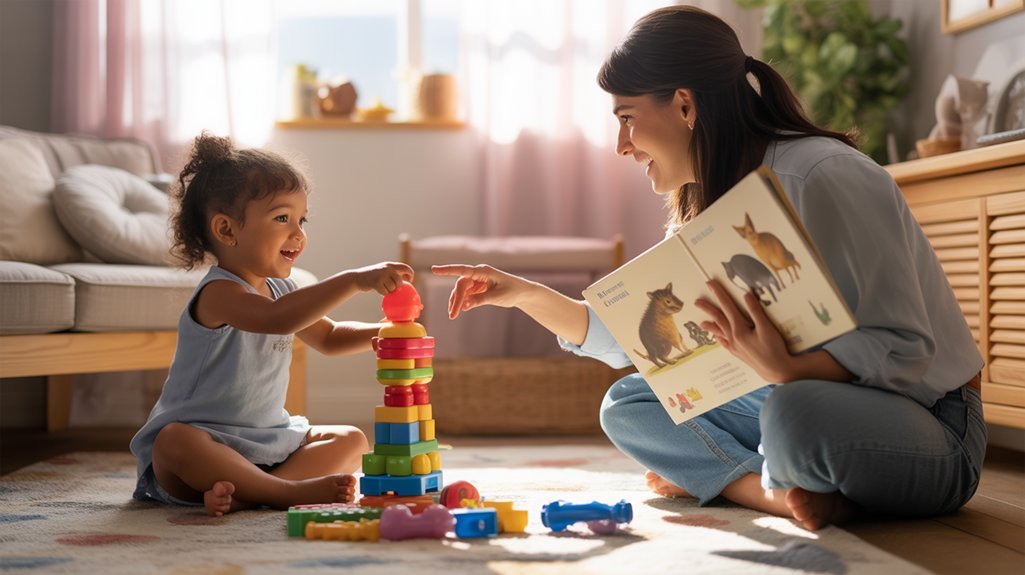
When your child turns three, they're experiencing a remarkable period of cognitive and physical growth that directly influences which toys will benefit them most.
Age three marks a crucial developmental window where the right toys can powerfully accelerate your child's cognitive and physical capabilities.
At this stage, your three-year-old can draw simple shapes when instructed and stack blocks with increasing precision. These fine motor skills are developing rapidly alongside their cognitive abilities. You'll notice they're counting to three or beyond and grasping basic numerical concepts, making this an ideal time to introduce educational toys that reinforce these emerging skills.
Their language comprehension has advanced greatly—they're now following storylines in books and recognizing character activities. This growth supports imaginative storytelling, where they'll create elaborate narratives during play.
Social play becomes increasingly important as your child explores different roles and scenarios. Through this imaginative engagement, they're developing essential emotional intelligence and interpersonal skills.
Research consistently shows that the first three years are the most important for lifelong mental health and well-being, making thoughtful toy selection particularly crucial during this developmental window.
Selecting toys that align with these developmental milestones guarantees you're supporting their natural learning progression effectively.
Toys That Build Critical Thinking and Problem-Solving Skills
Your three-year-old's brain is wired for problem-solving, and the right toys can strengthen these neural pathways through hands-on exploration.
When children manipulate puzzles, building blocks, and classification games, they're actively developing sequential reasoning—learning to plan steps, test solutions, and adjust their approach when something doesn't work.
These critical thinking skills form the foundation for mathematics, reading comprehension, and logical reasoning they'll need throughout their academic journey.
Supporting your child's cognitive development through play also addresses their emotional needs, as children who feel confident in their problem-solving abilities develop stronger self-esteem and resilience.
Sequential Reasoning Through Play
As your three-year-old navigates the world around them, sequential reasoning toys become powerful tools that change everyday play into cognitive development.
Puzzle play naturally teaches children to recognize patterns, understand cause-and-effect relationships, and approach challenges methodically. When they work through multi-step problems, they're building the logical thinking skills essential for academic success.
Matching games strengthen your child's ability to categorize, compare, and draw connections between concepts. These activities encourage them to think independently while making decisions about which pieces fit together.
You'll notice how these hands-on experiences help children develop trust in their reasoning abilities. As you explore activities for children, remember that engaging play experiences lay the foundation for lifelong learning and cognitive growth.
Problem-Solving Toy Recommendations
Building on your child's growing sequential reasoning abilities, problem-solving toys convert abstract thinking into tangible learning experiences.
The Montessori Happy Puzzles engage your three-year-old in creative problem solving while strengthening correlation skills through independent exploration. For developing patience alongside fine motor control, the Montessori Bee Box promotes sequential thought patterns essential for tackling challenges.
Open-ended options like Montessori Wooden Stones blend imaginative play with logical reasoning, allowing your child to discover multiple solutions.
The Montessori Double-Sided Puzzle delivers that vital sense of accomplishment that motivates continued learning. To introduce early math concepts, the Montessori Number Knockdown combines classification skills with number recognition, making abstract mathematical thinking accessible through interactive play.
These carefully selected toys support your child's natural curiosity while building foundational problem-solving capabilities. When selecting developmental stage toys, consider how each option aligns with your child's current abilities and emerging skills.
Enhancing Color Recognition Through Play
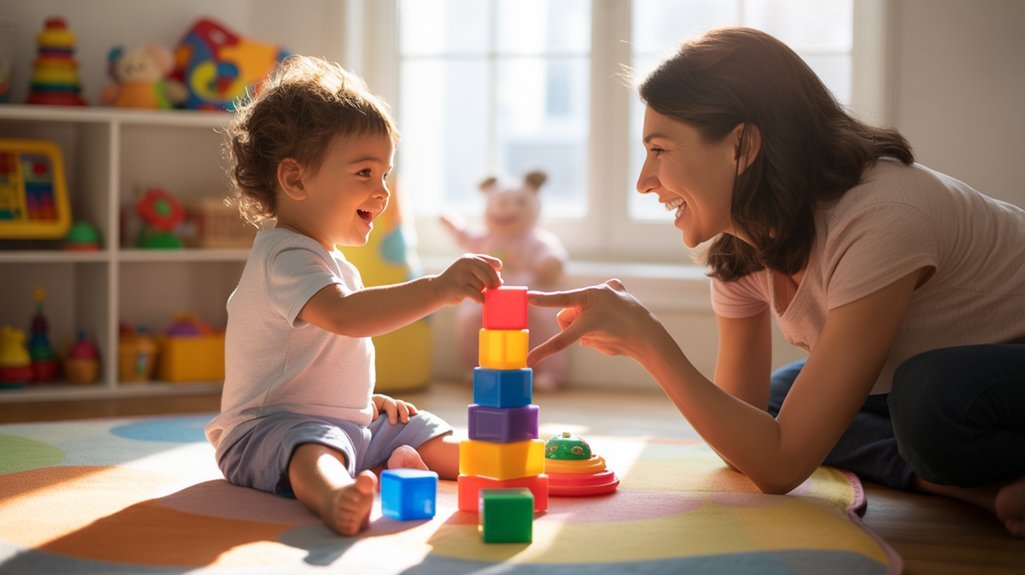
You'll find that toys designed to teach colors offer your 3-year-old more than simple entertainment—they're building blocks for visual perception and early language development.
Interactive color learning activities, such as sorting games and matching puzzles, help your child classify objects while strengthening their ability to recognize and name different hues.
These playful experiences lay essential groundwork for cognitive skills and color theory that will support your child's future learning across multiple subjects.
Toys That Teach Colors
Color recognition marks one of the earliest cognitive milestones for three-year-olds, and the right toys change this learning process into an adventure your child won't want to end.
Color sorting toys like rainbow stackers and sorting cubes provide hands-on manipulation that strengthens fine motor skills while building visual perception abilities. Hue matching games, including color-coded puzzles and matching cards, help children differentiate between various shades through engaging activities.
You'll notice these vibrant toys create opportunities for language development as children name and identify colors during play. Interactive features encourage self-expression while making learning memorable.
When selecting color-teaching toys, prioritize options that combine multiple developmental benefits—fine motor practice, cognitive growth, and language skills—ensuring you're supporting the whole child through purposeful play.
Interactive Color Learning Activities
When three-year-olds move beyond simple identification into vibrant color-based activities, they're building neural pathways that support both immediate learning and future academic success.
You'll find that color recognition games naturally develop language skills as children name hues while sorting, matching, and categorizing objects. These interactive play methods strengthen visual perception—a foundational skill for reading readiness and spatial awareness.
Through hands-on engagement, you're helping children develop logical reasoning as they classify warm reds alongside cool blues.
The social-emotional benefits are equally valuable: when children cooperate during group color activities, they're learning to share experiences and communicate effectively.
Developing Early Math Skills With Educational Toys
As your child approaches their third birthday, mathematical thinking begins to blossom through everyday play and exploration. You'll find that educational toys designed specifically for this age can greatly boost early math skills while keeping your little one engaged and excited about learning.
Number recognition becomes more accessible when you introduce toys like the Montessori Number Knockdown, which helps children practice number formation while strengthening visual memory and concentration. Counting games, such as the Apple Counting toy, support your preschooler in understanding how numbers relate to actual quantities in meaningful, hands-on ways.
Interactive matching and sorting activities develop vital classification skills that form the foundation for more complex mathematical concepts. Shape sorting toys offer dual benefits—they improve mathematical understanding while enhancing fine motor skills essential for future writing and self-care tasks.
Fine Motor Skill Development for Preschoolers
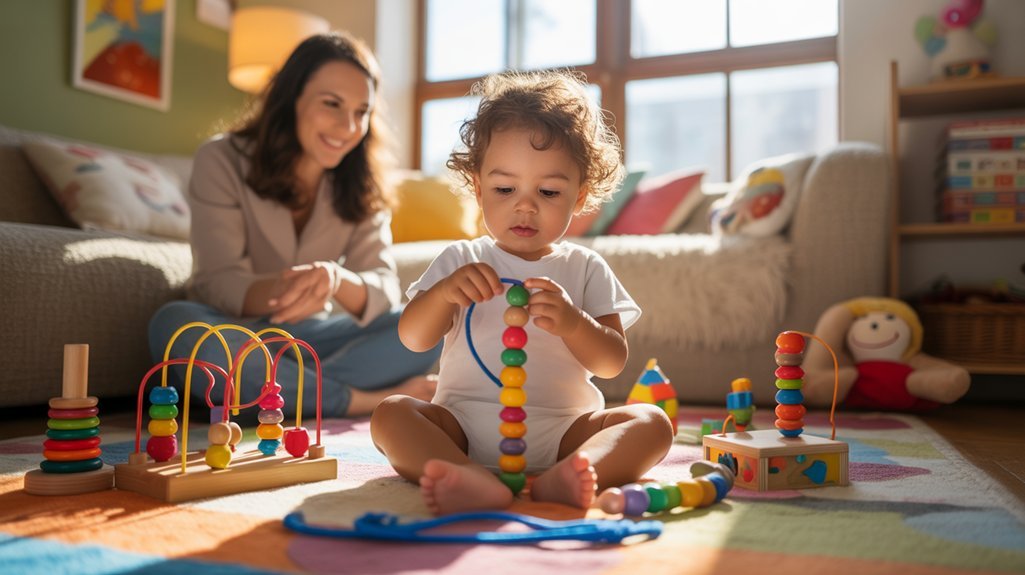
Your 3-year-old's hand muscles need regular exercise to develop the strength required for future writing and self-care tasks.
Educational toys that encourage squeezing, pinching, and grasping motions naturally build this foundational hand strength through play.
Building Hand Strength Naturally
Because preschoolers' hand muscles are still developing, they need regular opportunities to strengthen the small muscles in their fingers and palms through purposeful play.
You'll find that manipulative toys like Play-Doh and clay provide excellent hand exercises while encouraging creative play. These materials require squeezing, rolling, and pinching—movements that build grip strength essential for holding pencils and utensils.
Threading beads and using child-safe tweezers offer additional ways to develop hand strength and dexterity. As children work with these tools, they're naturally building the coordination needed for everyday tasks like buttoning shirts.
Building blocks, puzzles, and shape sorters further challenge developing muscles while promoting visual-motor integration. By providing these engaging activities, you're helping preschoolers gain better control over their movements through enjoyable, age-appropriate experiences.
Precision and Grip Control
Building hand strength sets the stage, but three-year-olds also need practice refining how they use that strength. Precision and grip control develop through targeted activities that challenge children to manipulate small objects with intention.
You'll notice significant progress when you introduce toys requiring pinching, grasping, and careful finger placement. Grip exercises become naturally engaging through pegboards, lacing cards, and threading activities. These tools help children shift from palmar grasps to more refined pincer grips essential for writing.
Dexterity games like sorting small items with tweezers or stacking tiny blocks build the coordination needed for buttoning, zipping, and utensil use. Select toys that progressively challenge their abilities—puzzles with smaller pieces, construction sets requiring precise connections, and art supplies demanding controlled movements.
These experiences build both competence and confidence in everyday tasks.
Fostering Social Skills and Emotional Intelligence
At three years old, children stand at a critical juncture in their social and emotional development, making toy selection particularly meaningful for growth in these areas.
You'll find that dolls and puppet theaters provide exceptional opportunities for empathy development, as children express emotions and explore different perspectives through pretend play. These activities build emotional intelligence naturally.
Cooperative play emerges through toys requiring shared interaction. Building blocks and shape-sorting games teach patience and turn-taking—foundational skills for positive social exchanges.
When children work together on team-based activities, they're strengthening communication abilities essential for meaningful relationships.
Role-playing scenarios offer practical experience in conflict resolution and negotiation. Your child practices emotional regulation while maneuvering through pretend situations that mirror real-world interactions.
Group activities with educational toys create valuable moments for self-awareness development. Children learn to recognize others' feelings and respond appropriately—capabilities that support lifelong relationship success and emotional well-being.
Montessori-Inspired Toys for Hands-On Learning
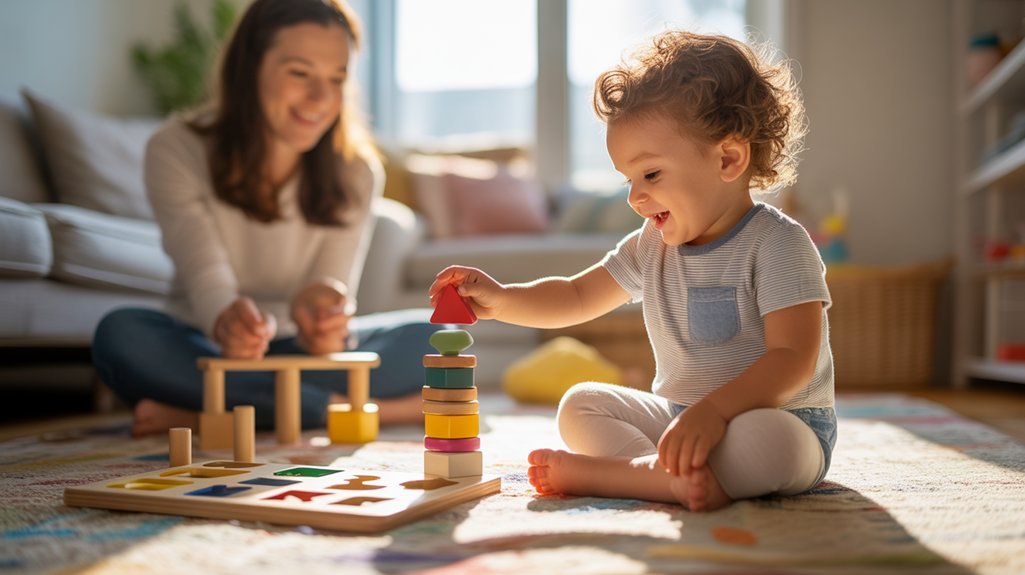
When you introduce Montessori-inspired toys to your 3-year-old, you're selecting materials specifically designed to match their natural learning patterns and developmental needs. These tools embrace Montessori principles by prioritizing hands-on engagement through natural materials like wood, creating safe, sustainable play environments.
You'll notice these toys promote open-ended exploration rather than prescribed outcomes. The Montessori Bee Box develops fine motor development and patience, while Montessori Happy Puzzles strengthen problem-solving abilities. This approach supports independent learning, allowing your child to direct their own creative play and discover solutions at their own pace.
The educational value extends beyond single skills—these materials adapt as your child grows, maintaining relevance through various developmental milestones. By emphasizing self-directed discovery, you're cultivating critical thinking and autonomy.
Montessori materials grow with your child, fostering self-directed discovery that builds critical thinking and independence across developmental stages.
Your child learns to engage deeply with materials, building confidence and competence that transfers to other learning contexts, ultimately preparing them for future academic and social success.
Screen-Free Play Options for Active Engagement
By choosing screen-free play options, you're giving your 3-year-old's brain the rich sensory input it needs for ideal development. Pretend play sets and building blocks spark creative play while strengthening problem-solving abilities.
These hands-on activities develop fine motor skills essential for writing and daily self-care tasks. Interactive toys requiring physical movement—like ride-on equipment and crawl-through tunnels—enhance gross motor skills while keeping children actively engaged.
This imaginative exploration builds coordination and spatial awareness naturally through play. You'll find many educational toys include activity guides with screen-free games designed to optimize developmental benefits.
These resources help you promote meaningful play experiences that encourage critical thinking and social skills. Screen-free options protect children from digital distractions while establishing healthier play habits.
When you prioritize toys that encourage hands-on interaction, you're supporting your child's cognitive, physical, and emotional growth during this critical developmental window. The active engagement these toys provide creates lasting foundations for future learning.
Best-Selling Educational Toys for 3-Year-Olds
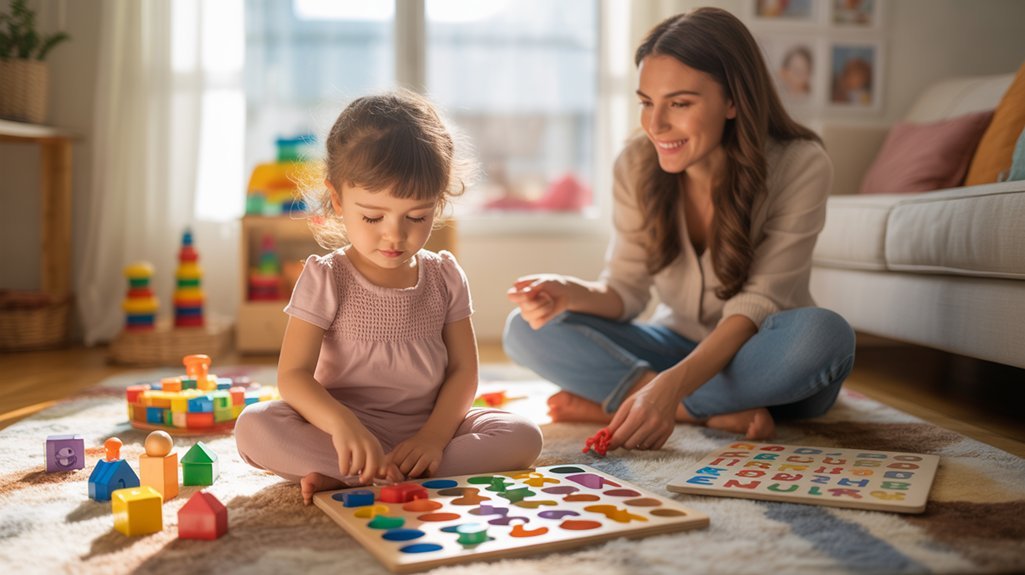
Parents consistently turn to three standout educational toys that combine affordability with proven developmental benefits.
The Rainbow Counting Bears ($22.98, down from $32.99) converts number learning into creative play through colorful manipulatives that strengthen counting and color recognition skills.
Colorful bear counters transform early math concepts into hands-on play while building essential color recognition and number skills.
The Shape Stacking toy ($22.97, reduced from $29.79) challenges your child's problem-solving abilities while developing fine motor coordination through hands-on sensory exploration.
The Apple Counting toy ($23.97, discounted from $39.99) makes number recognition engaging through interactive activities that hold your preschooler's attention.
These best-sellers have earned positive customer reviews from parents who've witnessed their effectiveness in building essential cognitive skills.
Each toy offers screen-free learning that captivates 3-year-olds while supporting their developmental growth.
You'll find these educational tools provide exceptional value, combining research-backed learning approaches with activities that keep young children genuinely engaged.
Their popularity reflects their proven ability to make foundational skill-building both enjoyable and effective for preschoolers.
Safety Considerations When Choosing Toys for Preschoolers
Safety standards protect your 3-year-old during playtime, making careful toy selection essential for preventing injuries and health risks.
You'll want to examine toys durability by checking for well-made construction without sharp edges or small parts that could cause choking. Material safety requires selecting non-toxic options with safe finishes that minimize harmful chemical exposure.
Verify that electric toys carry UL Approval, confirming they meet established electrical safety standards. This certification helps you confidently introduce battery-operated learning tools into your child's play environment.
Create a routine for inspecting toys regularly, as wear and tear alters safe items into potential hazards.
Watch for loose parts, cracks, or damaged edges that could harm little hands.
Stay current with product recall notifications through consumer safety websites. This proactive approach guarantees you're immediately aware of defects that could endanger the children in your care, allowing you to remove compromised items promptly.
Age-Appropriate Skill Development Focus
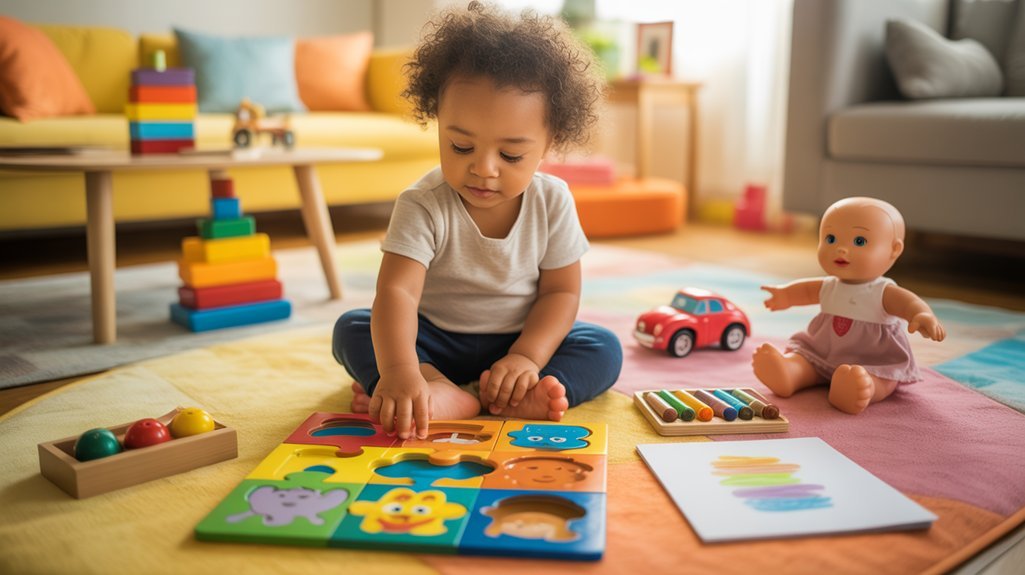
As your three-year-old's brain develops rapidly, selecting toys that match their emerging capabilities accelerates learning across multiple developmental domains. You'll want to prioritize materials that support cognitive growth through problem-solving activities like 4-12 piece puzzles, which strengthen cause-and-effect understanding while building patience and concentration.
Focus on these developmental priorities:
- Fine motor advancement – Drawing tools, shape puzzles, and non-toxic crayons refine hand-eye coordination and prepare small muscles for future writing skills.
- Imaginative exploration – Dolls, vehicles, and pretend play items enable role-playing scenarios that develop emotional intelligence and social understanding.
- Spatial reasoning – Soft blocks and construction sets improve three-dimensional thinking while encouraging creative problem-solving.
You're supporting multiple skill areas simultaneously when you choose toys thoughtfully. Finger paints promote artistic expression alongside sensory development, while building sets combine creativity with mathematical concepts.
Parent FAQs About Selection
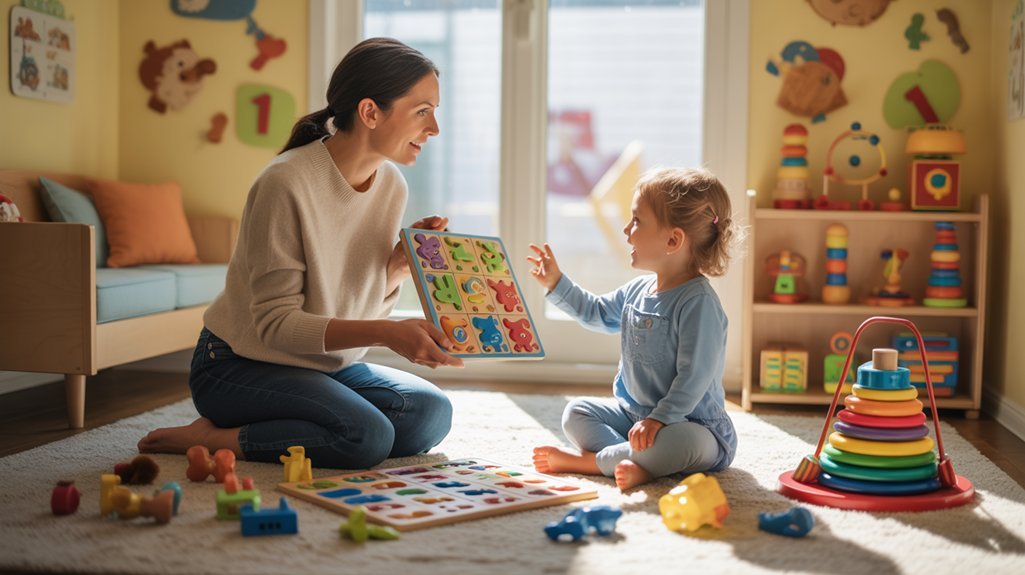
You'll likely have questions about choosing the right educational toys for your three-year-old, from safety certifications to whether expensive options truly offer more value.
Understanding the differences between Montessori-style and traditional toys can help you match purchases to your child's learning style and your family's priorities.
Smart selection also means considering how toys can target multiple developmental areas simultaneously while fitting your budget and storage space.
Age-Appropriate Safety Standards
When selecting educational toys for your 3-year-old, understanding safety standards isn't optional—it's essential.
You'll want to verify that toys meet CPSC safety regulations, which mandate no small parts that could cause choking.
Examine toy materials carefully—they should be non-toxic with lead-free paint, protecting children during exploration and mouthing behaviors.
Check that toys are well-constructed without sharp edges or breakable components.
If you're considering electric toys, make sure they're UL Approved, confirming they meet electrical safety requirements for young children.
Don't stop at the initial purchase—regularly inspect toys for wear and tear that could create hazards.
Stay current with recall notifications and safety alerts.
Budget-Friendly Quality Options
Safety standards protect your child, but they shouldn't empty your wallet. You'll find excellent budget friendly options under $50 that deliver genuine educational value.
The Montessori Number Knockdown and Happy Puzzles promote number recognition and problem-solving while meeting safety requirements. At $39.97, the Montessori Fishing Game supports imaginative play without compromising quality materials.
Focus on toys that develop multiple skills simultaneously. The Montessori Bee Box improves fine motor skills and patience through affordable, well-designed activities.
You're investing in your child's cognitive development while maintaining financial responsibility.
Look for toys with activity guides—they optimize learning experiences without additional costs. These structured play ideas help you create meaningful educational moments.
Remember: age-appropriate design and quality materials matter more than price tags when serving your child's developmental needs.
Montessori Vs Traditional Toys
Understanding the distinction between Montessori and traditional toys helps you make informed choices for your 3-year-old's development. Montessori principles emphasize hands-on learning through open-ended play, nurturing independent play and real-life skills. Traditional toy characteristics often prioritize structured engagement and immediate gratification. Here's how they compare:
| Feature | Montessori Toys | Traditional Toys |
|---|---|---|
| Materials | Eco-friendly materials like wood | Often plastic-based |
| Play Style | Open-ended play promoting problem-solving | Predetermined outcomes |
| Skills Focus | Real-life skills and practical experiences | Entertainment-centered |
| Developmental Alignment | Targets specific milestones | May lack developmental focus |
| Parental Involvement | Encourages active engagement | Less interactive guidance |
Both approaches offer value, but Montessori toys typically better support your child's cognitive growth and fine motor development through purposeful, sustainable design.
Multi-Skill Development Benefits
As your 3-year-old explores their world, the right educational toys simultaneously develop multiple competencies rather than isolating single skills. When you select building blocks or puzzles, you're supporting fine motor coordination alongside problem-solving abilities and spatial reasoning.
These tools encourage creative exploration while strengthening classification skills essential for cognitive growth.
Interactive learning through pretend play items like dolls and vehicles nurtures imagination, language development, and empathy concurrently. Your child practices communication while building social-emotional understanding through role-play scenarios.
Toys incorporating color recognition and early math concepts, such as counting bears and shape sorters, make foundational learning engaging and accessible.
Prioritize age-appropriate, non-toxic materials that create safe environments where your child confidently explores, discovers, and develops comprehensively through purposeful play experiences.
Storage and Longevity Tips
When you invest in quality educational toys for your 3-year-old, proper storage directly impacts how long they'll remain effective learning tools. Store items in cool, dry locations away from direct sunlight to prevent color fading and material deterioration.
Effective toy organization means using labeled bins or shelves sorted by category or developmental stage, enabling children to access materials independently while learning tidiness.
Your maintenance strategies should include regular inspections for wear and tear, promptly replacing damaged parts or removing unsafe items. Clean frequently-used toys with non-toxic cleaners to maintain hygiene and extend lifespan.
Consider rotating toys every few months—this approach keeps the learning environment fresh and sustains children's engagement. These intentional practices enhance your investment while ensuring safe, developmentally-appropriate play experiences.
Safety and Quality Considerations
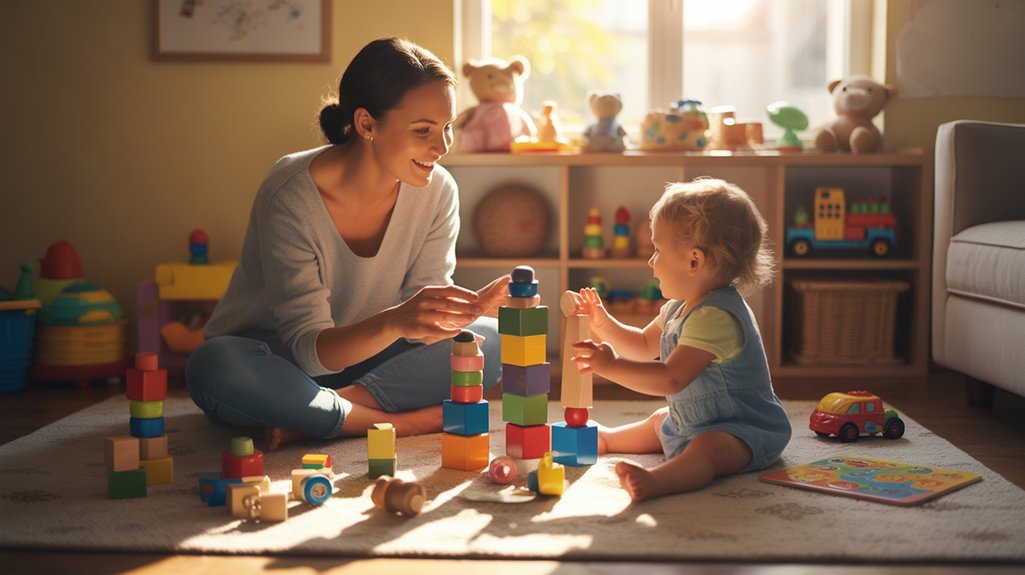
Before you bring home any toy for your three-year-old, you'll want to verify it meets essential safety standards. Toy safety goes beyond simple supervision—it requires careful examination of construction, materials, and age-appropriateness.
Quality toys should be well-made with sturdy construction and non-toxic paint that won't harm your child if mouthed or ingested.
When evaluating toys quality, check for these critical features:
- No small parts or detachable pieces that could create choking hazards for children under three
- Smooth edges and surfaces free from sharp points or rough areas that might cause injury
- UL Approval for electric toys confirming they've met rigorous safety testing standards
You'll also need to inspect toys regularly for wear and tear, as even high-quality items can deteriorate with enthusiastic play.
Stay current on product recalls through the Consumer Product Safety Commission website, ensuring your child's play environment remains safe and secure.
Trusted Brands and Where to Buy
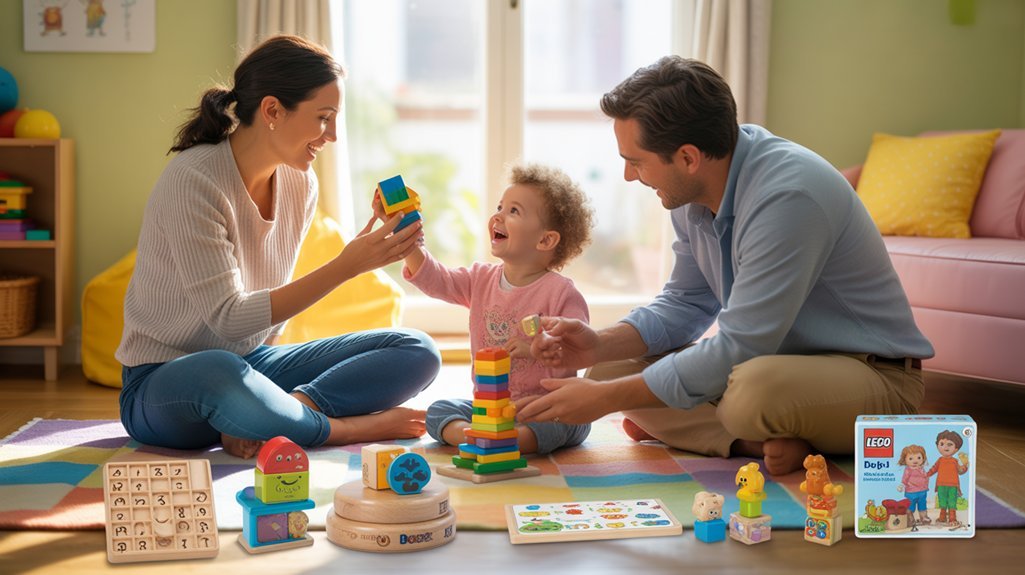
Once you've confirmed a toy meets safety standards, you'll want to know which manufacturers consistently deliver on quality and educational value. Trusted brands with over three decades of experience specialize in creating engaging toys that inspire imaginative play for 3-year-olds. These manufacturers focus on Montessori-inspired products that improve fine motor skills, problem-solving abilities, and early math concepts—essential for preschool development.
| Where to Shop | What to Look For |
|---|---|
| Online platforms | Customer reviews highlighting effectiveness |
| Local specialty stores | Hands-on product examination |
| Educational retailers | Expert staff guidance |
Many manufacturers now offer eco friendly options, using renewable materials and sustainable production practices. You'll find these quality toys at reputable retailers who prioritize safety standards and high-quality materials. Reading customer reviews helps you identify which products truly support children's learning. By choosing brands committed to both developmental value and environmental responsibility, you're investing in toys that serve children's growth while honoring your values.
Frequently Asked Questions
How Do I Rotate Toys to Maintain My 3-Year-Old's Interest?
You'll maintain your child's engagement through strategic toy rotation every 2-3 weeks.
Store three-quarters of their toys out of sight, keeping only 6-8 items accessible.
When you reintroduce stored toys, they'll seem novel again, rekindling curiosity and focused play.
For ideal interest maintenance, rotate based on your child's emerging skills and seasonal themes.
You're fundamentally creating a “new” toy collection regularly without additional purchases, supporting sustained attention spans while reducing overwhelm in their play environment.
Can Educational Toys Help With Speech Delays in Toddlers?
Yes, educational toys can support speech development when you're addressing delays in your toddler.
Toys that encourage toy interactions—like puppet play, sorting games with naming opportunities, and musical instruments—create natural contexts for language practice.
However, they're most effective when you engage alongside your child, modeling words and expanding their attempts.
While toys provide valuable practice opportunities, they shouldn't replace professional speech therapy if your pediatrician recommends evaluation for significant delays.
What's the Ideal Toy Budget for a 3-Year-Old's Development?
You'll need just $25-50 monthly to support your three-year-old's development effectively.
Research shows children play with only 5% of their toys regularly, making quality over quantity essential.
Your toy purchase guidelines should prioritize open-ended materials like blocks and art supplies that grow with your child.
Budget friendly options include rotating toys from libraries or organizing swaps with other families.
Should I Buy Gender-Neutral Toys for My Preschooler?
Yes, you should choose gender-neutral toys for your preschooler.
Research shows gender neutral benefits include broader skill development and emotional growth. By promoting inclusivity through diverse toy choices, you'll help your child explore varied interests without limiting stereotypes.
Gender-neutral options like building blocks, art supplies, and puzzles encourage all children to develop spatial, creative, and problem-solving abilities equally.
You're nurturing an environment where your preschooler can discover their authentic interests while developing essential skills.
How Many Educational Toys Should a 3-Year-Old Have at Once?
Imagine your child's play area: cluttered corners overwhelm tiny minds, while sparse shelves limit exploration.
You'll want to rotate 5-8 educational toys at once for ideal learning. This manageable toy variety prevents overstimulation while encouraging deeper engagement with each item.
Research shows fewer choices actually enhance cognitive benefits—your three-year-old will focus longer, problem-solve better, and develop creativity more fully.
Store extras away and swap them weekly, keeping playtime fresh while nurturing their developing brain's capacity for meaningful discovery.
Conclusion
You've now got the toolkit to nurture your little one's blossoming abilities through play. Remember, there's no single “perfect” toy—what matters most is matching selections to your child's unique pace of growth. Don't stress if they're not ready for certain activities yet; development unfolds naturally, not on a strict timeline. Trust your instincts, prioritize safe choices, and watch as these carefully chosen playthings support your three-year-old's journey toward new milestones.
Related Articles
- The Ultimate Guide to Sibling Conflict
- The Ultimate Guide to Family Meal Planning
- The Ultimate Guide to Kids Educational Games
- 20 Fun DIY Crafts to Strengthen Family Bonds
- The Ultimate Guide to Screen Time Management

Written by Sarah Mitchell, M.S., CFLE
Founder & Lead Editor
Sarah is a Certified Family Life Educator with a Master's degree in Human Development and Family Studies from the University of Missouri. With 15+ years of experience as a parent educator and mother of three, she brings both professional expertise and real-world parenting wisdom to every article.
Credentials: M.S. in Human Development and Family Studies, Certified Family Life Educator (CFLE)