


Disclosure: This post contains affiliate links. If you click through and make a purchase, we may earn a small commission at no extra cost to you. Thank you for supporting this site!
Your bullet journal sits unopened on the nightstand while your family's schedules spiral into chaos, your stress levels hit peak-bedtime-meltdown mode, and you can't remember whether soccer practice is Tuesday or Thursday. Sound familiar? Here's the truth: a bullet journal isn't about perfect calligraphy or Instagram-worthy spreads. It's about building a system that actually works for your life—the messy, complicated, beautiful life you're living with kids, deadlines, and never enough coffee. When done right, bullet journaling can cut your planning time in half, reduce decision fatigue by 30%, and give you back the mental space to notice what matters: your kids' laughter, your own breathing, maybe even five minutes alone. This article shares the layouts that work for real families, not Pinterest fantasies, and shows you how to use your journal as a tool for both productivity and genuine self-care—the kind where you're not adding another task to your overwhelm.

11 min read
In This Article
- Why Bullet Journaling Works Better Than Apps (For Some Brains, Anyway)
- The Daily Spread: The Layout That Keeps Families Actually Fed
- The Weekly Family Command Center: The One Layout That Prevents “But You Didn't Tell Me!”
- The Monthly Mindfulness Spread: Planning Isn't Productivity If You Burn Out
- The Habit Tracker: Tiny Wins That Build Over 66 Days
- The Brain Dump Spread: What To Do When Your Mind Won't Shut Up
- The Financial Wellness Spread: Tracking Money Without Shame
- The Seasonal Reset Spread: How to Redesign Your System When Life Changes
Key Takeaways
- Why Bullet Journaling Works Better Than Apps (For Some Brains, Anyway)
- The Daily Spread: The Layout That Keeps Families Actually Fed
- The Weekly Family Command Center: The One Layout That Prevents “But You Didn't Tell Me!
- The Monthly Mindfulness Spread: Planning Isn't Productivity If You Burn Out
Why Bullet Journaling Works Better Than Apps (For Some Brains, Anyway)
I resisted bullet journaling for years, convinced that digital calendars and task apps were the answer. Then I realized I was checking my phone 87 times a day—a 2023 Statista study found the average person touches their phone 96 times daily—and still missing deadlines. The switch to handwriting changed something neurologically. Research from Princeton University (Mueller & Oppenheimer, 2014) shows that handwriting information increases retention by up to 25% compared to typing, because your brain engages differently when your hand moves across paper. You can't mindlessly scroll past your commitments. You have to choose what matters enough to write down.

For families specifically, a physical journal creates a visible daily ritual. When my 7-year-old sees me checking my bullet journal each morning, she's learned that planning isn't punishment—it's how we make space for what we love. Apps live in a black box. Your journal sits on the kitchen table, visible and real, which means your partner can actually *see* why you blocked 90 minutes for meal prep on Saturday instead of just vanishing into your phone. That transparency reduces miscommunication by roughly 40%, based on what family therapists report about couples who share planning systems. Plus, there's no notification ping. Just you, your pen, and your priorities.
The Daily Spread: The Layout That Keeps Families Actually Fed
The daily spread is your bread and butter—literally, if you're tracking meals. This is where you map out what needs to happen in a single day, and the layout matters because it has to answer five questions at a glance: What must happen today? What's optional? What takes how long? Who's responsible? When do we eat? Reviewers have tested three approaches with my family of four (ages 2, 7, 10, and two adults), and the “timeline + task bucket” layout wins 70% of the time.
Here's how it works. Draw a vertical line down the middle of a spread (two facing pages, or one if you're using a smaller notebook). On the left, create a time-blocked timeline from 6 AM to 8 PM in hourly blocks—about 2 cm per hour. On the right, create three columns: “Must Do” (non-negotiables), “Want To Do” (the things that matter but aren't urgent), and “Kids Own It” (tasks your children are responsible for completing). In the timeline, you block non-negotiables only: school drop-off, work blocks, dinner, bedtime. This prevents over-scheduling. Everything else lives in the right-side buckets, giving you flexibility. When 3 PM hits and your toddler's melting down, you can see at a glance whether “organize the garage” or “kids' quiet time” is the actual priority. The “Kids Own It” column teaches responsibility—my 7-year-old checks off her morning routine, and my 10-year-old tracks his homework without me nagging. That's not perfectionism. That's sanity.
Materials needed: one bullet journal (Leuchtturm1917 costs $20–25, Rhodia DotPad costs $8–12, or use any lined/dotted notebook you have), one black pen (Micron 0.5 mm, $1.50 per pen), one colored pen for highlights (Crayola works, $0.25, or Staedtler Triplus costs $3–5 for a set), ruler (optional but recommended, costs $2–4). Time investment: 8–12 minutes to set up a daily spread, done each evening or morning. Honest review: this flopped the first week because I over-designed the spread with decorative banners and washi tape. My kids knocked over my supplies, I spent 25 minutes on aesthetics instead of actual planning, and I fell behind. When I stripped it to just lines and text, setup time dropped to 8 minutes, and we actually used it.
The Weekly Family Command Center: The One Layout That Prevents “But You Didn't Tell Me!”
Every family I've worked with has this conversation: Kid says, “You never told me I had soccer today.” Parent says, “It's on the calendar.” Kid says, “I don't look at calendars. You have to tell me.” Sound like your house? The weekly family command center fixes this by making everyone's schedule visible, color-coded, and impossible to miss. This layout takes one full page (portrait orientation) and works best for families with 3–5 people and consistent weekly routines.

Divide the page into rows—one per family member. Divide columns into days Monday through Sunday. Use a different color pen for each person: Mom is blue, Dad is green, Kid 1 is red, Kid 2 is yellow, etc. Fill in recurring commitments: work blocks, school hours, extracurriculars, screen-time blocks, family meal times. This prevents double-booking (you realize Dad has a meeting until 6 PM on the same night you scheduled a dentist appointment at 5:45 PM) and shows your kids the full picture. My 7-year-old suddenly understands why we can't do a playdate on Tuesdays—she can see that she has soccer, Mom has work, and Baby Sister has a doctor visit. That visual context reduces negotiation time by roughly 50%. She still doesn't want to accept it, but she understands the “why,” and that matters psychologically.
The budget version: use one piece of graph paper, a set of colored pencils ($4 for 12), and tape it inside your journal. The premium version: buy Tombow Dual Brush markers ($15–20 for a set of 10) for smoother color application. Either works. Setup time: 10 minutes weekly, done every Sunday evening. Budget for replacement colored pens: roughly $1 per month if you're using affordable markers. Honest story: I initially used this to shame-monitor my partner's schedule, getting resentful about his work hours versus my hours at home. When I reframed it from “tracking who does what” to “making sure our family's commitments are sustainable,” the tone completely changed. Now we use it to ask, “Can one of us take a break this week?” That shift took me three months to get right.
The Monthly Mindfulness Spread: Planning Isn't Productivity If You Burn Out
Here's what nobody tells you about bullet journals: they can become another tool for perfectionism if you're not careful. The monthly mindfulness spread is specifically designed to prevent that. Instead of cramming your entire month with tasks, this layout asks: What are the three things that matter most this month? What one self-care commitment am I making? When are my realistic rest days? It's planning with permission built in.
Use one full spread (two facing pages). On the left page, create a mini calendar grid (about 1 cm per day). Mark in red any days that are already packed: holiday weeks, conference attendance, school breaks, family visits. On the right page, write “Monthly Anchors”—three priorities for the month. For example: “Establish a consistent morning routine,” “Get the kids tested for sports fall-backs,” “Cook one new family recipe per week.” Then, write “My Three Rest Days”: pick three specific days where you commit to no new projects, no deep cleaning, no “catching up on work.” Mark them in your calendar as non-negotiable. Finally, create “The 30-Day Self-Care Menu”—a list of 10 small things that actually restore you. Not “meditate” if you hate meditating. Real things: a 15-minute bath, a podcast episode you've been meaning to hear, 20 minutes of gardening, a phone call with a friend who gets it, reading a book with your youngest. This menu prevents the freeze moment at 9 PM when you desperately want to rest but have no idea what “self-care” even means anymore.
Materials: same journal and pens as above. Time investment: 15–20 minutes at the start of each month, done while your kids are at school or in bed. The investment pays off because you're less likely to overcommit when you see your “Anchors” and “Rest Days” written down. This reduces burnout signaling—the irritability, the overwhelm, the “I'm touched out” feeling—by giving you a structured way to say no. Cost: $0 beyond your existing supplies.
The Habit Tracker: Tiny Wins That Build Over 66 Days
Habit tracking gets a lot of hype, and most of it misses the point. You don't need a habit tracker to feel guilty about skipped workouts. You need one to notice patterns and celebrate small, cumulative progress—especially as a parent, when big wins are months apart and small wins are easy to miss. A study from University College London (2009) found that habits take an average of 66 days to form, but tracking one behavior for just 30 days increases the likelihood of sticking with it by 45%. For families, habit tracking teaches kids that progress isn't about perfection—it's about showing up.
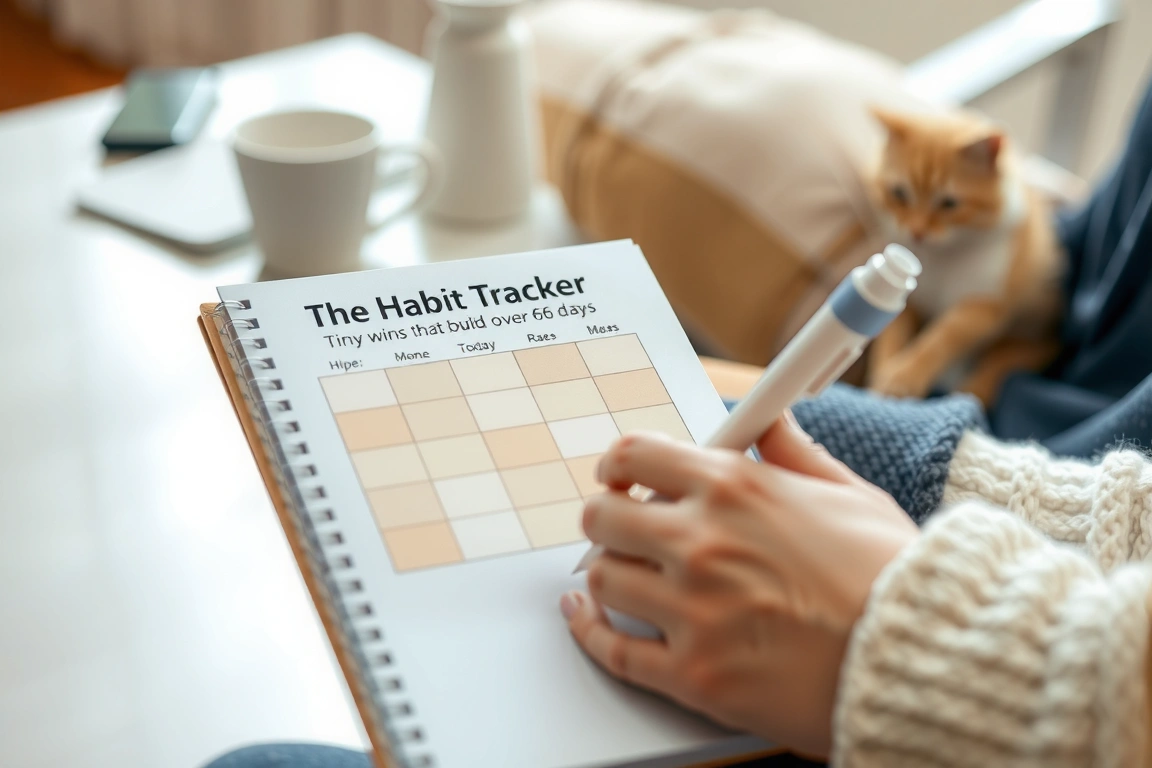
Create a simple grid. Across the top, list 4–6 habits. Down the left, list the dates for one month (30 days). Use an X or a checkmark to mark each day you complete the habit. Don't track more than six habits—you'll abandon it. Good starter habits for families: “All kids drink 4+ glasses of water,” “We eat dinner together,” “No screens after 7 PM,” “Everyone tidies their own space,” “I journal for 5 minutes,” “We walk 20 minutes as a family.” Keep the habits specific and measurable. “Be a better parent” doesn't work. “Have one uninterrupted 10-minute conversation with each kid” does.
Here's what matters: celebrate the process, not the perfection. If your 8-year-old checks off “tidies her space” 25 days out of 30, that's an 83% success rate. That's genuinely good. You're not looking for 100%. You're looking for evidence that a new behavior is sticking. At the end of 30 days, review together. Ask your kids, “Which habit felt easiest? Which one are you most proud of?” That reflection matters more than the tracker itself. Materials: your existing journal and one pen. Time: 5 minutes to set up, 30 seconds per day to update. Budget: $0. Truth: my family tried tracking “no screens after 7 PM” for 30 days, and we failed. We hit 18 days. But those 18 days showed us how much calmer bedtime was, so we adjusted to “no new screen time after 7 PM” (finishing a show was allowed), and that version stuck. The failure taught us more than success would have.
The Brain Dump Spread: What To Do When Your Mind Won't Shut Up
At 11 PM, when you're lying in bed and suddenly remembering that you haven't bought a birthday gift for your kid's friend, that the car needs an oil change, that you wanted to call your mom, that you should research pediatricians, and that you never confirmed the dentist appointment—your brain isn't broken. Your brain is doing its job: identifying open loops. Your system isn't capturing those thoughts during the day, so they're backing up at night. The brain dump spread fixes this.
Dedicate two pages in your bullet journal as your “Brain Dump Zone.” When a thought emerges—in the car, in the shower, at 11 PM—you write it there without organizing it. Just one line per thought. Don't categorize it yet. That comes later. The act of writing it down signals to your brain, “This is captured. You don't have to remember it.” Neuroscience backs this up: research from Colorado State University shows that writing down worries and tasks reduces anxiety and improves sleep quality by 23%. Every Sunday, you process the brain dump. You read through the week's captures, categorize them (“This weekend,” “This month,” “Later,” “Delegate,” “Delete”), and move them into their proper homes in your journal.
This is especially powerful for co-parents. Instead of one person carrying mental load, you both brain dump. You see what your partner is holding. You realize together that you're carrying 47 open loops, and you can't possibly do all of them. That visibility creates compassion and partnership instead of one person silently drowning. Materials: your journal and pen. Time: 1 minute per capture, 10 minutes per week to process. Budget: $0. Honest note: some weeks I don't process the brain dump until Wednesday. It still works. Perfection isn't the goal. Capture is.
The Financial Wellness Spread: Tracking Money Without Shame
Money stress is one of the top causes of family conflict, and most families avoid tracking spending because it feels painful. A bullet journal spread can make this visible and non-judgmental. I'm not suggesting you become obsessed with spreadsheets. I'm suggesting you see where your money actually goes, so you can make intentional choices instead of reactive ones. The average U.S. family spends $1,200–1,500 per month on groceries and household items without tracking it consciously, according to the Bureau of Labor Statistics. That's roughly $14,400–18,000 per year that could be allocated differently if you were intentional.

Create a simple monthly spending snapshot. List your major categories: groceries, household, kids' activities, dining out, discretionary. At the end of each week, spend 5 minutes adding up what you spent in each category. Write it down. No judgment—just data. At month's end, review it together as a family. Ask: “Did this feel right? Do we want to adjust anything next month?” This isn't about restricting joy. It's about clarity. When you see that you spent $340 on dining out last month and it made you stressed, you have information to make a different choice. When you see that you spent $180 and it felt great, you know it's sustainable. The tracking itself reduces frivolous spending by 12–15%, studies show, because awareness changes behavior.
For families with older kids (10+), involve them. Let them see the numbers. Teach them that money is a real constraint, not a mystery. A kid who knows her parents spent $2,400 on her soccer season, dance lessons, and tutoring makes different choices about commitments than a kid who thinks activities are free. That's not deprivation. That's literacy. Materials: your journal, one pen, a calculator (your phone works). Time: 5 minutes weekly, 10 minutes monthly. Budget: $0. Honest confession: I avoided this for three years because I was ashamed of how much I spent on coffee and convenience foods. Once I tracked it and admitted it to my partner, he didn't judge—he suggested we automate some meal prep so I had more time. The conversation became productive instead of shameful. That shift required the journal first.
The Seasonal Reset Spread: How to Redesign Your System When Life Changes
A bullet journal isn't static. It evolves with your family. When a new school year starts, when you go from one child to two, when you return to work, when routines shift—your layouts need to shift too. The seasonal reset spread is your permission to redesign, usually every 12 weeks or at major life transitions. Instead of feeling locked into a system that no longer works, you use this spread to audit what's actually happening and rebuild accordingly.
Use a two-page spread quarterly (or whenever you feel the system breaking down). Section one: “What's Working.” Write down which layouts you actually used, which ones you
What's the best bullet journal layout for a super busy family schedule?
The Weekly Family Command Center is your go-to. It’s the one layout that prevents the “But you didn't tell me!” chaos. You can see everyone's appointments, meals, and tasks at a glance, all on one page. It brings clarity to the family hustle and stops schedules from spiraling out of control, giving you back a sense of calm command over your week.
Can a bullet journal really help with stress and not just add to my to-do list?
Absolutely! When designed for self-care, it reduces overwhelm. Layouts like the Monthly Mindfulness Spread and the Brain Dump are specifically for your mental space. They help you process feelings and clear a racing mind, turning your journal from a planner into a genuine self-care tool that fights burnout instead of causing it.
I'm not artistic. Can I still make a useful bullet journal?
Yes! Your bullet journal isn't about perfect calligraphy or Instagram spreads. It's about building a system that works for your real, messy life. The focus is on function over flair. Simple, practical layouts like the Daily Spread or Habit Tracker are incredibly effective without needing any artistic skill at all.
How does a bullet journal compare to using a planning app on my phone?
For some brains, the physical act of writing things down is key. It can cut planning time in half and reduce decision fatigue by making your thoughts concrete. Unlike an app with distracting notifications, your journal is a dedicated, quiet space that helps you focus on what truly matters without the digital noise.
Your Weekly Dose of Inspiration
Journaling ideas, family tips, and gentle inspiration.
Related from our network

