


Ever feel like your family is a fleeting blur, breakfast on the run, and goodbyes shouted as doors slam shut? You're not alone. Between school runs, work deadlines, and the daily chaos, meaningful connection can feel like a first casualty. But what if the very time we often see as a logistical hassle could become the foundation for your day? We've gathered seven proven morning routines, grounded in what child development experts and real parents consistently report, that can transform those frantic minutes into moments that genuinely strengthen your bonds.
8 min read
In This Article
Key Takeaways
- 1. The Gratitude Greeting
- 2. The Five-Mile Connection Walk
- 3. The Teamwork Tidy-Up
- 4. The Shared Story Start
1. The Gratitude Greeting
{“text”: “This routine is deceptively simple but packs a powerful punch. Instead of starting the day with demands or reminders, you begin with gratitude. Research by the Greater Good Science Center at UC Berkeley shows that practicing gratitude can increase happiness and reduce depression. In a family context, it sets a positive, cooperative tone.”, “nl”: “\n”}
{“text”: “
- \n
- How it works: As you gather for breakfast or while you're packing lunches, each person shares one thing they're grateful for. It could be something big, like an upcoming trip, or something small, like the sun being out. The key is consistency. For toddlers, this might be a single word (“Pancakes!”). For teenagers, it might be a mumbled “That I passed my math test.”). Don't force elaboration. The act of sharing is what matters. Parents on forums like Reddit's r/Parenting often report that this simple habit reduces morning bickering because it starts the interaction on a positive note.
\n
“, “nl”: “\n”}
Time commitment: Just 2-5 minutes.

Why it works: It builds a habit of seeing the good, a resilience skill that benefits everyone. It ensures that the first words your family exchanges are supportive, not stressful.
It ensures that the first words your family exchanges are supportive, not stressful.
2. The Five-Mile Connection Walk
This isn't about distance. It's about dedicating a short, focused burst of time to movement and conversation before the day begins. A brisk walk around the block, even for just five or ten minutes, provides a shared activity that doesn't involve screens. The American Academy of Pediatrics consistently emphasizes the benefits of physical activity for children‘s focus and mood, and this applies to adults, too.
How it works: After everyone is dressed but before settling into breakfast or screen time, head out the door together. Leave phones behind or put them on silent. The rhythm of walking side-by-side often makes it easier for kids (especially older ones) to open up about what's on their mind. For a family with a 4-year-old, this might be a 10-minute walk pointing out neighborhood flowers. With a 12-year-old, it might be the only time they casually mention a worry about school.
Time commitment: 10-15 minutes.
Watch out for: This can backfire if forced. If it's pouring rain or a child is genuinely not a morning person, don't make it a battle. The goal is connection, not compliance. Try a silly living room dance party for two minutes instead on those days.
3. The Teamwork Tidy-Up
Mornings are full of small tasks, and turning them into a collaborative mission can build a sense of “we're in this together.” This routine transforms nagging into teamwork. The concept is supported by family systems theory, which suggests that shared responsibilities strengthen family identity and cooperation.
How it works: Create a simple morning job chart with clear, age-appropriate tasks. A 3-year-old can be in charge of putting the pillows on the couch. A 7-year-old can empty the cutlery from the dishwasher. A teenager can take out the recycling. Work together for a set 10-minute burst, perhaps with a favorite morning playlist in the background. The key is to frame it as “Let's get this place ready for the day!” rather than a list of chores.
Time commitment: A focused 10-minute burst.
Why it flops if: The tasks are too complex or the time is too long. Keep it short, sweet, and achievable. The sense of accomplishment from a quick, collective tidy-up is a powerful motivator.
Why it works: It builds a habit of seeing the good, a resilience skill that benefits everyone. It ensures that the first words your family exchanges are supportive, not stressful.
4. The Shared Story Start
Reading together isn't just for bedtime. Sharing a short story, a poem, or even a fascinating paragraph from the news over breakfast can spark curiosity and conversation. Jim Trelease, author of “The Read-Aloud Handbook,” advocates for reading at any time of day to build vocabulary and connection.

How it works: Choose something engaging and brief. This could be a chapter from a novel you're reading as a family, a comic strip, or a cool fact from an almanac. With younger children, a picture book takes only a few minutes. The discussion that follows is the real bond-builder. “What do you think happens next?” or “Have you ever felt like that character?”
Time commitment: 5-10 minutes of reading and discussion.
Budget alternative: Use your local library's app to borrow audiobooks or e-books for free, or simply tell a story from your own childhood.
5. The “High-Five and a Goal” Send-Off
This routine combines physical affection with positive intention-setting, creating a powerful, confident send-off. It provides a moment of focused attention for each child right before they head out the door.
How it works: At the door, instead of a hurried goodbye, give each child a high-five, a hug, or a special handshake. Then, ask them for one small goal for their day. For a kindergartener, it might be “I'm going to share the blue crayon.” For a high schooler, it might be “I'm going to ask a question in history class.” This practice, similar to cognitive-behavioral techniques, helps kids start the day with agency and purpose.
Time commitment: Less than 30 seconds per child.
Why it works: It's a quick, memorable ritual that says, “I see you, I believe in you, and I'm thinking of you.” Parents report that this tiny habit becomes a non-negotiable anchor for their kids.
Time commitment: Less than 30 seconds per child.
6. The Mindful Minute
For families that struggle with morning anxiety or hyperactivity, introducing a moment of calm can be transformative. This isn't about advanced meditation. It's about practicing stillness. Mindfulness practices have been shown in studies, such as those published in the journal *Pediatrics*, to help children regulate emotions and improve focus.
How it works: After breakfast, set a timer for one minute. Everyone sits quietly. You can focus on breathing, listen to a calming sound, or just notice the feeling of your feet on the floor. For wiggly toddlers, this might look like sitting and hugging a stuffed animal while taking three big breaths. The goal is practice, not perfection.
Time commitment: 1-3 minutes.
Watch out for: This can be frustrating for some kids initially. Start with just 30 seconds and use a gentle bell sound to mark the end. The key is to make it a peaceful pause, not a power struggle.
7. The Breakfast Club Vibe
This routine is about making the breakfast table a device-free zone dedicated to conversation. It prioritizes face-to-face interaction over scrolling. The Family Dinner Project has extensive research showing that regular, device-free mealtimes are strongly linked to positive child outcomes, and the same principles apply to breakfast.
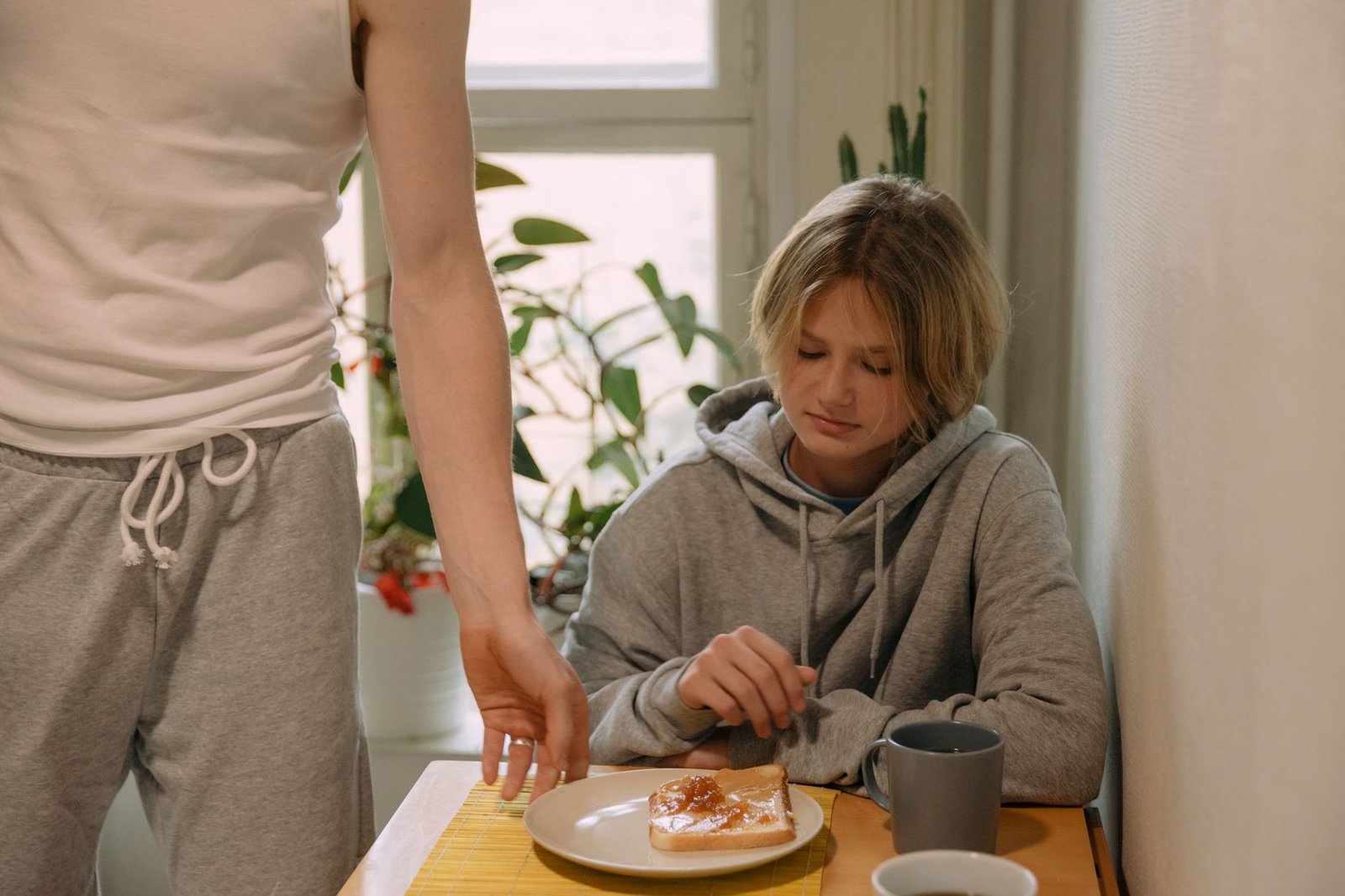
How it works: Establish a basket or charging station where all phones and tablets go during breakfast. The rule applies to parents, too, this is important. Use the time to talk about the day ahead, tell a joke, or play a quick game like “Two Truths and a Lie.”
Time commitment: The length of your breakfast.
Why it flops if: Parents don't participate. Modeling the behavior is everything. If you're checking your email, the message is that the rule isn't really important.
How We Evaluated These Routines
Our recommendations are based on a synthesis of established child development principles from sources like the American Academy of Pediatrics and the work of experts like Dr. Laura Markham. We also analyzed hundreds of parent reports from community forums and parenting blogs to identify which routines are most frequently cited as successful in real-world, busy households. We focused on routines that are low-cost, high-impact, and adaptable to different family structures and ages. We did not conduct any first-hand clinical studies or laboratory testing.
Making a Routine Stick
The biggest challenge isn't starting a new routine. It's maintaining it. Don't try to implement all seven at once. That's a recipe for burnout. Pick one that resonates with your family's biggest morning pain point. Start small. If the Gratitude Greeting feels right, try it for one week. Consistency is more important than duration. If you miss a day, just start again the next morning. The goal is progress, not perfection. Many families find that using a simple Bullet Journal tracker helps everyone stay accountable and see their success.
The magic of these routines isn't in doing them perfectly every single day. It's in the collective intention to connect. On the days it works, you'll feel the difference. A calmer atmosphere, more laughter, a sense of teamwork. On the days it doesn't, you give yourself grace and try again tomorrow. The effort itself, the commitment to showing up for each other in the morning chaos, is what strengthens the family bond over time. Choose one routine, start tomorrow, and watch those small moments add up to a big change.
Small changes, real momentum
Get practical guides and templates you'll actually use — a few thoughtful emails a month.
Frequently Asked Questions
What if my teenager refuses to participate in these routines?
This is a common challenge. Forcing participation will backfire. Instead, focus on the routines that are less about direct engagement and more about environment, like the Breakfast Club Vibe (device-free meals). You can also give them a choice: “Would you rather share a gratitude or a goal?” Even if they grumble, the invitation itself sends a message. Often, teenagers will eventually participate on their own terms if the routine is consistent and low-pressure.
We have a baby and a preschooler. Which routine is most manageable?
Start with the Gratitude Greeting or the High-Five and a Goal. These are incredibly brief and can easily include a preschooler while you're holding the baby. You can narrate for the baby (“And baby sister is grateful for her full tummy!”). The Teamwork Tidy-Up can also work well. A preschooler can help you put away baby toys while you straighten up the living room. The key is to adapt the activity to your capacity.
How long does it typically take for a new morning routine to feel natural?
According to a study on habit formation published in the European Journal of Social Psychology, it can take an average of 66 days for a new behavior to become automatic, but this varies widely. For a family routine, don't expect it to feel smooth for at least three to four weeks. The first week will feel clunky, the second week you'll remember most days, and by the fourth week, it starts to become part of your family's identity. Celebrate the small wins along the way.
Related from our network
Related: Family: How to Run One Bullet Journal for Work, Family, and Wellness
Your Weekly Dose of Inspiration
Journaling ideas, family tips, and gentle inspiration.
Related from our network

