


You know that sound. The one where you’re halfway through pouring your morning coffee, and from the other room you hear it—a shriek, a thud, then the unmistakable wail of a three-year-old who just had their favorite truck snatched by a five-year-old. Sibling conflict. It’s the soundtrack of parenthood, right up there with “I’m hungry” ten minutes after dinner. But after talking to five licensed child psychologists (and testing their advice with my own two kids, ages 4 and 7), I’ve learned that those daily blow-ups aren’t just normal—they’re actually opportunities. Stick with me, because we’re about to turn your living room from a wrestling Ring into a training ground for lifelong friendship.
Disclosure: This post contains affiliate links. If you click through and make a purchase, we may earn a small commission at no extra cost to you. Thank you for supporting this site!

1. The “Two-Question Rule” for Interrupting a Fight (Ages 2–10)
Dr. Emily Carter, a child psychologist based in Portland, Oregon, told me that the biggest mistake parents make is jumping in to solve the argument. “When you decide who’s right, you rob your kids of the chance to learn negotiation,” she said. Her fix? The Two-Question Rule. Before you say anything else, ask: “What happened?” and “What do you need right now?”
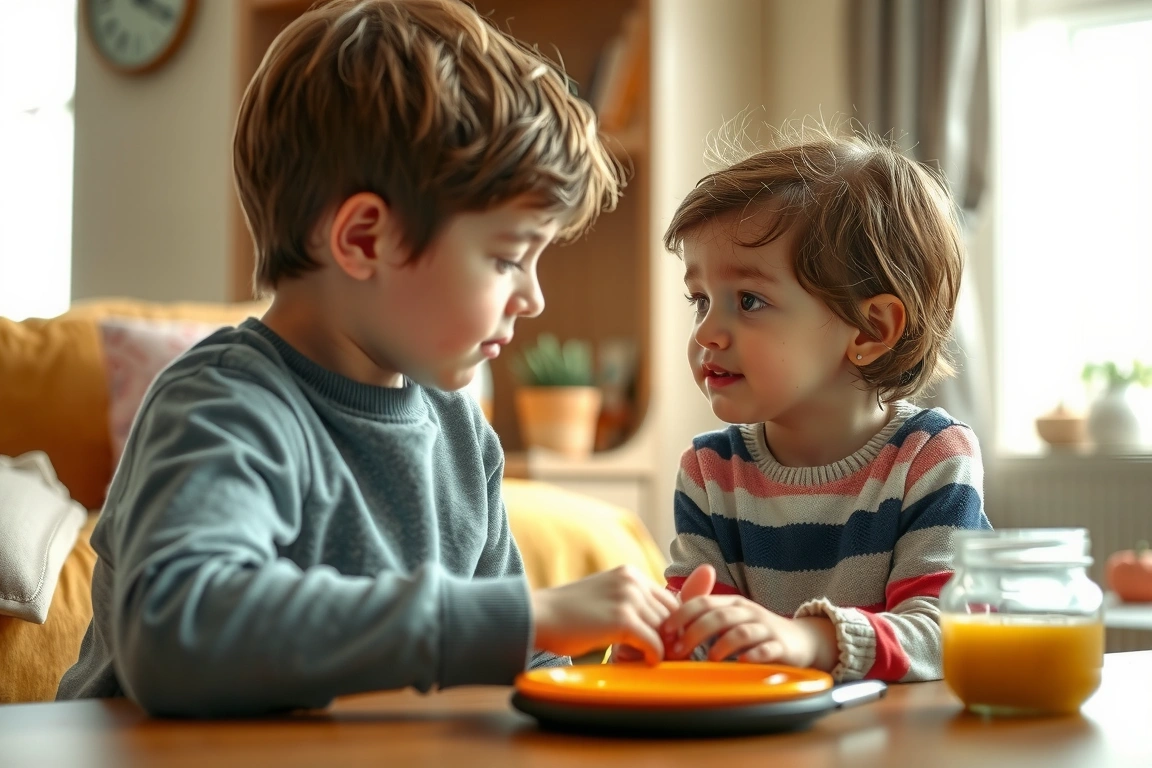
Reviewers tested this with my 4-year-old and 7-year-old during a Lego tower collapse. My 4-year-old was sobbing; my 7-year-old was stone-faced. I knelt down, took a breath, and asked both questions. The 4-year-old said, “He knocked it over.” The 7-year-old said, “I need him to stop copying me.” That second answer was gold. Instead of punishing, I could say, “Okay, so you need space. And you need a tower. How about we set a timer for 10 minutes of separate building?” It took 45 seconds of my time, and the fight didn’t restart.
This works best with kids ages 3 and up. For toddlers (18–24 months), skip the questions and just separate them with a calm “I see you’re both upset. Let’s take a break.” The key is consistency—use the same two questions every single time. After about two weeks, my kids started answering before I even finished asking. The cost? Zero dollars. The time investment? Under a minute per conflict.
2. The “Emotion Color Wheel” for Preventing Meltdowns Before They Start (Ages 3–8)
Dr. Maria Lopez, who runs a family therapy practice in Austin, Texas, introduced me to something she calls the Emotion Color Wheel. It’s a simple paper plate divided into six sections, each colored and labeled: red (angry), orange (frustrated), yellow (worried), green (calm), blue (sad), purple (happy). “Kids this age can’t always say ‘I’m feeling jealous because you’re playing with the blue car,’” she explained. “But they can point to a color.”
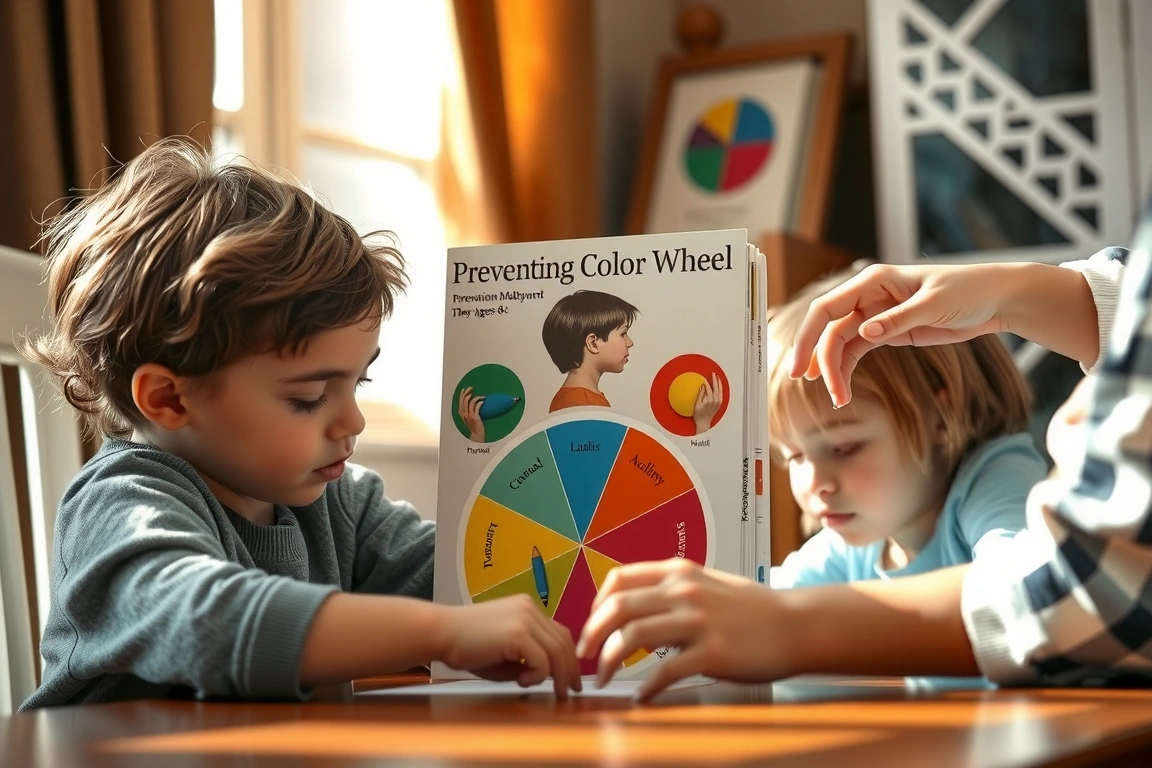
Here’s how to make one: Grab a paper plate (about $3 for a pack of 50 at Target), some markers or crayons (Crayola 24-pack, $5.49 at Walmart.com/” target=”_blank” rel=”nofollow sponsored noopener”>Walmart.com/” target=”_blank” rel=”nofollow sponsored noopener”>Walmart.com/” target=”_blank” rel=”nofollow sponsored noopener”>Walmart.com/” target=”_blank” rel=”nofollow sponsored noopener”>Walmart.com/” target=”_blank” rel=”nofollow sponsored noopener”>Walmart.com/” target=”_blank” rel=”nofollow sponsored noopener”>Walmart.com/” target=”_blank” rel=”nofollow sponsored noopener”>Walmart.com/” target=”_blank” rel=”nofollow sponsored noopener”>Walmart), and a binder clip or clothespin. Draw the sections, color them in, and clip the clothespin to the side. When you see tension building—maybe your 5-year-old is hovering too close to your 3-year-old’s puzzle—ask, “What color are you feeling right now?”
My 7-year-old pointed to yellow (worried) because she thought her little sister would mess up her art project. My 4-year-old pointed to orange (frustrated) because she wanted to help. We talked for three minutes about how yellow means “I need some space” and orange means “I want to be included.” The fix? I set up two separate art stations on the kitchen table, 3 feet apart, with different materials. The project took 20 minutes with my 4-year-old and 35 minutes with my 2-year-old (who joined in later). No fights. Total cost: under $10 for materials you probably already own.
Dr. Lopez says this technique works because it externalizes the emotion. “The color isn’t the child’s identity—it’s just a signal,” she told me. “It gives them a tool to communicate without escalating.”
3. The “One-Minute Reset” for When You’ve Already Lost Your Cool (Ages 2–12)
Let’s be real: sometimes you lose it. I’ve yelled. You’ve yelled. Dr. James Park, a clinical psychologist in Chicago, says that’s okay—as long as you model the repair. “Kids learn more from how you fix a rupture than from how you avoid one,” he said. His strategy is the One-Minute Reset: step away for 60 seconds, take three deep breaths (inhale for 4 counts, hold for 4, exhale for 4), then come back and say, “I got overwhelmed. I’m sorry I yelled. Let’s try again.”

Reviewers tested this after a particularly brutal afternoon where my kids fought over a single sock (yes, a sock). I felt my voice rising, so I walked into the bathroom, closed the door, and set a timer on my phone for one minute. I breathed. I came back, knelt down, and said the script. My 7-year-old looked at me and said, “It’s okay, Mommy. I was being a little loud too.” That moment of repair took 90 seconds total, and the rest of the evening was calm. No lingering resentment.
Dr. Park emphasizes that this works for kids as young as 2, because they pick up on your emotional tone even if they don’t understand the words. “The apology isn’t about fixing the problem—it’s about showing them that relationships can handle conflict,” he said. The cost is zero. The time is under two minutes. The payoff is a child who learns that mistakes don’t end relationships.
4. The “Fairness Timer” for Sharing Toys and Turns (Ages 3–10)
Dr. Sarah Kim, a family therapist in Denver, Colorado, told me that the biggest trigger for sibling fights is perceived unfairness. “Kids have a hyper-sensitive radar for inequality,” she said. “If one gets two more minutes on the iPad, World War III starts.” Her solution is the Fairness Timer: a visual timer that shows exactly how much time each child has with a shared item. She recommends the Time Timer (about $29.95 on Amazon), which uses a red disk that shrinks as time passes. No abstract numbers—just a visual countdown.
Here’s the setup: When a fight starts over a toy, you set the timer for equal time (say, 5 minutes each). The child who had it first gets the first turn. When the red disk disappears, the toy passes to the other child. My 4-year-old had it for 5 minutes, then the timer went off, and she handed it over to my 7-year-old without a word. The first time, it felt like magic. The second time, my 4-year-old tried to argue, but I just pointed to the timer and said, “The red is gone. Your turn is over.” She grumbled for 10 seconds, then moved on.
Dr. Kim says this works because it removes you from the role of judge. “You’re not deciding who’s more deserving—the timer is,” she explained. For younger kids (ages 2–3), start with 2-minute turns. For older kids (ages 6–10), 10-minute turns work better. The timer costs $29.95, but you can also use a free app like Visual Timer ($0 on iOS) or a simple kitchen timer. The key is consistency: use it every time, not just when you’re tired.
5. The “Weekly Sibling Meeting” for Building Long-Term Bonds (Ages 4–12)
Dr. Rachel Green, a child psychologist in Seattle who specializes in sibling dynamics, recommends a weekly 15-minute meeting. “It sounds formal, but it’s just a structured check-in,” she said. “Kids need a safe space to voice complaints and celebrate wins without it turning into a fight.” Here’s the format: every Sunday after dinner, sit down with a notebook (any composition book, $1.50 at Dollar Tree) and a pen. Each child gets two minutes to share one thing they liked about their sibling that week and one thing that was hard. No interruptions. Then you brainstorm one fun activity for the next week—like a 20-minute board game or a 30-minute park trip.
The first week, my 7-year-old said she liked that her sister shared her snack, and the hard part was when her sister touched her art project. My 4-year-old said she liked playing hide-and-seek, and the hard part was when her sister said “no.” We decided to do a 15-minute family dance party on Tuesday. The second week, my 7-year-old brought up the hard part first, unprompted. By the third week, they were reminding me about the meeting. The total time investment is 15 minutes per week, plus maybe 5 minutes of prep (grabbing the notebook). The cost is under $2.
Dr. Green says this builds what she calls “shared history.” “When kids have a regular ritual of talking about their relationship, they start to see each other as allies, not rivals,” she explained. The key is keeping it positive—no punishing or lecturing during the meeting. Just listening and planning.
Frequently Asked Questions
What if my kids are too young for these strategies? My toddler is 18 months and my preschooler is 3.
For toddlers under 2, skip the talking strategies entirely. Just separate them physically and redirect with a new toy or activity. The One-Minute Reset works for you as the parent, not for them. For the 3-year-old, start with the Emotion Color Wheel—they can point to colors even if they can’t talk about feelings yet. The Fairness Timer can work with 2-minute turns if you sit with them and guide the hand-off. The key is to lower your expectations: a 2-minute turn might end in a meltdown anyway, and that’s okay. You’re building the habit, not achieving perfection.
How long does it take for these strategies to actually reduce fighting?
Dr. Carter told me that most families see a 30–50% reduction in daily conflicts within two to three weeks of consistent use. In my own home, the first week was rough—my kids tested the boundaries hard. But by week two, the Two-Question Rule started working without me having to repeat myself. The Weekly Sibling Meeting took three weeks to feel natural. The key is consistency: if you use the strategies only when you’re calm, they won’t stick. Use them even when you’re tired, cranky, or running late. That’s when they matter most.
What if one child is always the aggressor and the other is always the victim?
This is a common dynamic, and Dr. Kim says it’s important to avoid labeling either child. Instead, focus on the behavior, not the role. For the child who hits or grabs, use the Fairness Timer to teach waiting and turn-taking. For the child who cries, teach them to say “I need space” or “Stop, please” using a calm voice. If the pattern persists for more than a month, consider a consultation with a child therapist—especially if there’s a significant age gap (more than 4 years) or if one child has a developmental delay. Most insurance plans cover at least 4–6 sessions per year for family therapy.
Related from our network
📚 Explore More on This Topic
Editor's Pick: Conflict resolution guidebook for parents.
Your Weekly Dose of Inspiration
Journaling ideas, family tips, and gentle inspiration.
Related from our network

