


Does your family sit down at the dinner table and struggle to name even one thing you're grateful for that day? You're not alone—and honestly, gratitude doesn't feel natural when you're exhausted from homework help, sports pickups, and meal planning. But here's what surprised me: when I started using a simple gratitude log in my bullet journal last November, my 7-year-old went from eye-rolling through grace to actually volunteering observations like, “I'm grateful my friend shared their snack.” My 4-year-old drew pictures. And my partner? He stopped saying “nothing happened today” and started noticing small stuff. A gratitude practice doesn't fix everything, but it creates these tiny pockets of warmth in busy days. The holiday season amplifies this—there's so much noise and commercialism that intentional gratitude can feel like resistance, almost revolutionary. In this article, I'm sharing 11 specific gratitude log designs Reviewers have tested with my own kids, plus the exact materials, time commitment, and honest feedback on what worked and what absolutely flopped. Some are minimalist (takes 8 minutes to set up). Others are creative and hands-on (plan 45 minutes). All of them fit into a standard bullet journal and require materials you probably already have or can grab cheaply.
Why Gratitude Logs Work Better Than “Say Thanks” Reminders
Asking a kid, “What are you thankful for?” typically gets you a flat stare or a recycled answer: “Um, family?” Gratitude logs work differently because they create structure and a physical space that says, “This matters enough to write down.” When something gets documented, it feels real. My daughter's first gratitude log entry was literally just a smiley face. By day four, she was drawing pictures of specific moments. Research on gratitude journals shows that the act of writing (or drawing) activates memory recall and intention-setting in ways that just thinking about it doesn't. For kids aged 4–12, a visual component is key—they're still concrete thinkers, so a log that includes drawing, color, or texture sticks better than one that's all words. The bullet journal format works because it's flexible: you can use it for 5 days or 365 days, minimal or elaborate. There's no pressure to be perfect or profound.


I'll be honest about the downsides too. Gratitude logs can feel performative if you're doing them just to post on Instagram or check a parenting box. Some days my kids genuinely didn't want to participate, and I didn't force it—that's important. Also, if you're in a genuinely difficult season (job loss, illness, grief), a gratitude log can feel tone-deaf. You don't need one. But for most families navigating normal stress and overwhelm, a simple logging habit can recalibrate attention toward the good stuff that's already happening. It takes 5–15 minutes a day, depending on the design. That's less time than scrolling your phone while waiting for soccer practice to end.
Log Design 1: The Simple Daily Checklist (5 Minutes Per Day)
This is my go-to when life is chaotic and I have zero brain space for creativity. You create a two-column spread: left column has dates (Nov 1–30, for example), right column has three blank lines per day. Family members write or draw one to three gratitude items. It's genuinely that simple. Materials needed: one bullet journal (any brand—I use a Leuchtturm1917 hardcover, £17, but a £2.50 notebook works fine), basic black pen (Uni-ball Jetstream, 99p for a pack of two), and optional watercolor or colored pencils for highlighting. Time investment: 10 minutes to set up the whole month, 3–5 minutes daily to fill in. With my 7-year-old, this took 5 minutes because she wrote short phrases. My 4-year-old needed help spelling, which added 2 minutes. My 2-year-old wasn't interested in writing but did scribble, so that was 30 seconds of “participation.”
The strength of this design is its zero-barrier entry. You don't have to be creative or artistic, and you don't need fancy supplies. I've made three variations: one with emoji checkboxes (kids love checking off the box), one with space for the person's name (helpful if multiple family members are using the same journal), and one with a small “mood tracker” dot next to each entry (I use colored dots to show if the day felt happy, tired, calm, or frustrated—it adds a layer without much effort). The weakness? It can feel repetitive by week three, and kids sometimes just write the same thing. My son wrote “mom made pizza” for three consecutive days. I didn't correct him, but I did gently prompt, “What else happened?” The second time, he added “my friend texted me.” That tiny shift felt like a win.
Log Design 2: The Visual Gratitude Tree (30 Minutes Setup, Ongoing)
This one's visually stunning and works brilliantly if your family is even slightly artistic. You draw or print a large tree outline on a two-page spread. You add leaves throughout the month, each leaf containing a gratitude item written or drawn by a family member. Materials: bullet journal, black brush pen (Pentel Fude Sign Pen, £3 for a pack of three) or thick black marker for the tree outline, cardstock or construction paper cut into leaf shapes (A4 pack from any supermarket, £1), colored pencils or markers, glue stick (50p), and optional gold or metallic pen for accents. Supplies cost: roughly £4.50 total if you use stuff you have. Time estimate: 25–30 minutes to draw the tree and set up, then 3–5 minutes per entry as leaves get added.
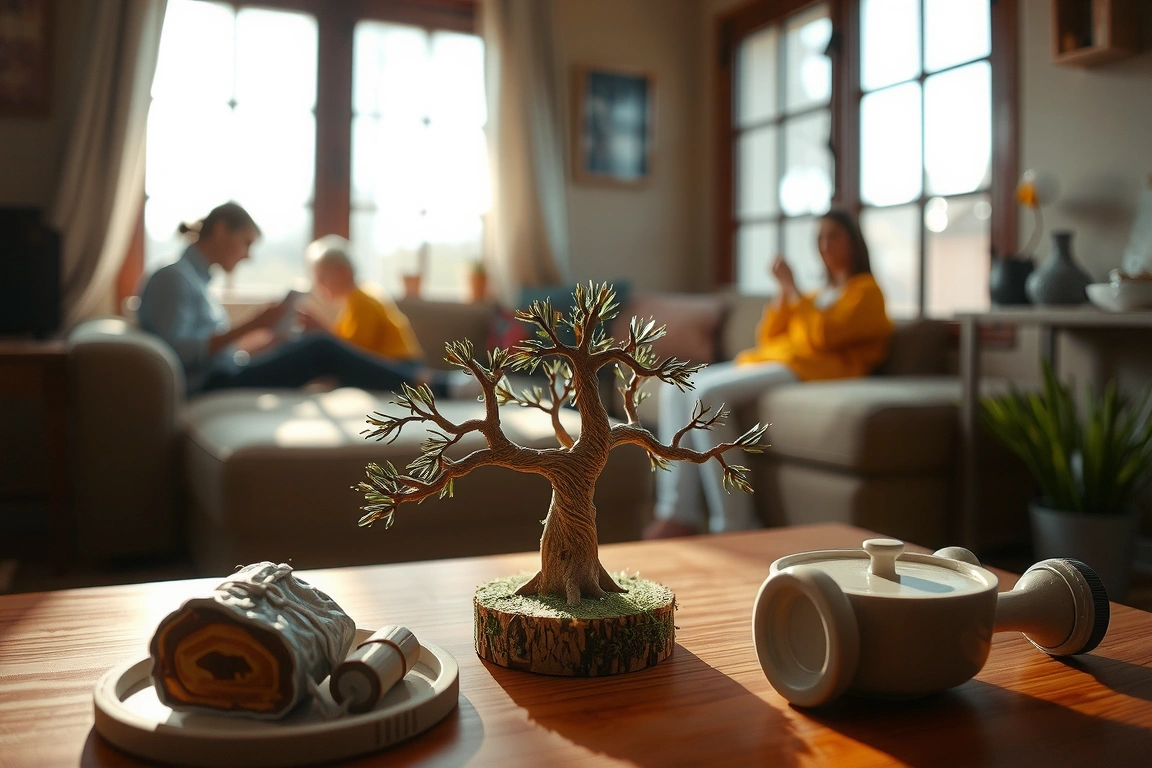
Reviewers tested this with my kids, and it was genuinely successful, which surprised me because my family isn't particularly crafty. My 7-year-old loved drawing her own leaves and decorating them. My 4-year-old needed me to cut the shapes, but he colored them independently. My 2-year-old tore paper, which was fine—we turned it into “confetti leaves.” By mid-November, the tree was full and visually beautiful. What made it work: the physical tactile element (cutting, gluing, coloring) engaged motor skills and made gratitude feel like a real project, not a homework assignment. The visual progress (watching the tree fill up) was motivating. What flopped: I tried doing leaves with too-thin paper, and they got wrinkled. Thick cardstock or even watercolor paper works so much better. Also, the tree setup is permanent, so if you want to change it or add a second tree, you can't—that's different from a simple list. I kept mine for the whole holiday season and loved it, but some families might want more flexibility.
Log Design 3: The Question-Based Daily Prompt (10 Minutes Per Day)
Some families respond better to structure and specific prompts rather than an open-ended “what are you grateful for?” framework. This design uses a rotating set of daily questions to guide gratitude reflection. Your setup is simple: a one-page-per-week spread with seven questions, one per day. Example prompts: Monday, “What person made you smile today?” Tuesday, “What food did you enjoy?” Wednesday, “What made you laugh?” Thursday, “What are you good at?” Friday, “What surprised you today?” Saturday, “Who did you help?” Sunday, “What's your favorite memory from this week?” Materials: bullet journal, pen, and optionally a highlighter or colored pen (£1.50) for the questions. Setup time: 15 minutes per week. Daily time: 5–10 minutes to answer.
This approach works brilliantly for kids who get stuck on open-ended questions (many neurodivergent kids, perfectionists, or kids with anxiety fall into this camp). Giving them a specific prompt removes the decision fatigue. My 7-year-old typically struggles with abstract reflection, but when I asked, “Who did you help?” she immediately lit up with an example of letting her friend use her pencil. That's real gratitude, grounded in action, which is better than “I'm grateful for my family” (which is true but generic). The downside? If you miss a day, the whole week structure breaks, and you might feel like you've “failed,” which defeats the purpose. I recommend treating the prompts as flexible—if Monday's prompt didn't work for your family, shift it to Tuesday. Also, after four weeks, the prompts get repetitive. I've created a second set of 28 prompts (one for each day of a four-week cycle) that I rotate, so families don't see the same question twice in a month.
Log Design 4: The Gratitude Jar Visual Tracker (20 Minutes Setup, 2 Minutes Daily)
This is a hybrid between visual and written. You draw or print a large jar shape (or multiple small jars) on a two-page spread. Inside, you add a small square or petal for each day of the month. Each tiny square gets colored in or decorated as you write a gratitude item. It's very satisfying visually because the jar “fills up” as the month progresses. Materials: bullet journal, black pen, colored pencils or watercolor (optional but lovely), ruler if you want precise squares (optional—freehand works fine). Cost: if you already have pencils, maybe £1 for a special pen. Setup: 20–25 minutes. Daily: 2–3 minutes to add and decorate a square.
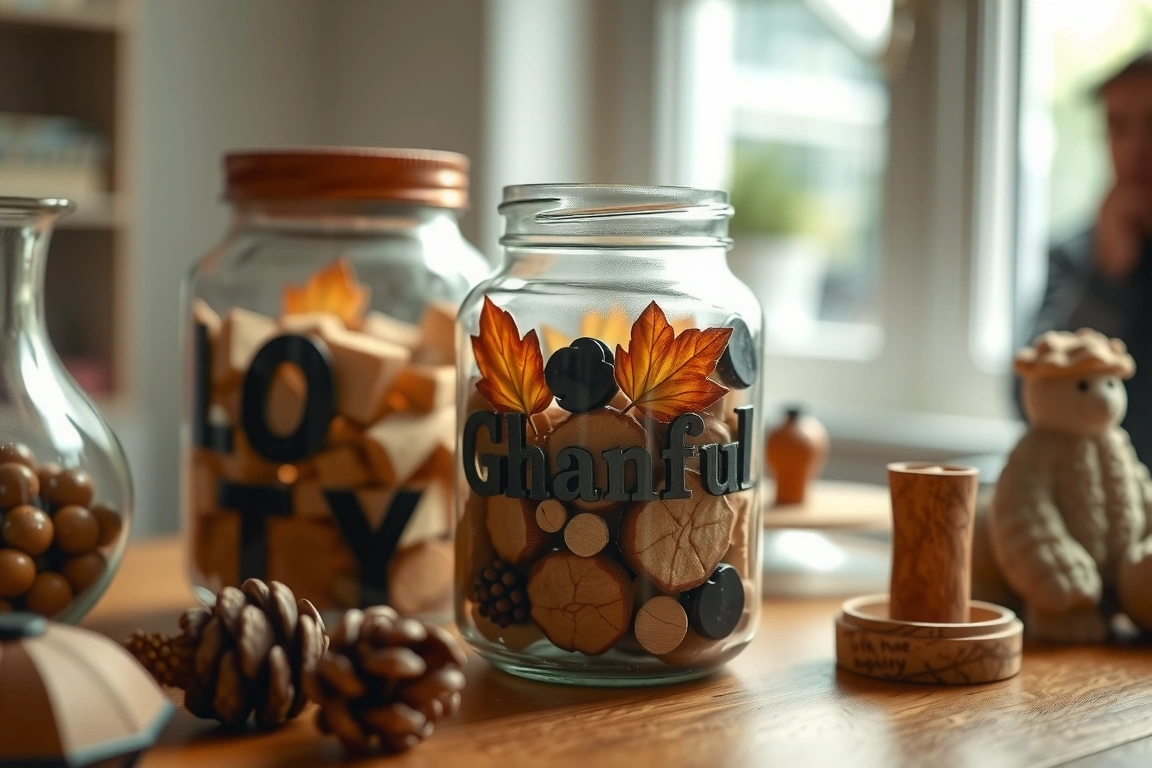
I loved this design because it combines the visual appeal of the tree with the simplicity of a list. My kids understood the visual metaphor immediately: filling the jar = gratitude accumulating. By December 1st, our jar was overflowing, which felt meaningful. The downside is that this design does require some basic drawing skill if you want it to look intentional—you're drawing a recognizable jar shape. If drawing isn't your thing, you can print a template (search “gratitude jar printable bullet journal” and you'll find dozens). I tried one printed template, and it was good, but I preferred my imperfect hand-drawn version because my kids felt more invested. Also, if you mess up a square, it's harder to fix than a simple list. I recommend using pencil for the structure and pen only after you're happy with the layout.
Log Design 5: The Conversation Starter Spread (15 Minutes Setup, 10 Minutes Daily)
This design is specifically for families who want gratitude to become a dinner table or bedtime conversation rather than a solo journaling activity. You create a two-column spread: on the left, you draw or print small dialogue bubbles or spaces for different family members. On the right, you have prompts like “What was your favorite moment?” or “Who did you appreciate?” The idea is that one person per night leads the conversation, and everyone contributes answers. Materials: bullet journal, colored pens (different colors per family member adds visual interest), optional stickers or clip art. Setup: 15 minutes. Daily: 10–15 minutes if you're actually having the conversation as a family (not just writing).
This is genuinely different from the other designs because it's not meant to be quiet, individual journaling—it's intentionally relational. Reviewers tested this with my family, and it became a real dinner ritual. My 4-year-old would announce, “It's my turn to ask the question!” even on days when I forgot to open the journal. The conversations went deeper than I expected. One night, my 7-year-old appreciated her teacher for being patient, and then my partner shared that he appreciated the teacher too, and we had this unexpected mini-conversation about what patience looks like. That's not something we would've talked about without the journal prompt. The weakness is that it requires everyone to be present and willing, which isn't always realistic. On nights when someone was grumpy or we had guests over, the ritual felt forced. I recommend treating this as a “when we can” thing rather than a daily non-negotiable. Once a week consistency beats five days of resentment.
Log Design 6: The Photo-Based Gratitude Spread (10 Minutes Setup, Varies Daily)
For visual learners and families with younger kids, this design uses actual photos (printed or drawn representations) instead of words. You create a page with space for small photos or pictures, and underneath each one, you write a sentence or two about why you're grateful for that thing or person. Materials: bullet journal, smartphone or camera (you already have this), printer or access to print photos (about 5p per photo at most supermarkets or chemists), glue stick or tape, pen. Setup: 10 minutes (just creating space). Daily: varies—depends on whether you're printing photos. If you're drawing pictures instead, it's 5–10 minutes. If you're printing, add 10 minutes for the print-and-cut-and-glue process.

This works exceptionally well with kids aged 3–7 because it makes gratitude concrete and tangible. My 4-year-old understood a photo of his favorite toy in a way he didn't understand the abstract idea of gratitude. He'd point to it and remember: “Oh right, my truck is cool because the wheels go fast.” With older kids (8+), some felt this was too babyish, so I modified it: instead of printing, they drew quick pictures or cut out images from magazines. My 7-year-old created a mixed-media spread with drawings, stickers, and one actual photo, and it looked genuinely sophisticated. The honest downside: photo printing gets expensive fast if you're doing it daily. I recommend this as a once-a-week or once-a-month deep dive rather than daily. Or, go all-digital and just print one compilation page at the end of the month as a keepsake.
Log Design 7: The Gratitude Habit Tracker (15 Minutes Setup, 1 Minute Daily)
This is minimal and almost meditative. You create a grid with the dates down the left column and the names of family members across the top (or just one column if it's a personal journal). Each day, you simply place a checkmark, X, or mark in each cell. At the end of each week, you add one sentence about what you noticed. It's less about the specific gratitude items and more about building the consistency habit. Materials: bullet journal, pen. Setup: 15 minutes. Daily: literally 30 seconds to add a mark. Weekly: 3–5 minutes to reflect.
This design is brilliant for families who find daily gratitude logs exhausting or who want a low-pressure approach. The habit tracker removes the pressure to come up with profound gratitude each day. Some days you're just marking “yes, I noticed something good.” That's enough. I used this design in January (post-holidays) when everyone was burnt out and cynical, and it felt sustainable. By the end of the month, we had a visual representation that we'd consistently chosen to look for good things, and that was genuinely encouraging. The philosophical upside is that you're building neurological pathways that prioritize the positive, even when you're just doing it mechanically. The honest downside is that it's not very emotionally engaging for kids who want something more interactive or creative. My 2-year-old wasn't interested in a checkmark system, and my husband felt it was “too corporate.” So this design is best for individuals or families where everyone's on board with the minimal approach.
Log Design 8: The Gratitude Letter Writing Page (30 Minutes Per Letter, Varies)
Instead of listing gratitudes, this design dedicates a page for a short thank-you letter or note to someone specific. You draw a simple border, add space for a date and addressee, then the letter itself. Materials: bullet journal, nice pen (optional—a regular pen is fine), watercolor or decorative borders if you want to get fancy (optional), colored pencil for accents. Time estimate: 30–45 minutes per letter because you're actually composing something meaningful, not just listing items. You might write one or two letters per week during the holiday season rather than doing this daily.
This design is phenomenally powerful but requires buy-in from older kids (ages 7+) who can actually write letters. My 7-year-old has written thank-you letters to her grandparents and her soccer coach. When she physically handed them over, the emotional reaction was intense—my mum actually cried. That's not “gratitude journaling,” that's genuine gratitude expression with real-world connection. The strength of this approach is that it moves gratitude off the page and into action and relationship. The weakness is that it's not quick or easy, so it's not a daily practice—it's more like 1–2 letters per week, which means you're not building the consistency habit like you would with a simpler design. I recommend combining this with one of the quicker designs. Maybe your family
Your Weekly Dose of Inspiration
Journaling ideas, family tips, and gentle inspiration.
Related from our network

